Resources

Introducing a new way to think about higher education, learning, and technology that prioritizes the benefits of the human dimension. José Bowen recognizes that technology is profoundly changing education and that if students are going to continue to pay enormous sums for campus classes, colleges will need to provide more than what can be found online and maximize “naked” face-to-face contact with faculty. Here, he illustrates how technology is most powerfully used outside the classroom, and, when used effectively, how it can ensure that students arrive to class more prepared for meaningful interaction with faculty. Bowen offers practical advice for faculty and administrators on how to engage students with new technology while restructuring classes into more active learning environments. (From the Publisher)
Inquiry-driven learners anticipate, embrace, and adapt to disruptive change. Clifton Conrad and Laura Dunek advance a transformative purpose of a college education. They invite stakeholders from across higher education to engage in vigorous dialogue about the aims of a college education—and how to realize those aims. Increasingly influenced by market forces, many universities employ a default purpose of a college education: preparing students for entry into the workforce. As a result, students remain unprepared for a world in which much of the knowledge they acquire will have a shelf life of only a few years. Cultivating Inquiry-Driven Learners charts a new way forward. It proposes that a college education prepare students to be innovative and adaptable by developing four signature capabilities: core qualities of mind, critical thinking skills, expertise in divergent modes of inquiry, and the capacity to express and communicate ideas. In concert, these capabilities empower students to explore and foster ideas that will prepare them to successfully navigate constant change, capitalize on career opportunities, enrich their personal lives, and thoughtfully engage in public life. This innovative book also explores a wide range of initiatives and practices for educating inquiry-driven learners. Examples illustrate possibilities for developing inquiry-driven learners across the curriculum and are drawn from institutions with remarkably different missions and identities—from research universities to liberal arts colleges. "This book revitalizes the notion of a 'well-rounded' education by describing how inquiry-driven learning is critically important for these times. It is the sort of foundational text that invites discussion and debate and describes with clarity and economy of prose the pressures facing colleges and universities and how they ought to respond."—Matthew Hartley, University of Pennsylvania. (From the Publisher)
With awareness of both the opportunities and challenges presented by globalization, there is a growing trend among colleges and universities across the country to commit goals and resources to the concept of internationalizing their campuses. This can occur in a number of different ways but a common thread involves exploring the concept of global citizenship and finding ways to embed this concept in undergraduate curricula. For faculty, this may call for moving out of a presumed comfort zone in the traditional classroom and determining new approaches to teaching a generation of students who will live and work in a more global context. A method for accomplishing this work that is growing in popularity involves offering short-term, faculty-led field courses to international settings. In fact, today more college students are participating in such short-term study abroad opportunities than the more traditional semester and/or yearlong programs. Faculty and administrators who want to capitalize on short-term, study abroad programs as a means for internationalizing their campuses need practical resources to help them realize this challenging but important goal. They not only need support in developing the course curricula and logistics, but also in constructing authentic means for assessing the multi-faceted learning that occurs. Short-term international programs, when carefully planned and executed, engage the participants (both students and faculty) in unique learning experiences that can involve service, research, and critical analysis of what it truly means to be a global citizen. Such work helps define the somewhat nebulous but worthy goals of internationalizing campuses and fostering global citizenship. The authors of this text are professional educators with deep experience in global education and curriculum development. They offer a valuable resource for the development, execution and assessment of faculty-led international field courses that is at once theoretical, practical and motivational. Whether readers are considering offering an international field program for the first time and need guidance; are veteran field course leaders who would like to take their work to the next level; or are administrators attempting to encourage and provide needed support for faculty-led international programs, this book will prove invaluable. (From the Publisher)
Every year, hundreds of small colleges, state schools, and large, research-oriented universities across the United States (and, increasingly, across Europe and Asia) are revisiting their core and general education curricula, often moving toward more integrative models. And every year, faculty members who are highly skilled and regularly rewarded for their work in narrowly defined fields are raising their hands at department meetings, at divisional gatherings, and at faculty senate sessions and asking two simple questions: “Why?” and “How is this going to impact me?” This guide seeks to answer these and other questions by providing an overview of and a rationale for the recent shift in general education curricular design, a sense of how this shift can affect a faculty member’s teaching, and a sense of how all of this might impact course and student assessment. (From the Publisher)
A detailed philosophical debate on the nature of expertise is long overdue and Dimensions of Expertise opens up that debate. Christopher Winch firstly explores an account of know-how, derived primarily from the pioneering work of Gilbert Ryle, and moves on to relate this epistemological debate to discussions concerning the nature of expertise in vocational and professional education, including attempts to provide a theory of expertise. (From the Publisher)
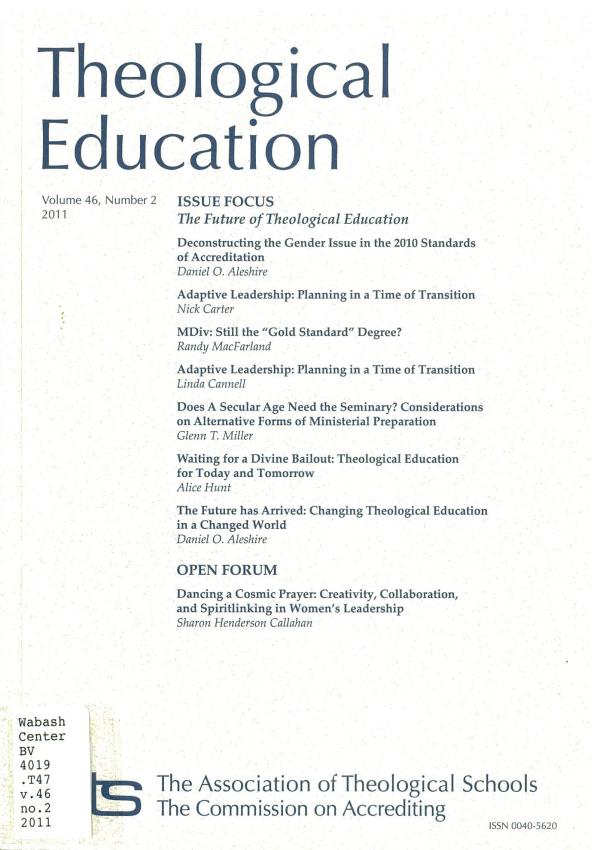
Journal Issue. Full text is available online.
This book explores the wide range of contexts in which research into creating connections in learning and teaching may take place. Creating connections can encompass making links, crossing divides, forming relationships, building frameworks, and generating new knowledge. The cognitive, cultural, social, emotional and/or physical aspects of understanding, meaning-making, motivating, acting, researching, and evaluating are explored as constituent forms of creativity in relation to such connections. From this exploration the authors identify varied connective contexts and means which include the learner, the educator, the organisation, and the relevant community. The crossing of divides, forming learner-educator relationships, bringing together diverse groups of learners, establishing networks and partnerships among educators, and establishing links between organisations and communities are all considered as connections which can be created by and within the learning and teaching dynamic. By examining the factors which help to facilitate and/or restrict the possibilities for creating connections in educational contexts, implications for and outcomes of learning and/or teaching arise from the connections created. The final chapter of this book will explicate the realisations that have emerged for educators and researchers working to create connections. These offer suggestions for future directions and enunciate what and how connections might contribute to both educational institutions and the broader society. (From the Publisher)
This article employs George Lakoff and Mark Johnson's work on metaphor (1980) to examine the current use of the term “learning outcomes” within higher education. It argues that “learning outcomes” is an ontological metaphor (education becomes focused on results that one can understand and measure) that resonates with contemporary academic capitalism. Yet because metaphors highlight some things and conceal others, thinking about teaching and disciplines using “learning outcomes” hides other dimensions of academic capitalism and obscures unquantifiable and highly complex aspects of education. Finally, the article explores ways in which an emphasis upon outcomes has consequences for the field of Religious Studies.
How do we interrupt the current paradigms of sexism in the academy? How do we construct a new and inclusive gender paradigm that resists the dominant values of the patriarchy? And why are these agendas important not just for women, but for higher education as a whole? These are the questions that these extensive and rich analyses of the historical and contemporary roles of women in higher education— as administrators, faculty, students, and student affairs professionals—seek constructively to answer. In doing so they address the intersection of gender and women’s other social identities, such as of race, ethnicity, sexual orientation, class, and ability. This book addresses the experiences and position of women students, from application to college through graduate school, and the barriers they encounter; the continuing inequalities in the rates of promotion and progression of women and other marginalized groups to positions of authority, and the gap in earnings between men and women; and pays particular attention to how race and other social markers impact such disparities, contextualizing them across all institutional types. Written collaboratively by an intergenerational group of women, men, and transgender people with different social identities, feminist perspectives, and professional identities— and who, in the process, built upon each other’s work—this volume constitutes a call to educators and scholars to work toward centering feminist and other marginalized perspectives in their practice and research in order to equitably address the evolving complexities of college and university life. Employing a wide range of theoretical lenses, examining a variety of models of practice, and giving voice to a diversity of personal experiences through narrative, this is a major contribution to the scholarship on women in higher education. This is a book for all women in the academy who want to better understand their experience, and to dismantle the remaining barriers of sexism and oppression—for themselves, and future generations of students. (From the Publisher)
The academic profession, like many others, is rapidly being transformed. This book explores the current challenges to the profession and their broad implications for American higher education. Examining what professors do and how academia is changing, contributors to this volume assess current and potential threats to the profession. Leading scholars in sociology and higher education explore such topics as structural and cognitive change, socialization and deviance, career development, and professional autonomy and regulation. A comprehensive analysis of the significant questions facing this crucial profession, The American Academic Profession will be welcomed by students and scholars as well as by administrators and policy makers concerned with the future of the academy. (From the Publisher)