Resources
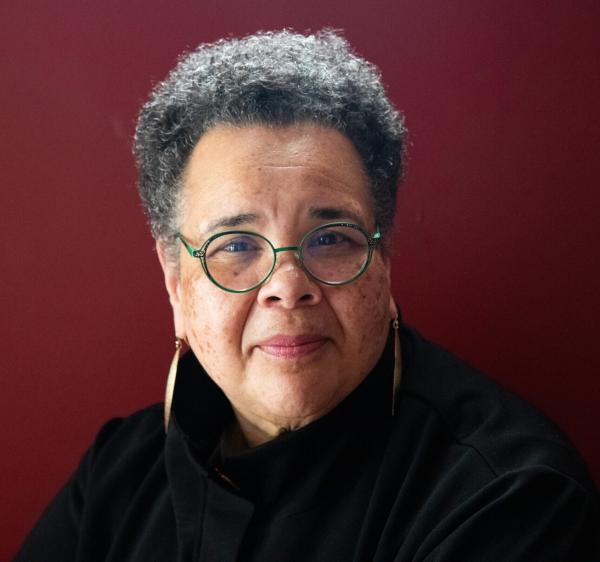
All storms are not the same. A light summer rain is not a category five hurricane. You must learn, in your context, to identify those storms that can be refreshing, and even enjoyable, and those storms that are life threatening and require you to batten down the hatches or evacuate. My Uncle Frank was a loving and unconventional man. He stood about 6’4” tall. He had a medium build. He was bald on the top of his head with a hair-ring around the sides. He wore a size 15 shoe and an extra-large hat. Uncle Frank was light-hearted and laughed often. He and my parents had grown up together in Cleveland, Tennessee. The Meridiths, the Bullocks, and the Westfields had known each other for many generations. By the time my brother and I were born, Uncle Frank and Aunt Emma, with their four children, lived in Philadelphia – near our family. My father treated Uncle Frank with the respect given an older brother. Our families were family to each other. Uncle Frank worked for a company that would buy out the local amusement park for its employees the Sunday of each Memorial Day weekend. Frank would accept the five tickets given each employee, then barter, negotiate, and acquire twenty or thirty more tickets so he could host a grand picnic for the extended family. My birthday is May 28; we would celebrate at the amusement park. Every year Uncle Frank would tell me the picnic was for my birthday. I loved Uncle Frank and Uncle Frank loved me. Uncle Frank would reserve a pavilion in the picnic section of the park just for his guests. The annual event felt like a family reunion. Upon arrival at the pavilion, each family would claim two or three picnic tables and set-up their spot. Each family brought food and beverages, more than enough to share. The picnic was a grand feast with all-day rides, card playing (spades, bid whist, pinochle), lots of laughter, and being together. It was a day of excitement and fun. I have fond recollections of all my amusement park picnics, but there was one that was the most remarkable. It was a sunny Sunday. Our family arrived at the park about 10am. We parked in the parking lot, then hauled our food and picnic supplies from the parking lot to the reserved pavilion. After greeting everyone, my brother, father, and I left my mom to set up our picnic tables. We went to ride the rides promising to return in two hours for lunch. We started with a ride on the Wild Mouse--the wooden roller coaster. Then the bumper cars, Ferris wheel and then the teacups. It happened when we were in line for a second ride on the roller coaster. Without warning--the wind whipped up with prolonged gusts. The sky darkened. It began to drizzle. The drizzle turned to downpour. My dad told us we needed to go back to the pavilion. My brother complained because he wanted to ride, even if it was raining. Dad grabbed my hand, told my brother to move quickly and pointed in the direction of the pavilion. With a pout, my brother trotted ahead of us. The downpour increased. As we jogged, it seemed as if everyone in the park was running - looking for shelter from the storm. It was pandemonium. By the time dad, brother and I got near to the pavilion the rain was teeming from the skies. The thick rain made it difficult to see. The winds were erratic. My mother was standing at the edge of the pavilion watching for us and, no doubt, praying. When Mom saw us at a distance, she began to call my father’s name and wave her arms. Dad picked me up, grabbed my brother by the hand and jetted to my mother. Everyone in the pavilion was packing up. My mom dried us off with an extra tablecloth and paper towels. As if out of nowhere, Uncle Frank ran into the pavilion and hollered, “Don’t leave!” Hearing Frank’s voice, people paused. Everything but the rain and the wind stopped to listen. Frank said, “Don’t go! The storm is not going to last long. Don’t go!” Several families ignored him – packed quickly and launched out into the mean weather headed back to the parking lot to drive home. Uncle Frank came over to my parents and repeated, “The storm will not last long. We are safer here than on the road.” My parents hesitated. They did not know what to do. Uncle Frank collapsed a card table, leaned it against a pavilion wall and instructed me and my brother to go under. We did. Frank covered the table with a tablecloth and made sure there were no exposed edges to be caught by the wind. Uncle Frank instructed us, “Stay there until we call you out!” The storm lasted another thirty or forty minutes. They were long and frightening minutes. Then, as abruptly as the storm had started--it stopped. With the stillness, my brother and I peeked out from behind the table. My father said, “Come on out, it’s over.” We crawled out and I looked around the pavilion. The only folks who had stayed were Uncle Frank, Aunt Emma, their four kids, our family, the Conway Family, and the Simmons Family. Anything uncovered in the pavilion was soggy or drenched, but no one was hurt. As if by magic, the thick black clouds continued to part, and the blue sky returned. The sun shone bright, again. The winds were gone. Together we cleaned up the pavilion and reestablished our picnic. Families had left covered dishes, coolers, and lawn chairs. Dad and Frank organized items they would return in coming days. My mom and Aunt Emma took inventory of the food and reset one large table of food and a beverage station for everyone. Mercifully, my birthday cake was unharmed. In about thirty minutes we heard the amusement park rides restarting. And here’s the best part--for the rest of the day there were no lines for any rides! Since most of the people in the park had fled during the storm, those of us who had braved the storm were now free to ride any ride without having to wait in line. That day, I rode the roller coaster twenty-seven times! That day I rode every ride in West Point Park! That day was one of the best ever! Years later, I asked Uncle Frank how he knew we should stay at the pavilion during the storm. He said, “All storms aren’t the same. Even bad storms aren’t the same kind of bad. That storm came up so fast and unexpectedly, I knew it was going to move through just as quickly. I also knew driving in that kind of weather would have been more dangerous than hunkering down in that pavilion.” With a wry smile, Uncle Frank continued, “And, it was your birthday – we had not cut the cake!” Friends, storms in our careers are like this. Ask yourself, which storms are simply part of the ecology of faculty life, and which storms are potentially life threatening or cataclysmic? Negotiating the processes of hire, tenure, renewed contract and promotion is distinctly different from navigating in an institution that is restructuring or has filed for financial exigency. Learning to advise students, lead faculty committees, and find a suitable publisher can be challenging, but all are elements of the academic landscape. How do you come to know what is usual and what is dangerous? We all need an Uncle Frank who can tell us if we should hunker down or run! Thank you, Uncle Frank.

CREATIVITY IS… Learning in the theological academy needs to be liberated. It has been held hostage by standards of appropriateness authored by voices and ideologies long gone yet holding on. They can be quite static and unmoving. The solution? Creativity. But I’m not sure if theological institutions are truly ready for her, for she asks for too much. Within theological education, Creativity needs honesty. She requires both desire and attention to possibility as well as a sense of duty to hold failed systems of current practices accountable. She is bold and voluminous; veracious enough to name when she does not have the appropriate room to thrive. She will, without hesitation, mention how crowded institutional elephants can make a room (no offense to elephants, they are simply not spatially conducive to a healthy theological education environment). Creativity does not hold her tongue, for limit might deter her potential. She announces how holding on to ill-fitting things and anachronistic ideas takes space away from her truest emergence. And theological education is, unfortunately, a space unaware of its spatial misappropriations. Colonial roots can do that to you. Well, what can faculty do to welcome her into their classrooms? “Faculty in theological education,” Creativity would say without pause, “are captives to the institutionality of teaching.” That’s not the answer we were expecting. “I can’t work well, here,” she would continue. “Here, I need the opposite, a spirit of the apophatic. I can tell you where something is by naming where it is not, how it is by how it is not. Here, I need partners who understand the beauty of this refusal—of crafting the necessary in the midst of a mantle of negation. I need dreamers willing to be anti-institutional within their institutions. This clash, of refining through refusing, is where I am.” We can ask her for elaboration: “What does it mean to be anti-institution?” “It means to be me,” she will answer with nonchalance. “But how can an anti-institution institution exist?” we will surely press. “Have you checked the margins?” she will rhetorically inquire. ANTI-INSTITUTIONAL Check the margins. What will you find? Who will you find? Those who have historically been made the least of these. By virtue of their existence, many know Creativity and her bold requirements quite personally. To be creative in the theological academy means to actively resist the lure of traditional institutional priorities: maintaining the status quo financially and otherwise, re-enforcing institutional standards of rigor and knowledge, and continuing in the practice of institutional “speech-acts,” as Sarah Ahmed brilliantly calls them, where institutions claim their worded hopes of inclusion, diversity, and innovation as actual truth, though the world is aware they are not.[1] Creativity is naming where God is by illumining where God is not; remember, an apophatic spirit. To be sure, Creativity can exist within institutions; she has for years, but has she existed well? Freely? Is she permanent dweller or occasional guest? Is it possible, let alone desired, to make her host instead of hosted? To give her full reign of an institution? No. She is too risky. Total creative power would mean granting room for the ways of being and knowing that have always been in the room but have only known suppression. It would mean granting those who have been forced to make the margins their homes shared space in the center. And no one with institutional influence and say is interested in giving up the center. Creativity considers the historical pawns the priority instead of laborers towards the bottom line. The bottom line of budgets are amenable foes but not the only ones. The bottom line of certain standards of academic rigor, the bottom line of grades as the only means of intellectual analysis, the bottom line of fortifying academic structures created for the white men for whom theological education was created. Creativity wants—no, needs—not only the space of the classroom to leave a deep impression, but say over the entire structure of the theological educational system. Unprepared to acquiesce to such a demand, institutional heads will ask if it’s OK if she appears in the individual efforts of underpaid doctoral students, job-insecure adjunct educators, and exhausted minoritized faculty persons. She will reluctantly agree, or more like make do, but never stop asking in a nonchalant, rhetorical, inquiring tone, “Have you checked the margins?” There is a message in the margins: the classroom could be a space of influence—influence not synonymized as power, but a space where relationships between students and teachers, different forms of knowledge, and measures of intelligence can be reimagined. It can be a space where students’ experiences are taken seriously and where teachers do not have to take themselves so seriously. “Have you checked the margins?” How can the classroom become a platform for the periphery? What must be undone so that there is room for better? Many theological institutions still believe they must keep academic tradition for a church traditionally understood; Creativity instead asks, “What happens if minoritized students were the center in the classroom and institution as a whole? Do institutions want to learn their students? Do they trust marginalized experiences to be a true expression of the church universal?” “Have you checked the margins?” then is another way of asking, “Have you asked yourself?” [1] Sara Ahmed, “The Nonperformativity of Antiracism,” Meridians 7, no. 1 (2006): 104-126, especially 104.
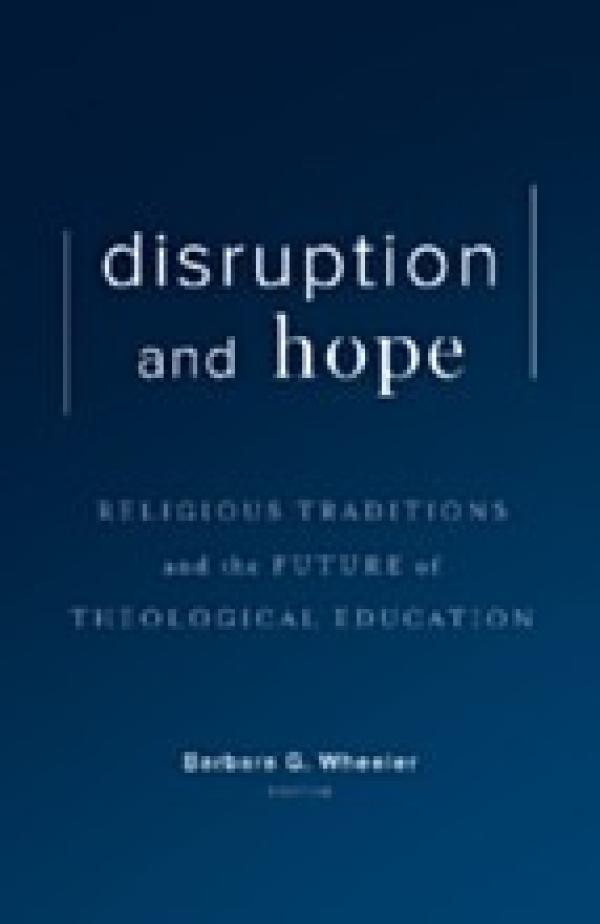
Demographic and societal shifts in religion—to say nothing of higher education challenges—gnaw at North American theological education. The turbulence around the religious and educational environment is constant, and the essays in this volume acknowledge these challenges while exploring methods to move forward. The essays were written by seminary presidents and university leaders of various traditions to honor Daniel Aleshire, longtime executive director of the Association of Theological Schools (ATS). The first four essays address the challenges faced by theological schools while the final two essays examine the rise of non-Christian traditions in North America. Outside of the six essays, a helpful introduction provides coherence to the book, while the honoree of the volume supplies an afterword. The first two essays by David Tiede and Martha Horne soberly name the disruptions around theological education. Tiede raises four pressing challenges and how Lutherans (ELCA) are addressing them: the digitization and marketing of everything; the cost/debt spiral; the need for leadership change; and the focus on educational results. Horne provides a call for change through the story of Desmond Tutu’s awakening to how theology is shaped by different historical, sociological, and cultural contexts. This should drive an ability for Anglican comprehensiveness, anchored in communion, worship, and mission, that allows for theological inquiry and debate. Donald Senior focuses on the type of Roman Catholic seminary candidate needed for the emerging needs of this world. Priestly formation from the work of Pope John Paul II roots this vision and is then joined with values from Pope Francis’s vision of the joy of the gospel, care for creation, and mercy. While other essays focus on curriculum or mission, Senior calls for a counter-cultural vision for theological education embodied through its people. Evangelical pragmatism and its aversion to seminary training is the focus of Richard Mouw’s essay. Mouw encourages theological schools to listen to concerns and questions of those in ministry. Theological educators must make the case for theological education, but must do so with an empathetic spirit throughout the conversation. The final two essays by Douglas McConnell and Judith Berling examine multifaith engagement and its implications for pedagogical concerns. McConnell grapples with how to engage a multifaith context from an evangelical framework. He calls for convicted civility rooted in hospitality and illustrates this through an institutional case study. Berling traces the history of multifaith theological education in mainline seminaries and explores ongoing opportunities and challenges. She raises the many ways that tradition can be both understood and shaped; this flexibility in tradition should aid in classroom pedagogy and interreligious learning. The volume as a whole encourages faculty, administators, stakeholders, and institutions to discern their core identity and mission. This, in turn, should drive what doctrines/affirmations and practices of life are central to a school’s tradition. While not prescriptive in methodology, the essays provide a quick read for busy stakeholders that can foster reflective dialogue on mission, tradition, and vision.
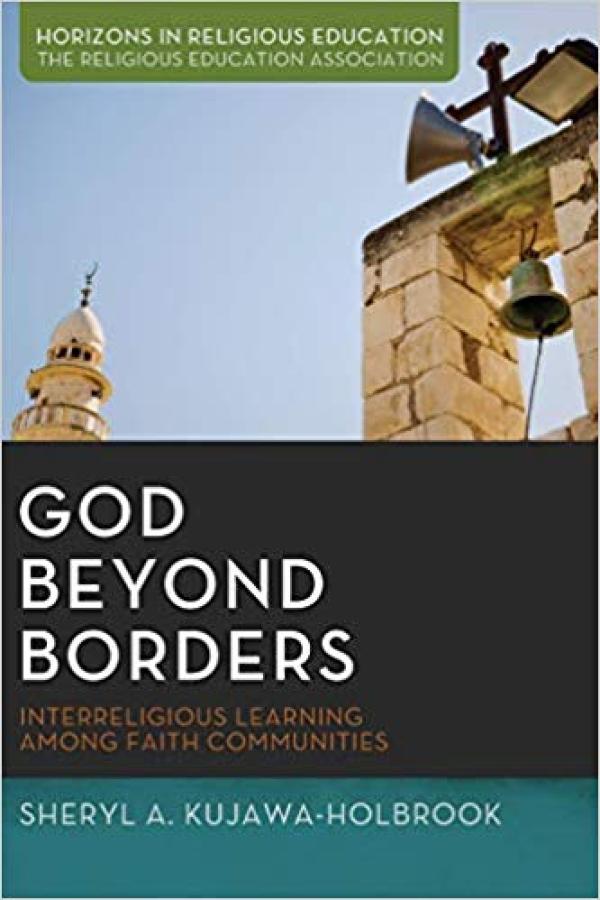
Based on ten years of research, God Beyond Borders is a comprehensive study of interreligious learning in faith communities. The United States is one of the most a diverse countries of the world. Kujawa-Holbrook details the many practices of interreligious learning in faith communities; through interreligious encounters, religious education, shared sacred space, shared prayer, and compassionate action. The book also surveys the field of interreligious learning and investigates some of the more common intentionally interreligious communities--families, clergy groups, chaplaincies, and community organizations. Kujawa-Holbrook combines theory and praxis to make a case for the importance of interreligious learning in all religious organizations. (From the Publisher)
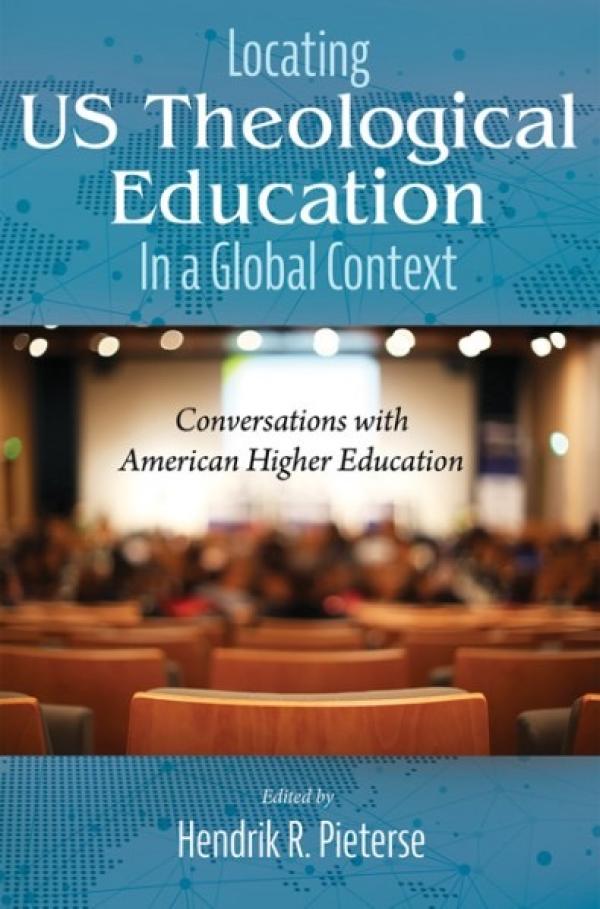
Theological education in the United States finds itself in untested circumstances today. Rapid social change is creating an increasing multicultural, multiracial, and multireligious context for leadership formation. At the same time, international enrollment, cross-border educational initiatives, student and faculty exchanges, and more are connecting US theological schools with a global community of Christian teaching and learning. How do US theological institutions “locate” themselves within this global ecology of theological formation so as to be both responsible participants and creative shapers within it? That is, how do they discern their proper place and role? It is questions like these that the contributors to this volume explore. Building on the decades-long discussion about the globalization of US theological education, this book argues that, in engaging such questions, US theological institutions have much to gain from a sustained conversation with the burgeoning literature on the internationalization of American higher education. This research offers theological institutions a trove of insights and cautionary tales as they seek to discern their rightful place and role in educating leaders in and for a global Christian church. (From the Publisher)
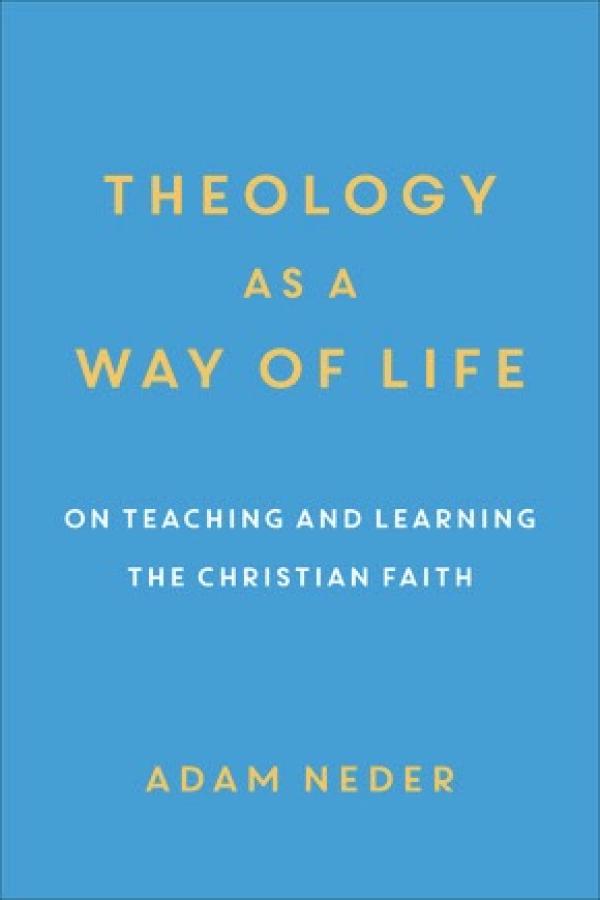
What difference does Jesus Christ make for the way we teach the Christian faith? If he is truly God and truly human, if he reveals God to us and us to ourselves, how might that shape our approach to teaching Christian theology? Without a compelling theological vision of theological instruction and without a clear awareness of its unique goals, challenges, and temptations, our teaching will be out of joint with the subject matter, and we will waste valuable opportunities. Drawing on the work of Søren Kierkegaard, Karl Barth, and Dietrich Bonhoeffer, Adam Neder offers a clear and creative theological and spiritual reflection on the art of teaching the Christian faith. This concise and engaging book offers a wealth of fresh insights and practical suggestions. While addressed to teachers in academic contexts, the approach is broad enough to include anyone involved in teaching and learning Christianity. (From the Publisher)