Resources
Change is the constant in theological education, though it may not seem so from some vantage points. Most people in an organization desire a sense of permanence. Given the nature of the day-to-day routine, most people experience on the job, it's not difficult to appreciate they are lulled into a sense of stability and immutability in their organization. From their perspective, the constancy of the job gives a sense of continuity. Even for Faculty, the annual rhythm and cycles and the academic year can give an unwarranted sense that things change slowly from year to year. From the perspective of the dean, however, change is the constant---intended or not. Deans will confront, manage, resist, hold at bay, or instigate change every year. Most deans would welcome a single year with a minimum amount of change that can provide a "breather" from the steady stream of issues, challenges, and problems that bring about some level of change at multiple levels. Unfortunately, the nature of the job means deans will work amidst a constant swirl of change. C. William Pollard, author of The Soul of the Firm, provides a perspective on change that is critical to theological education in this era. Pollard said, "Without change there is no innovation, creativity, or incentive for improvement. Those who initiate change will have a better opportunity to manage the change that is inevitable." Leaders in theological education should also take his caution to heart: "Learning and innovation go hand in hand. The arrogance of success is to think that what you did yesterday will be sufficient for tomorrow." Theological school deans, then, should embrace that change is part of their job, and accept that not everyone will like it. Deans, however, are also stewards of change in their organizations. As such, wise deans will also question change---that is, they will avail themselves of critical questions that can help them discern the purpose, necessity, and nature of the change they will lead. Questioning Change Here are sample perspectives that can help deans "question change": Do you have a legitimate rationale for the change? Can you rely on good data to inform the change? How much change do you need? What can help leverage the change? (trust, data, internal authority, external pressures?) What is the institution's capacity to absorb change? Has the institution navigated a similar change in the past? Did it succeed or fail? Why? How much risk can you absorb? What will you have to give up to realize the change? Who will you leave behind? What do you want to preserve? What will people grieve? What may be unintended consequences? What level of change is required? (Drastic or incremental?) What type of change is needed? (cultural, organizational, administrative, policy, technological, structural, programmatic, developmental, evolutionary, social?) What is your timeline for change? Is there a window of opportunity that creates urgency? Will your mission change as a result of the change? Does it need to? Will the change actually solve the problem being addressed? Who will commit to the change? Who is most invested in the change? In staying the same? Do you have the resources to make the change? How will you know the change is successful? What metrics will you use? Who will most benefit from the change? Who will be the most disadvantaged by the change? How will the change impact curriculum? Faculty? Students? Finances? The seminary culture? Administration? Can you see the changes through? (Will you leave office or the institution before the change is completed?) Abigail Brenner cautioned that "Change without transition may only serve to recreate old scenarios and reinforce old patterns of behavior. For change to have a salutary effect on us, we need to learn to effectively work with it and not to run the other way when it presents itself." ("The Nature of Change," Psychology Today. May 6, 2011).
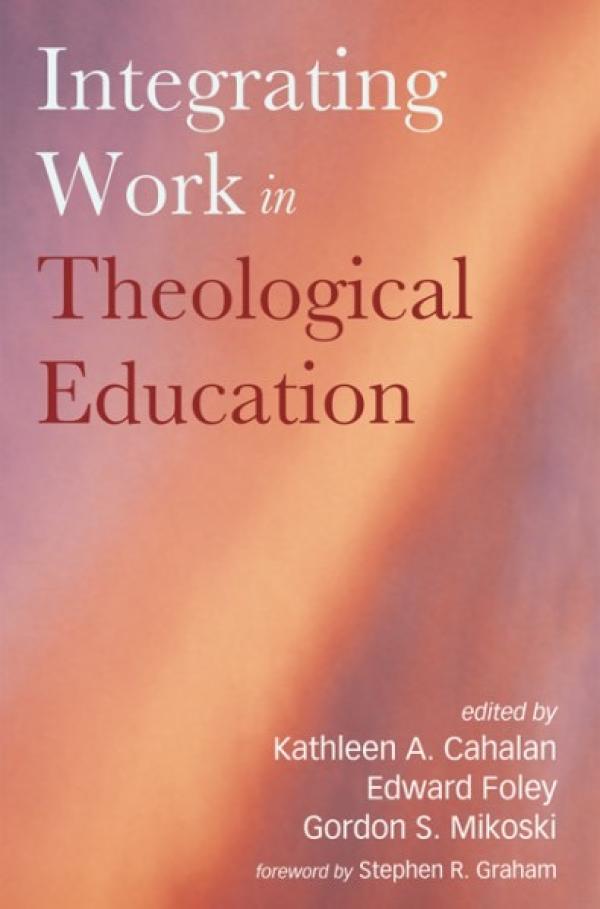
This intriguing 20-article volume edited by Kathleen Cahalan, Edward Foley, and Gordon Mikoski explores the question of integration in theological education. The editors, who also author multiple articles in this book, divide this text into four sections – schools, curriculums, courses, and frameworks – to engage integration. The authors represent a variety of disciplines in theological education including: practical theology, worship, Christian education, spirituality, ministry, leadership, and church history. In the introduction, Stephen Graham explains, “this book takes a very broad view of integration, using the term in three ways: making connections between bodies of knowledge, overcoming the divide between theory and practice, and enhancing what is called the ‘professional’ model by integrating intellectual, practical, and moral and professional aspects of theological education” (ix). Cahalan frames this volume with a very personal and robust essay. She writes, “I fear we have left it to the students to connect the dots between study, call, and ministry…the lack of integration in theological education and ministerial practice comes at a high price. It reverberates through the personal, ecclesial, and systemic messes we see every day in the church” (2). She then frames this book with various approaches to integration including: the split between theory and practice, divisions between various branches of theological study, and the integration between the intellectual, practical, and moral/professional domains. In the first section on schools, the authors consider integration across the wider school communities. Foley opens this section by examining the school as an agent in the integrating process. He broadens the concept of school to include formal, informal, and semi-formal education. After chapters on faculty development and renewal processes, Foley returns to provide a case study from Catholic Theological Union and an additional article to sum up this section. He concludes that “these are challenging times, but these challenges are also gifts, and they would be a terrible thing to waste” (71). The second section, on curriculums, addresses the opportunities and problems in the area of integration in theological programs of study. Cahalan begins by exploring the dynamics of seminary curriculum around the concept of integration. She argues that “if faculty want education to be more integrative, they have to do more than rearrange the courses and credits and defend their turf” (75). Then she outlines principles of curricular design to produce integrated learning. Her themes are continued in articles by David Rylaarsdam, who explores overhauling curriculum, Jeffery Jones, who gives special attention to the relationship between field education and the rest of the curriculum, and David Jenkins, who adds the needs of denominations to the mix of curricula drivers. The third section explores integration with courses. Mikoski starts breaking integration down to the course level including engaging the explicit, implicit, and null curriculum. After three well-developed case studies, Jeffery Tribble adds the concept of racial differences and Foley adds the challenge of online classes to the discussion on integration. Finally, in the last section, the three editors engage integration through three lenses: “as models, as practical wisdom, and as theology” (14). All three provide engaging conclusions that should propel readers to action. Although the target audience for this book is theological educators and administrators, this book offers important fodder for independent theologians and leaders of religious communities to consider. In addition to being well-written and clear, a very difficult task for an edited volume, this text unpacks some very complex educational theories and theological issues in accessible non-jargon packed language. Although this text could have benefited by exploring the politics and challenges of change in light of its call for integration, it presents a well-rounded and very worthwhile read. The concept of integration will remain an important topic for faculty, administrators, and religious leaders for years to come, and this book provides a valuable contribution to the discussion.
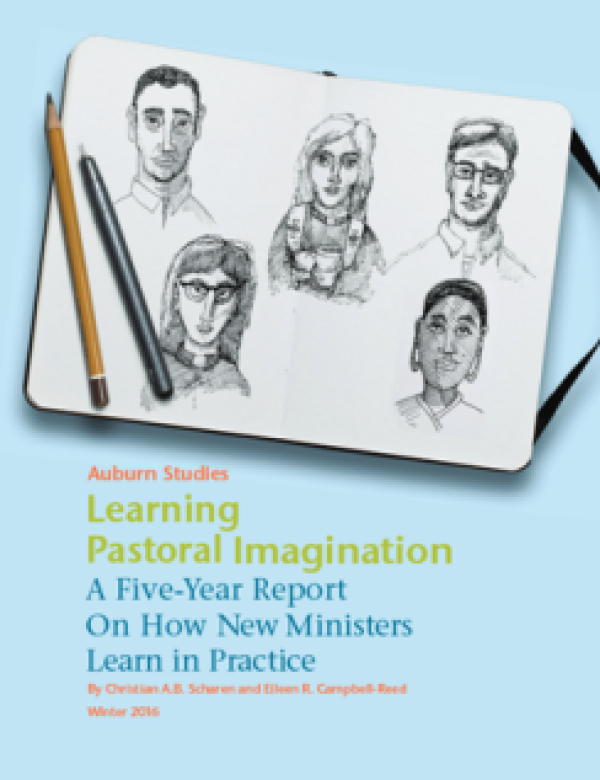
This Auburn Studies report highlights the changing features of online distance education (ODE) within theological schools. Distance education is not a new phenomenon, particularly within the broader field of higher education, and yet the “disruptive innovation” of the internet, as Clayton Christensen and others have argued, has only recently begun to change theological education.[i] While in some respects the impact of the internet is dramatic and new, many faith traditions have deep experience with the sort of mediated presence distinctive of ODE. For many world religions, the embodied presence of their founders—Moses, Jesus, Mohammad, Buddha, and others—was brief. For most of the histories of these great traditions, “not being there” has been normative. Take, for example, the story of Jesus’ post-resurrection appearance to the disciples in the Gospel of John. All the disciples were there, save Thomas, who would not believe Jesus was truly alive without “being there” to see and touch Jesus. Lucky for him, a week later Jesus appeared to Thomas as well. But note what Jesus said: “Have you believed because you have seen me? Blessed are those who have not seen and have come to believe.” This is the case for millions of believers today, whose experience of the holy is through a mediating presence, holy objects, or rituals, and perhaps, most profoundly, through scriptures understood as God’s presence, voice, or word. It is then not an unfamiliar world at all for people of faith to teach and learn at a distance, using mediated relationships to do so—even when the technology affording the connection is indeed new. While this report outlines our research findings, we also hope to offer resources for thinking in creative and hopeful ways in a time of change. The report takes stock of a generation of change in theological education driven by what is often called the “digital revolution.” We highlight three key findings: First, ODE is growing rapidly, pushing the boundaries of who typically attends theological school. Over the past decade, enrollment at member schools of The Association of Theological Schools (ATS) dropped by 11%; in the same period, online enrollment rose almost 200%. Broader cultural patterns regarding spirituality are surely at play as we see the democratizing force of the internet opening theological exploration to a much wider—and, it turns out, quite interested—audience. Given the success of ODE, many schools suddenly find themselves with too large and expensive a physical plant for the educational needs. Second, ODE student outcomes are equal to or better than those of traditional residential classes. Many critics—even now—harbor doubts that anything but students and a professor in a room together can achieve the desired educational outcomes. Yet the evidence shows this is not true. ODE provokes pedagogical innovation, shifting the focus from teacher to learner, and the power of the contexts in which the student learns. For both faculty and students, it is powerful to take seriously the “real world” context where student learning and daily work dynamically interrogate one another. Ironically, we found, while ODE takes more time and effort, remarkably few resources are currently dedicated to training and supporting faculty as they learn this new medium. Third, the integrated reality of digital life is quickly making the old divide between “traditional” and “online” classes—and hybrid courses or programs, which toggle between the two—obsolete. ODE creates an identity crisis for many schools that value highly the formative power of “being there” in classroom, chapel, and community life. Yet the question the disruption of the internet raises is “where” does education actually happen? It is clearly wherever the student lives, works, and learns, including in virtual spaces and through digitally mediated access to human and material resources.
I wrote a very thoughtful essay about a week ago on teaching social justice as a theological value. It centered on a chance meeting my spouse and I had with the CEO and Executive Director of Habitat for Humanity of Westchester, Jim Killoran. In that piece, I wanted to make a connection between social justice and faith-in-action as I witnessed in Jim’s life and work, in what Habitat’s founder Millard Fuller called the “theology of the hammer.” It drew parallels with the origins of Habitat, to the life of Jesus as carpenter/builder, to the need for all of us as human beings to create shelter and sanctuary for one another, and our responsibility as educators to engage “pedagogies of the hammer” as a theological value. It was a thought provoking essay, if I do say so myself. And then Charlottesville happened. Every lovely, poetic turn of phrase that I articulated in that piece seemed meaningless in the wake of the violence unleashed in Charlottesville, VA this past weekend. As others have noted so poignantly, those who say “this is not who we are” are woefully misguided.[1] The hatred and violence of white supremacy, white nationalism, the alt-right, the KKK and Neo-Nazis have been with us for a very long time. They are part of the fabric of our country’s history and their legacy continues to drive our policies and practices. The fact that those who espouse this hateful ideology are now emboldened to show their faces – no more hiding behind a hood or an internet persona - at this moment in history is a reflection of where we’ve come as a country. In spite of the tremendous effort of many to build a beloved community where all are afforded their God-given right of human dignity, we have fallen far short. How do we, as theological educators, teach social justice as a theological value at this particular moment in our country and our world? I’m stumped by that question, to tell you the God-honest truth. In the midst of the images of torches and swastikas, of confederate statues and flags, my mind keeps going back, strangely, to a song by Bob Marley and the Wailers, “Corner Stone,” in which he paraphrases the biblical passage, “The stone that the builders rejected has become the cornerstone.”[2] While Marley applies multiple meanings to the “builder” and the “stone”, including the lover pleading for acceptance, the central message is consistent with the biblical interpretation: that which society refuses to accept as valuable can be, in fact, the foundation upon which our most essential values are constructed. If we accept this interpretation, can social justice be understood as the theological value which becomes the cornerstone for the future we wish to build together, where the dignity and integrity of all creation – including our planet – is valued and given the opportunity to flourish? I would like to believe in that possibility. Charlottesville – as well as the mosque bombing in Minnesota, the killings of so many Black women and men at the hands of the state, and the rounding up of undocumented persons, among so many other atrocities of late – challenge my belief at its core. It is just so overwhelming; I feel it deep in my bones and I hear the same from many of my students. I shudder to think about how I will need to teach from that place as a new semester begins in just a few days from now. And yet, there’s something about the process of building - of laying a foundation, with stones and cornerstones, and seeing something emerge from the ground up - that is instructive for us in this moment. Every new structure requires time, a plan for construction and a purpose for use. In rudimentary terms, it begins with clearing and preparing a space: from ensuring the ground is suitable, to assessing the impact on the surrounding landscape, to removing old foundations. Once the new foundation is laid, then the structure is assembled: wood, steel, nail and mortar. Load bearing walls need to be accounted for; windows and doors need to be thoughtfully placed. The design needs to resonate with the intention for functionality, for how the space will be used. Those creating this new structure may not have a clear picture of exactly what it will look like, or how it will interact with the structures around it, until it is near completion. To some extent, a certain degree of faith is required that those who developed the plan have taken every possible consideration into account. Before we glorify this lovely metaphor of building upon a strong foundation, we should be reminded that it was used as a powerful call to arms over 156 years ago by Alexander H. Stevens, Vice President of the Confederate States of America, and well-noted in his “Cornerstone Speech” given in Savannah, Georgia on March 21, 1861. In this address, Stephens claimed that the foundation upon which the United States was established, including the constitution that articulates that founding, “rested upon the assumption of the equality of races. This was an error. It was a sandy foundation, and the government built upon it fell when the ‘storm came and the wind blew.’”[3] In contrast, the Confederacy was based on a wholly different premise: “Our new government is founded upon exactly the opposite idea; its foundations are laid, its corner-stone rests upon the great truth, that the negro is not equal to the white man; that slavery - subordination to the superior race - is his natural and normal condition…This, our new government, is the first, in the history of the world, based upon this great physical, philosophical, and moral truth.”[4] This is our history as a nation. These are the cornerstones that have been unearthed, these are the structures emerging from the shadows, as violent backlash against those of us who believe unequivocally that all persons are made in the image of God are laying new foundations upon which structures of human flourishing can be shaped. Among the backlash are some who want to enshrine those cornerstones and structures – including statues of this Confederacy – as idols of worship for the next generation. If we, as theological educators, envision structures of human flourishing that are established upon foundations of justice, then I think we need to get our hands dirty to clear a space for them to be built. Maybe, if we want to teach social justice as a theological value, we will first need to make time to gather in community to plan for construction and a purpose for use. Maybe we need to get out of the classroom and into the community, pick up some tools and start unearthing those cornerstones that have upheld structures – our judicial system, our corporate boardrooms and, yes, our educational institutions – that have undermined the dignity and integrity of too many for too long. Otherwise, we run the deadly risk of building new structures upon the same foundations so resoundingly applauded in Stephens’ speech a century and a half ago. The stone that the builders rejected has become the cornerstone. That which is deemed as possessing less value in our society, that which matters less to the world, becomes the foundation for new ways of being in relation. This is the precisely the gift of the Gospel message, of Jesus’ incarnation from a place where nothing good comes. We are called to discern, for ourselves and with our students in the aftermath of Charlottesville, what stones we will reject and which will become the theological basis for our shared future. [1] David Potter, “White Supremacy vs. the Gospel in Charlottesville,” Sojourners, August 15, 2017. [2] Psalm 118:22; Matthew 21:42; Acts 4:11; 1 Peter 2:7 [3] (Link No Longer Available) [4] Ibid.
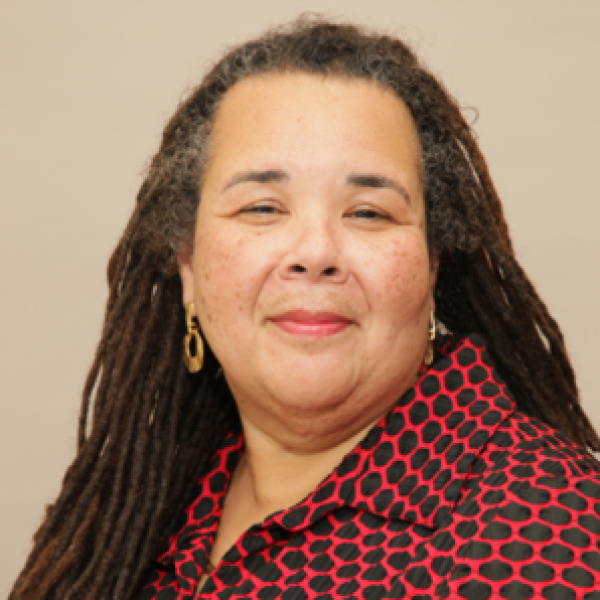
In a low and pensive voice, the young woman student posed her question to the all-women course. Her question sent a gentle shockwave through the room. After some far ranging discussion, my response to her question was this – “Black women all over the world make passionate love all night long, and then in the morning, go to their jobs looking fabulous!” I admit that I had never previously had this kind discussion in a classroom, but I was intrigued. I was, with this conversation, in uncharted territory in my own classroom discussion – and loving every moment of it! There are reasons, good reasons, why discussion is not a preferable learning activity in higher education. Teachers know from experience that discussion leans toward the will and want of the student. Discussions can and do “get out of hand.” Discussions can move into territory not on the syllabus or beyond the scope of expertise of the teacher. Methods to control and orchestrate classroom conversation are in all of our teaching repertoires. We must resist thinking of the moments of questions after a lecture as “discussion.” A posed question and a response is not a conversation. Q & A is not discussion. As a professor in a seminary, it has been apparent to me for many years that students come to class with “churchy” agendas and “churchified” discussions. Students are well aware of the standards of “acceptable” discussions. Students also have the habit of making a study of the teacher as much or more than they study the topic at-hand. In the study of the teacher, the student makes a concerted effort to ask questions and provide answers which are a match to the sensitivities of the teacher. In these instances, the lesson of the leaner has more to do with mimicking the masks and personas of the teacher than exposing and plumbing her own curiosity. Some teachers enjoy this gaslighting. Given the pitfalls and dangerous possibilities, I still work hard to engineer conversations in my classrooms which will be life changing, thought provoking, and courage summoning. Wielding the transformative power of deep conversation is my cautious aim. I want to engineer conversations which evoke astonishment and amazement. I want my students to experience, as I have experienced, conversations which heal, convict, and rescue. I yearn to choreograph conversations which allow students to ask the questions which they are genuinely wondering about, rather than the question they know is acceptable, palatable, and often benign. When we get it right, discussion can bring a magical kind of encounter resulting in insight, revelation, new perspective. The moments when students listen to and for each other as mutually shared engagement on tough issues is the moment of shared truth and ah-hah! The shared experience, as if something important is being cracked-opened as if new light is entering in, as if the world expanded a tiny bit, is the result of deep, risky discussion. For two courses, over the last eighteen years, I have had the good fortune of registration exclusively by women. I had not made a Mary Daly rule for registration, so in both instances, I was surprised and delighted. Each time I have taught an all-women course, I have wanted the exclusive presence of women to be more than a novel classroom experience. I wanted the conversation to be substantively different. I wanted to create space for a conversation by women for women about women. In both courses, once I realized registration was exclusively women, I made changes in the syllabus. I rethought the learning activities and created exercises which considered and honored the all-women group. I changed the readings of the course to exclusively readings of women authors. I shifted the cornerstone questions of the course to take into account issues of female identity, femininity, misogyny, and womanist approaches to self, community, and power. The discussion which evoked my comment about the love making habits of Black woman around the world happened in one of the all women courses. Our discussion about gender and womanhood was provoked by a new learning activity. I had instructed each woman to create a timeline of her own hair. It was a straightforward and simple exercise that uncorked a mammoth discussion. For those women whose hair had been a living symbol of maturity, personal growth, and participation in beauty culture – this assignment was a guide for recollection, reminiscing, and reflection. For those women whose hair had been a place of ongoing authentication of imposed inferiority, a constant tethering to a beauty standard which is unyielding in abuse, a site of verification for worthlessness and ugliness, this assignment was fraught with danger, ire, and tales of unhealed wounds. The political is personal and the personal is political if we can find ways to hold this viscous phenomenon for discussion. Discussing the body is a discussion of creating ourselves, including our politics, and has the potential to teach us how to summon moral courage. A discussion about our hair, for women, is potentially a discussion which moves into the arena of authentic reflection on sexism, racism, classism – the politic of superiority and inferiority which permeates the society. Since the body is the site of gender politics, racial politics, class politics, and the politics of sexual orientation - it is precisely the body which should be discussed. I am not saying other professors need to ask students to create a hair timeline. I am suggesting that the tool of discussion in our classrooms warrants our deepest attention if we are to move toward the conversations which are politically necessary for social change and healing. In so doing, I want to suggest that conversations among certain particularities are valuable and necessary, yet underutilized in classroom strategies. There is great merit in discussions on race and racism among only-white students. There is tremendous benefit for all-male groups to discuss issues of sexism and misogyny. I am a witness that the all-women conversation in two courses was life-giving.
What are grades doing in a homiletics classroom? This article traces the function of grades through the broader history of the educational system in the United States and then makes suggestions for how grades can be used more effectively in teaching preaching. Beginning in the nineteenth century, teachers used grades to rank and motivate students, as well as communicate across institutions. With the more recent assessment movement, educators have conceptualized grading as the larger process of evaluating the success of learning objectives. The commission on accreditation for the Association of Theological Schools does not view grades as part of its assessment, but it evaluates theological schools on whether they achieve intended learning outcomes. Theological educators need to be able to evaluate whether their teaching fulfills their schools' mission and learning objectives. For homiletics, the author measures learning through pre- and post-preaching feedback and incorporates professor- and student-crafted rubrics.
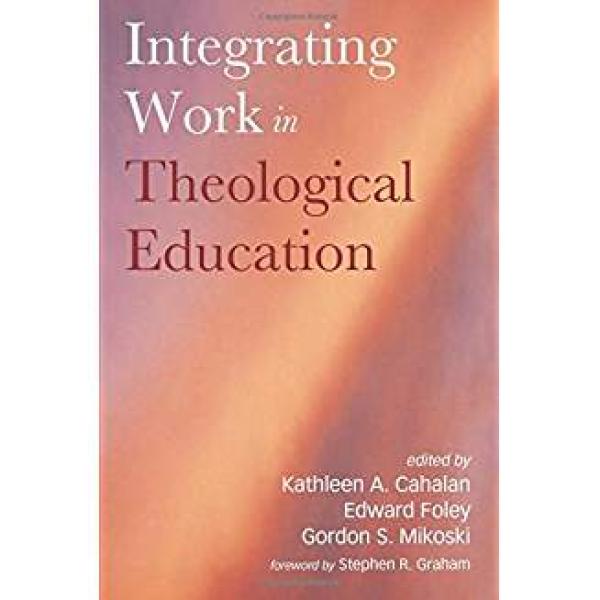
Click Here for Book Review If only we could do a better job of helping students at "connecting the dots," theological educators commonly lament. Integration, often proposed as a solution to the woes of professional education for ministry, would help students integrate knowledge, skills, spirituality, and integrity. When these remain disconnected, incompetence ensues, and the cost runs high for churches, denominations, and ministers themselves. However, we fail in thinking that integrating work is for students alone. It is a multifaceted, constructive process of learning that is contextual, reflective, and dialogical. It aims toward important ends--competent leaders who can guide Christian communities today. It entails rhythms, not stages, and dynamic movement, including disintegration. Integrating work is learning in motion, across domains, and among and between persons. It is social and communal, born of a life of learning together for faculty, staff, administrators and students. It is work that bridges the long-standing gaps between school, ministry practice, and life. It's a verb, not a noun. Here a diverse group of theological educators, through descriptive case studies, theological reflection, and theory building, offer a distinctive contribution to understanding integrating work and how best to achieve it across three domains: in community, curriculums, and courses. (From the Publisher)
One of the most critical skills theological school deans need, arguably now more than ever before, is that of problem-solving. The challenges facing theological schools continue to become more technologically complex, socially entangled, costly, and multi-faceted. It is evident that most deans are not just dealing with programmatic, administrative, and technological problems, they are dealing with wicked problems. The experience can feel like trying to unravel an endless tangled cord. Horst Rittel, one of the first to research wicked problems, references ten characteristics that describe this sort of complicated challenge: Wicked problems have no definitive formulation. Therefore, it becomes difficult for a dean to define the problem that needs to be addressed. This is a significant challenge given the tendency for people to want to know the one answer and simplest solution to a complex problem. With complex problems, it's never about just one thing. Wicked problems have no stopping rule or criteria upon which to determine "solving." Unlike challenges with clearly defined outcomes and measures of completion, wicked problems are persistent and tend to be moving targets. The answer to "When will we ever solve this problem?" is "Never." Solutions to wicked problems are not true or false; they can only be good or bad. When deans tackle wicked problems the best approach is to choose the best strategy at the time. Arguing about what "should" or "should not" be is pointless. There is no complete list of applicable "moves" for a solution to a wicked problem. Wicked problems require deans to be imaginative, fleet, flexible, and innovative. There is always more than one explanation for a wicked problem, with the appropriateness of the explanation depending on the individual perspective of the perceiver. Hence, deans will constantly deal with the impasse of multiple interpretations. The President will see it one way, the Faculty another, Trustees in their own way, donors and students differently altogether. Where one sits in the system determines one's perspective. It should come as no surprise, then, that no one will see the problem in the same way the dean does. This requires a multi-disciplinary approach to most wicked problems, as no singular perspective suffices. Every wicked problem is a symptom of another problem. Like a knotted bunch of cords, pulling on one end of the problem merely creates tension and tightens the knot on the other end. Deans need to be systems thinkers, understanding the interconnected complexity of the enterprise. No solution of a wicked problem has a definitive, scientific test. When proposing strategies for addressing complex problems deans often face the call to give evidence or proof that the action will be successful. That's just not possible with wicked problems. They require the courage to risk and the ability to adapt along the way. Every wicked problem is unique. The problems facing theological schools are endemic to all schools merely by virtue that they are systems of a type. But it remains true that each dean will have to solve their own problems in their own context. Finally, to paraphrase Rittel, deans attempting to solve a wicked problem must be fully responsible for their actions. That's the burden of leadership. Few, if any, in the organization will take responsibility for tackling wicked problems. That comes with the job of being the dean. While not all problems a dean faces are wicked, those that are will be the most demanding. Even difficult problems can have a solution, and most deans can get adept at tackling them. But wicked problems will be the most challenging to educational leaders due to the indeterminate scope and scale required to address them. Wicked problems can't be fixed; they'll be the bane of every successive dean and President in office. Questions: What are the wicked problems you face in your school? Who are you consulting with on addressing the wicked problems? Are you aware of your biases which may hinder you from seeing alternative and imaginative approaches? Are you alert to unintended consequences as you apply strategies to wicked problems? In what ways are you defining and interpreting the wicked problems to the various audiences in your school?
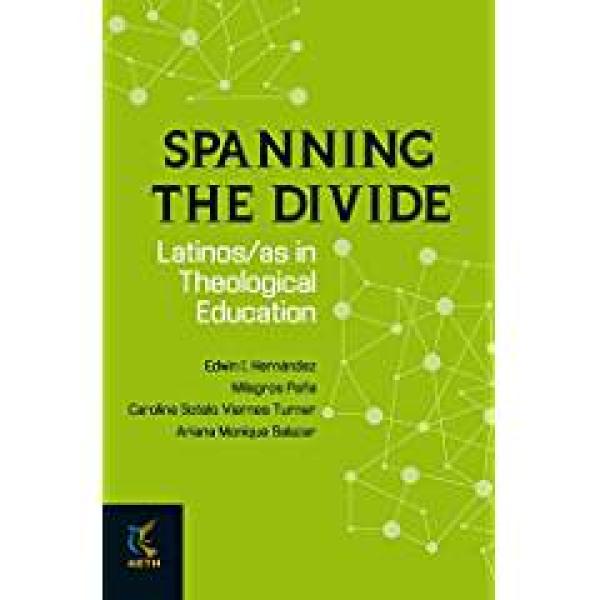
Click Here for Book Review This book provides a detailed look at the current state of Latino/a theological education in the United States. This includes consideration of the career development and opinions of Latinos/as in seminary education, as well attention to other important modes of Latino/a theological education, like non-degree programs and Hispanic-serving organizations like the HTI and HSP. Another goal of this project was to make recommendations for ways in which schools of theology can do a better job preparing the next generation of Latino/a religious leaders to serve as bridge builders for the future. Thus, we paid special attention to how hospitable theological educational institus are to Hispanics. This book also offers recommendations on improving Latino/a recruitment, revamping the curriculum and Hispanic ministry education, tending better to the sense of community on campuses, and so much more. (From the Publisher)
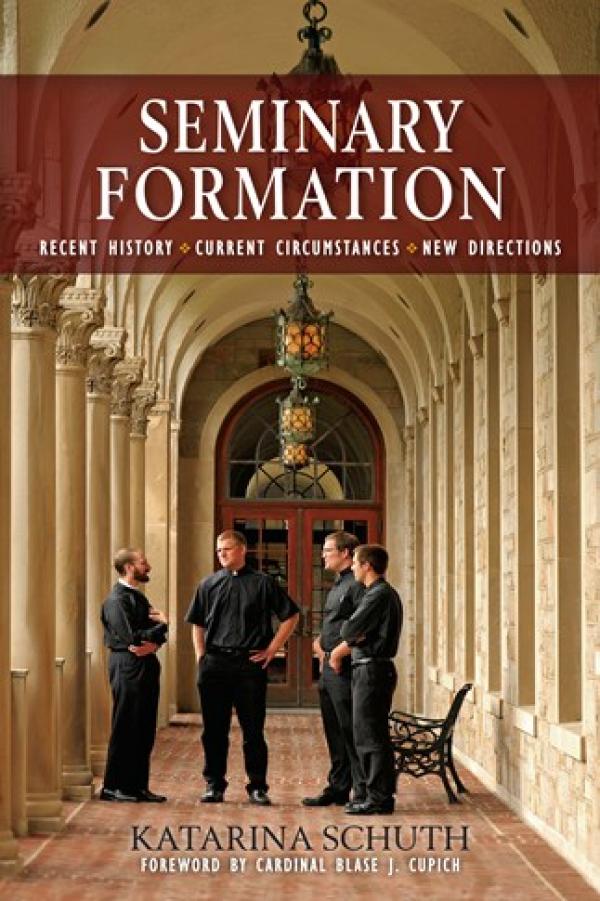
The past thirty years have witnessed tremendous societal and ecclesial changes that continue to inform ministry education in the 21st century. In Seminary Formation, Katarina Schuth, OSF, examines the many aspects of theologate-level schools including their structures and missions, organization and leadership, student enrollment, backgrounds of both seminarians and lay students, and the evolution and development of degree programs, including human and spiritual, intellectual and pastoral formation. Seminary Formation also helpfully includes substantial commentaries on Schuth's research by Ronald Rolheiser, Thomas Walters, Leon M. Hutton, Barbara Reid, and Peter Vaccari. An exploration of the changes in seminaries and schools of theology, with statistical analysis, from 1985 to the present, Seminary Formation anticipates the challenges ahead and considers new directions for the future. (From the Publisher)