Resources
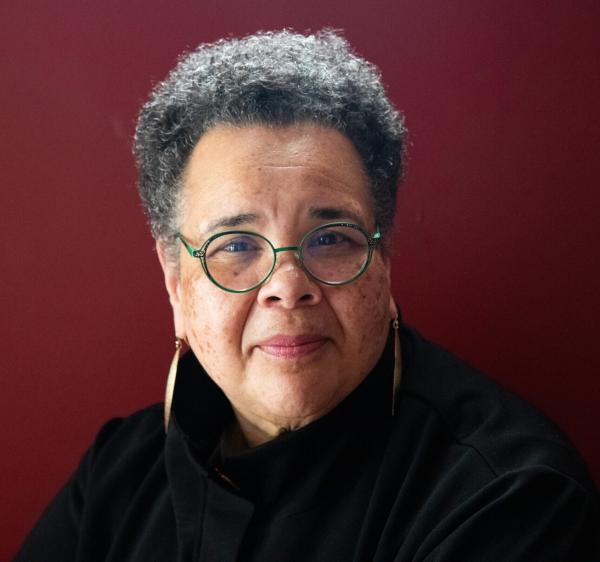
Neutrality is a lovely fiction.There is no such thing as a teacher who enters a classroom empty of convictions, untouched by history, or free from assumptions about the world. We arrive carrying beliefs—personal beliefs, communal beliefs, inherited beliefs, hard-won beliefs. Some have been examined with honesty and care. Others are so deeply woven into us that we mistake them for common sense.Our beliefs are baked in. Sown in. Poured into us long before we stand at the front of a classroom. They become the hidden rebar beneath our teaching, reinforcing the moral architecture of our decisions, our judgments, our dreams, and our expectations for ourselves and for our students.Teaching is never merely the transfer of information. Teaching is the revelation of a way of seeing the world.Whether we acknowledge them or not, our beliefs shape every decision we make. What do we believe about human beings? Are people fundamentally worthy? Capable of growth? Deserving of grace? What do we believe about failure? About power? About justice? About intelligence? About the purpose of our lives together?These are not abstract philosophical questions reserved for late-night conversations or higher education classrooms. They sit beside us while we write syllabi. They whisper while we grade papers. They accompany every conversation with a struggling student and every faculty meeting.Our beliefs teach long before our lesson plans do.Sometimes the greatest challenge is not that we lack beliefs but that we live contradictions. We profess one set of values while practicing another. We announce that every student can learn, yet quietly decide that some are beyond our reach. We proclaim that mistakes are opportunities for growth while responding to errors with disappointment or dismissal.To be human is to live with inconsistency. None of us embodies our deepest values perfectly. Yet the work of teaching asks us to seek greater integrity—to bring our practices into closer conversation with our convictions. Students notice the distance between what we say and how we live. They also notice when we are striving toward wholeness.Our deepest beliefs rarely begin with us. They are handed to us around family tables, in neighborhoods, in houses of worship, in schools, and in communities that loved us as best they knew how. We inherit ways of understanding the world long before we have language to evaluate them.My father gave me one such inheritance.Dad believed in redemption.Not simply second chances. He believed in second, third, fourth, and fifth chances. He believed that broken things deserved another opportunity to become useful again. He believed in repair. In restoration. In refusing to abandon what others had given up on.My father spent his career as a school psychologist in the Philadelphia public school system. He was also a reading specialist and, on weekends, a piano teacher. Early in his career, colleagues discovered that he possessed an unusual gift: he could recognize when children had been misjudged.Part of a school psychologist's responsibility is to evaluate students and recommend educational placement. Too often, particularly in under-resourced communities, marginalized children were incorrectly labeled and assigned to special education programs. Those labels carried consequences that stretched far beyond the classroom. A mistaken diagnosis could narrow opportunities, diminish expectations, and hasten a child's journey toward exclusion rather than possibility.When families appealed those decisions, my father often conducted the reevaluations. His careful work corrected many mistaken placements. His expertise restored educational opportunities to children who had been underestimated. Long before people regularly spoke about systemic inequities or educational justice, my father quietly practiced both.What I remember most is not his expertise.I never heard him criticize the colleagues whose judgments he corrected. I never heard him delight in proving someone wrong. He simply believed that if a mistake had been made, then his responsibility was to help make it right.That was his way in schools.It was also his way at home.Our family owned a ceramic cookie jar shaped like a large apple, painted in bright reds, greens, and yellows. The jar sits on a shelf in my television room today. The lid had a tiny stem for a handle. For two small children with little hands and developing coordination, that tiny stem was an impossible design. My brother and I dropped that lid over and over again. Sometimes it landed safely. Often it chipped. Occasionally it shattered into several pieces.Over the years, I suspect we dropped that lid twenty times.Every single time, my father gathered the fragments.Every single time, he glued it back together.We were never scolded. Never shamed. Never called careless or clumsy. The broken lid was never treated as evidence that something was wrong with us. It simply became another opportunity to practice restoration.More than sixty years later, that repaired lid still rests on the cookie jar, bearing the visible evidence of its history. Veins of glue run across its surface like the rings of an old tree. Every repair tells a story. Every scar witnesses to someone who believed that brokenness did not have to be the end of the story.That cookie jar reminds me that my father believed repair was the holy work of teaching. He believed that preserving was better than discarding. That correcting was better than condemning. That restoration was more faithful than replacement. He trusted that what appeared broken might still hold beauty, purpose, and possibility. Those beliefs shaped his life. They shape my teaching.Teaching asks for our whole selves. We do not leave our beliefs outside the classroom door. They accompany every lecture, every assignment, every difficult conversation, every act of encouragement, and every moment when we decide whether to see a student through the lens of deficiency or possibility.The invitation is not to become perfectly consistent. The invitation is to become more conscious.When we courageously examine what we believe, we become more capable of teaching with wisdom, compassion, and integrity. Our students deserve more than our expertise. They deserve teachers whose beliefs have been lovingly questioned, thoughtfully refined, and generously lived.Perhaps the deepest work of teaching is not simply asking, "What will I teach today?"Perhaps the deeper question is, "What do my students learn about humanity because they have encountered me?"Reflection QuestionsWhat beliefs about human worth quietly shape the way you prepare for class, respond to students, and evaluate learning?Who first taught you what it means to repair rather than discard? How does that lesson appear—or fail to appear—in your teaching?Think about a student who challenged you. What assumptions about that student were you carrying, and what new possibilities became visible when those assumptions were questioned?Where do your classroom practices faithfully reflect your deepest values? Where is there a gap between what you profess and what you practice?If your students remembered only one thing about the way you saw them, what would you hope it would be? What evidence do you offer them of that hope?Imagine your teaching as an heirloom passed to the next generation. What convictions, habits, and stories would you want future teachers to inherit from you?If your classroom became a place where redemption was practiced as intentionally as knowledge was shared, what would change—for your students, for your colleagues, and for yourself?
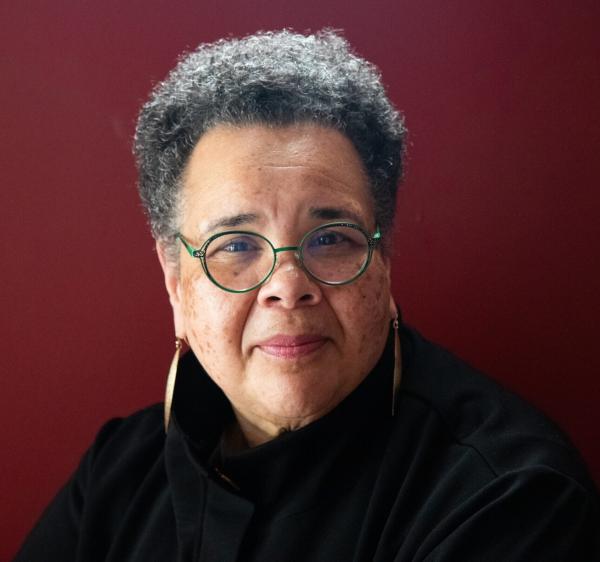
I was in elementary school—second or third grade—at George Washington Carver Elementary School in Philadelphia. The school served kindergarten through sixth grade, about five hundred students taught by roughly twenty teachers. Through the eyes of a seven-year-old, it felt bright, safe, and full of possibility. I loved school. I belonged there.From the first day, the teachers lined us up to walk through the school hallways in alphabetical order. Because of that, Angela White and I, Nancy Westfield, often walked side by side. Angela was quiet. She rarely smiled. She kept mostly to herself and took her schoolwork seriously.Her mother, Mrs. White, worked at the school as a non-teaching assistant. She supervised hallways, lunch periods, recess, assemblies—always somewhere nearby, always paying attention. Mrs. White carried herself with a kindness that settled people. Mrs. White greeted students warmly and helped make the school feel like a place where children mattered.Assembly days were a big deal. Once a month, the entire school gathered in the auditorium. Sometimes there were musical performances or class presentations. Sometimes police officers or firefighters visited with lessons about safety. In the spring, awards added extra excitement. Whatever the program, assembly days broke routine and filled the building with anticipation.One Tuesday morning, our teacher announced it was time to go to assembly.We lined up, barely able to contain ourselves, and marched to the auditorium. Every class had assigned seats. The youngest students sat closest to the stage; older students filled the rows behind us.I was sitting on the aisle. Angela sat beside me. The auditorium buzzed with hundreds of conversations. Children laughed, whispered, called out to friends. It was noisy in the way only children can be noisy—joyfully and unapologetically. The auditorium seating was old wooden theater seats. When you stood up, the bottom flipped upward.Angela started shifting in her seat. She placed her hands behind her back and continued squirming. Then it happened.As Angela leaned backward, the seat opened slightly. Her hands slipped into the gap between the seat and the backrest. When she leaned forward again, the seat shut. Both of her hands were trapped and crushed by the scissor action of the wooden seat. Angela cried out. When she tried to stand, the pressure became worse. Her cry grew louder, sharp with pain and panic.I remember searching for our teacher.Instead, I saw Mrs. White.She was across the auditorium.Hundreds of children filled that room. Yet somehow Mrs. White heard one voice.Without hesitation, she ran toward us. In one swift motion she reached across me, lifted Angela free, released her hands as the seat flipped upward, and carried her toward the nurse's office.Nearly sixty years later, I still remember that moment.In a room overflowing with voices, how did Mrs. White hear that one cry? How did she know instantly it was Angela?As educators of adults, we may hesitate to compare teaching with parenting—and we should. Adult learners bring agency, experience, expertise, and self-determination that fundamentally shape the educational relationship. There is something worth noticing in Mrs. White's knowing and response. She recognized Angela's voice because she knew it. And because she was listening for it. That distinction matters.Adult education unfolds in noisy spaces. Sometimes the noise is literal. More often it is the noise of work schedules, caregiving responsibilities, financial pressures, institutional demands, digital distractions, and the thousand daily realities adult learners carry into our classrooms.Adult learners do not always announce their needs directly.A missing assignment may be a sign of exhaustion.Silence may signal uncertainty, exclusion, resistance, or deep reflection.A brief email may contain far more urgency than its few words suggest.Listening for learners requires more than hearing words. It requires listening for meaning, context, history, and possibility.One challenge of teaching adults is that our time together is often brief. A fourteen-week semester can feel like an extended introduction. Just when we begin to understand who our learners are, the course ends. Yet over time, some learners become more audible to us. We begin to recognize their rhythms. We learn their questions, their hesitations, their brilliance, and the ways they enter a conversation. In crowded classrooms and online discussion boards, their voices become recognizable. That kind of attentiveness does not happen by accident. It is a practice.What distinguished Mrs. White was not simply that she heard her daughter. Plenty of people heard Angela’s painful cry. Mrs. White was listening for Angela. There is power in that kind of listening. It refuses distraction. It insists that people matter enough to be noticed.For educators, the question is not whether our learners are speaking. The question is whether we have trained our ears to hear them. Listening for learners may mean creating multiple ways for students to communicate. It may mean paying attention to patterns of participation and absence. It may mean noticing subtle shifts in tone, energy, or engagement. It certainly means cultivating classrooms where learners know their experiences are welcomed and their voices carry weight.Attentive listening is not passive.It is disciplined.It is an act of respect.It is fodder for dignity.Mrs. White's attuned ear was not merely about recognition. It was about readiness. When the moment came, she was prepared to respond. She came running! Adult educators are invited into a similar practice—not as parents, but as attentive companions in learning. We are called to listen deeply, respond humanely, and honor the complex lives our learners bring with them every time they enter our classrooms.Thank you Mrs. White. Reflection QuestionsWhose voice reaches you most easily in your classroom, and whose voice might be getting lost in the crowd? What assumptions shape your listening?Imagine your course through the eyes of a learner carrying invisible burdens. What signals of struggle, strength, resistance, or resilience might you be overlooking?When have you mistaken silence for disengagement? What other stories might silence be trying to tell?If your learners were describing the culture of your classroom, what would they say about who gets heard, who gets affirmed, and who must work hardest to be noticed?What would it look like to teach this term as someone intentionally "listening for" every learner? What specific practices would need to change for that commitment to become visible?
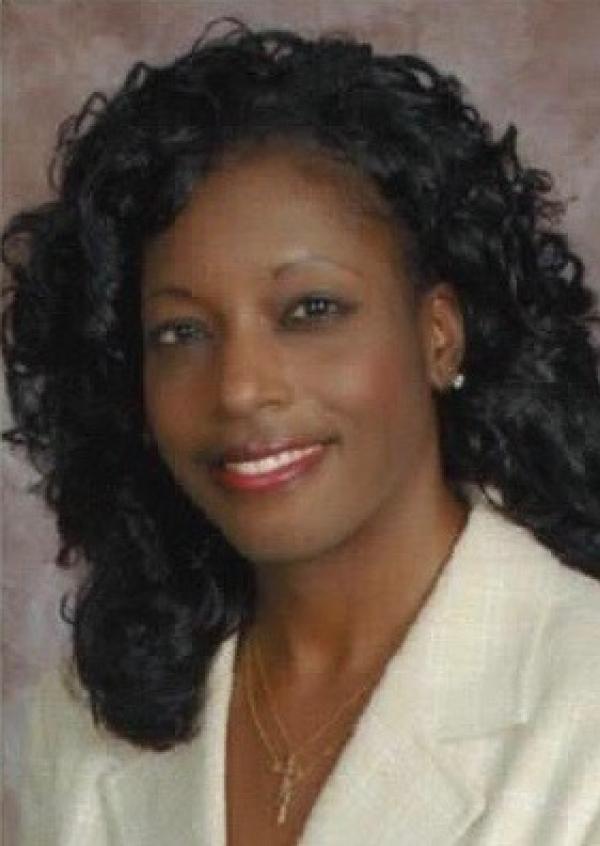
Teaching-learning is often a perilous process. Occasionally, in the midst of delivering carefully structured lectures, facilitating balanced yet critically engaging discussions, or working with students one-on-one, life intervenes in a dramatic and direct fashion. Three years ago, I was teaching a summer course on Methodist church history for Master of Divinity students pursuing ordination at Perkins School of Theology at Southern Methodist University. Right after we began the section on Black Methodism, Dylann Roof walked into a Bible study class at Emanuel African Methodist Episcopal Church in Charleston, South Carolina and killed nine people, including the pastor. The world was rife with shock and grief. We, ourselves church leaders, Bible study teachers, and ministerial workers, were actively engaged in crafting understandings of ecclesiastical history in order to refine vocational skills. Students (and instructor) processed painful emotions derived from a current event that hit close to home. Empathy with the victims and their families mingled with rage, disbelief, and ultimately, compassion for the tormented assailant. Socrates reportedly once said, “I cannot teach anybody anything. I can only make them think.” For me, as instructor, a pedagogical opportunity had arisen. I found myself addressing a contemporary demonstration of the societal and cultural terror that necessitated the original founding of Black Methodism while teaching a section on Black Methodism in a Methodist history class. In that moment, critical analysis of the broader sweep of church history and its convergence within the present was essential. It was important to help students utilize the historical information they were acquiring in light of current events. Balancing both sets of data, the historical record and the contemporary event, opened the way for collective inquiry, sharing, and judging right there in the classroom. This experience reveals a wider view of pedagogical method. By allowing students to ask and respond to critical questions, underlying assumptions are revealed. Students are then invited to further examine the nature of their assumptions. Have key events and concepts been adequately accessed? Does other relevant information exist that may shed light on these assessments? What are the logical implications of this view? Are there alternatives? If so, are they just as reasonable? Thus, one of the ways student-learners develop critical thinking skills is through the facilitation of teacher-learners who ask questions and respond to answers with more questions. While acknowledging the contributions of students equitably (and encouraging all to participate) facilitators move the discussion forward by engaging questions that maintain focus on the stated goals of the course. This includes summarizing the status of reflections, critical points, and remaining questions. However, it is also crucial to keep in mind that students may harbor feelings of trauma and stress sparked by the evaluation of historical knowledge and associated current events. Creating a classroom that nurtures the student voice through affirmation of shared experience fosters safe space. The use of critical thinking in analyzing history, which is oftentimes quite troubling, engenders the technique of practical engagement with personal and social traumas. And, sensitivity to cultural diversity, religious difference, and doctrinal belief is paramount in cultivating a healing environment. This includes the overt recognition and appreciation of differing and conflicting opinions. Paying attention to the energy of the class, body language of students, and other contextual signs will determine choice of direction that a teacher-learner may take, even while encouraging rational analysis of stated views. Taking a synergistic approach, that is, dialectical interaction among teacher-learners and student-learners, therefore allows room for reasoned critique of hypothetical assumptions as well as the emotional processing of potentially painful experiences. Effective execution requires heightened attention to the needs of students and patience with the flow of communication. This can be challenging, particularly when unexpected realities shatter benignly anticipated teaching moments carefully structured by course design. Instructors must, therefore, be gentle with themselves and practice flexibility in meeting the demands of challenging and/or controversial teaching moments. Although teaching does involve the transmission of knowledge, the ultimate goal of teaching lies in the cultivation of tools that allow students effective engagement in critical discernment of the world, leading to reasonably based decision making. In our Methodist History course, the shootings by a crazed supremacist at the historic Mother Emmanuel Church were a sobering occasion that offered the chance for systemic appraisal of institutional structures in church and society that continue to perpetuate racial violence. This unfortunate and deeply traumatic event provided context to evaluate broadly how various interlocking systems lead to experiential sufferings that are typically passed down generationally. As we grappled with the pain enkindled by this senseless act (which will reverberate in the annals of traumatic historical events) insightful theological and practical observations, deduced by critical analysis, were honed. Like the rest of the world, our class did not emerge emotionally unscathed by facing the horrors of history alive and well in today’s world that mournful day. We did, however, incorporate pedagogical tools, that, with repeated and improved use, are designed to foster growth and empowerment in teaching, learning, and living as responsible citizens.
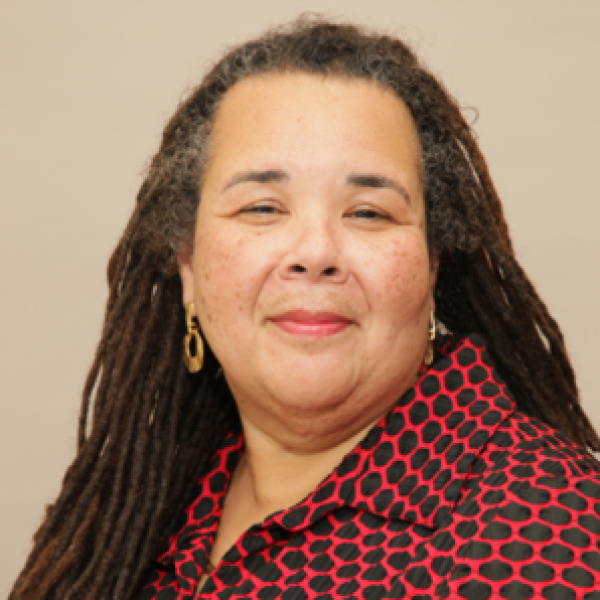
In a low and pensive voice, the young woman student posed her question to the all-women course. Her question sent a gentle shockwave through the room. After some far ranging discussion, my response to her question was this – “Black women all over the world make passionate love all night long, and then in the morning, go to their jobs looking fabulous!” I admit that I had never previously had this kind discussion in a classroom, but I was intrigued. I was, with this conversation, in uncharted territory in my own classroom discussion – and loving every moment of it! There are reasons, good reasons, why discussion is not a preferable learning activity in higher education. Teachers know from experience that discussion leans toward the will and want of the student. Discussions can and do “get out of hand.” Discussions can move into territory not on the syllabus or beyond the scope of expertise of the teacher. Methods to control and orchestrate classroom conversation are in all of our teaching repertoires. We must resist thinking of the moments of questions after a lecture as “discussion.” A posed question and a response is not a conversation. Q & A is not discussion. As a professor in a seminary, it has been apparent to me for many years that students come to class with “churchy” agendas and “churchified” discussions. Students are well aware of the standards of “acceptable” discussions. Students also have the habit of making a study of the teacher as much or more than they study the topic at-hand. In the study of the teacher, the student makes a concerted effort to ask questions and provide answers which are a match to the sensitivities of the teacher. In these instances, the lesson of the leaner has more to do with mimicking the masks and personas of the teacher than exposing and plumbing her own curiosity. Some teachers enjoy this gaslighting. Given the pitfalls and dangerous possibilities, I still work hard to engineer conversations in my classrooms which will be life changing, thought provoking, and courage summoning. Wielding the transformative power of deep conversation is my cautious aim. I want to engineer conversations which evoke astonishment and amazement. I want my students to experience, as I have experienced, conversations which heal, convict, and rescue. I yearn to choreograph conversations which allow students to ask the questions which they are genuinely wondering about, rather than the question they know is acceptable, palatable, and often benign. When we get it right, discussion can bring a magical kind of encounter resulting in insight, revelation, new perspective. The moments when students listen to and for each other as mutually shared engagement on tough issues is the moment of shared truth and ah-hah! The shared experience, as if something important is being cracked-opened as if new light is entering in, as if the world expanded a tiny bit, is the result of deep, risky discussion. For two courses, over the last eighteen years, I have had the good fortune of registration exclusively by women. I had not made a Mary Daly rule for registration, so in both instances, I was surprised and delighted. Each time I have taught an all-women course, I have wanted the exclusive presence of women to be more than a novel classroom experience. I wanted the conversation to be substantively different. I wanted to create space for a conversation by women for women about women. In both courses, once I realized registration was exclusively women, I made changes in the syllabus. I rethought the learning activities and created exercises which considered and honored the all-women group. I changed the readings of the course to exclusively readings of women authors. I shifted the cornerstone questions of the course to take into account issues of female identity, femininity, misogyny, and womanist approaches to self, community, and power. The discussion which evoked my comment about the love making habits of Black woman around the world happened in one of the all women courses. Our discussion about gender and womanhood was provoked by a new learning activity. I had instructed each woman to create a timeline of her own hair. It was a straightforward and simple exercise that uncorked a mammoth discussion. For those women whose hair had been a living symbol of maturity, personal growth, and participation in beauty culture – this assignment was a guide for recollection, reminiscing, and reflection. For those women whose hair had been a place of ongoing authentication of imposed inferiority, a constant tethering to a beauty standard which is unyielding in abuse, a site of verification for worthlessness and ugliness, this assignment was fraught with danger, ire, and tales of unhealed wounds. The political is personal and the personal is political if we can find ways to hold this viscous phenomenon for discussion. Discussing the body is a discussion of creating ourselves, including our politics, and has the potential to teach us how to summon moral courage. A discussion about our hair, for women, is potentially a discussion which moves into the arena of authentic reflection on sexism, racism, classism – the politic of superiority and inferiority which permeates the society. Since the body is the site of gender politics, racial politics, class politics, and the politics of sexual orientation - it is precisely the body which should be discussed. I am not saying other professors need to ask students to create a hair timeline. I am suggesting that the tool of discussion in our classrooms warrants our deepest attention if we are to move toward the conversations which are politically necessary for social change and healing. In so doing, I want to suggest that conversations among certain particularities are valuable and necessary, yet underutilized in classroom strategies. There is great merit in discussions on race and racism among only-white students. There is tremendous benefit for all-male groups to discuss issues of sexism and misogyny. I am a witness that the all-women conversation in two courses was life-giving.
This is the fourth and last installment of a series of posts on the theme of “teaching theory without theory talk” in an introductory course on Islam. To review, I have explored ways in which one might present to students in an introductory course important theoretical arguments (e.g., complicating binaries like tradition/modernity or religion/secular; appreciating the intimacy of discourse, power, and material conditions; interrogating the legacy of colonial modernity in the formation of contemporary categories of life) that are by now commonplace in the study of religion. How might one advance such conceptual tasks without burying students in the often intimidating and prohibitive protocols and operations of theoretical discourse? In the last three posts, I shared my experience wrestling with this challenge at different moments in an introductory Islam course. In this post, I want to take a step back. Rather than reflecting on teaching theory through teaching Islam, I wish to think through some of the theoretical assumptions that often sustain the teaching of Islam within the study of religion. More specifically, I wish to ponder aloud a certain discomfort I have often experienced on the first day of a course, especially the introductory Islam course. On day one, as is common practice among religion scholars, I try explaining to students what the study of religion is and how it differs from theological studies. This usually involves making a list of contrastive attributes. The study of religion (and Islam) is historical, non-confessional, non-normative, and analytical as opposed to the normative confessional study of religion as an object of faith. This sentiment is usefully captured in the formula of drawing the contrast between studying religion and studying about religion. There is obviously much merit in these explanatory gestures. One would not want the academic classroom to become a space for resolving competing truth claims or of passing certificates of normativity and heresy. However, there is nonetheless an underlying secularity at work in this exercise that I find not only conceptually troubling but also a potential roadblock to teaching Islam. To begin with, the act of contrasting the historical, academic, and non-confessional study of religion with the allegedly confessional character of theological studies risks reducing the latter to a caricatured representation. Surely, despite their normative preoccupations, seminaries and madrasas also often engage in analytically sharp and historically informed scholarship, even if their logics of history and critical thinking might differ. Making a conscious and concerted effort to distinguish religion studies from theological studies might have the unintended effect of smugly suggesting the superiority of the former over the latter. “We are cooler than those people who are unable to separate personal faith from scholarly inquiry.” Even if not intended as such, it is hard to imagine this not being among the implicit messages communicated by the assertion of the religion/theological studies dichotomy. Making such a contrast also embraces and replicates the secular/religious binary, which as many scholars have argued, is a very problematic binary. “We the critical historians of religion will undertake for the next fourteen weeks the secular study and inquiry of this religion and these religious subjects.” That is the upshot of the eager disclaimer that the study of religion is not theological/seminary studies. There is an underlying nod to the virtues of secularity at the heart of the promise of historicizing religion. This secular gesture does bring the benefits of absolving a course on Islam from the sins of establishing orthodoxy, encouraging piety, or of promoting confessional bias. But, it also carries certain limitations that are important to acknowledge and engage if not resolve. Let me highlight just one such limitation. The positioning of an introductory course as a non-confessional (read secular) inquiry into Islam can hamper the effectiveness of discussions on the affective and phenomenological aspects of a religion. An important moment in the introductory Islam course that speaks to this point is that of the revelation of Islam to Muhammad. This is a powerful moment. It combines awe, terror, anticipation, physical pain, and marks a permanent cleavage in time and history. But the history of religion approach deflates the power of this moment. Having taken their position as detached (even if sympathetic) observers of a tradition, students are unburdened from the weight of entangling their beings with the experiential registers of the religion. They are absolved of feeling, perhaps even suffering, the mixture of perplexity and wonder that suffuses and accompanies moments like Muhammad's revelation. They might sympathize with such moments or be fascinated by them, but the thick crust of secular historicism makes even the attempt at inhabiting the experience of such moments almost impossible. My point, or perhaps more accurately, my attempt at articulating a less than fully formulated doubt and discomfort, is not a rehearsal of predictable musings on the insider/outsider problem. Rather, I am after the implications and effects of a pedagogical orientation towards Islam that renders it a foreign object of secular historicist inquiry and consumption. Such an orientation, animated by the assumptions and logics of secularity, captured most prominently by the secular imperative of historicizing and desacralizing life, can produce rather deleterious effects. Most notably, it relies on and perpetuates a binary between the enlightened critical investigator and the tradition bound uncritical religious subject who is the former’s object of investigation. In other words, the history of religion approach to teaching Islam is a decisively secular approach that replicates and advances the religion-secular binary. Obviously, recourse to a confessional approach is hardly the solution; that is both untenable and undesirable. Perhaps what is needed is a pedagogical orientation that is thoroughly unaccepting of the religion-secular binary in all its manifestations. Being more critical of the critical historical study of religion, especially when set in contrast to traditionalist theological studies, might be a useful step towards the cultivation of such an orientation.

Over the past several weeks, we have seen over and over again violence against people, mostly women of color, presumed to be Muslim. The attackers have been white men who targeted their victims based on the victim’s presumed religion. Some of the increase in these hate crimes can be attributed to a rise in anti-Muslim rhetoric from political leaders which emboldens those with xenophobic views to be more public. However, the lack of a large public outcry against such crimes comes from long held racist assumptions rooted in Orientalism about Muslims which are reinforced by the media, popular culture, government narratives, and, too often, by some non-Muslim religious narratives. The question for any religious studies teacher in these times has to be: what can I do to help counter these assumptions, attitudes, and false narratives? Taking such a question seriously is not without risk, but teaching about religion is not a politically neutral endeavor. Talking about religion, teaching about religion, is political. My entire teaching career has been motivated by how narratives create our reality. This is not something new. After all, bell hooks, Edward Said, Stuart Hall, Paul Ricoeur, Judith Plaskow, Dwight Hopkins, Sheila Davaney, and many, many others have pressed for decades about representation and the creation of narratives. However, in our current cultural and political climate I often find myself pausing to consider the narrative, or better, the counter-narrative that needs to be told. Our assumptions about other people are shaped by the information we possess. In many instances, the information we possess is limited at best and ill-informed at worst. This understanding informs how I think about teaching religion. When teaching my “Introduction to Religious Studies” classes I have two goals in mind. First, I want to raise the students’ awareness of the relationships between religion and politics. Religious language is used to justify violence by non-state groups who claim religious identities. Religious language is also used to justify laws and policies about abortion, the death penalty, military strikes, violence, human rights, women’s rights, LBGTQ rights, etc., etc. Second, I hope to raise the level of students’ religious literacy. If our assumptions about other people are shaped by our knowledge, then introducing students to the commonly held beliefs and narratives of various religious communities should result in students having a better understanding about others. When I teach religious studies courses I use a human centered approach. As often as possible, I try to expose students to different practitioners within and among religious traditions. The challenge is always finding the balance between giving students general information about religious beliefs without generalizing and essentializing an entire tradition based on the beliefs of individual practitioners. The larger point is to humanize religious beliefs and practices. When students hear the stories of others, students find ways to connect with folks on a human level. Making a human connection then allows for a different kind of conversation about the interplay between religion and politics. The stereotypes and ill-informed assumptions start to be replaced by new knowledge. As students begin to think differently about human beings and the practices of religion, they also begin to ask critical questions. One of the questions students often ask is about the media’s and popular culture’s engagement with religion. Many students notice that religion is mostly presented as conservative, damaging, and/or violent with very little attention given to religious people who are working to create positive social change rooted in justice. It is during these moments that I am able to introduce to students groups and individuals who might be labeled “prophetic activists.” The idea of prophetic activism is as old as religion itself, but the term as I am using it comes from Helene Slessarev-Jamir. Slessarey-Jamir defines prophetic activism as “religion [that] is being used to frame progressive politics that prophetically calls for justice, peace, and the healing of the world.”[1] Some of the groups I tend to introduce in class include: Jewish Voices for Peace, SpiritHouse Project, Christian Peacemaker Teams, Muslim Advocates, and Four Winds American Indian Council. For example, Jewish Voices for Peace has consistently spoken out against anti-Muslim hate, be it a Chanukah ceremony to overcome racism and Islamaphobia or showing up at airport protest against the “Muslim Travel Ban.” It is prophetic activist groups such as Jewish Voices for Peace that help provide a counter-narrative of justice and nonviolent social change rooted in religion. I started out asking how religious studies teachers can help counter the racist and xenophobic assumptions, attitudes, and narratives that lead to violence and/or silence. My suggestions include a human-centered approach to teaching religion, to make the connections between religion and politics overt, and to provide counter-narratives that are rooted in justice and nonviolent social change. Most importantly, I think it is up to those of us who teach about religion to provide opportunities to change, confront assumptions, and to call out violence done in the name of religion or because of religion. [1] Helene Slessarev-Jamir, Prophetic Activism: Progressive Religious Justice Movements in Contemporary America (New York: New York University Press, 2011), 4.
Like many teachers, I was trained to expect student’s participation in the classroom to be many things at once: prepared, right on the issue at stake, ready to offer deep insights and if possible, be passionate. I also was trained to exclude the needs and subjective experiences of my students, expecting them to bracket their suffering, their sorrows, and their traumas, at least during class time. Oh, and I was trained to expect students to be as text-based as I am, even though reading habits have changed. I still resent it when the connections made in class are not related to the texts. After a while, it is so easy to catch students who are just pretending that they have read or make a comment based on a line on page 78 without having actually read the text. I get really frustrated when students don’t read the assigned texts or when they are not fully present, having their hearts and minds elsewhere. All of these forms of participation in class demand practical responses from the professors that are not as clear as we might hope. Let me give an example: one day a student offered a harsh critique of the book we were reading. I asked him to name what in the book he didn’t like. After 3 attempts to continue with his critique, it was clear he didn’t read a thing. What do I do? Call him out in front of everyone? Talk to him in private? Wait until the end of the semester? Other forms of participation, or non-participation, are part of the experience of the class. Students who “participate” by sleeping in class, or using their phones and computers. There is the gaze of the one who is checking emails and looking at Facebook. And there are the smiles, facial reactions, and even laughter when they are texting. All this is why I tend not to let students use computers or phones during class. But how to do that when the readings are on their computers, or when the cares of the world are (often) more compelling than what our students find in our classrooms? When we have only their bodies, and not their minds and hearts and spirits, passions and convictions, strong yesses and necessary nos, then what? Maybe we have to be open to the possibility that some of our students are part of conversations they cannot tell us unless we ask and are open to what we will hear. Besides the objective forms of grading participation regarding reading texts, there is so much more that is at stake when our students are in the classroom. I had a student who would sleep every day in my class. For a long while, I thought about sending him an email saying he couldn’t make this class his bedroom. But then, I decided to talk to him personally. We met and he then told me that life had been very difficult for him, that he was working overtime to take care of his unemployed mother, his little brother, and teenage sister. He apologized. What do I do? Tell him if he continues this way he cannot pass? Find ways to help him when I don’t have time to help? Keep him in the class for as long as I can until he resolves his problems? Another student was quiet all the time. Couldn’t speak. Talking to her I learned she was going through very difficult personal times, but couldn’t say what it was. She kept quiet. What to do? Flunk her? After the semester was over she decided to talk to me and told me she had become pregnant but had lost the baby. She could not make sense of her life, and the only places she found some sort of sustenance, relief and perhaps even coherence was the classes she took that semester, including mine. Another student received the news that his mother was terminally ill. He missed more classes than he was allowed in order to pass this class. What was I supposed to do? Objectively speaking, knowledge is a composition of several issues. Knowledge is not only about the present of abstract thinking but also by what is around us, with its feelings and emotions, the composition of social classes, objects and images used, sensations around expectations, fears and hopes, general conditions of life. The best forms of learning are the ones that can integrate all these aspects of life in direct and/or transversal ways. But for students in crisis, the ‘best forms of learning’ may require each teacher to bend a bit, to listen a little longer, to walk with the student an extra mile as she is able. Does that mean that every teacher needs to be a therapist or a chaplain? Yes and no. Perhaps more yes than no? Well, yes because when we teach we are teaching about the whole life and not only about the specifics of a certain discipline/knowledge. Even the specifics of a certain knowledge influences the whole way of living. And no, absolutely no, since we are not professionals in these areas, and we do not have the required formation, and cannot offer the appropriate care. In classrooms, there are so many borders to negotiate and fundamental boundaries that must be kept and honored. To deal with each case that arises in our classrooms is always so difficult to discern. But if I am unwilling to listen, or if I am captive to my objective model of learning, I may be injuring my students while professing rigor, standards, and policies. How teachers and students learn together is a wonder for me! How we survive a whole time together is a mystery to me! And when we witness transformed lives is a miracle to me! These truths are sometimes too much for me. For you, too?

From Dewey (How We Think [Boston: D.C. Heath,1933]) to Schön (Reflective Practitioner [New York: Basic 1983]), and most recently Palmer and Zajonc (The Heart of Higher Education [New York: Jossey Bass 2010]) and Barbezat and Bush (Contemplative Practices in Higher Education [New York: Jossey Bass, 2013]), reflective practice has a long pedagogical history, especially in clinical training. Reflective practice calls for revisiting one’s past or present experiences in order to analyze, reconsider, and mine the learning in them for use in the future. Reflective practice is increasingly being employed in higher education along with the use of contemplative practices as a means by which to increase student use of critical thinking skills and embodiment of “competence, compassion, collaboration, and a tolerance for ambiguity in the face of uncertainty” (Peterkin, 3). Portfolio to Go offers a multitude of questions that encourage deep reflection on clinical and personal experiences by students in healthcare training programs. Although some prompts refer specifically to clinical and medical settings (for example, “Describe the hospital corridors at 3 a.m.” [80]), most deal with far broader settings (“Write a story about the last time you were yelled at” [42]) and could be used by students in a wide range of disciplines and in classroom or small group settings. Peterkin encourages their use primarily in reflective writing such as journals, critical incident reflections, or stand-alone assignments. He identifies writing as a tool that increases awareness of feelings and thoughts about one’s work, but also as a vehicle that deepens critical thinking, enriches ethical insights in complex situations, and encourages development of one’s professional identity. Inclusion of reflective writing in student portfolios provides professors or future employers a glimpse of personal and professional learning and identity formation over time. Although Peterkin intends the book for students, it would be useful as an educator’s guide to the inclusion of reflective assignments in clinical courses. In the opinion of this reviewer, the most valuable parts of this book are the chapters that coach and teach students how reflection and storytelling can maximize professional growth. The chapters include how to critically reflect in one’s writing, how to move from reflection to actionable practice, how to form and participate in a reflective writing group, and how to deal with internal criticism. In one chapter, Peterkin differentiates criticism (negative) from critique (positive) by noting that the former finds fault, notes what is missing, and attacks the writer, while the latter identifies strengths, looks for possibilities, and is honest but kind. In the chapter on moving from reflection to action, the author notes simple but profound elements of clinical visits that students often struggle to implement such as asking open-ended questions (“what would you like me to know about you?” or “what is one thing you haven’t asked me, yet?”), listening for patient concerns and fears, noticing metaphors in conversation and using them to expand understanding, and being aware of body language (standing, sitting, touching) and how it impacts relationship. Educators often find assessing reflective writing and discussions difficult because of the personal and vulnerable nature of reflection. Peterkin offers a very useful rubric (118-120) that provides ways by which to measure levels of participation and reflection. Portfolios to Go is a helpful volume for any educator interested in exploring the value of reflective practice and in including reflective assignments in a classroom or clinical training program.
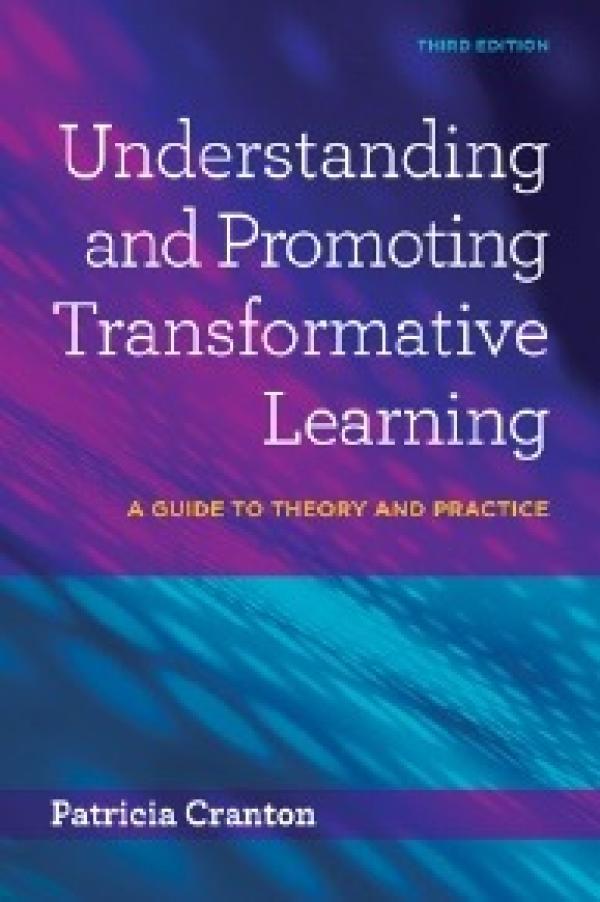
In the third edition of Understanding and Promoting Transformative Learning, Patricia Cranton provides new insights into the field of transformative learning. Cranton promotes transformative learning, addresses transformative learning theory, and offers strategies for the concept itself. The author examines and promotes transformative learning in multiple contexts: higher education, business industry, government, health professions, nonprofit organizations, and community development. Cranton traces the origin of the concept of transformative learning and then gives a full description of the theory from an integrative perspective. In doing so, she shows the reader that transformative learning takes place both individually and communally. A minor weakness of the book is its use of specialized psychological terminology; the reader unfamiliar with it may lose focus on the overall purpose of the book as they strive to understand the meaning of particular words and phrases. That said, the book is helpful for understanding transformative learning theory, practice, and strategy. These insights alone aid faculty in developing effective teaching strategies to advance student learning. In addition, the author shows not only the importance of the subject, but how it can be used in real life applications. This book is valuable because it focuses on the core of what it means to learn. At the forefront of this learning is an acknowledgement of various ways of knowing and the author provides examples of these. I was particularly drawn to the section that discusses dialogue, discourse, and support. This section of the book resonates with me because it fits into my own theory of critical pedagogy. The student should be impacted by learning in such a way that it transforms not only the learner, but the learner’s society as well. Understanding and Promoting Transformative Learning is particularly valuable for helping educators see their role in the learning process. The methodology described throughout the book leads to self-reflection, critical reflection, and thinking about how one’s teaching may fit into contemporary contexts. Furthermore, it converts the process of reflection into active participation in society. Additionally, the book discusses empowerment and the importance of dialogue to this process. This book is valuable in its demonstration of how dialogue is critical to transformative learning and can help the reader see how this affects student self-awareness and consciousness. Overall, I found this book to be a valuable asset for those interested in social justice and especially for teachers interested in transformative learning.
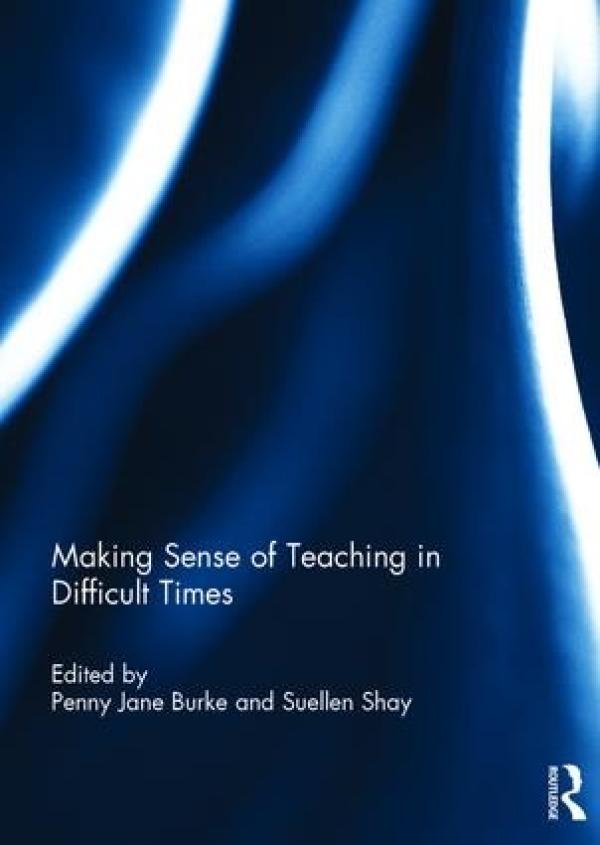
The ten chapters in this volume first appeared as a special issue of Teaching in Higher Education (2013). Each author is situated in particular classroom and institutional contexts ranging from South Africa to Australia, from Denmark to China and Canada, from the United Kingdom to the United States. Their expertise is far reaching. Although none of the contributors are in the areas of theology or religious studies, the questions raised and addressed in this volume center on strategies for effective teaching and learning. Collectively, these chapters supply a snapshot of the challenges and promises facing instructors of higher education. As a result, there are several potentially relevant sites for reflection and application. Grouped thematically, student-centered chapters highlight raising awareness of White Privilege (chapter 1) and of global citizenship through on-campus threshold-crossing experiences (chapter 3), undergraduate research (chapter 4), and social justice (chapter 8). More instructor-centered chapters confront the role of self-reflective practices (chapter 2), and of online education (chapter 10). Curricular chapters focus on inter-disciplinarity in an engineering curriculum (chapter 5), on the impact of problem-based learning on Chinese students undertaking higher education outside of their homeland (chapter 6), and on assessment practices (chapter 9). Of all of the chapters in this volume, “Reframing teaching relationships: from student-centered to subject-centered teaching,” would be the most suitable starting point for the reader of the Wabash Center’s online reviews. Although this chapter is situated at the center of the volume (chapter 7), it serves as the organizing chapter because it tackles an issue raised more specifically in the other chapters. Employing frame theory, the authors respond to questions of self-identity and the teaching relationship by advocating subject-centered learning. The strength of the volume rests with the particular contribution of each individual chapter. Offering a specific perspective in a local context, each author works within cleanly defined theoretical boundaries and approaches, and presents an argument worthy of further consideration and discussion. Despite this strength, however, the overall coherence of the volume suffers from the lack of a formal, introductory chapter and a final, concluding chapter. An additional chapter at the fore could justify the order of presentation of the collection (thematically topically, or through some other means) and facilitate the act of reading by explaining criteria for selection and inclusion; a closing chapter might indicate possible applications of the issues in other contexts and introduce new approaches or questions moving forward. The lack of these critical organizing chapters at the opening and closing of the volume requires the reader to determine the contours of coherence across the chapters and to impose frameworks for interpretation.