Resources
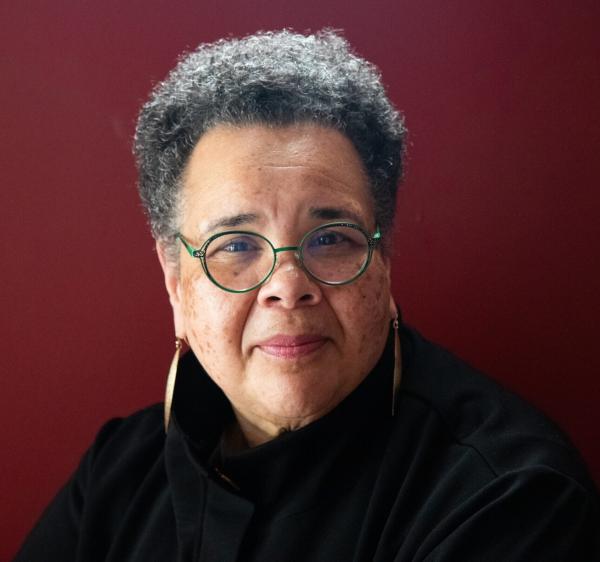
I was in elementary school—second or third grade—at George Washington Carver Elementary School in Philadelphia. The school served kindergarten through sixth grade, about five hundred students taught by roughly twenty teachers. Through the eyes of a seven-year-old, it felt bright, safe, and full of possibility. I loved school. I belonged there.From the first day, the teachers lined us up to walk through the school hallways in alphabetical order. Because of that, Angela White and I, Nancy Westfield, often walked side by side. Angela was quiet. She rarely smiled. She kept mostly to herself and took her schoolwork seriously.Her mother, Mrs. White, worked at the school as a non-teaching assistant. She supervised hallways, lunch periods, recess, assemblies—always somewhere nearby, always paying attention. Mrs. White carried herself with a kindness that settled people. Mrs. White greeted students warmly and helped make the school feel like a place where children mattered.Assembly days were a big deal. Once a month, the entire school gathered in the auditorium. Sometimes there were musical performances or class presentations. Sometimes police officers or firefighters visited with lessons about safety. In the spring, awards added extra excitement. Whatever the program, assembly days broke routine and filled the building with anticipation.One Tuesday morning, our teacher announced it was time to go to assembly.We lined up, barely able to contain ourselves, and marched to the auditorium. Every class had assigned seats. The youngest students sat closest to the stage; older students filled the rows behind us.I was sitting on the aisle. Angela sat beside me. The auditorium buzzed with hundreds of conversations. Children laughed, whispered, called out to friends. It was noisy in the way only children can be noisy—joyfully and unapologetically. The auditorium seating was old wooden theater seats. When you stood up, the bottom flipped upward.Angela started shifting in her seat. She placed her hands behind her back and continued squirming. Then it happened.As Angela leaned backward, the seat opened slightly. Her hands slipped into the gap between the seat and the backrest. When she leaned forward again, the seat shut. Both of her hands were trapped and crushed by the scissor action of the wooden seat. Angela cried out. When she tried to stand, the pressure became worse. Her cry grew louder, sharp with pain and panic.I remember searching for our teacher.Instead, I saw Mrs. White.She was across the auditorium.Hundreds of children filled that room. Yet somehow Mrs. White heard one voice.Without hesitation, she ran toward us. In one swift motion she reached across me, lifted Angela free, released her hands as the seat flipped upward, and carried her toward the nurse's office.Nearly sixty years later, I still remember that moment.In a room overflowing with voices, how did Mrs. White hear that one cry? How did she know instantly it was Angela?As educators of adults, we may hesitate to compare teaching with parenting—and we should. Adult learners bring agency, experience, expertise, and self-determination that fundamentally shape the educational relationship. There is something worth noticing in Mrs. White's knowing and response. She recognized Angela's voice because she knew it. And because she was listening for it. That distinction matters.Adult education unfolds in noisy spaces. Sometimes the noise is literal. More often it is the noise of work schedules, caregiving responsibilities, financial pressures, institutional demands, digital distractions, and the thousand daily realities adult learners carry into our classrooms.Adult learners do not always announce their needs directly.A missing assignment may be a sign of exhaustion.Silence may signal uncertainty, exclusion, resistance, or deep reflection.A brief email may contain far more urgency than its few words suggest.Listening for learners requires more than hearing words. It requires listening for meaning, context, history, and possibility.One challenge of teaching adults is that our time together is often brief. A fourteen-week semester can feel like an extended introduction. Just when we begin to understand who our learners are, the course ends. Yet over time, some learners become more audible to us. We begin to recognize their rhythms. We learn their questions, their hesitations, their brilliance, and the ways they enter a conversation. In crowded classrooms and online discussion boards, their voices become recognizable. That kind of attentiveness does not happen by accident. It is a practice.What distinguished Mrs. White was not simply that she heard her daughter. Plenty of people heard Angela’s painful cry. Mrs. White was listening for Angela. There is power in that kind of listening. It refuses distraction. It insists that people matter enough to be noticed.For educators, the question is not whether our learners are speaking. The question is whether we have trained our ears to hear them. Listening for learners may mean creating multiple ways for students to communicate. It may mean paying attention to patterns of participation and absence. It may mean noticing subtle shifts in tone, energy, or engagement. It certainly means cultivating classrooms where learners know their experiences are welcomed and their voices carry weight.Attentive listening is not passive.It is disciplined.It is an act of respect.It is fodder for dignity.Mrs. White's attuned ear was not merely about recognition. It was about readiness. When the moment came, she was prepared to respond. She came running! Adult educators are invited into a similar practice—not as parents, but as attentive companions in learning. We are called to listen deeply, respond humanely, and honor the complex lives our learners bring with them every time they enter our classrooms.Thank you Mrs. White. Reflection QuestionsWhose voice reaches you most easily in your classroom, and whose voice might be getting lost in the crowd? What assumptions shape your listening?Imagine your course through the eyes of a learner carrying invisible burdens. What signals of struggle, strength, resistance, or resilience might you be overlooking?When have you mistaken silence for disengagement? What other stories might silence be trying to tell?If your learners were describing the culture of your classroom, what would they say about who gets heard, who gets affirmed, and who must work hardest to be noticed?What would it look like to teach this term as someone intentionally "listening for" every learner? What specific practices would need to change for that commitment to become visible?
You know the feeling.You have watched your students survive it. You have survived it yourself, many times. It is that shift from knowing to not knowing; from confidence to uncertainty; from expert to novice.Learning so often begins with a jolt of disorientation. It is uncomfortable. It can be exhausting. Over time, with patience and willingness, that discomfort usually gives way to new learning, relearning, even transformation.If you have ever wondered whether your body is part of the learning process, think back to how your body responds when you face something truly new: the queasiness, the sense of being under attack, the way fear can freeze you in place. For many of us, our bodies announce the loss of old truths long before our minds catch up. Disenfranchisement, feeling misplaced, confusion—these are not just ideas. They live in our muscles and our breathing.The disorientation of learning can be severe.I have come to believe that this disorientation is a signal. It tells us that we are entering a space of possibility, wonder, and generativity. That uneasy feeling is a sign that we are exactly where we are supposed to be. Pay attention to the breakthroughs when they come—because they do come.The most sensitive teachers stay in touch with what it feels like to be a learner.Some students greet new learning—or the loss of old knowing—with resistance, refusal, distrust, anger, or deep skepticism. Sympathetic teachers remember what it is like to move from being a competent, confident adult with swagger to feeling like an uncertain beginner, without the vocabulary to join the conversation. Learning can be emotional and unsettling. It can feel grief-stricken, like a small death of who we thought we were.I hold deep respect for adults who decide to learn new things. Those who dare to pursue degrees, learn new software, or tackle baking bread from scratch are risk-takers. I admire risk-takers, dreamers, disruptors.Stepping into classrooms, reading substantial books, participating in weighty discussions, exploring new worldviews, and encountering unfamiliar cultural knowledges—complete with assignments, deadlines, and grades—places learners in terrain marked by misunderstanding, uncertainty, surrender. These are not small shifts. They are life-altering, identity-reforming changes.Many students begin their studies assuming that coursework will affirm what they already know. Instead, they discover that genuine learning asks us to move from knowing to unknowing to new knowing. Few adults are prepared for this destabilizing journey.Deep study challenges what we assumed was settled and agreed upon. That cognitive dissonance is both disruptive and life-giving. Learning can be powerful.We need teachers who recognize how difficult learning is and who sympathize with their students, even as they gently invite them to lean into the formation of a reordered identity.Think about learning to ride a bicycle or surf a wave or drive a car. Fear was high and ability was low. What helped you push through was knowing that others had learned before you. You wobbled. You fell. You practiced—again and again—just to gain a small measure of proficiency. You strengthened your determination. And when the new skills finally took root, your confidence returned. Your swagger came back.Over the years, I learned to notice when my students’ swagger disappeared and disorientation set in. I watched their breathing in class. By mid-semester, their breath usually slowed; their bodies relaxed. I listened to how they used new vocabulary and interacted with unfamiliar concepts. By mid-semester, many of them were incorporating new words into their conversations—sometimes tentatively, sometimes playfully.I became a cheerleader for their attempts, even the unsuccessful ones. I designed assignments that did not assume students already knew what they had come to my class to learn. I created learning activities that acknowledged struggle and disorientation, then coaxed students toward deeper, richer, more flexible knowing. I learned to honor and even celebrate confusion as part of the process.The best teachers cultivate a desire to learn and build spaces for community. New learning is best done not in isolation but together.Do not be alone when confusion gives way to reorientation. Surround yourself—and your students—with people who will not be embarrassed or shamed, who will not humiliate others for not already knowing. The heart is too tender in the midst of learning to bear ridicule or blame.Classrooms need clear rules of engagement that foster community, make room for mistakes, and celebrate the courage it takes to learn.Making space for students to imagine new ways of living through engagement with new knowledges is both daunting and exhilarating. It is risky work. And it is worth it.Happy New Year!

In the field of education, researchers firmly believe that non-cognitive skills and factors are equally or even more important than cognitive aspects in the educative process and for employment potentials. When identifying the personal qualities that are required to function well in the 21st century, the role of non-cognitive factors is often highlighted in the discourse. In recent years, increasing attempts have been made to investigate the role of non-cognitive factors in academic success. The notion of ‘non-cognitive’ has many phraseological collocations. Among frequently used collocations are constructs, traits, skills, abilities, variables, outcomes, attributes, and predictors. In addition, a myriad of other specific skills have been identified as non-cognitive. To name a few: grit, tenacity, curiosity, attitudes, self-concept, self-efficacy, anxiety, coping strategies, motivation, perseverance, confidence are among those frequently referred to in the literature. In some instances, non-cognitive factors are considered multifaceted. Some refer them to soft skills and personal characteristics that fall under the purview of affective domain. This book attempts to define non-cognitive traits, ways to measure them, impact of non-cognitive factors and how they can affect the positive outcomes in academic achievement, influence in employability, and success in social life. The information contained in this book provides knowledge growth and current thinking about non-cognitive factors and educational strategies that can be effectively used to nurture the well-being of individuals. (From the Publisher)
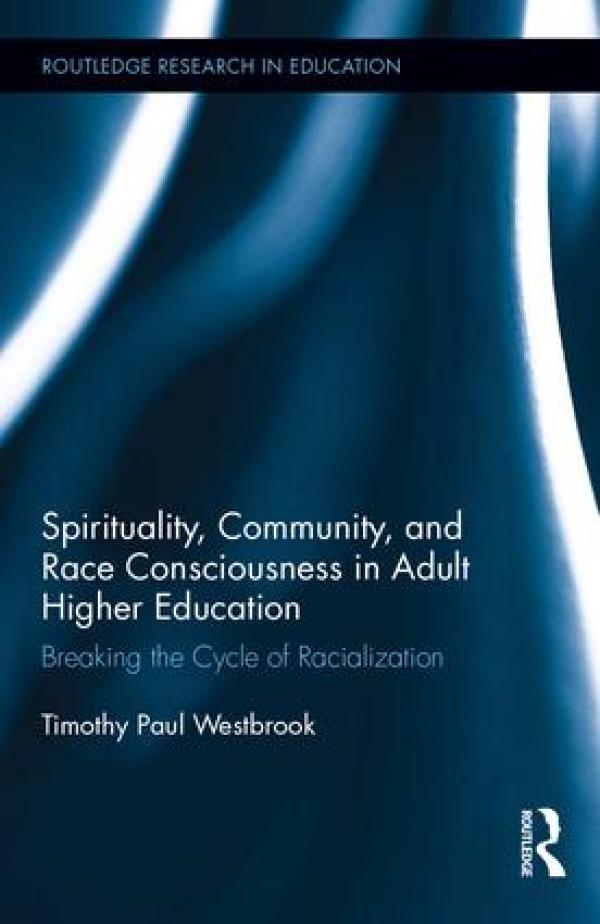
Drawing on the lived experiences of Black students in adult degree completion programs at predominantly White, Christian institutions in the southern United States, this book presents a model for reimagining adult higher education. Westbrook explores the reasons students enrolled in degree programs, how they experience their predominantly white institutions, and how their experiences affect their lives. Employing Critical Race Theory and Christian theology as frameworks for evaluating the students’ experiences, the author sheds light on the ways African American experiences to inform, critique, and shape Christian adult learning in higher education. (From the Publisher)
Grading systems matter more to the teaching and learning enterprise than many teachers may realize, as demonstrated in the author's experience of adopting a new one. Different systems emphasize different values such as excellence vs. perfection, achievement vs. talent, and second chances vs. partial credit. The author relates her experiment with specifications grading, an outcome‚Äêbased, pass/fail, rubric‚Äêbased, and contractual grading system, and demonstrates its promise. She then addresses three questions her experiment raised: Should I grade at all and if so, toward what end? Exactly what am I grading when I grade? and Is there any way to lessen the sting of failure?
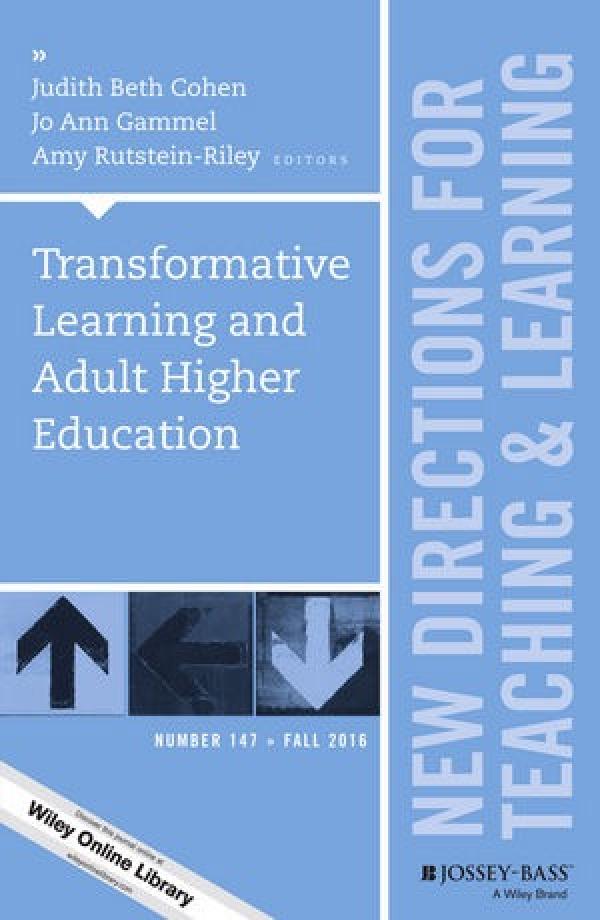
Transformative Learning and Adult Higher Education is a small anthology written by adult education practitioner-scholars in which they share diverse learning perspectives and practices utilized in universities for adult learners. The editors and writers of this volume describe creative experiences, unconventional perspectives, and unusual pedagogical methods in a variety of educational contexts that lead adults to experience learning that is transformative. A fundamental premise of the book is that genuine adult learning is synonymous with significant life change. The book’s animating notion is sociologist Jack Mezirow’s influential theory of Transformational Learning, found in his seminal work, Transformative Dimensions of Adult Learning (Jossey-Bass, 1991). Some acquaintance with Mezirow’s theory is necessary if one is to fully appreciate the book since each contributor builds on it or refers to it. According to Mezirow, transformative learning happens when three things take place in the life of the adult learner. First, an adult learner changes their understanding of themselves. Second, she or he revises their behavior. Third, he or she changes their approach to life (19). The contributors to the book pay homage to the groundbreaking ideas of Mezirow, but do not always locate transformative adult learning inside the limits of Mezirow’s definitions. Sometimes the writers expand the perspectives supplied by Mezirow in avant-garde and provocative ways. The book is composed of eleven short chapters each written by a different practitioner-scholar in which she or he shares the transformational learning that took place within a specific group of adult learners in a particular context. (For example Chapter 3 explores the learning that took place between female professors and female doctoral students in the advising process of working on their dissertations). The writer then usually shares the character of the learning process which catalyzed the transformative change. Typically, each chapter includes a description of the uniqueness of the population of adult learners the writer was involved with, each chapter gives a report of the qualitative study the contributor completed, and each chapter contains the writer’s reflections about the learning process and outcomes. The chapters are very different from one another, demonstrating the eclectic nature of the learning experiences and the diverse learners involved. A couple of examples of chapter content may reflect the variety and uniqueness of the adult learning described in the volume. Chapter 1 describes the learning journey of eighteen to twenty-eight-year-old emerging adult undergraduate students who struggle with learning differences (such as dyslexia). The chapter contributor, utilizing Mezirow’s theory and Marcia Baxter-Magolda’s stages of self-authorship (13), details the transformational process by which these students went from viewing themselves as intellectually diminished, and therefore inferior to their “smarter” peers, to being uniquely equipped for life, and therefore confident in engaging life. In this chapter transformative learning was expressed as overcoming a seemingly indomitable life challenge and going forward with determination and optimism. Chapter 2 presents a study of three black women educators: a portraiture of each woman’s transformative journey is given. One of these women had grown up as a Roman Catholic. Part of her transformational learning involved acknowledging the inadequacy of the Catholic faith for her and abandoning it in favor of a new expression of Christianity which she found generative and liberating. According to the writer of this chapter, transformative learning involved rebelling against her faith, abandoning an old and insufficient way of living, and embracing a new way of seeing the world. Adult transformative learning is often depicted in the eleven chapters as becoming aware of a harmful way of living and discarding it. The Editor-in-Chief, Catherine M. Wehlburg, wrote that this book regards transformative learning as a “‘rich metaphor’ for exploring the interactions and experiences of students and faculty in higher education” (3). She goes on to write that one will find “many examples of the richness of transformative learning” in this volume (3). I agree. The strength of the volume is its diversity in conceiving of transformative learning and describing some of its possible expressions. These conceptions and expressions are sometimes peculiar and idiosyncratic, but they are always creative and stimulate thought. I found that they beckoned me to stretch the boundaries of my own pedagogical creativity. Further, I found particular pedagogical practices described in the book as ones that I could use in my own teaching with a little adjustment to my context. The chapters are scholarly, concise, and easy to read. One is able to extract useful ideas without wading through lengthy, rambling prose. A weakness of the volume is that nearly every chapter addresses Mezirow’s chief ideas in such a way as to create the feeling of redundancy. The repeated recitation of those ideas is unnecessary and tiring. The seminary where I teach has a mission statement which expresses its intention to provide its students theological education that is characterized, in part, as “Christ-centered transformation.” Thus, I was drawn to this book about transformative learning with the hope that it would further illuminate my understanding of transformation inside the context of a confessional Christian institution. My seminary, as well as scores of schools with similar confessional commitments, finds it impossible to think about life transformation apart from particular content. For example, knowledge of the Christian Scriptures and the life of Jesus Christ are believed to be necessary catalysts for genuine life change. Transformative Learning and Adult Higher Education does not venerate any particular content as necessary for life transformation. Instead, this volume exalts process as the means of transformative learning. Transformation is made possible through the masterful facilitation of a process which is conceived without many definitive guidelines or boundaries. Teachers and scholars in confessional learning contexts will likely, therefore, find the conception of transformative learning contained in this book helpful but incomplete.
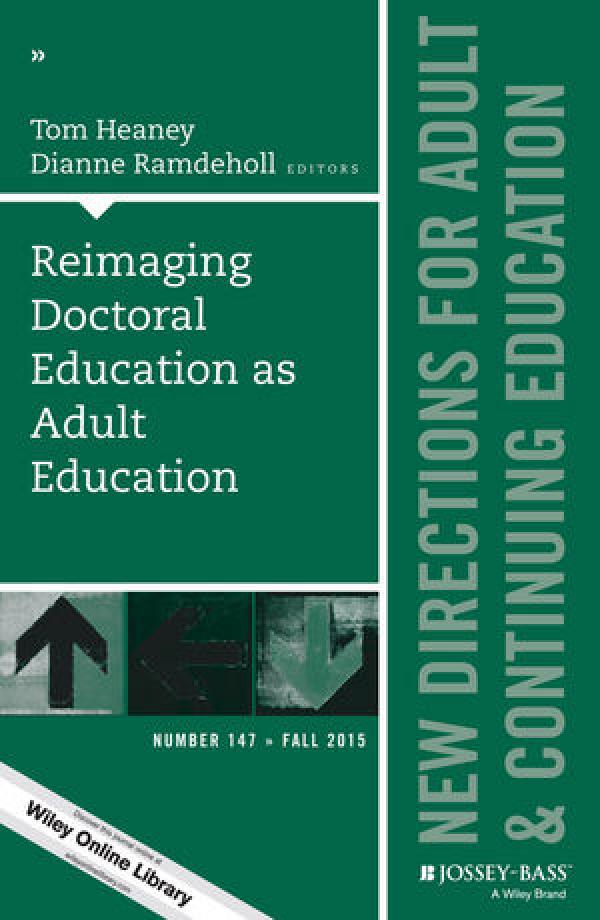
Click Here for Book Review This volume looks at graduate education, specifically the doctorate, through the lens of adult education practice. Students in doctoral programs are, after all, adults. Building on principles of adult learning, the authors provide examples of academic excellence achieved through the incorporation of best practices in adult education, including: - practical suggestions for democratically negotiating the curriculum - best practices for nurturing responsible action for social justice, - ways of encouraging collaborative and noncompetitive learning and research, and - support in shifting paradigmatic assumptions beyond the Eurocentric frame. This is the 147th volume of the Jossey Bass series New Directions for Adult and Continuing Education. Noted for its depth of coverage, it explores issues of common interest to instructors, administrators, counselors, and policymakers in a broad range of education settings, such as colleges and universities, extension programs, businesses, libraries, and museums. (From the Publisher)
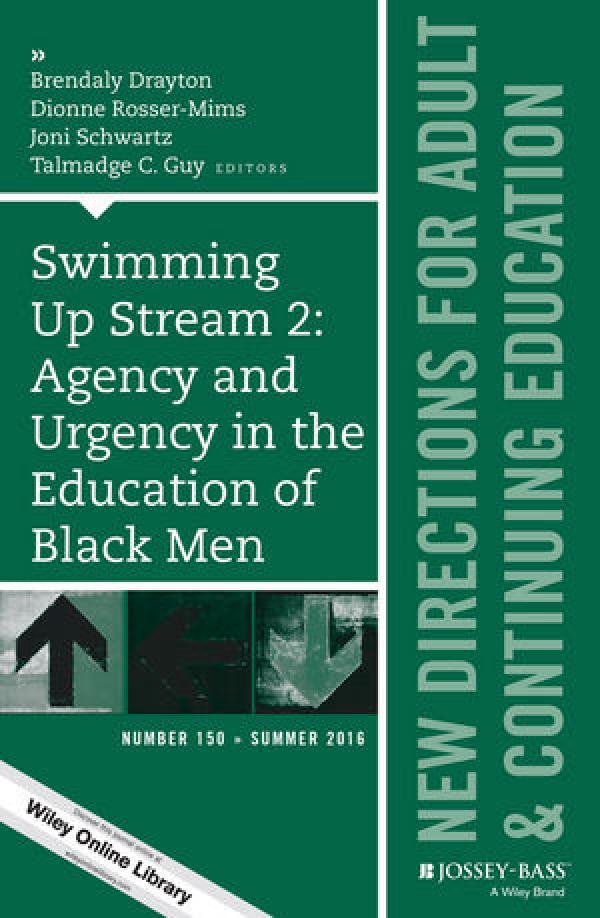
This volume is the continuation of a two-part series that focuses on salient topics and issues affecting Black males as they engage in adult education and learning. Considering the historical and current effects on the way these men participate in adult education, this volume broadens the conversations around adult Black males’ educational experiences by utilizing academic research as well as program descriptions and personal narratives with a concern for the “lived experiences.” More specifically, the authors explore: - the agency of Black men in carving out pathways to success - the programs that support these endeavors, and - the role of civil society in facilitating or inhibiting their progress. Topics covered include the digital divide, sports, professional career development, sexuality, role of religion, college as a choice, and the Black Lives Matter initiative. Practitioners will be encouraged to reflect on their own practices as they work toward engagement of Black males in learning communities. This is the 150th volume of the Jossey Bass series New Directions for Adult and Continuing Education. Noted for its depth of coverage, it explores issues of common interest to instructors, administrators, counselors, and policymakers in a broad range of education settings, such as colleges and universities, extension programs, businesses, libraries, and museums. (From the Publisher)
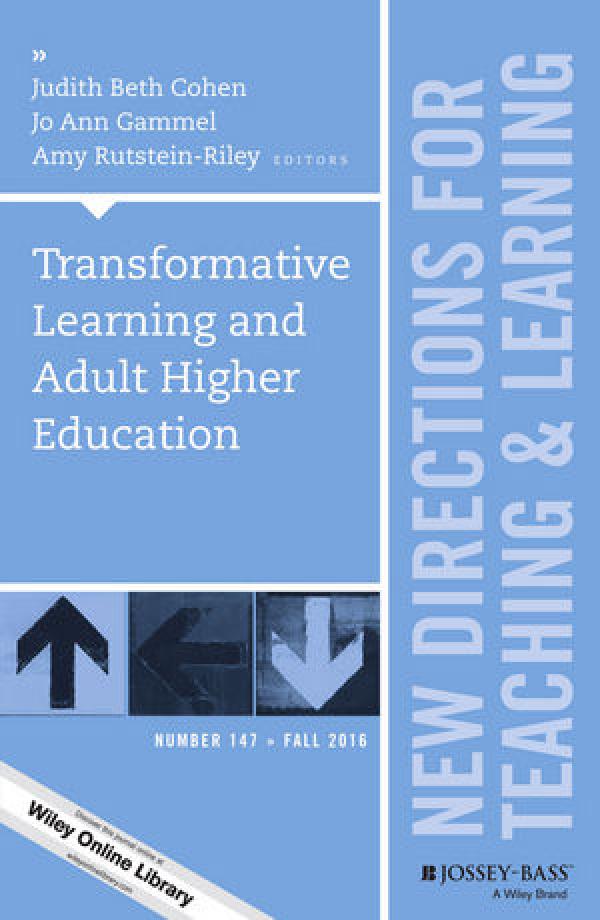
Click Here for Book Review Presenting current trends in transformative learning and adult higher education, this volume paints a vivid picture of the Transformative Learning theory in action. The concepts that knit these articles together despite the variety of educational settings and populations are: relationships, community, and the body experience - often missing in higher education. This volume includes: - the voices of marginalized populations often excluded from research studies such as community college students, emerging adults with learning differences, English language learners, native Alaskans, African-American health educators, doctoral students, and yoga practitioners; - new paradigms for thinking about adult undergraduate education; - new ways to deal with social conflict and advise doctoral students; and - personal stories from Black women leaders, college teachers, student writers as well as pregnant women, and social service providers. This is the 147th volume of this Jossey-Bass higher education series. It offers a comprehensive range of ideas and techniques for improving college teaching based on the experience of seasoned instructors and the latest findings of educational and psychological researchers. (From the Publisher)
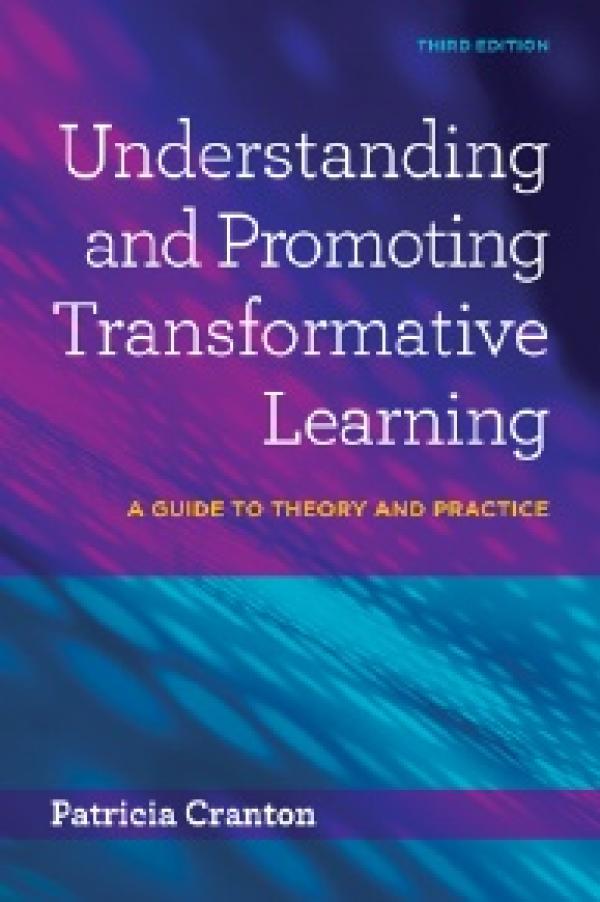
Click Here for Book Review Abstract: The third edition of Patricia Cranton’s Understanding and Promoting Transformative Learning brings a wealth of new insight from the tremendous growth in the field during the decade since the previous edition. As in the previous editions, the book helps adult educators understand what transformative learning is, distinguish it from other forms of learning, and foster it in their practice. The first part of the book is dedicated to clarifying transformative learning theory and relating it to other theoretical frameworks. The author examines transformative learning from the learner’s perspective, and discusses individual differences in how learners go through the process. In the second half of the book, the focus is squarely on strategies for promoting transformative learning in a wide variety of adult and higher education contexts. Practitioners will be able to take ideas from the text and apply them directly in their teaching. Since 1975, transformative learning has become a core theoretical perspective in adult and higher education, and research has proliferated. In the past decade, adult education and especially transformative learning grew into a noticeably larger field. The numbers of undergraduate and graduate programs in adult education have increased and continue to increase as more and more individuals are seeking the expertise, skills, and training necessary to work with adult learners in higher education, business, industry, government, health professions, non-profit organizations, and community development. In addition, the number of programs in higher education (both undergraduate and graduate) that include courses in transformative learning has grown dramatically. These academic audiences use the book to further their understanding of transformative learning theory and practice. Drawing on the latest research as well as the author’s own teaching experience in both online and face-to-face courses, this new edition will be a vital resource for members of the transformative learning community, as well as those encountering the topic for the first time. (From the Publisher)