Resources
One-page Teaching Tactic with information on how to get more out of in class quizzes.
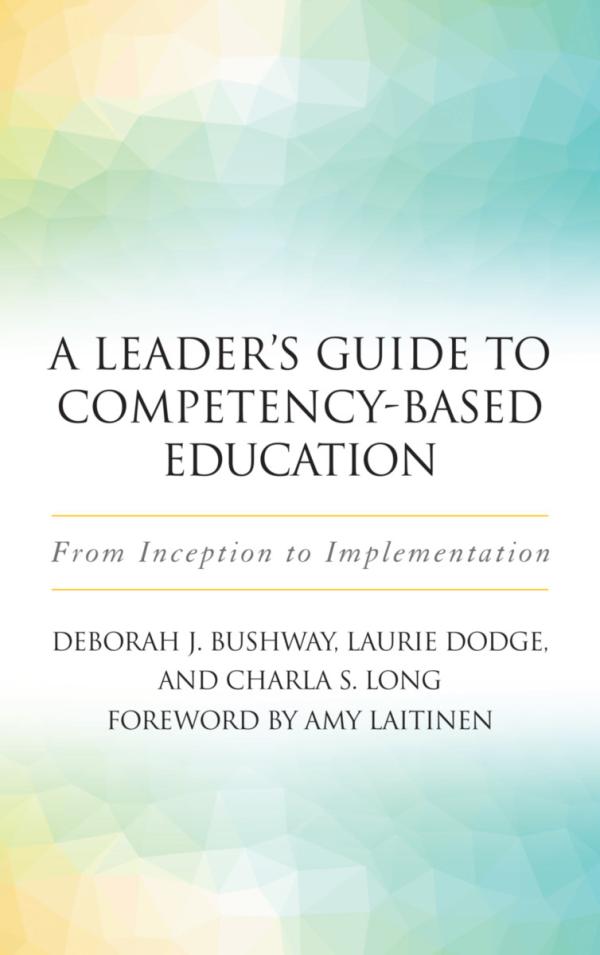
Click Here for Book Review As interest in competency-based education (CBE) continues to grow by leaps and bounds, the need for a practical resource to guide development of high-quality CBE programs led the authors to write this book. Until now, there has been no how-to manual that captures in one place a big picture view of CBE along with the down-to-earth means for building a CBE program. A variety of pressures are driving the growth in CBE, including the need for alternatives to the current model of higher education (with its dismal completion rates); the potential to better manage the iron triangle of costs, access, and quality; the need for graduates to be better prepared for the workforce; and the demands of adult learners for programs with the flexible time and personalized learning that CBE offers. Designed to help institutional leaders become more competent in designing, building, and scaling high-quality competency-based education (CBE) programs, this book provides context, guidelines, and process. The process is based on ten design elements that emerged from research funded by the Gates Foundation, and sponsored by AAC&U, ACE, EDUCAUSE, and the Competency-Based Education Network (C-BEN), with thought partners CAEL and Quality Matters. In short, the book will serve administrators, higher education leaders, faculty, staff, and others who have an interest in CBE by: • Giving context to enable the audience to discover the importance of each design element and to help frame the CBE program (the “why”); • Providing models, checklists, and considerations to determine the “what” component for each design element; • Sharing outlines and templates for the design elements to enable institutions to build quality, relevant, and rigorous CBE programs (the “how”). (From the Publisher)
The issue is richly augmented by a set of teaching tactics (Allen, Ghosh, and Woodard and Mabry) across a range of religious traditions which briefly describe further practices that can be productive in the classroom.
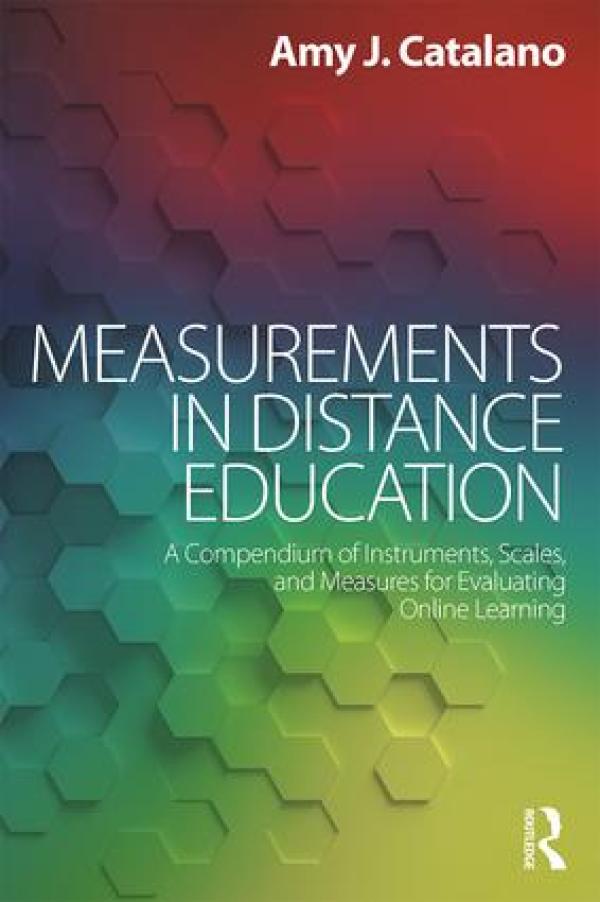
Click Here for Book Review As more postsecondary faculty become engaged in designing online learning environments, research conducted on distance education program quality becomes increasingly important. Measurements in Distance Education is a concise, well-organized guide to some of the many instruments, scales, and methods that have been created to assess distance education environments, learners, and teachers. Entries are organized according to the qualities these measures attempt to gauge—such as engagement and information retention—and provide summaries of each instrument, usage information, the history of its development, and validation, including any reported psychometric properties. Offering more than 50 different surveys, tests, and other metrics, this book is an essential reference for anyone interested in understanding distance education assessment. (From the Publisher)
One page Teaching Tactic: structure, prompts, and evaluation rubric for final summative exams conducted orally with individual students.
One page Teaching Tactic: a test-prep strategy in which students prepare a 30 second "elevator speech" in the character of one of the course's major thinkers, that they then present to each other in pairs and have to determine each other's characters.
One page Teaching Tactic: describes a scaffolded semester-long design encouraging student self-assessment of their work.
Grading systems matter more to the teaching and learning enterprise than many teachers may realize, as demonstrated in the author's experience of adopting a new one. Different systems emphasize different values such as excellence vs. perfection, achievement vs. talent, and second chances vs. partial credit. The author relates her experiment with specifications grading, an outcome‚Äêbased, pass/fail, rubric‚Äêbased, and contractual grading system, and demonstrates its promise. She then addresses three questions her experiment raised: Should I grade at all and if so, toward what end? Exactly what am I grading when I grade? and Is there any way to lessen the sting of failure?
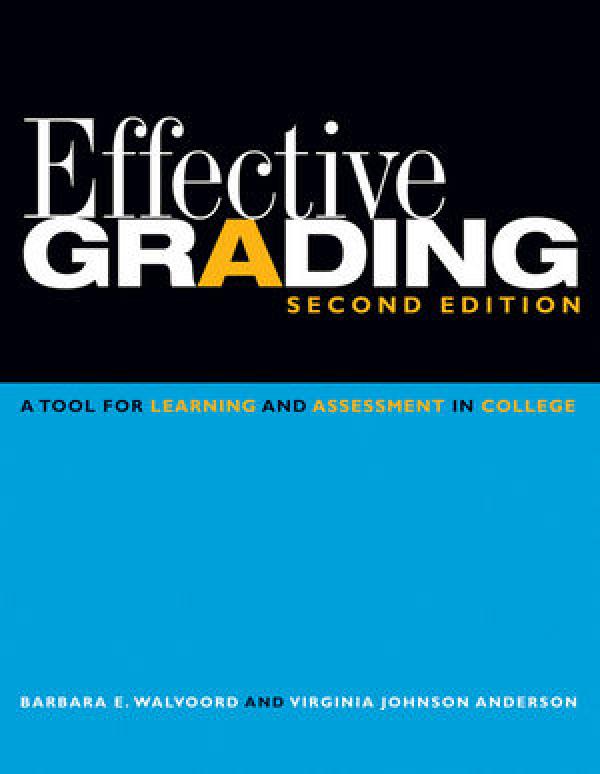
The second edition of Effective Grading—the book that has become a classic in the field—provides a proven hands-on guide for evaluating student work and offers an in-depth examination of the link between teaching and grading. Authors Barbara E. Walvoord and Virginia Johnson Anderson explain that grades are not isolated artifacts but part of a process that, when integrated with course objectives, provides rich information about student learning, as well as being a tool for learning itself. The authors show how the grading process can be used for broader assessment objectives, such as curriculum and institutional assessment.
Written assessment feedback has not been widely researched despite higher education students continually expressing the need for meaningful and constructive feedback. This qualitative study employing focus groups captures and interprets the student perspective of written assessment feedback. Participants were Registered Nurses and non-traditional entrants to higher education. The findings generated a framework of themes and categories representing the feedback process experienced by the students. The themes were ‘learning from’,‘the process of receiving’ and ‘making sense of’ feedback.When this framework incorporates strategies such as ‘feed-forward’, selfmanaged learning and personalized guidance it then represents a heuristic model of effective written assessment feedback. The model, created as a result of the research, should enhance the student experience and aid understanding of the complex processes associated with providing written assessment feedback.