Resources
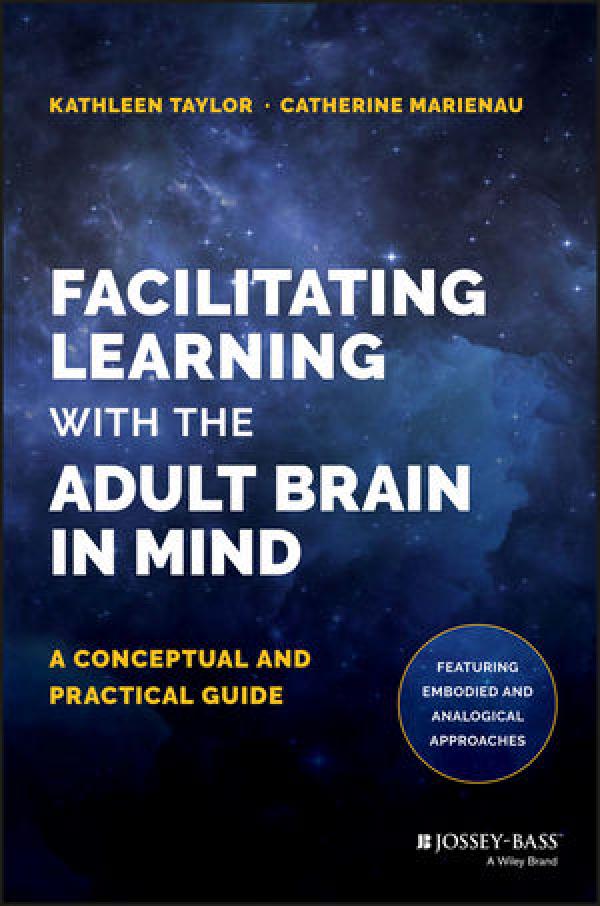
Click Here for Book Review Abstract: Facilitating Learning with the Adult Brain in Mind explains how the brain works, and how to help adults learn, develop, and perform more effectively in various settings. Recent neurobiological discoveries have challenged long-held assumptions that logical, rational thought is the preeminent approach to knowing. Rather, feelings and emotions are essential for meaningful learning to occur in the embodied brain. Using stories, metaphors, and engaging illustrations to illuminate technical ideas, Taylor and Marienau synthesize relevant trends in neuroscience, cognitive science, and philosophy of mind. Readers unfamiliar with current brain discoveries will enjoy an informative, easy-to-read book. Neuroscience fans will find additional material designed to supplement their knowledge. Many popular publications on brain and learning focus on school-aged learners or tend more toward anatomical description than practical application. This book provides facilitators of adult learning and development a much-needed resource of tested approaches plus the science behind their effectiveness. - Appreciate the fundamental role of experience in adult learning - Understand how metaphor and analogy spark curiosity and creativity - Alleviate adult anxieties that impede learning - Acquire tools and approaches that foster adult learning and development Compared with other books on brain and learning, this volume includes dozens of specific examples of how experienced practitioners facilitate meaningful learning. These "brain-aware" approaches can be adopted and adapted for use in diverse settings. Facilitating Learning with the Adult Brain in Mind should be read by advisors/counselors, instructors, curriculum and instructional developers, professional development designers, corporate trainers and coaches, faculty mentors, and graduate students—in fact, anyone interested in how adult brains learn. (From the Publisher)
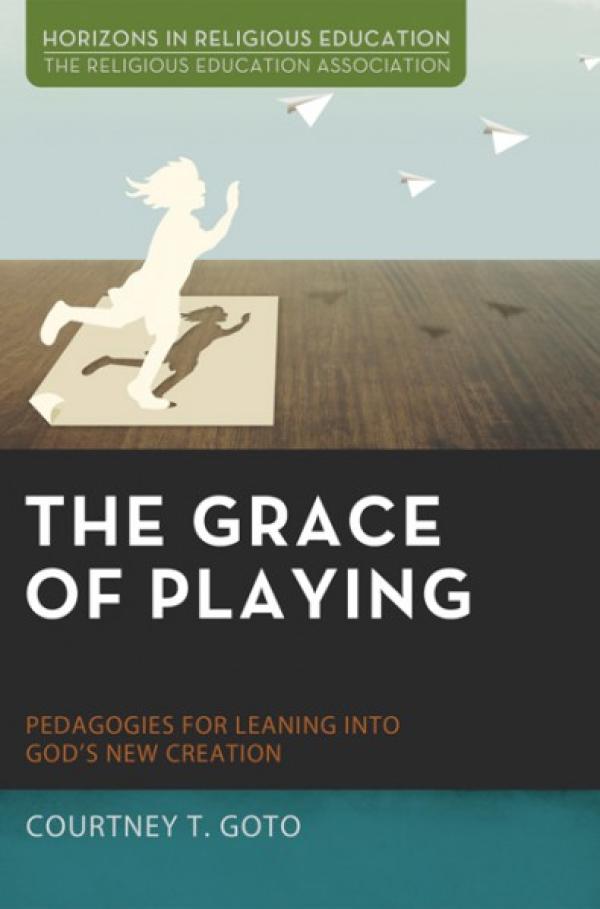
Click Here for Book Review Abstract: Believers and teachers of faith regularly know the in-breaking of God's Spirit in their midst, when revelatory experiencing unexpectedly shifts habits of thinking, feeling, and doing toward more life-giving ways of being and becoming. When the moment is right, Spirit breathes new life into dry bones. Though religious educators have much practical wisdom about facilitating learning that is creative and transformative, sharper concepts, cases, and theory can help them do it more critically and assist learners to practice openness to wonder, surprise, and authenticity. The Grace of Playing explains how we can create the conditions for revelatory experiencing by understanding it in light of playing. The notion of playing "as if" can be powerfully reclaimed from ecclesial ambivalence, casual speech, and commercial interests that often lead playing to be associated with childishness, frivolity, or entertainment. This book theorizes adults playing for the sake of faith, drawing on D. W. Winnicott's psychoanalytic theory, a revision of Jurgen Moltmann's theology of play, biblical texts, medieval devotional practices, as well as art and aesthetics that help local faith communities engage in theological reflection. Communal forms of playing in/at God's new creation provide insights into pedagogies in which learners are creating and are created anew. (From the Publisher)
Click Here for Book Review Abstract: As a result of transnational migration, many countries are becoming increasingly ethnoculturally diverse, creating both new opportunities and challenges for practices of adult education. This volume examines the changing nature of adult education in the age of increased transnational migration and: • synthesize the latest research, policies, and practices in transnational migration and adult education, • examines the larger historical and structural issues of race and gender in immigration and newer theories, such as diaspora studies, in relation to adult education, and • provides examples and recommendations for enhancing socially just and inclusive adult education environments for newcomers. Transborder injustices and multiple dimensions of social justice permeate immigration dynamics and challenge adult educators to rethink social justice in a transnational age. This is the 146th volume of the Jossey Bass series New Directions for Adult and Continuing Education. Noted for its depth of coverage, it explores issues of common interest to instructors, administrators, counselors, and policymakers in a broad range of education settings, such as colleges and universities, extension programs, businesses, libraries, and museums. (From the Publisher)
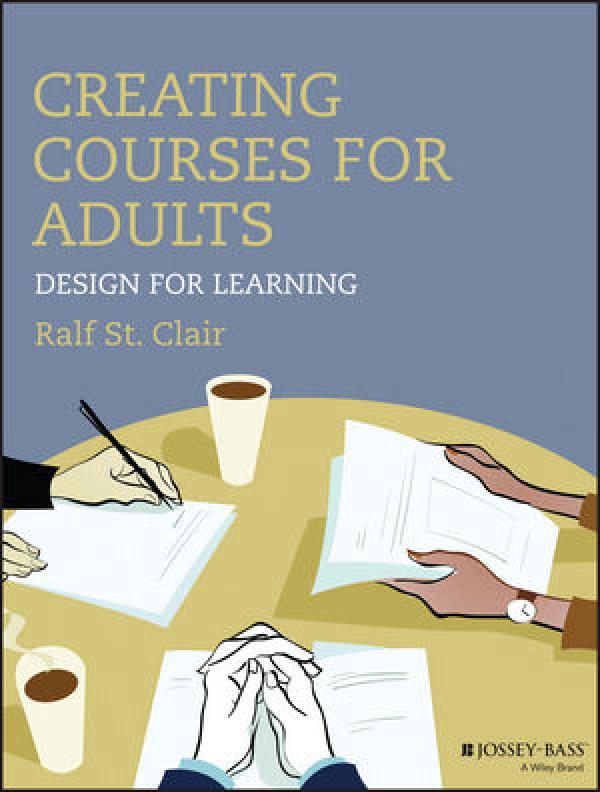
Click Here for Book Review Abstract: Become an effective adult educator by approaching teaching systematically As the author describes at the beginning of Creating Courses for Adults, "The big idea of this book is that education for adults has to be designed." Whether in basic skills training, English language classes, professional development workshops, personal interest courses, or formal degree programs, good teaching tends to conceal all the planning and decisions which had to be made in order to present participants with a seamless and coherent process for learning. The author posits that nobody is a completely intuitive teacher and that everybody has to make a series of choices as they put courses together. The decisions they make are important and far-reaching, and deserve to be considered carefully. Starting with the three core factors which must be taken into account when creating courses, Creating Courses for Adults walks readers through a manageable process for addressing the key decisions which must be made in order to design effective learning. - Instructor factors are what the teacher brings to the teaching and learning process, such as experience and preferences. - Learner factors are the influences that students bring with them, including their past experiences and expectations for the class. - Context factors include the educational setting, whether in-person or online, as well as the subject matter. Readers of Creating Courses for Adults will learn a systematic approach to lesson and course design based on research into the ways adults learn and the best ways to reach them, along with pointers and tips for teaching adults in any setting. (From the Publisher)
Click Here for Book Review Abstract: In this wide-ranging book, Elana Michelson invites us to revisit basic understandings of the 'experiential learner'. How does experience come to be seen as the basis of knowledge? How do gender, class, and race enter into the ways in which knowledge is valued? What political and cultural belief systems underlie such practices as the assessment of prior learning and the writing of life narratives? Drawing on a range of disciplines, from feminist theory and the politics of knowledge to literary criticism, Michelson argues that particular understandings of `experiential learning’ have been central to modern Western cultures and the power relationships that underlie them. Presented in four parts, this challenging and lively book asks educators of adults to think in new ways about their assumptions, theories, and practices: - Part I provides readers with a short history of the notion of experiential learning. - Part II brings the insights and concerns of feminist theory to bear on mainstream theories of experiential learning. - Part III examines the assessment of prior experiential learning for academic credit and/or professional credentials. - Part IV addresses a second pedagogical practice that is ubiquitous in adult learning, namely, the assigning of life narratives. Gender, Experience, and Knowledge in Adult Learning will be of value to scholars and graduate students exploring adult and experiential learning, as well as academics wishing to introduce students to a broad range of feminist, critical-race, materialist and postmodernist thinking in the field. (From the Publisher)
Click Here for Book Review Abstract: Sharing and engaging in interactions and discussion as required for collaborative teaching and learning can be a foreign concept to students coming from Asia or growing up in an Asian family. As such, this first volume in a two-volume edition helps lecturers, educators, and teachers create collaborative teaching and learning experiences with multicultural adult learners in higher education. Topics include: - assessment and evaluation techniques that focus on collaborative teaching and learning with diverse students - students’ cultural beliefs and strategies for outcomes-based collaborative teaching and learning in Asia, and - an understanding of the unique learning motivations of contemporary Asian students. This is the 142nd volume of this Jossey-Bass higher education series. It offers a comprehensive range of ideas and techniques for improving college teaching based on the experience of seasoned instructors and the latest findings of educational and psychological researchers. (From the Publisher)
Click Here for Book Review Abstract: Lifelong learning, the arts, and community cultural engagement in the contemporary university maps the work of adult educators, teachers, researchers and graduate students from North America, Europe and Africa who use the arts in their university classroom teaching, their research and in service. It is written specifically for graduate students, and educators working in higher education, communities, schools, and practitioners who want to learn how to better integrate the arts in their practice to critically and creativity communicate, teach, make meaning, uncover, and involve. The book contextualises the place and role of the arts in society, adult education, higher education and knowledge creation, outlines current arts-based theories and methodologies and provides examples of visual and performing arts practices to critically and creatively see, explore, represent, learn and discover the potential of the human aesthetic dimension in higher education teaching and research. (From the Publisher)
Click Here for Book Review Abstract: The death of a student, especially to gun violence, is a life-changing experience that occurs with more and more frequency in America’s schools. For each of these tragedies, there is a classroom and there is a teacher. Yet student death is often a forbidden subject, removed from teacher education and professional development classes where the curriculum is focused instead on learning about standards, lesson plans, and pedagogy. What can and should teachers do when the unbearable happens? An Empty Seat in Class illuminates the tragedy of student death and suggests ways of dealing and healing within the classroom community. This book weaves the story of the author’s very personal experience of a student’s fatal shooting with short pieces by other educators who have worked through equally terrible events and also includes contributions from counselors, therapists, and school principals. Through accumulated wisdom, educators are given the means and the resources to find their own path to healing their students, their communities, and themselves. (From the Publisher)
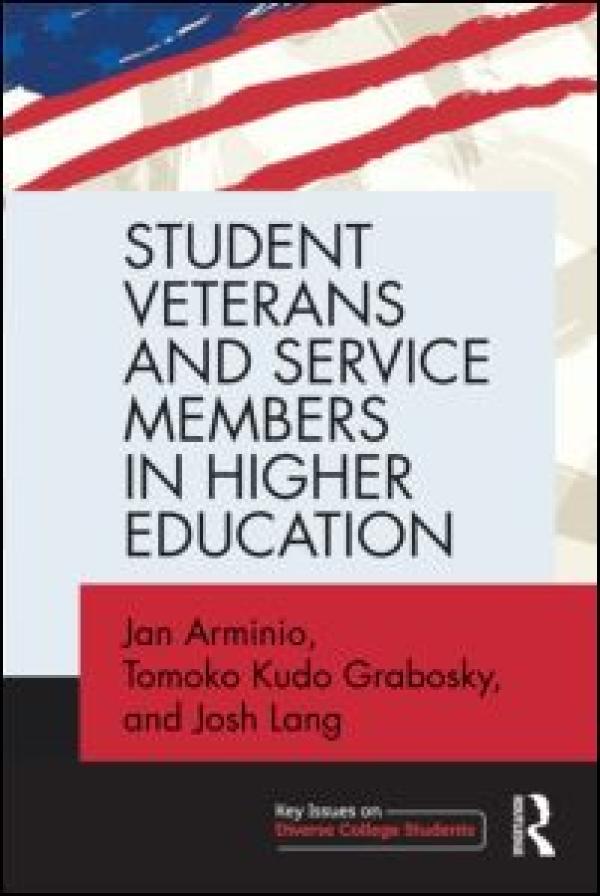
Click Here for Book Review Abstract: Student Veterans and Service Members in Higher Education bridges theory to practice in order to better prepare practitioners in their efforts to increase the success of veteran and military service members in higher education. Bringing together perspectives from a researcher, practitioner, and student veteran, this unique author team provides a comprehensive but manageable text reviewing relevant research literature and presenting accessible strategies for working with students. This book explores the facilitators and barriers of student veteran learning and engagement, how culture informs the current student veteran experience, and best practices for creating and maintaining a campus that allows for the success of these students. The latest to publish in the Key Issues on Diverse College Students series, this volume is a valuable resource for student affairs and higher education professionals to better serve veteran and military service members in higher education. (From the Publisher)
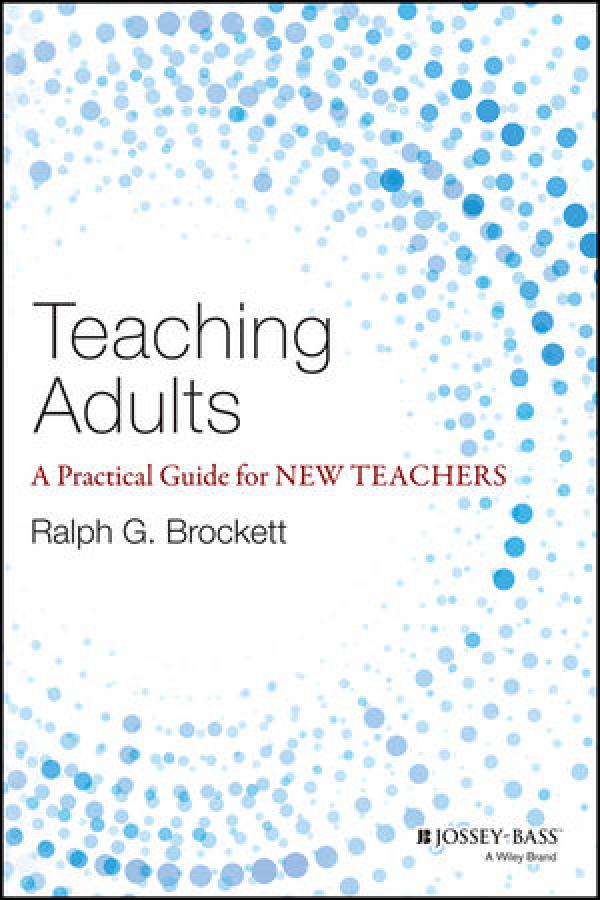
Click Here for Book Review Abstract: A highly practical guide for new instructors teaching in any setting Regardless of the context, teaching is a tall task—and for those teaching adults, unique challenges await. Teaching Adults: A Practical Guide for New Teachers is chock-full of ideas that can be read quickly and implemented immediately in formal and informal settings, in classrooms and workplaces; in short, wherever adults are learning. Written with straightforward language that eschews jargon, yet grounded in theory, research, and practice in adult education, the book will benefit readers who have not previously been exposed to these ideas as well as more experienced teachers who seek new ways to reach adult learners. The book will serve as a resource to revisit from time to time as readers face new challenges and questions in teaching adults. Readers will delve into to a variety of topics, including: • A general teaching framework, including the author's four keys to effective teaching • An in-depth exploration of the primary components of effective teaching • An examination of the unique challenges involved with teaching adults, including how to best create a positive learning environment, overcoming resistance to learning, motivation techniques, and dealing with difficult or disruptive learners The book elucidates the techniques required to connect with adult learners and provide instruction that is specifically tailored to the unique learning needs of these students. (From the Publisher)