Resources
For the last few years, in teaching about racial justice, I have consciously decided to incorporate into my syllabi an opportunity for critical reflection based on Stephen Brookfield’s theory of “ideology critique.”[1] In short, Brookfield defines ideology critique as “part learning process, part civic action”; it “focuses on helping people come to an awareness of how capitalism, White Supremacy, patriarchy, ableism, heterosexism, and other ideologies shape beliefs and practices that justify and maintain economic and political inequity.”[2] As Brookfield describes it, ideology critique is a helpful tool for framing discussions about the unjust beliefs and assumptions that dictate the unequal ways in which society is organized: “(1) that apparently open, Western democracies are actually highly unequal societies in which economic inequity, racism, and class discrimination are empirical realties; (2) that the way this state of affairs is reproduced as seeming to be normal, natural, and inevitable (thereby heading off potential challenges to the system) is through the dissemination of dominant ideology; and (3) that critical theory attempts to understand this state of affairs as a prelude to changing it.”[3] As I understand and use his theory, the ubiquitous and dominant nature of unjust ideologies, like racism, demands that every subject area question its foundational assumptions, in order to pave the way for real and lasting societal change. Assignments designed to teach ideology critique also help us model that habit of mind with our students and let them practice it as well. In order to use this theory in my courses effectively, I need to connect the critical reflection with course content in a way that is responsible for the methods and objectives about which I am hired to teach (i.e., Catholic Systematic Theology). One of the most effective strategies I’ve designed is the following written assignment. In one of my introductory theology courses, I ask my students to write a critical evaluation of the United States Conference of Catholic Bishops’ (USCCB) most recent document on race, “Open Wide Our Hearts: A Pastoral Letter Against Racism,” issued in 2018. To prepare students for the assignment, we spend a few class sessions analyzing the social realties of racism and white privilege based on the work of scholars like Ibram X. Kendhi and Robin DiAngelo. We then turn to a Catholic theological perspective written by Bryan Massingale, a Black Roman Catholic moral theologian and priest, who also has recently come out as gay. I have students read Massingale’s critique of prior USCCB documents and list both the substantial deficits and limitations that he identifies. To do this, they read a chapter from his groundbreaking book, Racial Justice and the Catholic Church, which was published in 2010, eight years prior to the writing of the most recent “Open Wide Our Hearts” document. Then, in their written assignment, I ask the students to apply Massingale’s critiques of the prior USCCB documents to their own analysis of the current one. This assignment has been effective for a number of reasons. First, it allows students the chance to explore how racism has been embedded not just in economics and politics, but in religion—something of which they are not always aware. In particular, they often identify how even a theological document that denounces racism is itself entangled with assumptions based in patriarchy, heterosexism, and White Supremacy. For instance, many times students remark on how the USCCB document is written by a predominately White group of people, all of whom are men. In recent student papers, two different students made this critique and bolstered it by mentioning how the National Black Catholic Clergy Caucus (NBCCC) approved a statement in April of 1968 that described the Catholic Church as a “white racist institution.” Second, it often leads students to see how theology and religion have the opportunity as ideologies to promote civic action, as was the case with Dr. Martin Luther King Jr.’s religious convictions, but how they can also be problematic—particularly if they promote reconciliation without justice. For example, a recent student’s paper made this critique by remarking on the 2018 USCCB document “Open Wide Our Hearts” in this way: The Catholic Bishops think that racism will be overcome by education, dialogue, and moral persuasion. They think that if everyone is educated on racism that it’ll just magically disappear, but it’s not that simple…. Racism has been with us for many, many years now and it’s deep in our roots. It’s not something you can change overnight by having a different mindset. I wish it were that easy, but unfortunately it’s not. The student is recognizing that racism goes beyond an individual’s acts, and that it is also a widespread and deeply entrenched, systemic issue. Another student went further in their analysis and considered why the Bishops might not have promoted real systemic change in their document: I think that the Bishops might be concerned with not crossing any boundaries and having too strong of an opinion that would align themselves with a certain political party. The idea that there needs to be a separation of church and state has been a saying for a long time and people believe that it is an important part in democracy. This concern is valid but I also think that the idea of all people having equal rights is not only a Catholic belief and should be a belief held by both political parties. Finally, and here’s where I hope the assignment is most effective: the assignment teaches students to begin to develop and adopt for themselves a process of ideology critique outside of the classroom. For instance, after discussing the widespread issuing of #BLM statements by nearly every retail company, with no real call to action, one student made a similar critique of the 2018 USCCB document as the “church’s feeble attempt to get ahead of a problem instead of being deemed as ignoring the problem.” When students are able to identify how racism has been shaped and maintained in other documents, beliefs, and practices, including but not limited to religious ones, I know the assignment has accomplished its objective. Notes [1] This post continues reflections that I began in a previous post. I am grateful to Dr. Jessica Tinklenberg, who encouraged me to develop this post in such a way, and to include anonymous student comments. She also worked with me on a fuller piece which will be include in the American Academy of Religion’s Fall 2020 edition of Spotlight on Teaching. [2] Stephen Brookfield, “The Concept of Critical Reflection: Promises and Contradictions,” European Journal of Social Work 12, no. 3 (September 2009): 298-299. [3] Brookfield, 298.
We walk into our classrooms, be they virtual or face-to-face, and we see the eyes of our students with screens in front of them. Those screens may be laptops, desktops, tablets, or phones but the screens are there. On those screens our students spend an average of four hours per day, engaging moving and still images. We then ask them to read and process something that was written by someone they will never see or hear. We expect them to be fully engaged by the reading. The social justice issues they are reading about are hidden beneath text on a page. While reading is essential, it is limiting, and it especially limits the mental capacity of the students we teach today whose minds are wired to engage moving and still images via stories. Our students need to see to fully connect with that we are studying. If we are to teach to their strengths we need to show them the subject matter. The way we show them is by using documentaries as the foundation of course design. Listen to Albert Maysles as he speaks on the power of documentaries: [embedyt] https://www.youtube.com/watch?v=L_yABhT20Hs[/embedyt] Documentaries put students in the midst of the social justice issues we are studying. They can see, feel, and connect, not just with the issue, but also with the real people who are affected by injustices. Nick Fraser says in his book Say What Happened: A Story of Documentaries, “docs have morphed into contemporary essays, becoming a form whereby we get to experience highly provisional stabs at reality, but, far more than fictions, which are usually finished and fixed in their own reality, they are also transformed by it.”[1] Documentaries are the new essay; we have access to a new type of reading made just for the generation of students we are teaching. We need to honor them by showing them and in the showing they are seeing what was, what is, and what can be. We work in an industry that values the written and spoken word over the visual. We were taught to plan our classes starting with the reading—readings that were written years before our time mostly by dead white males. I always found these readings alien to me when I was a student, and even those I connected with were usually written by people many years my senior. There was still this disconnect because of the faded pages from which I read; I was removed from them by time and space. None of what I have said makes these works irrelevant or useless but it highlights the limitations of readings. When I think about the students I teach today who view more than they read I see that they are deep thinkers, they are intelligent, they can read and write, and they also bring a more expansive set of communicative and interpretive skills to the classroom than I did when I was a student. The question I am raising in this blog is: How do I engage what my students bring to the classroom so that I can show them what I want them to learn? Yes, show them. To answer my question, I am suggesting that we show our students the social justice issues we are discussing in class while showing them how movements work by engaging documentaries as the core content for our courses. I am not dismissing books and readings, but I am displacing their historical place of privilege. Why documentaries? Documentaries speak to the head and the heart. Documentaries help students see and feel by eliciting the emotive response in the visual. More centers of the brain are activated by sound, movement, light, story, and real life characters who lived in the movement. Students see history and how they can make history. I have also found that conversation after a documentary is democratized unlike those after reading discussions. Reading discussions privilege certain types of students whereas discussion around documentaries has a way of leveling the playing field. Students feel more equipped to talk about that which they have seen, engaged, and understood. As Cathy Chattoo says in her book Story Movements: How Documentaries Empower People and Inspire Social Change, Documentary is a vital, irreplaceable part of our storytelling culture and democratic discourse. It is distinct among mediated ways we receive and interpret signals about the world and its inhabitants. We humans, despite our insistence to the contrary, make individual and collective decisions from an emotional place of the soul—where kindness and compassion and rage and anger originate—not from a rational deliberation of facts and information. By opening a portal into the depth of human experience, documentary storytelling contributes to strengthening our cultural moral compass—our normative rulebook that shapes how we regard one another in daily exchanges, and how we prioritize the policies and laws that either expand justice or dictate oppression.[2] Documentaries connect with us because we are wired for story and true stories told well speak truth to us and set us free to be part of the freedom movement. So if we are to start with documentaries as the foundation of our courses, and use readings to complement the documentaries, where do we start? Let me offer a few questions that might get you thinking: What do I want my students to see? Why is the visual experience of this course as important as the reading(s)? What do I want my students to hear? What do I want my students to feel? Why is it important for my students to engage the sights and sounds of this experience so as to bring to life that which we are studying together? What do I want my students to do about social injustice as a result of experiencing this course? How can I create and curate a visual experience that is buttressed by quality readings that will make this course be more than memorable, but will make it serve as a launching pad for social justice initiatives and actions in the real world? How can I make the viewing experience a communal experience and make it as unlike the isolating experience of reading as possible? What documentaries are worth my students’ time, in that they are well told stories, well researched, historically accurate, factual, and emotionally stimulating? So now you might ask what could this look like? What are some documentaries one might consider? There are of course many but allow me to offer a list I have used for courses where the Civil Rights Movement of the 1950s and 1960s has been the foundation of the course. The list below is just one such list to get you thinking about what a curated list of documentaries would look like, and about the order which they would be engaged. A Civil Rights Course Lineup (in this order): The Murder of Emmet Till (2003) 53 minutes Directed by Stanley Nelson The Black Press: Soldiers Without Swords (1999) 86 minutes Directed by Stanley Nelson Eyes on the Prize: Season #1 – 1952 to 1965 (1987) 42 minutes each Directed by Henry Hampton and others Mavis (2015) 80 minutes Directed by Jessica Edwards 4 Little Girls (1997) 102 minutes Directed by Spike Lee Mr. Civil Rights: Thurgood Marshall & The NAACP (2014) 57 minutes Directed by Mick Cauette Black Panthers: Vanguard of the Revolution (2015) 115 minutes Directed by Stanley Nelson Brother Outsider: The Life of Bayard Rustin (2003) 90 minutes Directed by Nancy D. Kates and Bennet Singer Movin’ On Up: The Music and Message of Curtis Mayfield and the Impressions (2008) 90 minutes Directed by Phillip Galloway Freedom Riders (2010) 117 minutes Directed by Stanley Nelson John Lewis: Good Trouble (2020) 96 Minutes Directed by Dawn Porter King: A Filmed Record Montgomery to Memphis (1970) 240 minutes Directed by Sidney Lumet King in the Wilderness (2018) 111 minutes Directed by Peter W. Kuhardt The Black Power Mixtape 1967–1975 (2011) 92 minutes Director Göran Olsson Wattstax (1973) 103 Minutes Directed by Mel Stuart Chisholm ’72: Unbought and Unbossed (2004) 66 minutes Directed by Shola Lynch I Am Not Your Negro (2017) 93 minutes Directed by Raoul Peck Documentary Associations and Resources: Fireflight Media http://www.firelightmedia.tv PBS Civil Rights Documentary http://www.pbs.org/black-culture/explore/10-black-history-documentaries-to-watch/ HBO Documentaries https://www.hbo.com/documentaries International Documentary Associations https://www.documentary.org Doc Society https://docsociety.org Odyssey Impact https://www.odyssey-impact.org Impact Field Guide https://impactguide.org American Documentary https://www.amdoc.org/create/filmmaker-resources/ PBS POV http://www.pbs.org/pov/ Netflix Best Documentaries https://www.netflix.com/browse/genre/6839 Notes [1]Nick Fraser, Say What Happened: A Star of Documentaries (London: Faber & Faber Press, 2019), 28. [2]Cathy Borum Chattoo, Story Movements: How Documentaries Empower People and Inspire Social Change. (New York, NY: Oxford University Press, 2020), 207.
Teaching and learning in academic settings can sometimes appear contrived or artificial in relation to the “real” world or professional contexts for which students prepare. However, this does not always have to be the case. One of the things that has surprised me about teaching in theological education is the spontaneous emergence of holy moments or sacramental spaces in the classroom. These serendipitous occurrences have transpired despite carefully constructed lesson, lecture, and discussion plans. The intrusion of grace-filled moments in the midst of linear, rationally focused pedagogical agendas remind me of the synergistic power of the Divine that never leaves us alone, even in our best efforts and intentions. Addressing trauma through pedagogy as a form of educational and professional development can be an integral part of the teaching and learning experience. Pain is a part of life. In fact, pain is a constant, albeit varied, component of what it means to be human. There is great value in developing ways to gradually face pain directly, as opposed to shrinking or retreating from its reality. Part of a quality classroom education is helping students negotiate methods of confronting pain. Knowledge-based and contextually-driven learning enables students to acquire applicable models for dealing with pain and trauma in other settings. One way of thinking about teaching and traumatic events in the classroom is to envision instructional and experiential sacramental spaces. Sacraments are outward, visible signs and symbols of invisible, interior spiritual graces. They are gifts of the Divine. Although primarily viewed as specifically dogmatic and rites-based, sacraments can also be understood in terms of the varied means by which God manifests transcendental grace. Opening pathways for the intrusion of the holy, through multiple iterations, into learning spaces mirrors the healing process and thus becomes a viable way in addressing trauma. Historically, Roman soldiers took an oath of allegiance, or sacramentum, declaring a vow of obedience to their militaristic superiors. Similarly, adherents of ancient religious cults ritualistically declared service to the gods or mottos heralded by those societies. By pledging devotion and loyalty, participants bonded to the values and beliefs exemplified by the institution. Christians adopted this system in response not only to the allegiance believers swore to the Divinity of Christ, but also in recognition of the gift of Christ’s own suffering. The solidarity of God with humanity in pain formed the nucleus of a movement. Swearing the sacrament of faith to God was indeed, as in the other systems, a rite of membership. But it was also a means of acknowledging the work that God had done and was doing on their behalf. This deeply reflective theological method is relatable to teaching trauma in the classroom. Teachers and learners bring their best efforts in terms of preparation, study, and participation. That is, they do the work. Yet, they also make room for the work of God. Teachers can allow for this to happen through the cultivation of listening moments in the classroom. For example, the traditionally contemplative method of lectio divina is organized by study, prayer, reflection, and meditation. These steps allow for holy listening to the Spirit in the midst of the rational, exegetical process of biblical learning. Balancing the logical processes involved in classroom learning with short breaks of reflection, problem-solving, and simple quiet nurtures a sacramental atmosphere. In so doing, awareness is distilled that God embraces our best efforts with the unmerited grace that transforms.
The call for educational practitioners to be critically self-reflective is fairly common today. This is in large part due to the work of pedagogical theorists, such as Stephen Brookfield, who have challenged educators to routinely assess and hone our teaching practices. Indeed, since the beginning of my teaching career, I have been encouraged by mentors to reflect critically on my teaching through the four lenses Brookfield identifies: (1) students' eyes, (2) colleagues' perceptions, (3) personal experience, and (4) theory.[1] Recently, however, I have noticed a pattern in my critical reflection: it becomes all-encompassing and far-reaching during the aftermath of national traumas. For example, in these few weeks following the shooting at Stoneman Douglas High School in Parkland, Florida, I have been thinking, “What are we doing wrong? What am I doing wrong? What else should I be doing?” The sickening coincidence that the shooting occurred on Ash Wednesday, the first day of Lent according to the Christian liturgical calendar that I observe, added an unavoidable urgency to my usual Lenten critical reflection. Because the main area of my social engagement is through my teaching and writing, the tragedy of yet another mass shooting prompted me to reconsider everything I have ever done in the classroom. Similar moments of wholescale critical reflection were stirred within me after other tragic events over the past few years. For example, I vividly remember this process of questioning all of my pedagogical assumptions and practices after the presidential election of 2016 and the deaths of Trayvon Martin, Tamir Rice, Eric Garner, and Michael Brown. In the genre of educational theory, I believe Jack Mezirow would define each of these events as a “disorienting dilemma.”[2] He has poignantly described how traumatic events can often lead us to scrutinize previously unquestioned assumptions and to identify how our assumptions have limited our thought-processes and actions up to the point they occurred. For me, each of these national tragedies has led me to uncover my previous assumption that “I need to be an expert in what I teach.” Based on this assumption, I had believed that my expertise in the area of “systematic theology” did not qualify me to teach about civic action or politics at all. So, if I wanted to teach about anything that engaged in social or racial justice (which I desperately did), I would need to go back and get another Ph.D. in critical race theory. However, through my critical reflection, particularly through Brookfield’s fourth lens of theory, I have come to understand the inaccuracy of my previous viewpoint and have begun to embrace a much more accurate alternative: all teaching in higher education must entail “ideology critique.” Indeed, I have taken a tip from Brookfield’s own theory. As he defines it, “Ideology critique is part learning process, part civic action.” It “focuses on helping people come to an awareness of how capitalism, White Supremacy, patriarchy, ableism, heterosexism and other ideologies shape beliefs and practices that justify and maintain economic and political inequity.”[3] I now understand ideology critique as a necessary and central component to critical reflection. National traumas led me to intuit this assumption, and Brookfield’s theory led me to embrace it. Moreover, through my critical reflection--specifically through Brookfield’s first lens, that of my students’ eyes--I know that it is not just me that is questioning everything I have been doing (cognitively and behaviorally) after a national tragedy, but my students are too. I have found that leading them through a critical reflection, which entails ideology critique, is helpful for them as well. The three core assumptions Brookfield identifies as comprising ideology critique are helpful for framing such discussions about the unjust ways the world is organized: “(1) that apparently open, Western democracies are actually highly unequal societies in which economic inequity, racism and class discrimination are empirical realties; (2) that the way this state of affairs is reproduced as seeming to be normal, natural and inevitable (thereby heading off potential challenges to the system) is through the dissemination of dominant ideology; and (3) that critical theory attempts to understand this state of affairs as a prelude to changing it.”[4] Of course, this activity of leading students in a reflection on these assumptions is not the primary focus of my lesson plan in every class. After all, I am responsible for teaching them theological methods and theories—that is, the areas in which I have been trained. But what I know now for sure is that I can and necessarily must lead them in a critical reflection concerning dominant ideology, especially in the aftermath of national tragedies and traumas. I am curious to know how and to what extent others engage in ideology critique in the classroom: In what ways and in which theory do you frame your discussion? How do you balance the demands of the course content for which you are responsible and the demands of the students and contemporary society begging for ideology critique? [1] Stephen Brookfield, Becoming a Critically Reflective Teacher (San-Francisco: Jossey-Bass, 1995). [2] Jack Mezirow, Learning as Transformation: Critical Perspectives on a Theory in Progress (San Francisco: Jossey Bass, 2000). [3] Stephen Brookfield, “The Concept of Critical Reflection: Promises and Contradictions,” European Journal of Social Work, 12.3 (September 2009): 298-299. [4] Ibid., 298.
Is my teaching good enough? Is your teaching good enough? I believe that good enough teaching and learning are practices of radical hospitality that are needed more than ever today in a political climate of American exceptionalism, increasingly divisive civil discourse, and passionate if conflicting longings to be “great.” While I hope to promote excellence in my work, I don’t ask students for greatness over and above their peers in my classroom; rather, I aim for a learning environment in which every student believes they are good enough to be there. I believe that learning in a group is more possible and probable when the learner experiences themselves not as necessarily better or less than other learners, but rather as good enough, believing that they belong and therefore can participate in learning. However, many students and teachers do not believe they are good enough – a fear that has been communicated through previous learning experiences from pre-school to Ph.D. processes. Believing oneself to be good enough – a requirement for teaching and learning in my opinion – functions like other privileges, available to some more than others and laced with relative power and opportunity. Good Enough? What exactly is good enough? With multiple connotations, this phrase “good enough” is easily misunderstood. In my field of pastoral theology, good enough is a practice of radical hospitality that opens participants to relationships of appropriate support and challenge. D.W. Winnicott, a leading thinker in object-relations psychological theory, imagined good enough practice as responsible and responsive, neither rigidly perfectionistic not negligently unmotivated. Here’s how I explain the concept in my pastoral theology syllabus: “Pastoral theology continues to view the modern psychologies as offering tools for understanding care. One of the most helpful metaphors that pastoral theology has adopted is that of the good enough participant in caregiving. This is not to say that care involves minimal effort. Rather, pastoral theologians have recognized that it is more helpful to aspire to be a good enough pastoral caregiver than a perfect one. This stance requires more effort, attention, and courageous habits of self and communal reflection.” Good enough is also a helpful concept for pedagogical reflection beyond my academic discipline. By good enough, I mean to indicate a deep sense of value, a seat at the table, a voice considered a worthy conversation partner, a belief in oneself as belonging. Is this possible in classrooms today? For students who do not experience believing themselves to be good enough, both perfectionism and apathy are rational responses. However, neither of these responses is healthy for the learning environment not to mention for the learner. Bracketing admissions, financial aid, curricula, hiring policies, tension between institutional traditions and commitments, and more for the moment, when I focus on the students eligible to enroll in my class, if I am committed to good enough teaching, I need to ask how hospitable my teaching is to different learners—especially in this politically divisive moment. Have I designed a class in which students are able to believe they belong? Can each willing participant be good enough? What are some challenges to this kind of radical hospitality in theological education? Which boundaries are required for this kind of radical hospitality and which boundaries must be released? Three Challenges of Radical Hospitality in Theological Education: Room, Representation, and Respect In my teaching, I am confronting challenges to radical hospitality whether newly awakened in this political era, as is the case for many of my white colleagues and students in theological education, or held as longstanding concerns, as is the case for colleagues and students who represent and/or are committed to be in relationship with communities with histories of exclusion from theological education. Specific practices of radical hospitality, such as room, representation, and respect, can dismantle good enough as a privilege in order to invite all students to believe in themselves as good enough participants in learning. I think of these practices as disciplines of inquiry and courageous self and communal reflection. Room: Where is the breathing room in my course design? Is there room in my syllabus for multiple avenues of earning a course grade? Do students have an opportunity to learn how to succeed in the class through assignments that build over the semester? Have I woven enough practice into course time? Is there room in assignments for students to make connections between the course content and what matters deeply to them? Representation: What voices and epistemologies are represented in the course texts and in what order? How might different students feel invited into a conversation (imagined or real) with the authors of these texts? Will all students have to stretch in relation to some readings and feel more at home with other readings? How do I represent, include, and compensate epistemologies, voices, and communities deeply relevant to the course of study but that don’t have access to academic publishing? Respect: Does my syllabus avoid unintentional dehumanization? Do I account for the word “we” and define my authoritative access to speak for groups of people from seminary students to human beings to women? Do I coach students in accounting for their use of pronouns? What structures of accountability have I included in the planning, unfolding, and debriefing of my teaching? Now What? I need to wrestle with the limits of belonging in my pedagogy to consider how to move more deeply into good enough teaching and learning. I do not think that good enough teaching and learning ought to be a privilege restricted to a small group of learners, professors, and learning environments. Good enough teaching and learning are practices of radical hospitality that swing open wide the opportunities of learning. If I want to embrace a good enough pedagogy, I will need to become more aware of and willing to address the challenges of radical hospitality in theological education, especially in my classrooms. I believe theological educators can begin to cultivate pedagogies where all learners have access to being good enough by first recognizing challenges to radical hospitality in theological education. In my next blog, I wonder about dreams, commitments, and strategic practices that invite all learners to believe in themselves as good enough. How have you tried to embody and inspire good enough teaching and learning?
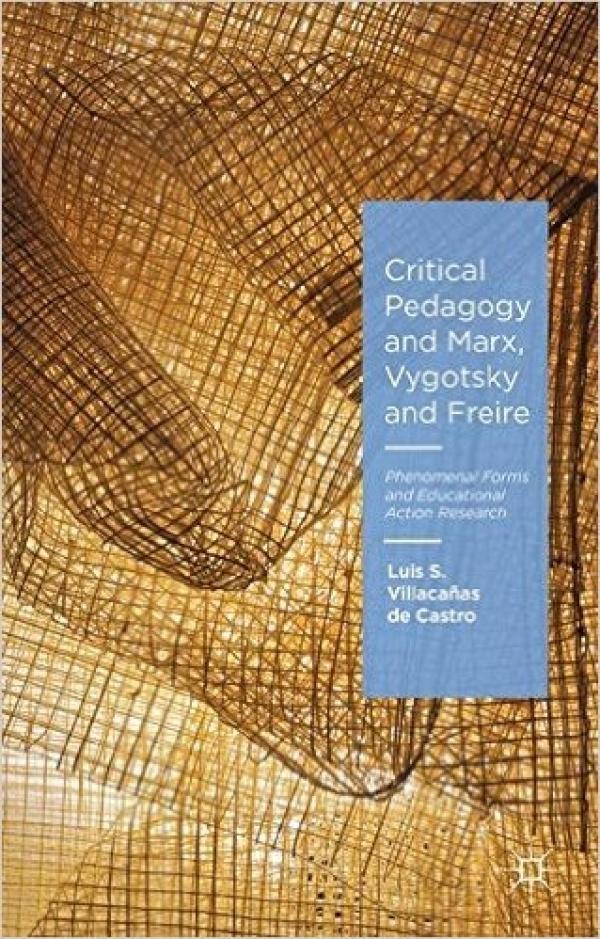
Luis S. Villacaňas de Castro, an assistant professor in the department of Language and Literature Education at the University of Valencia in Spain, wrote Critical Pedagogy and Marx, Vygotsky, and Freire as a companion volume to his earlier book The Copernican Turn and the Social Science, which was published in Spanish in 2013. Villacaňas de Castro writes extensively in epistemology, critical pedagogy, political philosophy, and language education and publishes in both Spanish and English. This volume has three sections and an introduction. In the introduction, the author explores the Copernican turn, which involves paradigm-shifting theories. He argues that four scientific theories qualify as Copernican turns: Freud’s psychoanalysis; Marx’s works in sociology; Neo-Darwinism; and the Theory of Relativity. Villacaňas de Castro explains that “a Copernican turn thus involves two kinds of knowledge: about the object and the subject; knowledge about specific realities; and also new knowledge about how human beings should understand themselves in relation to those four objects” (2). He argues that each Copernican turn creates epistemological obstacles, and he engages these obstacles through the lens of the German concept Erscheinungsformen, which he translates as phenomenal forms. The author explores “the threats and difficulties that the Erscheinungsformen pose to teaching and learning, and how educators should negotiate these obstacles” (5). Villacaňas de Castro uses the works of Marx, Vygotsky, and Freire to translate the epistemological obstacles into pedagogical problems and then engages pedagogical approaches to solve the problems (7). The author argues that these pedagogical approaches justify participatory action research as the most effective educational approach. The first section deals with Marx, Freud, and pedagogy. In Chapter I, Villacaňas de Castro introduces the major concepts of Marxist sociology and Freudian psychoanalysis in terms of pedagogical approaches to address the epistemological obstacles. Section II explores epistemology, critical pedagogy, and the liberal principle. The two chapters in this section engage concepts from Marx and Vygotsky to unpack and engage Erscheinungsformen. Villacaňas de Castro argues that this chapter reveals “a theoretical blind spot in Vygotsky’s pedagogy…which it is in the interests of critical pedagogues to resolve” (46). The work of Freire becomes key as Villacaňas de Castro develops this critical pedagogy in the form of social democracy. The last part of the book, Section III, explores the theory and practice of educational action research. Using Freire’s pedagogical approach and John Elliott’s liberal pedagogy, the author concludes “that John Elliott does not provide educators with a liberal pedagogy, but rather an appropriate method for them to fulfill their main critical goal: to help students understand the nature of the key subject matters that determine their life in society” (114). This supports Villacaňas de Castro’s argument and he concludes that participatory meta-action research is “an effective measure to break the vicious circle both students and I have fallen into” (144). This book is a very complex and abstract argument. Villacaňas de Castro’s academic writing style will throw off many readers. His sentence structures are very long (including a 141-word sentence on pages 86 and 87) with many embedded clauses. This makes attempting to unpack the already difficult concepts of Marx, Vygotsky, and Freire more challenging. However, the author develops a solid case for a stronger critical pedagogy rooted in participatory action research. Theological libraries that support programs with components of theological methodology should add this text to their collections. In addition, faculty and graduate students who are working with participatory action research should read this book to explore the epistemological foundations of their methodology.
On election night last year when Donald Trump won the presidential election, I was traveling in Greece visiting the historical and religious sites. Several days before the election, I visited the Acropolis and climbed up Mars Hill where Paul delivered his sermon to the Athenians (Acts 17:22-31). The fact that I was in Athens, the cradle of Western democracy, prompted me to think about the development of democratic institutions and their relationships to an empire. The word “democracy” in Greek combines the elements dêmos and krátos, and means literally, “people power.” However, only adult male citizens who owned land could participate in Athenian democracy. Women, slaves, children, and lower-class people were excluded. Athens once had the strongest military power among the Greek city-states and harbored imperialistic impulses. The Delian League, created by the Athenians in the 5th century BCE, captured cities, colonized and enslaved peoples. Athens suppressed revolts among the League’s members and collected dues from them in exchange for protection. In our modern day, democracy has not prevented countries from turning into imperialistic powers. The British once ruled an empire so vast that the sun never set on the empire. While British subjects enjoyed democracy at home, colonized subjects did not have self-autonomy and had to obey British rule and laws. In the US, Donald Trump’s slogan “Make America Great Again” appealed to deep-seated American imperialistic desire, especially among non-college educated white men. I began teaching a class on liberation theology shortly after Trump’s inauguration. My reflection on the relationship between democracy and empire prompted me to find ways to heighten my students’ consciousness about the image of the US and the impact of American policies abroad. During our first class, we discussed the changing political and social contexts in which we studied liberation theology. There were a significant number of international students from Asia and Africa in the class. I invited them to share reactions to Trump’s election from news reports from their countries. I also asked them to share their thoughts on the slogan “Make America Great Again.” A number of them said that the US is already the most powerful country and has a major effect in their own countries. They were concerned about how Trump’s presidency would affect global stability and foreign policies. After Hillary Clinton lost the election, some commentators discussed what Clinton’s loss would mean for the future of feminism. Others wondered why her coalition of women, racial and ethnic minorities and lesbian, gay, bisexual, and transgender people could not pull off a win. I discussed with students Columbia University professor Mark Lilla’s widely read essay “The End of Identity Liberalism.”[1] He warns that American liberalism has focused too much on identity politics and diversity issues, such as race, gender, and sexuality. This focus is disastrous for democratic politics for it fails to provide a unifying principle. Instead, he argues that we have to engage more in conversations about class, war, political economy, and the common good. Lilla’s essay has created a lot of debates, and some said that “identity politics” addresses real problems of discrimination. In our class discussion, I helped students to see two important points. First, we have to take an intersectional approach and see the various forms of oppression as mutually constitutive. Second, we have to avoid the tendency of focusing too narrowly on identity issues in the US, without paying attention to larger social, economic, and political forces shaping the world at the macro-level. Commentators outside of the US have taken the election of Donald Trump and raised it up as an example of how democracy can become dysfunctional. Some of my students were shocked when Trump was elected, and his first 100 days in office have created chaos and presented us with “alternative truths.” When my students felt depressed by the current political situation, I reminded them that democracy is a project and it requires vigilance in protecting it. We should not think that American democracy is the best institution, for it has been polluted by big money and big donors. Trump said during his campaign that he was free from Wall Street’s influences. But his cabinet and close advisors include many billionaires and people from Goldman Sachs. His currently proposed health care policy and tax reforms will benefit the rich and take away from the elderly, the sick, and the poor. I reminded students that democracy has been used as an ideology to further the cause of empire. In the 19th century, the spread of Christianity was part and parcel of the “civilizing mission” of the West. In the 20th and 21st centuries, the protection of democracy has been given as a reason for military intervention and regime change. In the name of democracy, the U.S. has supported military coups, toppled governments, and created regional animosity and instability. Democracy has taken several centuries to develop in Western countries, and cannot be superimposed by power and might from without. Within the course of one week, Trump ordered a military strike in Syria and the U.S. dropped a 22,000-pound bomb on ISIS forces in Afghanistan. It is vitally important to educate students to become global citizens who understand the consequences of US actions in the wider context of the world. A good beginning is to understand how democracy and populism can be used to serve imperial interests. [1] Mark Lilla, “The End of Identity Liberalism,” New York Times, November 18, 2016, https://www.nytimes.com/2016/11/20/opinion/sunday/the-end-of-identity-liberalism.html.
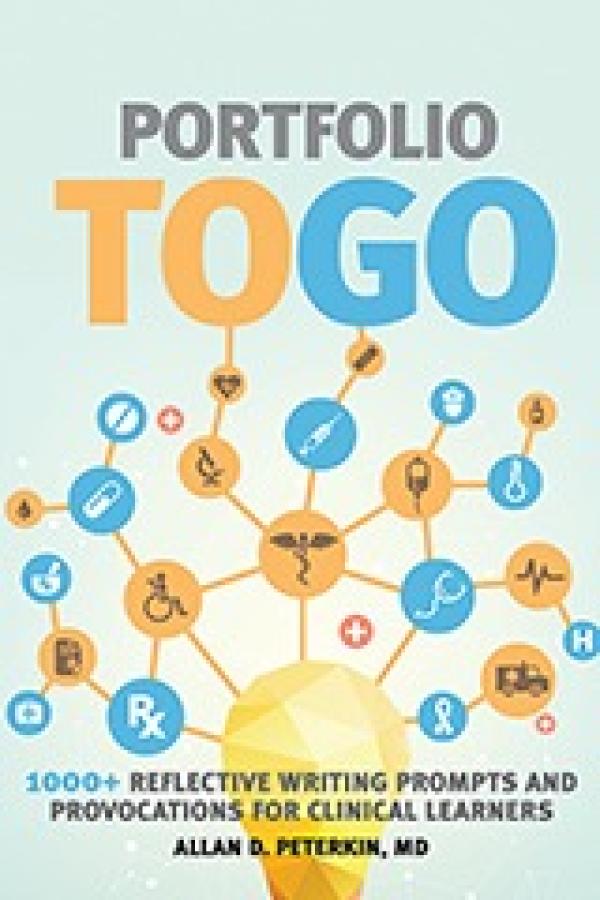
From Dewey (How We Think [Boston: D.C. Heath,1933]) to Schön (Reflective Practitioner [New York: Basic 1983]), and most recently Palmer and Zajonc (The Heart of Higher Education [New York: Jossey Bass 2010]) and Barbezat and Bush (Contemplative Practices in Higher Education [New York: Jossey Bass, 2013]), reflective practice has a long pedagogical history, especially in clinical training. Reflective practice calls for revisiting one’s past or present experiences in order to analyze, reconsider, and mine the learning in them for use in the future. Reflective practice is increasingly being employed in higher education along with the use of contemplative practices as a means by which to increase student use of critical thinking skills and embodiment of “competence, compassion, collaboration, and a tolerance for ambiguity in the face of uncertainty” (Peterkin, 3). Portfolio to Go offers a multitude of questions that encourage deep reflection on clinical and personal experiences by students in healthcare training programs. Although some prompts refer specifically to clinical and medical settings (for example, “Describe the hospital corridors at 3 a.m.” [80]), most deal with far broader settings (“Write a story about the last time you were yelled at” [42]) and could be used by students in a wide range of disciplines and in classroom or small group settings. Peterkin encourages their use primarily in reflective writing such as journals, critical incident reflections, or stand-alone assignments. He identifies writing as a tool that increases awareness of feelings and thoughts about one’s work, but also as a vehicle that deepens critical thinking, enriches ethical insights in complex situations, and encourages development of one’s professional identity. Inclusion of reflective writing in student portfolios provides professors or future employers a glimpse of personal and professional learning and identity formation over time. Although Peterkin intends the book for students, it would be useful as an educator’s guide to the inclusion of reflective assignments in clinical courses. In the opinion of this reviewer, the most valuable parts of this book are the chapters that coach and teach students how reflection and storytelling can maximize professional growth. The chapters include how to critically reflect in one’s writing, how to move from reflection to actionable practice, how to form and participate in a reflective writing group, and how to deal with internal criticism. In one chapter, Peterkin differentiates criticism (negative) from critique (positive) by noting that the former finds fault, notes what is missing, and attacks the writer, while the latter identifies strengths, looks for possibilities, and is honest but kind. In the chapter on moving from reflection to action, the author notes simple but profound elements of clinical visits that students often struggle to implement such as asking open-ended questions (“what would you like me to know about you?” or “what is one thing you haven’t asked me, yet?”), listening for patient concerns and fears, noticing metaphors in conversation and using them to expand understanding, and being aware of body language (standing, sitting, touching) and how it impacts relationship. Educators often find assessing reflective writing and discussions difficult because of the personal and vulnerable nature of reflection. Peterkin offers a very useful rubric (118-120) that provides ways by which to measure levels of participation and reflection. Portfolios to Go is a helpful volume for any educator interested in exploring the value of reflective practice and in including reflective assignments in a classroom or clinical training program.
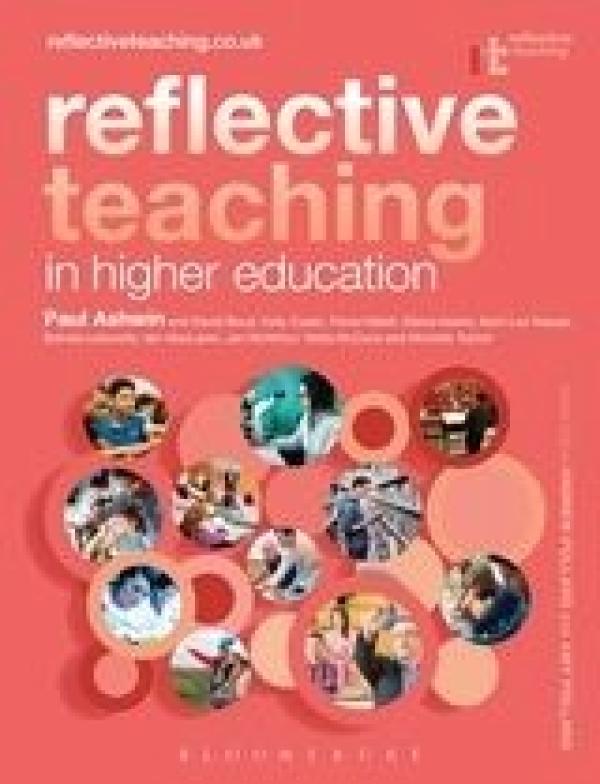
A group of English, Scottish, Irish, and Australian scholars has produced a thorough and insightful resource for effective teaching in higher education that seeks “to bring together the latest knowledge and understanding of teaching, learning, and assessment in higher education” (xi). The editorial team developed the approach to reflective teaching on the basis of the ten point Teaching and Learning Research Programme (TLRP) developed in the UK. The chapters in each section refer to the relevant principles in TLRP and put forward credible arguments grounded in recent empirical research. The editors intersperse useful reflective activities and case studies throughout each chapter in order to promote reflective inquiry by individuals and groups of teachers. The editors organized the book into five parts: Becoming Reflective; Creating Conditions for Learning; Teaching for Understanding; Reflecting on Consequences; and Deepening Understanding. Taken together, these five elements constitute a model for the development of effective teaching in higher education that is comprehensive, open-ended, and ongoing. The approach offered here functions like a dynamic spiral toward adaptive expertise. The emphases on evidence-based theory and practice, constructivism, teaching as jazz improvisation, assessment as a crucial component of learning, and robust inclusion all recommend this book to contemporary educators in higher education. I find only two deficiencies in this impressive body of work. At four hundred pages, only the most dedicated teachers or administrators in higher education will read the work as a whole. I tried to plow my way through to the end several times, but could only make limited progress in any one session of reading due to the density of the material. I think a book half the size of the existing volume would have sufficed. The second problem concerns the commitment of the authors to critical pedagogy. Toward the end of the book, the editors advocate ever more strongly for a largely Frierian-based approach to diversity and inclusion as the best – perhaps the only – way forward in higher education today. While I have more than a passing interest in critical pedagogy, I find the narrowing of the philosophy of education bandwidth advocated here to be overly confining and surprisingly uncritical. I would have liked to see a treatment of multiple approaches that would support the establishment of egalitarian and inclusive communities of learning in higher education. I see four likely uses for this book. Those charged with leading doctoral seminars on teaching in higher education may find this a particularly valuable resource. I know that I will. It could well serve as a viable alternative to Barbara Gross Davis’s Tools for Teaching (2nd ed., Jossey-Bass, 2009). This book could also help new professors develop the kind of reflective practice that will enable them to become expert practitioners of the craft of teaching. Many individual chapters of the book could find use by those leading in-service faculty development sessions. Finally, academic deans or committees responsible for promoting effective teaching in faculties could profitably work their way through this resource in its entirety as a way to gain a 360° sense of effective teaching and learning in higher education today.
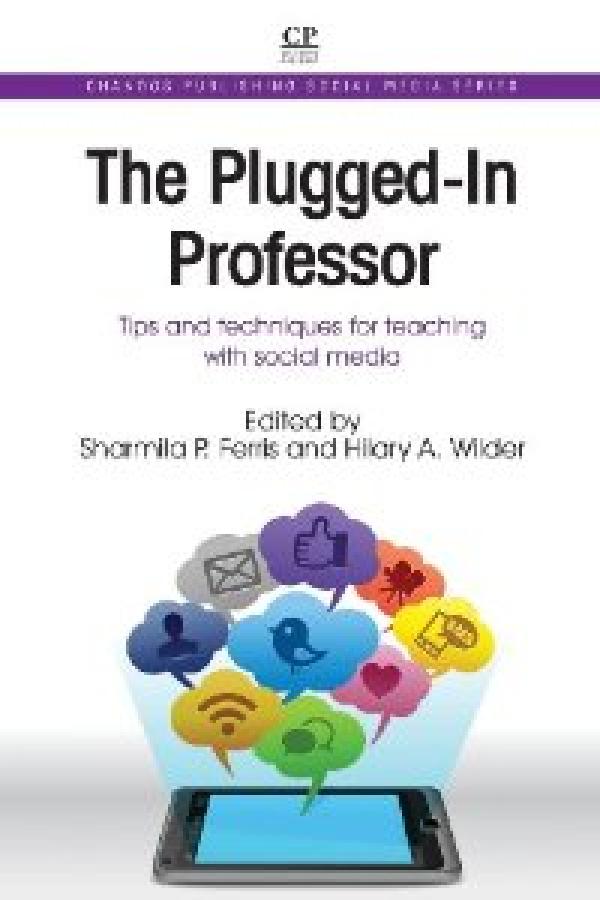
This volume is designed more like a handbook than a piece of prose. Aside from the preface that details how the volume is arranged and how each successive chapter is outlined, each chapter (twenty-five in total) represents a stand-alone essay that describes how an instructor can integrate a piece of social media into her or his curriculum and assignment portfolio. The essays are divided into four parts. The essays in Part 1, “Research, Writing and Information Fluency,” focus on applications of social media that challenge students to develop effective research and writing skills. The essays on “sharing” sites are of note because they offer instructors insight on how to use social media sites that students are already using to share research through bookmarking cultural artifacts. Part 2, “Communication and Collaboration,” is divided into two sections. The first section focuses on instructional communication through social media. Each social media outlet examined in this section is a communicative tool (for example, Wimba or YouTube) that can be re-allocated for educational purposes. The second section of Part 2 concerns issues of collaboration in terms of students working together on educational projects through social media tools such as Google Docs, study blogs, and group-designed wikis. Part 3, “Critical Thinking and Creativity,” is also divided into two sections. The first section considers how students can demonstrate critical (and, I might add, culturally perceptive) thinking through social media outlets such as Tumblr and Facebook. Students are challenged in these sections to examine social trends and personal expressions offered by users of these social media outlets to ascertain how persons learn and demonstrate social ethics or personal and professional development. The second section focuses on creative final course projects such as digital storytelling or video streaming presentations. Part 4, which concludes the volume, focuses on integrative learning, on integrating research, communication, collaboration, critical thinking, and creativity into one social media project. The final essay is of note here because it describes how students conducted a “social media campaign” through Twitter (xxvii). The students researched a client, communicated with opinion leaders in the client’s field, and promoted the client’s cause through critical reflection and creative engagement. The Plugged-In Professor clearly articulates that learning can be promoted in a host of ways through the use of social media. Therefore this is a valuable resource. The social media savvy instructor will be able to wade through the technical language with ease and find projects that he or she can use in class. However, the digital immigrant or digital alien may be overwhelmed at first. This volume can be read straight through, but one is likely to get bogged down in the various approaches and creative projects. It may be more helpful to read this volume like a tasting menu, sampling this Twitter-based exercise or that exercise for Google Docs. Perhaps it could be seen in a similar light as the Teaching Theology & Religion “Teaching Tactics.” Regardless of how one reads the material, the instructor should be careful to assess each project’s usefulness before implementing a social media project. The only real limitation to this volume is that the field of religious studies and theology was not represented, but religion and theology faculty can adapt these projects for their courses. For example, I was challenged by some of the essays in Part 1 to develop a wiki group project for my Pentateuch course. That said, it would be have useful and encouraging to see at least one sample of how social media has been used in a religious studies or theology course.