Resources
For the past seven months I have been immersed in storytelling. My small project grant, Black Women’s Storytelling as Healing Pedagogy, has taken me on a journey of wonder, insight, wisdom, knowledge, revelation, and so much more. I had conversations with eleven Black women storytellers who are living their vocational calling at the intersection of the church and academy. Their definitions of story and personal practices of storytelling inform their individual and collective approaches to healing pedagogy that inspires human flourishing. The culminating event of this project was a storytelling excursion to Washington DC, to visit the Smithsonian National Museum of African American History and Culture. This experience propelled me to the mountaintop of storytelling centered on the African Diasporic experience. Let me share one of a multitude of stories that expanded my worldview.Jim Crow Laws and lynch mobs were a common part of the landscape of the United States prior to the civil war. They continue in a variety of ways beyond the strange fruit that hung from southern trees that Ancestor Billie Holiday sang about. Now unarmed and nonviolent Black men, women, and children serve as target practice for those commissioned to serve and protect.Remembering the 1920’s to 1930’s in Marshall, Texas, and at Wiley College in particular, Professor Melvin B. Tolson confronted racist attitudes and actions to establish a debate team which he knew would be equal to any white teams during that time. The students’ have been given the name “The Great Debaters” and competed in the first inter-racial debate ever held in the history of the south.The film, “The Great Debaters,” was introduced to the world in 2007. The story centered around the young students and their coach, Tolson, played by the film’s director, Denzel Washington. “The Great Debaters” is one of my favorite movies because of its historical significance and embodiment of Black Excellence.During my tour of the museum, I marveled as I thoughtfully and carefully viewed the exhibits and artifacts. One exhibit in particular caught my eye. It was a flier depicting the original Great Debaters from Wiley College. I found myself drawn to the photos of these young men and women, recalling the struggles and obstacles they had to overcome as they sought to establish themselves as just as good or better than their white counterparts in the field of forensics. As I stood there reflecting and paying homage to my Wiley College ancestors who faced the realities of domestic terror in the south, I heard the word “RESOLVED,” in my heart, mind, soul, body, and spirit.During a debate, a resolve is a specific statement or question up for debate. It is also a determination to do or refrain from doing something. Resolve is to come to a conclusion. I asked God, what is the RESOLVE, or what is to be determined, as I engage, explore, and experience the museum? I was led to Psalm 118: 17. BE IT RESOLVED: “We (Black people) will not die, but live and proclaim what the Lord has done.” This is the story of MY people throughout all generations. We will not die, but live, and will proclaim what the Lord has done. Ancestor Maya Angelou with her soul’s conviction said it poignantly in her world-renowned poem, “And Still I Rise”:Out of the huts of history’s shameI riseUp from a past that’s rooted in painI riseI'm a black ocean, leaping and wide,Welling and swelling I bear in the tide. Leaving behind nights of terror and fearI riseInto a daybreak that’s wondrously clearI riseBringing the gifts that my ancestors gave,I am the dream and the hope of the slave.I riseI riseI rise. RESOLVED—We will not die, but live, and proclaim what the Lord has done.
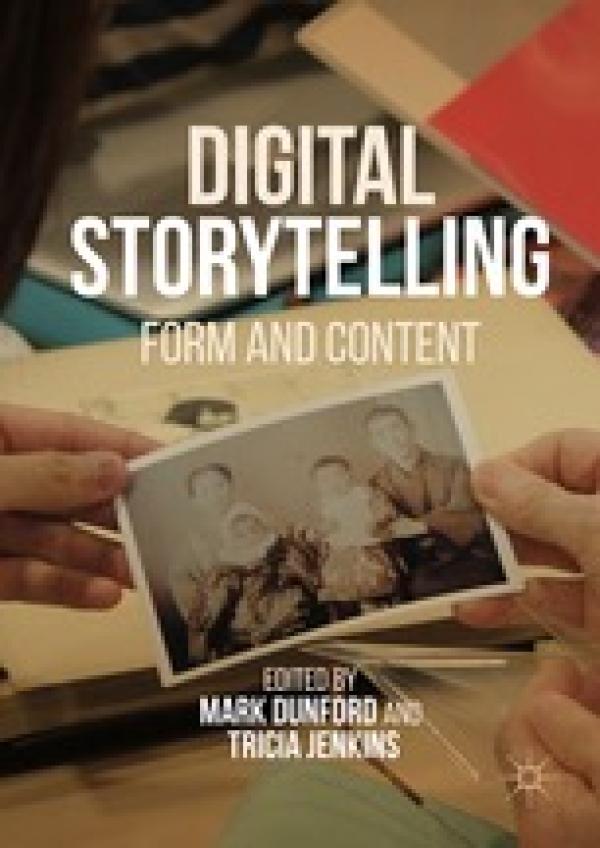
Upon reading the varied chapters that constitute Digital Story Telling: Form and Content, I could not help but be reminded of Salman Rushdie’s comments on the power of story. Those who do not have the power over the story that dominates their lives, the power to retell it, rethink it, deconstruct it, joke about it, and change it as times change, truly are powerless, because they cannot think new thoughts. (1991, Dec. 12, New York Times) Rushdie’s words illustrate the demands the postmodern world places on all individuals. It is a world replete with a multiplicity of stories in a myriad of forms… stories of domination and liberation, state narratives and personal accounts, corporate media renderings, and cellphone videos. In this world, the personal and political are not easily divorced. It is a world eager for new mediums which can offer the individual tools for agency and a space in which to tell, retell, rethink, deconstruct, joke about, and change their story. Digital Storytelling (DS) appears to be one such medium. What is DS? This volume’s editors, Mark Dunford and Tricia Jenkins, describe it as “a simple, creative process whereby people with little or no experience of computers gain the skills needed to tell a personal story as a two minute video using predominately still images combined with recorded voice-over, and often including music and/or other sounds” (3). The end products are “self-representational stories which emerge from a collaborative workshop process using a ‘Story Circle,’ in which a range of writing stimuli and other activities are used to develop trust within the group and ‘find’ the story” (3). Much of this definition comes from a pioneer in the field of DS, Joe Lambert, whose Digital Storytelling workshops, terminology, and methods have shaped the DS movement. DS is a form of participatory media in which political activism is embedded in its very practice. Lambert describes how in the 1990s he and those he was working with “thought of the Internet, new low-cost digital media production tools, and the distribution opportunities of the web as major advances that could promote global democracy and liberation” (22). The advent of the Internet for such a medium is tantamount to the proliferation of the printing press in sixteenth-century Europe. One need only look to social media platforms such as Facebook, YouTube, and Instagram to see how the Internet and low-cost media production tools have changed what we watch and how we watch it. DS is a precursor to this platform proliferation and the motivations driving it as a process appear to have been less fiscally motivated. One of the paramount intentions of DS is to provide the voiceless the means to be heard. Of course, DS workshops have facilitators and funders, both of which, intentionally or not, are intimately involved in the creation and dissemination of these personal stories. The volume is segmented into four elements or parts: Practice (five case studies from Kenya to the UK of DS in action); Content (pieces addressing the role content, especially content of a political [Simsek] or socially provocative [Kuga Thas] nature, plays in how that content is created, collected, received, parsed, and disseminated [Lewis and Matthews] and licensed [Spurgeon]); Form (insights garnered from when the cultural specificity of the DS model requires modification such as in Japan, Romania, and Ireland); and Understanding (three essays honing in on the limits and potential of DS as a political and personal force in the world). The volume culminates with Nancy Thumim’s chapter “Therapy, Democracy, and the Creative Practice of Digital Storytelling” in which she reflects on the unifying themes of the book (DS as democratizing work, DS as therapy, DS as meaning-making, reflection, presentation, and representation) as well as the logistical and ethical challenges DS faces (issues of ownership in regard to co-created media, the afterlife of created materials, restructuring workshops to accommodate participants of disparate backgrounds and differing needs). DS, in its varied iterations, straddles the personal and public and opens up a space for creativity among communities created by the DS workshops and those affected by their material output (artifacts). Perhaps the most compelling aspects of this volume are the stories (as found in Rainbird, Henry, Hardy and Sumner, Lewis and Matthews, Ogawa and Tsuchiya, Alexandra, and Brushwood Rose) of those persons challenged with mediating and assisting others (often those whose voices go unheard) through the process of narrating their own stories. As an academic advisor, the power of storytelling for self-actualization is readily apparent to me. Like the DS workshop facilitators in this book, academic advisors are involved in a co-creative narrative process. Advisors help students reflect on their goals and values and provide them with tools and mechanisms for authoring their own academic life story. The examples of DS workshop facilitators agonizing over how active to be in the creation of these personal stories should resonate with any reader who works in a co-creative capacity (advisors, administrators, teachers, parents, therapists, and so forth). The stories presented in each of these chapters are rather remarkable and, indeed, powerful. Anyone interested in modern media, narrative, social activism, communication studies, film, as well as those versed in DS scholarship, will find this a compelling read.
The car service arrived at my house. I grabbed my purse, suitcase, and briefcase and hurried out the door making sure it was locked behind me. As scheduled, we stopped to pick up a colleague who was also attending the conference in Toronto, Canada. Driving east on Highway 78 and almost to Newark International Airport, I gasped. My passport was still at home. My colleague asked if I wanted to go back and get it. I looked at my watch and said, “No.” Going back would likely mean we both would miss the flight. Once at the ticket counter, I handed the gate agent my ticket and driver’s license. I told him I was on my way to Toronto. He looked at my ticket to confirm an international destination. He asked me for my passport. I told him, in my most contrite voice, that I had left my passport on my dining room table. He stopped himself from rolling his eyes, but a faint sigh of annoyance slipped through his otherwise professional demeanor. Still, in a mode of apology, I asked, “Surely there is some other identification that I can use to cross the border . . . . Not everybody has a passport!” Without looking up from his terminal, he informed me he would accept a U.S. Voter Identification Card. “EUREKA!” I thought and “EEEEEeeeee!!!!!” came out of my mouth. I gleefully reached into my purse, found my wallet, located my voter registration card, and with the pride of the ancestors, I extended my arm to hand it to the ticketing agent. My flurry of emotion had gotten his attention, and he looked up from his terminal and at me. When I handed him the card, he stared in disbelief. Slowly he reached for the worn card, examined it suspiciously, and was flabbergasted. He went from doubt to shock with the reading of the card. He raised my card above his head and called to his left and then to his right—to the other agents at neighboring terminals—“Someone has it! Someone actually has a voter registration card!” The other agents reacted with nods of approval and surprise. The African-American gentleman processed my ticket and gave me a boarding pass. He said to me while handing back my voter card, “Nobody ever has these.” I thanked him for telling me of the alternative ID and asked if I would have any trouble getting back into the USA from Canada with only a voter registration card as ID. He said, “It’s the law. They have to let you back home.” My voter registration card has been in my wallet since 1980 – age 18. I carry the card as a symbol of ancestral work and sacrifice that created the democratic republic, the United States of America. The free labor of my African enslaved people provided ease in the creation of a democracy for those white men who reaped untold financial benefits and whose families still benefit from this legacy of blood and dehumanization. I carry my card to mark the progress of Black women. Through the leadership of such women as Barbara Jordan, Sojourner Truth, and Madam C. J. Walker, we are surviving. The card reminds me that in 1994, the brothers and sisters in South Africa seized democratic rights. I cried when after a three-day journey by wheel barrel—with grandchildren taking turns pushing—the grandmother cast her vote for Nelson Mandela as president. I cried because so many grand-women did not have wheel barrels for transportation to the polls. Lest my repletion become hollow romantic recollection and foolish sentimentality, I admit that I would have, even in 2002, known that my voter ID would allow me to cross the US/Canada border. Welding the power of democracy means knowledge of my rights as well as voicing my dissent when my rights and the rights of others are challenged, and even taken. The politicians and the system that benefits from my not knowing my rights must be challenged and dismantled. Undoubtedly, the recent executive orders by the newly elected president that would have banned Muslim brothers and sisters from entering the United States was stopped by mobilized voters. Unquestionably, the House and House Leader Paul Ryan, on March 24th, canceled their vote to repeal and replace the Affordable Care Act due to the pressure of grassroots efforts by churches, synagogues, and mosques; by grassroots advocacy organizations like Black Lives Matter and Indivisible; and by those Republicans, likely voters for President Trump, who felt betrayed when the bill would shrink Medicaid. With widespread acts of protest and resistance in the first hundred days of the presidency of #45, the complacency of the American voter has been shed. It is, for voters, an exciting and dangerous time in democracy. We are coming to the realization (again!) that liberty depends upon a voiced constituency. Without a voiced constituency, we have only ourselves to blame for the creation of a dictator as president. Democracy is not in the DNA of the United States. Instead, democracy is one of the most powerful ideas on earth and each generation must make the decision to doggedly pursue this profound belief or not. Classrooms hold the possibility of being the invaluable spaces where the idea of democracy is re-inscribed on every generation. While I do not believe classrooms are in-and-of-themselves democratic spaces, I do subscribe to the view that classrooms are training grounds for learning to use the spectrum of voices needed for our flourishing democracy. Our students must become border-crossing sojourners able to discern what is right and just. The classroom is where informed and thoughtful citizens should be shaped, constituted, and inspired for the work of justice. Classrooms are the spaces to cultivate the voices that would challenge the oppressions that have a stranglehold on our democracy. What are the rights of students in your institution? By what means are the rights of students known and owned by students? How do these rights enter into the course design for formation and accountability? What would it mean to discuss the rights of students in the classroom, and then juxtapose those rights and responsibilities with those of the local and national democratic system? In what ways does a banking system approach to teaching truncate citizenship? In what ways does a banking system approach contribute to a voiceless democratic constituency? Which pedagogies prepare students for full participation in democracy? What would it mean to assess all introductory courses to discover the kinds of voice students are expected to develop and utilize through class participation and assignments? What would it take to expand the repertoire of voices developed across the introductory courses? What would it mean to raise the awareness of faculty concerning the ways the U.S. democratic system affects international students and recently immigrated students? In what ways can faculty better support international students and recent immigrants through their course design?
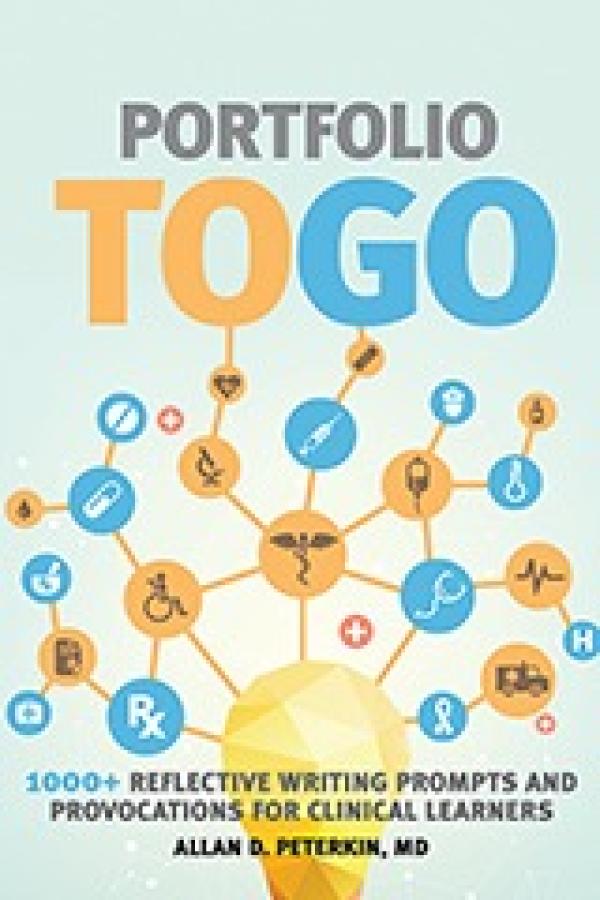
From Dewey (How We Think [Boston: D.C. Heath,1933]) to Schön (Reflective Practitioner [New York: Basic 1983]), and most recently Palmer and Zajonc (The Heart of Higher Education [New York: Jossey Bass 2010]) and Barbezat and Bush (Contemplative Practices in Higher Education [New York: Jossey Bass, 2013]), reflective practice has a long pedagogical history, especially in clinical training. Reflective practice calls for revisiting one’s past or present experiences in order to analyze, reconsider, and mine the learning in them for use in the future. Reflective practice is increasingly being employed in higher education along with the use of contemplative practices as a means by which to increase student use of critical thinking skills and embodiment of “competence, compassion, collaboration, and a tolerance for ambiguity in the face of uncertainty” (Peterkin, 3). Portfolio to Go offers a multitude of questions that encourage deep reflection on clinical and personal experiences by students in healthcare training programs. Although some prompts refer specifically to clinical and medical settings (for example, “Describe the hospital corridors at 3 a.m.” [80]), most deal with far broader settings (“Write a story about the last time you were yelled at” [42]) and could be used by students in a wide range of disciplines and in classroom or small group settings. Peterkin encourages their use primarily in reflective writing such as journals, critical incident reflections, or stand-alone assignments. He identifies writing as a tool that increases awareness of feelings and thoughts about one’s work, but also as a vehicle that deepens critical thinking, enriches ethical insights in complex situations, and encourages development of one’s professional identity. Inclusion of reflective writing in student portfolios provides professors or future employers a glimpse of personal and professional learning and identity formation over time. Although Peterkin intends the book for students, it would be useful as an educator’s guide to the inclusion of reflective assignments in clinical courses. In the opinion of this reviewer, the most valuable parts of this book are the chapters that coach and teach students how reflection and storytelling can maximize professional growth. The chapters include how to critically reflect in one’s writing, how to move from reflection to actionable practice, how to form and participate in a reflective writing group, and how to deal with internal criticism. In one chapter, Peterkin differentiates criticism (negative) from critique (positive) by noting that the former finds fault, notes what is missing, and attacks the writer, while the latter identifies strengths, looks for possibilities, and is honest but kind. In the chapter on moving from reflection to action, the author notes simple but profound elements of clinical visits that students often struggle to implement such as asking open-ended questions (“what would you like me to know about you?” or “what is one thing you haven’t asked me, yet?”), listening for patient concerns and fears, noticing metaphors in conversation and using them to expand understanding, and being aware of body language (standing, sitting, touching) and how it impacts relationship. Educators often find assessing reflective writing and discussions difficult because of the personal and vulnerable nature of reflection. Peterkin offers a very useful rubric (118-120) that provides ways by which to measure levels of participation and reflection. Portfolios to Go is a helpful volume for any educator interested in exploring the value of reflective practice and in including reflective assignments in a classroom or clinical training program.
I was scheduled to write a blog post on teaching about controversial issues and how they are shaping contemporary Muslim identities in North America. Guessing, however, that many readers may be fatigued from the barrage of unfavorable events – from the U.S. travel ban on citizens of seven Muslim-majority countries to a horrible attack on a mosque in Quebec – I have decided to dedicate this particular blog to one of my favorite pedagogical tools for inspiring hope as well as a lasting sense of personal connection to the subject matter: the telling of a story. Storytelling is one of the oldest techniques that human beings have used to teach one another. From pre-Islamic times to the present day, all Muslim societies have been shaped by orality in the form of tales, fables, myths, legends, and narratives. As I have emphasized to my students, there are many purposes for storytelling: for spiritual and moral guidance; for creating a sense of the supernatural, the metaphysical, and the existential; for inspiring learning, wonder, and adventure; for critiquing self and society; and for reinforcing historical narratives, in ways that can create positive social identity as well as stereotypes, prejudices, and even a basis for ongoing conflict. Whether I am teaching an introductory course on Islam or a graduate course on Sufi expressions of Islam, some of my greatest moments in class are when I share with students a story of my living experience of traveling to particular places in the Muslim world. For this blog I would like to share a story from a visit to Egypt more than a decade ago, as a window into diverse aspects of Arab and Middle Eastern culture (I also sometimes share this story when lecturing on traditional Islamic cities). While my particular story will differ from the stories other instructors will use in their own teaching, I hope that the manner in which I communicate different realities and experiences will prompt others to harvest their own distinctive experiences, and consider which aspects of those experiences might be richest in content for students – particularly those whose ideas about Muslim-majority and Middle Eastern societies are abstract and largely gleaned from news and popular culture. In 2003, I had the honor of planning and coordinating a conference at the Library of Alexandria in Egypt. After the conference was over I lingered in Egypt for a number of days, and on my last day I wanted to go shopping for books on Sufism in Cairo. (I would share with my students that Cairo and Damascus have long been two of the greatest cities in the Middle East for finding and buying books on Sufism.) A list of books in hand, my husband and I went from one bookstore to another and then another until we finally encountered, at the very back of one store, a beautiful elderly man who wrote and then recited the following sentence on a piece paper: “You must find Abdul Rahman at 5:00 pm in Azbakeya.” Inspired by this new lead, we set out to find Azbakeya but no one knew where it was. Finally, after much searching, we found it – an area in Cairo where there were booksellers of every kind, clustered in row upon row of small metal shacks. Somewhat daunted about where to start, we began to ask where we might find Abdul Rahman. As so often happens in the Middle East, many people were willing to stop, listen, and try to help, leading us from one person to the next but still no Abdul Rahman. Eventually, though, we did find Abdul Rahman and promptly showed him the list. How long, he asked, would we be in Cairo? “We leave tonight,” we informed him. Hearing this, he physically closed his shack for the day and said, “Follow me.” Surprised by this turn of events and uncertain about exactly where we were going, my husband and I then started to follow Abdul Rahman through the busy streets of Cairo, swerving this way and that. The sunset prayer had just begun and people were bustling about – some going home, some praying on the street, and others on their way to whatever events they had planned for the evening. Abdul Rahman then did a strange thing. He climbed into the front passenger seat of a taxi cab and beckoned us to get into the back of it. Still unsure of our destination, we complied with his request and felt good about this new, unforeseen but promising development. As a professor once told us, “Surrender to the grace of the moment.” As we made our way down paved but dusty streets, we started to realize that our cab was approaching “the City of the Dead” (I would share with my students how this is an area known to be both one of the largest cemeteries in the Middle East and also a place where the poorest of Cairo’s poor find spaces to live.) Abdul Rahman was taking us to his home. The cab dropped us off in front of a modest mausoleum building, and Abdul Rahman yelled up to the second floor where his beautiful daughter, perhaps 8 or 9 years old, was holding a baby. She peeked out, ran down to the front gate, opened it, and handed the baby to her father. We then entered the building and followed Abdul Rahman to his living quarters, where there were books on all four walls, and books in boxes as well as on top of boxes and tables. We could not imagine fitting more books into one space. Abdul Rahman then handed the baby to my husband before proceeding to search his stacks, and I thought to myself, “This is the first time I have seen my husband hold a baby and it was in the City of the Dead!” Knowing his collection well, Abdul Rahman moved efficiently from one stack to another and brought forth a stack of books on Sufism. Some, he pointed out, were hundreds of years old – for instance, an early edition of Ibn al-‘Arabi’s Futuhat al-Makkiyyah. Even though we did not want to bargain – no easy task for us in any event, made somewhat more awkward by the circumstances – we then had to haggle for the books. (I would share with my students the social significance of haggling and the art to a good haggler!) Soon, after a few purchases and some small talk about baby names (Abdul Rahman cited a hadith of the Prophet to explain his own preference for boys’ names starting with Abdul [meaning servant of a particular divine quality] and etymological variations on Muhammad [which translates literally as “praising and praiseworthy”]), it was time for us to leave. We had to get back to our hotel, check out, and then leave for the airport to catch our flight. Abdul Rahman went outside and hailed a taxi for us in the City of the Dead. While conversing with our young cab driver, we discovered that he was a Nubian, with roots in Egypt’s culturally distinctive south. Upon hearing that we had come from the United States, he smiled and, with a thumbs-up signal, articulated a single word with much drama: “Schwarzenegger!” We immediately grasped his meaning, though this was our first news of the matter: Arnold Schwarzenegger had won the election, becoming governor of California. Unable to resonate with his obvious excitement, we felt what might be described as the beginning stage of reverse culture shock. My husband and I looked at each other, and could read the same meaning in each others’ faces: “We are going back to that.” In an attempt to change the subject, we tried to steer the conversation to Egypt and Egyptians – so much hospitality, and so many amazing things to see. Our driver was happy to hear of our positive experience, and appeared to enjoy the exchange. Then about five minutes before arriving at the hotel our driver pulled over to the side of the road, and turned to us with a hand signal that every visitor to the country must learn within the first day or two: “Please wait just a minute.” He then hopped out of the car and left us in it! Once again we consulted intuition but things felt good and we “surrendered to the grace of the moment.” A few minutes later, our driver popped out of a small roadside shop, slid into the driver’s seat, and turned to present us with a single rose in each hand. He looked at us with light in his eyes and said, “Welcome to Egypt!” Many of my students over the years have told me that this is one of the stories they remember. Like other stories, it beckons them to encounter the Muslim world with openness, wonder and awe rather than fear, perplexity, or prejudgment. With this story, I invite my students to enjoy the process of entering into the same sense of discovery experienced by a traveler abroad on some new journey, never quite knowing what to do or what to expect, but open to common humanity, curious about cultural nuance, and eager for the inevitable experience of surprise.
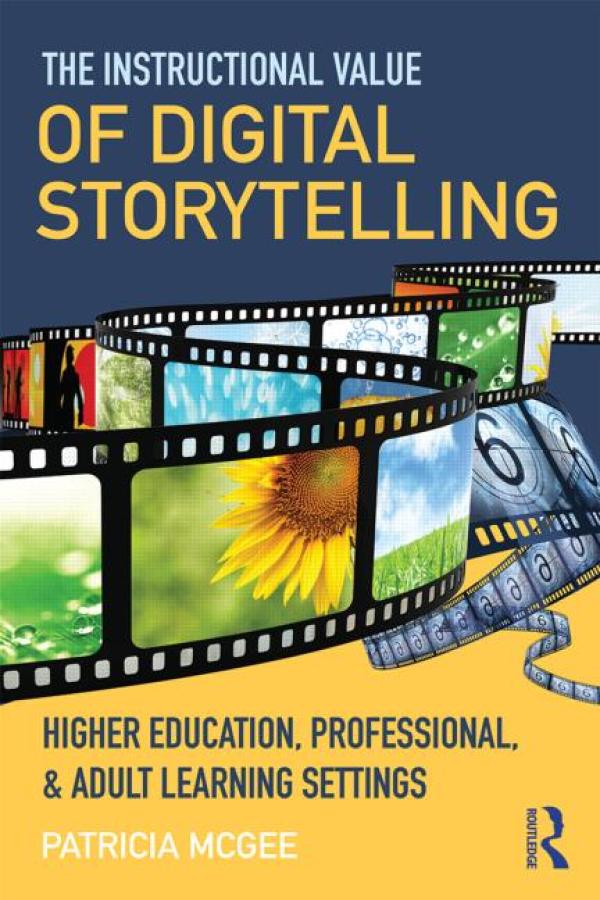
Digital Storytelling originated in the early 1990s in the matrix of what was then called “new media”: a mix of graphics, photography, videography, audio recording, and video and audio editing. As first developed at the Center for Digital Storytelling in California, workshop participants learned to create a two- to three-minute first-person story in a digital format that could be shared via the Internet. By 2000 when media production software became commonly available on personal computers, what had been the realm of professional artists and media producers became a potential playground where ordinary people of all ages could be empowered to craft and to share digitally a succinct, poignant, brief first-person video story. Since then, this form of storytelling has found advocates around the world: in small villages in Wales; in schools from elementary to college-level in the U.S.; in museum art programs in Australia; and in social service and social justice organizations in the U.S., Africa, and elsewhere; and in youth faith formation in Norway and Denmark. Major universities now offer education courses in this method, from the University of Cardiff in Wales to the University of Hawaii. ESL teachers have successfully employed this technique to help immigrants tell their stories. PhD students have written dissertations that explore the evolution and application of Digital Storytelling in a variety of settings, and media and cultural studies scholars have analyzed this phenomenon as it has been introduced in multiple cultures. While the original short format is referred to with initial capital letters, the wider field of digital media storytelling has evolved and now takes many forms. Patricia McGee has carved out a portion of this diverse world of digital storytelling and limited her comments to “Higher Education, Professional, and Adult Learning Settings,” which is still a very wide scope. She divides this well-researched work into three sections that provide excellent overviews of past storytelling traditions and new twenty-first century approaches; current institutional uses and emerging models for digital storytelling; and applications in diverse cultural and institutional contexts. She advises readers to turn to whichever section they find of most interest. Theological educators and religious studies professors will most benefit from exploring the third section on applications. With a little imagination, they can envision how the digital storytelling examples McGee cites can be translated for application in their classrooms and how their ministry students and graduates can use digital storytelling in youth ministry, faith formation, catechumenal processes, new members gatherings, church building transitions and anniversaries, and church websites. McGee, Associate Professor of Digital Learning Design at the University of Texas at San Antonio, is evidently a master of her wide-ranging, fast-evolving field. She is a good guide, one who will stretch the vision of theological and religious studies educators. By introducing this creative, communal digital storytelling process in their classrooms, their students can learn to empower themselves and others to claim their voice.