Resources
Podcast series. Offers insights for amplifying critical thinking in daily life.  This podcast is for anyone who wants to understand the ins-and-outs of how our brains work when it comes to thinking, but it’s also great for educators who want to understand how their student’s brains work!  Smarterer! Is a humorous, short, and immediately useful.  
The Critical Thinking Initiative podcast is a response to the low critical thinking outcomes among U.S. students across all levels of education. Each episode dispels myths about teaching critical thinking education and discusses cutting-edge, research-supported ways to actually improve critical thinking in any discipline.
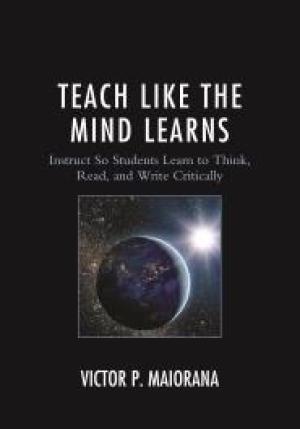
This volume is the most recent of a triumvirate of interrelated works Maiorana has recently published. Teach Like the Mind Learns builds off Fixing Instruction: Resolving Major Issues with a Core Body of Critical Knowledge for Critical Instruction (2015) and Preparation for Critical Instruction: How to Explain Subject Matter While Teaching All Learners to Think, Read, and Write Critically (2016). Maiorana’s larger project is an ambitious one. He takes aim, with broad brushstrokes, at rote-learning styles of instruction, a specter he calls “serialism” and describes as the “teaching profession’s weak default instructional strategy” (4). He contends that this pervasive style inhibits “our innate ability to think critically” (155). As an antidote, Maiorana offers his own unique instructional framework. He argues that subject matter is universal and critical in nature across disciplines. He also argues that one can teach how the mind learns, and as a result, promote teaching that gets students to write, speak, and observe critically. One can do this by utilizing “mind grammar,” which he defines as the “innate, systematic, and patterned way that the human mind encounters the world and all its subject matter” (6), At the core of mind grammar instructional techniques are what he calls “subject matter displays.” Much of the practical approach involves formal concept mapping and displaying the explanation of a certain term or concept with related activities. The book unfolds in two main parts: part one provides an overview of Maiorana’s theoretical basis for critical instruction, and part two offers numerous examples of activities and instruction sets using this framework. Teach Like the Mind Learns is a tough nut to crack. This is largely because it is a closed intellectual loop. The only other instructional literature Maiorana cites in footnotes and references in passing are his own two earlier works on the topic. He even instructs the reader to purchase his previous books so one can better follow the self-referential citations that abound in each chapter. The first-time reader must further master Maiorana’a distinctive vocabulary, from mind grammar to “Itechniques” and “Imethods.” Consequently, the learning curve for reading Teach Like the Mind Learns is steep. It is largely predicated on the assumption that the reader has read and embraced Maiorana's earlier works. There are some helpful insights throughout, including the example teaching exercises that make up the second half of the book. But as Maiorana’s approach avoids engaging with any other instructional literature beyond his own, it is ultimately not clear how one might use this approach in combination with other pedagogical styles and resources to improve classroom instruction. Further, he suggests a remarkable universality to his framework, regardless of specific context – from elementary through college-level instruction – a bold one-size-fits-all approach. In a world of opportunity costs, limited time, and limited energy, someone looking to explore “how the mind learns” would be much better off diving into the established science of learning literature. There are numerous accessible works on its foundations and praxis, and several that are specifically about improving instruction at the college level, such as James Lang’s Small Teaching (San Francisco: Jossey-Bass, 2016) and Donelson Forsyth’s College Teaching (Washington, D.C.: American Psychological Association, 2016).

On election night last year when Donald Trump won the presidential election, I was traveling in Greece visiting the historical and religious sites. Several days before the election, I visited the Acropolis and climbed up Mars Hill where Paul delivered his sermon to the Athenians (Acts 17:22-31). The fact that I was in Athens, the cradle of Western democracy, prompted me to think about the development of democratic institutions and their relationships to an empire. The word “democracy” in Greek combines the elements dêmos and krátos, and means literally, “people power.” However, only adult male citizens who owned land could participate in Athenian democracy. Women, slaves, children, and lower-class people were excluded. Athens once had the strongest military power among the Greek city-states and harbored imperialistic impulses. The Delian League, created by the Athenians in the 5th century BCE, captured cities, colonized and enslaved peoples. Athens suppressed revolts among the League’s members and collected dues from them in exchange for protection. In our modern day, democracy has not prevented countries from turning into imperialistic powers. The British once ruled an empire so vast that the sun never set on the empire. While British subjects enjoyed democracy at home, colonized subjects did not have self-autonomy and had to obey British rule and laws. In the US, Donald Trump’s slogan “Make America Great Again” appealed to deep-seated American imperialistic desire, especially among non-college educated white men. I began teaching a class on liberation theology shortly after Trump’s inauguration. My reflection on the relationship between democracy and empire prompted me to find ways to heighten my students’ consciousness about the image of the US and the impact of American policies abroad. During our first class, we discussed the changing political and social contexts in which we studied liberation theology. There were a significant number of international students from Asia and Africa in the class. I invited them to share reactions to Trump’s election from news reports from their countries. I also asked them to share their thoughts on the slogan “Make America Great Again.” A number of them said that the US is already the most powerful country and has a major effect in their own countries. They were concerned about how Trump’s presidency would affect global stability and foreign policies. After Hillary Clinton lost the election, some commentators discussed what Clinton’s loss would mean for the future of feminism. Others wondered why her coalition of women, racial and ethnic minorities and lesbian, gay, bisexual, and transgender people could not pull off a win. I discussed with students Columbia University professor Mark Lilla’s widely read essay “The End of Identity Liberalism.”[1] He warns that American liberalism has focused too much on identity politics and diversity issues, such as race, gender, and sexuality. This focus is disastrous for democratic politics for it fails to provide a unifying principle. Instead, he argues that we have to engage more in conversations about class, war, political economy, and the common good. Lilla’s essay has created a lot of debates, and some said that “identity politics” addresses real problems of discrimination. In our class discussion, I helped students to see two important points. First, we have to take an intersectional approach and see the various forms of oppression as mutually constitutive. Second, we have to avoid the tendency of focusing too narrowly on identity issues in the US, without paying attention to larger social, economic, and political forces shaping the world at the macro-level. Commentators outside of the US have taken the election of Donald Trump and raised it up as an example of how democracy can become dysfunctional. Some of my students were shocked when Trump was elected, and his first 100 days in office have created chaos and presented us with “alternative truths.” When my students felt depressed by the current political situation, I reminded them that democracy is a project and it requires vigilance in protecting it. We should not think that American democracy is the best institution, for it has been polluted by big money and big donors. Trump said during his campaign that he was free from Wall Street’s influences. But his cabinet and close advisors include many billionaires and people from Goldman Sachs. His currently proposed health care policy and tax reforms will benefit the rich and take away from the elderly, the sick, and the poor. I reminded students that democracy has been used as an ideology to further the cause of empire. In the 19th century, the spread of Christianity was part and parcel of the “civilizing mission” of the West. In the 20th and 21st centuries, the protection of democracy has been given as a reason for military intervention and regime change. In the name of democracy, the U.S. has supported military coups, toppled governments, and created regional animosity and instability. Democracy has taken several centuries to develop in Western countries, and cannot be superimposed by power and might from without. Within the course of one week, Trump ordered a military strike in Syria and the U.S. dropped a 22,000-pound bomb on ISIS forces in Afghanistan. It is vitally important to educate students to become global citizens who understand the consequences of US actions in the wider context of the world. A good beginning is to understand how democracy and populism can be used to serve imperial interests. [1] Mark Lilla, “The End of Identity Liberalism,” New York Times, November 18, 2016, https://www.nytimes.com/2016/11/20/opinion/sunday/the-end-of-identity-liberalism.html.
I am convinced that all eurocentric philosophical thought and movements – yes all – are oppressive to those who come from colonized spaces. When I contemplate every philosophical contribution made by the so-called Age of Enlightenment, it becomes obvious that the French Revolution’s battle cry for Liberté, Egalité, Fraternité was never meant for her future colonies in Vietnam or Algiers. Hegel’s entire endeavor for a historical truths rests on the presupposition of the superiority of the Europeans and the inferiority of non-whites. In his 1824 book, Vorlesungen über die Philosophie der Weltgeschichte, Northern Europe - specifically the German Spirit - is the Spirit of the new World whose aim becomes the realization of absolute Truth as the unlimited self-determination of Freedom, a Freedom which has as its own absolute form itself as its purport (341). Such a Freedom was never meant for the “inferior” in need of civilization and Christianization. Even the U.S. rhetorical end to our daily oath of “liberty and justice for all” was never meant to include those from African descent, nor their neighbors south of the border. The “all” in eurocentric philosophical thought just meant whites, definitely not her colonies or those among the colonized who followed their stolen raw material and cheap labor to the center of Empires. Abstract philosophical thought must be constructed to reconcile the quest for liberty and equality among whites with their purposeful exclusion of those whom they colonized. The issue is not so much hypocrisy on the part of the colonizer spewing rhetoric about liberty; but rather, philosophically justifying oppression through freedom-based language. The move to the abstract serves the crucial purpose of obscuring the economic need of dispossessing and disenfranchising the colonized and their descendants. Universal eurocentric celestial concepts of rights blinds the oppressed to the concrete feet-on-the-ground reality of oppression at the hands of such freedom loving whites. Over 125 years ago, José Martí saw the danger of adopting a eurocentric worldview detrimental to the existential intellectual space occupied by the colonized. He called the oppressed of the world to create a new way of thinking based on our indigeneity. To make our wine out of bananas (“Nuestro vino de plátano”) means such a wine would naturally be sweet. But if we instead make our wine out of the fruits of Europe and it becomes sour (“y si es agrio”), then we are stuck with it (“es nuestro vino”). Eurocentric philosophical thought not only sours our wine but also our teaching. To build liberative edifices on eurocentric philosophical foundations reproduces the same consequences as pouring new wines into old skins. Even our beloved liberation theological movements have, more often than not, looked toward their oppressors for means of expression. How much richer would our liberative thinking have been if we looked to our own original thinkers like Martí rather than the European liberal thinkers of the time? When those of us seeking a liberative pedagogical methodology rest upon eurocentric philosophical paradigms, we construct resistance on shifting sand, contributing to our own oppression. And worse, when we teach in our classrooms our resistance to eurocentric thought, regardless of how loud, fearless, and passionate we may be, we are undermining our students’ ability to bring about subsistent change. The difficult task before us who call ourselves liberative scholar-activists is how do we think new thoughts that are less a response, and more an indigenous radical worldview different from the normative philosophies which have historically justified our subservient place within society. True, we must learn the Eurocentric canon if we hope to obtain PhDs and be considered learned, even though our white colleagues need not bother with the discourses occurring on their margins. But rather than looking at the esteemed eurocentric thinkers who have historically written philosophies to remove us from humanity and the fruits of liberation, what would happen if we possessed the dexterity to teach what the children of the colonizers legitimized and normalized as well as a different worldview based on lo cotidiano - the every day of those purposely written off Hegel’s metaphysical dialectical history. To teach from the margins disabuses the regurgitation of foreign and deadly philosophical paradigms in favor of those which resonates with the least of these. Not solely to understand the world – as important as this may be, but also for its transformation.

As an anthropologist of religion, I have advocated that the skills one develops in an ethnographic setting are necessarily translated to the classroom. I’m a proponent of creating a space for students to serve as experts and to speak to their own experiences—especially when addressing contemporary political movements and events. Active listening and collaborative learning with our students are key means through which we, as James Bielo notes, are able to be “ethnographers in, of, and for all the courses we teach.”[1] I like to joke with other anthropologists that we were the children who didn’t fit in; we sat on the sidelines watching the more popular children play, drawing rudimentary theories about their social dynamics and interactions. One of the first things one learns in the field is to drop all assumptions. We learn to ask questions to which we think we already know the answer and, more often than not, we uncover something altogether unexpected. This is my approach in my course on Religion and Society – a course that looks at the manifestations of religion in the contemporary world read through a lens and a critique of the social forces that dominate modern Western democracies. As has become almost canon among RS professors, I use the example of the American flag to illustrate Durkheim’s discussion of the totem and the distinctions between sacred and profane. As a Canadian living in the United States, I have the added benefit that I am able to feign ignorance. Holding a paper version of the American flag, I ask my students to reflect on what it stands for. “I didn’t grow up here,” I tell my students. “I don’t know what any of this means. Tell me abo-out it” (all semester long, I put the extended emphasis on my ‘u’s in preparation for this performance of difference). I pretend to be confused as they explain, yes, it’s a piece of paper, but really it means more: freedom, justice, liberty, etc. It’s a great conversation – one that is not original to me – and makes for a strong teaching exercise in an introductory religion class. Not only does it illustrate Durkheim’s theory of the totem, collective effervescence, and American civil religion, but it is also an excellent vehicle to get students comfortable with debate and disagreement in the classroom. Usually, the students respond well. They are acquainted with controversies surrounding the American flag; they quickly draw connections to such social issues as debates over the Confederate flag and Colin Kaepernick. In my experience, it is a topic that matters to them and they are already familiar with both sides of the argument and have already drawn their own conclusions. Because they are more or less set in their opinions, it serves as a good topic to practice respectful listening. Sometimes it is easier to listen openly to an opposing argument when you know that you’re not going to change your perspective.[2] And at an early stage in both the semester and in their college careers, learning to listen and practicing disagreement are key. I am unable to stop at this point. The exercise helps students learn to disagree from a shared starting point (American identity) but leaves me dissatisfied because it doesn’t attend to the experiences of dual nationalism of myself and many of my immigrant students. Canadians hold a form of national pride invested in our self-perception as the underdog. The first time I taught this lesson in the United States I followed the American flag with the Canadian one. I don’t know what I thought my students would say when asked about the national qualities and values associated with The Maple Leaf. But the responses of “hockey, Justin Bieber, bacon, and polar bears” were strikingly in contrast to the discussion of the core values signified by the American flag, for which many claimed they would willingly sacrifice their lives. I now take seriously collaborative learning experiences where some students’ lack of expertise might be highlighted. It is one that purposely redefines who counts as an expert and displaces my American-born students. A clarification about context is necessary. Middle Tennessee State University is the largest public institution in the state. It caters mostly to students from the Middle Tennessee area, many of whom are first-generation college students. Because of the wide availability of manufacturing jobs, low cost of living, and its identification by the American government as a refugee resettlement region, Middle Tennessee is more international than one might expect for a region that regularly boasts to be the ‘Buckle of the Bible Belt.’ In addition to significant Hispanic and Southeast Asian immigrant communities, the region has the largest Kurdish population in North America, a significant Laotian community who have been in the region for several decades, and a recent increase in immigrants from Somalia, Sudan, Egypt, Eretria, and Bhutan.[3] On the first day of every semester, I have students fill out an information form that—along with relevant questions asking about students’ majors/minors, preferred gender pronouns, previous courses in religious studies, etc.—asks what their hometown is. With this information in hand, I bring images of the national flags of their countries of origins and ask them to speak to their conceptions of their own flag.[4] Sometimes this exercise works and sometimes it falls flat. For the most part, my students who were born in another country immigrated to the United States with their families as children and have become naturalized citizens. Unlike myself, they have a sense of themselves as Americans. “What about this flag? What does it signify?” I wait patiently for Farrah, who immigrated to the United States as a child fourteen years ago to look up. Farrah looks up and laughs. “That’s the Egyptian flag,” she says excitedly. She begins to explain the symbolism of the colors and their revolutionary importance. She speaks proudly about the struggle to overcome oppression and how the white band symbolizes a peaceful exchange of power. “But it’s more than that,” she continues. “Egypt is the cradle of culture, the oldest continuing civilization. You wouldn’t have the developments in Europe or America if it hadn’t been for us. Or at least that’s what we learn in school. We’re taught that we are history.” At this point, I usually attempt to pick up a common theme between their form of nationalism and my own. With Farrah, it was easy to draw connections between the emphasis placed on a perceived bloodless transition of power in the national myths of Canada and Egypt. It doesn’t always work well. Farrah’s family moved to the US fifteen years ago, but they return regularly to Cairo to spend time with family. They are proud of their Egyptian roots. Often my Egyptian students, particularly those who are Coptic, are more critical of the national mythos. This past semester a student from Monaco rejected my attempts at a shared identity and instead placed me with the Americans observing, “Europeans just don’t care about these symbols the way you North Americans do.” I like this exercise because it displaces the students in a way for which they are not prepared. Their rehearsed points about the flag, which are perceptive and important, are all of a sudden lost in the context of a different national mythos. They are smart enough to know that the Justin Bieber jokes don’t cut it, and as Farrah lays claim to her country as the origins of history, she discursively moves the American-born students to the margins. If anyone understands displacement, it’s immigrants—from lines in airports and government forms to media rhetoric and misplaced cultural cues, feeling out of place is par for the course. It is my hope that this exercise serves as a place to begin larger conversations about religion, politics, and social issues and realigns our assumptions about who counts as an insider and who counts as an outsider. These are conversations that many of us are having both inside and outside of the classroom in consideration of gender, sex, abilities, race, ethnicity, and, of course, religion. But I’ve found the rhetoric about immigration, citizenship and nationality lacking. I am hesitant about language that in a spirit of inclusivity too quickly overlooks the lived experiences of our dual-national students. I’m not sure what I’m looking for, but I’d like to use this blog as a forum to think publically about it. I hope that you will join me in this conversation regardless of your nationality. [1] Bielo, James S. 2012. “Religion Matters: Reflections from an AAA Teaching Workshop.” Religion and Society: Advances in Research 3: 203–208. [2] A recent New Yorker article argues that changing one’s mind is even more difficult than we think: http://www.newyorker.com/magazine/2017/02/27/why-facts-dont-change-our-minds. [3] http://www.tennessean.com/story/opinion/contributors/2015/05/17/nashville-welcoming-immigrants/27479183/ [4] At the beginning of every semester, I have every student enrolled in this introductory course meet with me for a short one-on-one interview to get to know them, to talk about any early concerns they might have, and to emphasize my expectations about their responsibilities as students. I ask my immigrant students during this interview if they are comfortable speaking in class about their experience growing up in or coming from another country. Especially, given recent political developments, it would be inappropriate to ‘out’ them without permission.
This is the third and penultimate blog in a series of posts in which I have sought to meditate on the question of how one might present theoretical/conceptual arguments to students in an introductory course on Islam in a manner that does not burden them with theory talk. To recap, in the last two posts, I shared some thoughts on this front in relation to teaching about the category of religion and in regards to teaching Sufism. In this post, I want to continue this theme by reflecting on the topic of what could broadly be categorized as “Islam and colonial modernity.” Through this topic, I want to reflect on the experience of teaching two central and interconnected theoretical arguments: 1) that tradition/modernity is not an oppositional binary, and 2) that conditions and discourse are always intimately connected such that new conditions generate new kinds of argument and ways of arguing. These two points are by now staple to the humanities and to the study of religion. But what are some specific ways in which they might be impressed in an introductory Islam course? Here are some examples that speak to this question. In this context, I have found most helpful working with collections of primary texts, such as the anthology of Muslim Modernist writings (edited by Charles Kurzman) and the anthology of Islamist texts (edited by Muhammad Qasim Zaman and Roxanne Euben). Let me walk you through some moments from my teaching when I draw on these anthologies. I employ the relatively straightforward tactic of locating and then discussing places in a primary text where the author’s argument is indebted to modern conditions. So for instance, in the Modernist Islam sourcebook, we find the example of the 19th century Indian Muslim scholar Sayyid Ahmad Khan (d. 1898) arguing that Muslims should alter their explanation for why the Qur’an was miraculous. Rather than attach the Qur’an’s miracle to the inimitability of its language (a long running argument in the tradition), he argued that Muslims should instead locate the miracle of the Qur’an in the inimitability of its meaning and guidance. More crucial than the argument here (which was not altogether novel) was the logic behind the argument: namely that a linguistic explanation for the Qur’an’s miracle “cannot,” in his words, “be put forward in confrontation with nonbelievers” (Kurzman, Modernist Islam, 300). He continued tellingly, “it will not satisfy their mind” (Ibid). Clearly, the new condition of missionary activity and competition in colonial India had a lot to do with the content and framing of Khan’s argument. Similarly, elsewhere in the same anthology, we find the Lebanese/Egyptian scholar Rashid Rida (d. 1935) expressing his admiration for European “nationalism” (Ibid, 82). And even more illustrative is the case of the 20th century Central Asian intellectual Abdurrauf Fitrat (d. 1938) who championed a new system of education as a way to cultivate “perfectly civil, patriotic Muslims” (Ibid, 247). I have students reflect on the question of how desires such as nationalism and patriotism might be contingent to the emergence of the nation state as the center of modern politics. Would these desires have existed even a couple centuries ago? What would they have looked like? Again, what I am after in posing these questions is to have them ponder, even if indirectly, the interaction of conditions and discourse. Perhaps the most effective case study for this task is the extract from the 20th century Egyptian thinker/activist Sayyid Qutb’s (d.1966) landmark text Signposts Along the Road in Zaman’s and Euben’s anthology of Islamist thought. There are many moments in this text that can be mobilized. Let me offer one particularly cutting example. In pushing for an exclusively Qur’an centered understanding of tradition, Qutb exclaimed that Muslims should read the Qur’an “like a soldier studies ‘the daily command’ to act immediately upon what he learns in the battlefield” (Zaman and Euben, Princeton Readings in Islamist Thought, 141). “Knowledge is for action” (Ibid), he had memorably continued. Again, these quotes provide an opportunity to have students think about possible connections between approaching the Qur’an as a soldier’s manual and new technological conditions such as the efflorescence of print and the concomitant materiality of the Qur’an as a bound printed book. Having worked through some of these examples, I put on the board a list of different categories of conditions including political (rise of the nation state, colonialism etc.), technological (print, commerce, railways), institutional (new educational institutions etc.), and epistemic/intellectual (valorization of science, championing of secular reason and progress etc.). In another column, I list the discursive moves of the authors we have examined that depended on and were made possible by any of these conditions. The point of this exercise is to show students that in analyzing discursive arguments, it is important to carefully consider the conditions, the terrain so to say, that make those arguments thinkable in the first place, and that shape the modality of their articulation. This of course is the now familiar conceptual point advanced and executed most forcefully in the work of Talal Asad. A careful navigation of and commentary on illustrative primary texts holds the potential of at least attuning students to such a conceptual orientation that takes seriously the interaction of discourse, conditions, and ultimately, power. There are two limitations of this method that I should like to briefly mention by way of conclusion. First, while this exercise is effective in demonstrating the dynamicity of tradition by showing ways in which it adapts, responds, and negotiates modern conditions, it is less successful in interrupting a celebratory teleology of modernity. “Ok, Muslim scholars can also desire modern stuff” is an all too convenient conclusion that some students might draw. Constantly reminding them about the power differentials involved in how modern conditions shape indigenous discourses and about the violence of colonial modernity (physical and otherwise) is thus very crucial. It might also be useful to frame modernity as a “narrative category;” a narrative that dramatizes its own claims to have eclipsed the past and tradition. I have found that students respond favorably when asked to think carefully about the kind of story modernity tells about itself and to reflect on the problems attached to that story. And second, the teaching tactic described in this post makes acutely palpable the absence of a substantive anthology that engages the work of Muslim traditionalist scholars (the ‘ulama’). Certainly, many among the modernists and Islamists were also trained in traditionalist methods. But still, there will be much to benefit from a reader (like Kurzman’s and Zaman’s and Euben’s) that takes as its focus the writings of modern Muslim traditionalist scholars. Such a resource will be especially useful for discussing continuities and ruptures in Islamic legal and ethical reasoning in the modern period, a topic that adds a particularly rich layer to this discussion.
Three arguments why we need the believing game: to help us find flaws in our thinking, to help us choose among competing claims, and to achieve goals that the doubting game neglects.
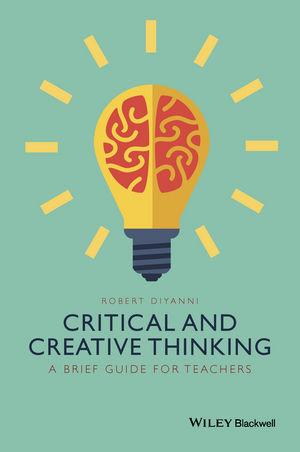
Click Here for Book Review Abstract: Critical and Creative Thinking: A Guide for Teachers reveals ways to develop a capacity to think both critically and creatively in practical and productive ways. - Explains why critical and creative thinking complement each other with clear examples - Provides a practical toolkit of cognitive techniques for generating and evaluating ideas using both creative and critical thinking - Enriches the discussion of creative and critical intersections with brief “inter-chapters” based on the thinking habits of Leonardo da Vinci - Offers an overview of current trends in critical and creative thinking, with applications across a spectrum of disciplines (From the Publisher)
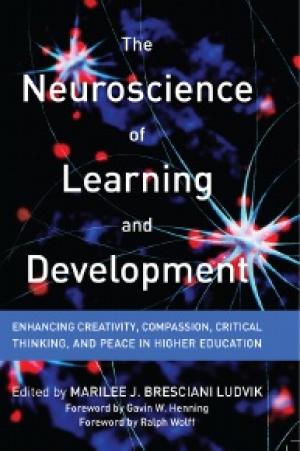
Is higher education preparing our students for a world that is increasingly complex and volatile, and in which they will have to contend with uncertainty and ambiguity? Are we addressing the concerns of employers who complain that graduates do not possess the creative, critical thinking, and communication skills needed in the workplace? This book harnesses what we have learned from innovations in teaching, from neuroscience, experiential learning, and studies on mindfulness and personal development to transform how we deliver and create new knowledge, and indeed transform our students, developing their capacities for adaptive boundary spanning. Starting from the premise that our current linear, course-based, educational practices are frequently at odds with how our neurological system facilitates learning and personal development, the authors set out an alternative model that emphasizes a holistic approach to education that integrates mindful inquiry practice with self-authorship and the regulation of emotion as the cornerstones of learning, while demonstrating how these align with the latest discoveries in neuroscience. The book closes by offering practical ideas for implementation, showing how simple refinements in classroom and out-of-classroom experiences can create foundations for students to develop key skills that will enhance adaptive problem solving, creativity, overall wellbeing, innovation, resilience, compassion, and ultimately world peace. (From the Publisher)