Resources
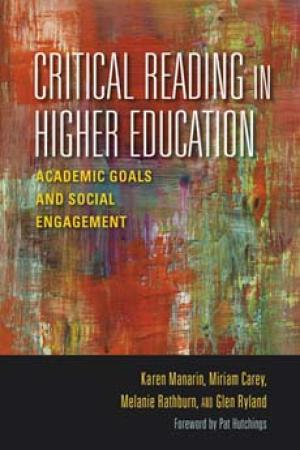
Faculty often worry that students can’t or won’t read critically, a foundational skill for success in academic and professional endeavors. “Critical reading” refers both to reading for academic purposes and reading for social engagement. This volume is based on collaborative, multidisciplinary research into how students read in first-year courses in subjects ranging from scientific literacy through composition. The authors discovered the good (students can read), the bad (students are not reading for social engagement), and the ugly (class assignments may be setting students up for failure) and they offer strategies that can better engage students and provide more meaningful reading experiences. (From the Publisher)
In this essay, I explore an exam format that pairs multiple-choice questions with required rationales. In a space adjacent to each multiple-choice question, students explain why or how they arrived at the answer they selected. This exercise builds the critical thinking skill known as metacognition, thinking about thinking, into an exam that also engages students in the methods of the academic study of religion by asking them to compare familiar excerpts and images. As a form of assessment, the exam provides a record of students' knowledge and their thought processes, and as a learning strategy, it encourages students to examine the thought processes they use to understand religion(s) and its many manifestations.

Click Here for Book Review Abstract: In this new collection, contributors from a variety of disciplines provide a critical context for the relationship between feminist pedagogy and academic feminism by exploring the complex ways that critical perspectives can be brought into the classroom. This book discusses the processes employed to engage learners by challenging them to ask tough questions and craft complex answers, wrestle with timely problems and posit innovative solutions, and grapple with ethical dilemmas for which they seek just resolutions. Diverse experiences, interests, and perspectives—together with the various teaching and learning styles that participants bring to twenty-first-century universities—necessitate inventive and evolving pedagogical approaches, and these are explored from a critical perspective. The contributors collectively consider the implications of the theory/practice divide, which remains central within academic feminism’s role as both a site of social and gender justice and as a part of the academy, and map out some of the ways in which academic feminism is located within the academy today. (From the Publisher)
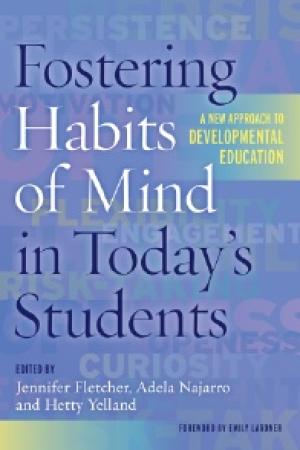
Students need more than just academic skills for success in college and career, and the lack of an explicit instructional focus on the “soft skills” critical to postsecondary success poses a challenge for many students who enter college, especially the underprepared. Based upon a multi-campus, cross-disciplinary collaboration, this book presents the resulting set of habits-of-mind-based strategies that demonstrably help not only low-income, ESL, and first-generation college students overcome obstacles on the path to degree completion; these strategies equally benefit all students. They promote life-long, integrative learning and foster intellectual qualities such as curiosity, openness, flexibility, engagement, and persistence that are the key to developing internalized and transferrable competencies that are seldom given direct attention in college classrooms. This contributed volume, written with full-time and adjunct faculty in mind, provides the rationale for this pedagogical approach and presents the sequential instructional cycle that begins by identifying students’ assets and progressively focusing on specific habits to develop their capacity to transfer their learning to new tasks and situations. Faculty from both two-year and four-year colleges provide examples of how they implement these practices in English, math, and General Education courses, and demonstrate the applicability of these practices across course types and disciplines. Chapters address key factors of college success, including: * The link between habits of mind and student retention and achievement * Using an assets-based approach to teaching and learning * Supporting and engaging students * Creating inclusive learning communities * Building confidence and self-efficacy * Promoting transfer of learning * Teacher networks and cross-disciplinary collaboration By foregrounding habits of mind as an instructional lens, this book makes a unique contribution to teaching in developmental and general education settings. (From the Publisher)

Journal Issue. Full text is available online.
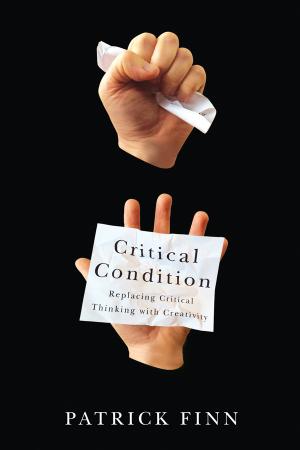
Should we stop teaching critical thinking? Meant as a prompt to further discussion, Critical Condition questions the assumption that every student should be turned into a “critical thinker.” The book starts with the pre-Socratics and the impact that Socrates’ death had on his student Plato and traces the increasingly violent use of critical “attack” on a perceived opponent. From the Roman militarization of debate to the medieval Church’s use of defence as a means of forcing confession and submission, the early phases of critical thinking were bound up in a type of attack that Finn suggests does not best serve intellectual inquiry. Recent developments have seen critical thinking become an ideology rather than a critical practice, with levels of debate devolving to the point where most debate becomes ad hominem. Far from arguing that we abandon critical inquiry, the author suggests that we emphasize a more open, loving system of engagement that is not only less inherently violent but also more robust when dealing with vastly more complex networks of information. This book challenges long-held beliefs about the benefits of critical thinking, which is shown to be far too linear to deal with the twenty-first century world. Critical Condition is a call to action unlike any other. (From the Publisher)
Conducts research and disseminates information on critical thinking for K-12 and higher ed faculty, and students. (The website also calls itself the "Critical Thinking Community.")
UNC Charlotte’s Learning Center provides this helpful example of a gradation of activities for assessment (specific to “social studies”), from classify, define, demonstrate, to  order, predict, solve, and state a rule
Provides a brief explanation and instructions for students to encourage them to learn to annotate while reading texts — produced by a state university writing center. 
A commitment to empathetic understanding shaped the field of religious studies; although subject to critique, it remains an important teaching practice where students are charged with the task of recognizing, and perhaps even appreciating, a worldview that appears significantly different from their own. However, when the focus of the course is historical trauma there are significant epistemological and ethical reasons empathetic understanding may not be our best pedagogical strategy. Drawing primarily on my experience teaching a general education class “The Holocaust and Its Impact” at California State University, Bakersfield, I advocate replacing empathetic understanding with engaged witnessing as a pedagogical framework and strategy for teaching traumatic knowledge. To make this case, I delineate four qualities of engaged witnessing and demonstrate their use in teaching about the Holocaust.