Resources
Journal Issue. Full text is available online.
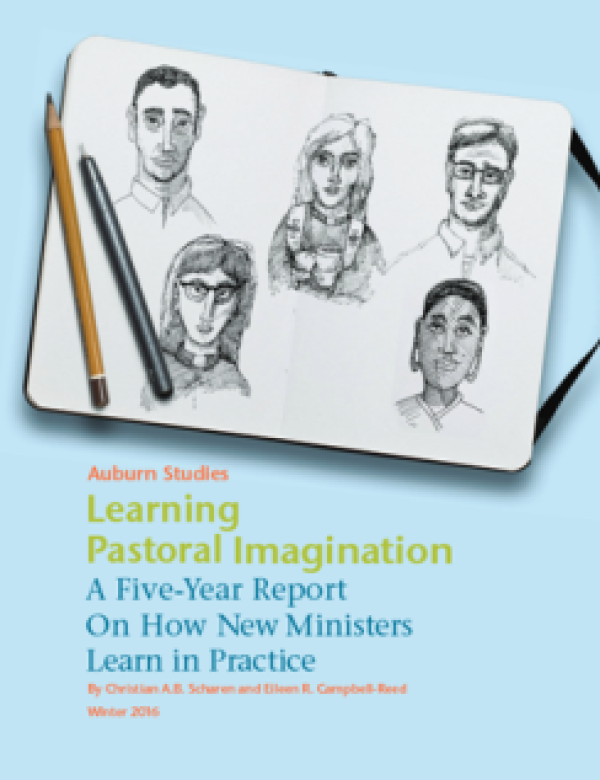
To lead with courage and pastoral wisdom in the twenty-first century requires ministers to make a transition from simply imagining ministry to embodying pastoral imagination. The relational and embodied capacity for ministry, what Craig Dykstra first called pastoral imagination, emerges over time and remains indispensable for effective pastoral leadership in congregations and community ministries. We find through listening to ministry leaders across the country that ministry today is less about exercising the authority of an office or role and more about embodying an authentic contextual wisdom only gained by daily practice of leadership on the long arc of learning ministry. Yet few studies of learning over time have been conducted, leading to this unique, broadly ecumenical, and national study of learning ministry in practice. In this five-year report, we describe the experiences of a cohort of 50 diverse ministers from across the United States, recruited from 10 theological schools ranging from Pentecostal to Eastern Orthodox and coming from many different denominational traditions. This study deepens engagement of Auburn research on patterns of teaching and learning in theological education, offering a dynamic view into the formation of faith leaders for the twenty-first century. (From the Publisher)
This article emerges from the experience of incorporating doctoral students into our Contextual Education (CXE) Program at Emmanuel College (Toronto). This change, I argue, helped us to distinguish more clearly among and thus distinctly orient the different kinds of relationships and theological practices that make up our program towards the often-elusive goal of curricular integration. After outlining a definition of integration, I contextualize that definition in our particular practices at Emmanuel College using Kathryn Tanner's (1997) understanding of theology as a cultural practice as my guide. I then offer a brief overview of our CXE Programs to demonstrate how nurturing strategic partnerships within them has made certain forms of integration possible for our students. I close with some activities for practical application in other CXE contexts.
Journal Issue. Full text is available online.
Journal Issue. Full text is available online.
Journal Issue. Full text is available online.
Journal Issue. Full text is available online.
Journal Issue. Full text is available online.
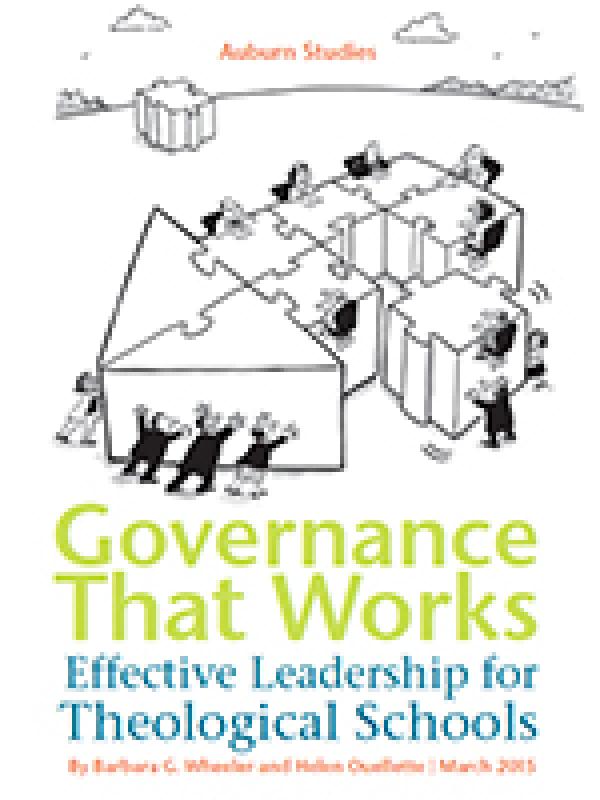
With this report, Barbara G. Wheeler ends a long and distinguished era as a lead researcher and author for the Auburn Studies series, the signature line of publications from the Center for the Study of Theological Education (CSTE). Beginning with Reaching Out (1993) which set a focused and extraordinarily generative vision for the CSTE, Wheeler went on to author or co-author fourteen of the twenty studies in this series. These studies engaged many of the issues central to theological schools and their stakeholders: studies of enrollment and student debt, student recruitment and alumni success, and the status of faculties and senior leadership—both presidents and governing boards. With these and many other publications, lectures, and consulting projects, Wheeler established Auburn as a respected source for those wanting to understand the dynamics of this very particular set of institutions of higher education which prepare faith leaders for their vocations. Governance That Works: Effective Leadership for Theological Schools exhibits Barbara Wheeler’s characteristically clear prose and keen insight readers of past Auburn Studies have come to expect. At a time when many theological schools are experiencing significant challenges, the report helpfully exegetes several schools as notable cases of effective governance. In general, the story is one of gradual change towards better governance policy and practice. Yet many boards struggle with improving board composition—including minority and gender inclusion but also people with the right skills and a capacity to be substantial donors to the school. Among a number of notable trends, the increasing power of chief executives—with generally strong support from their faculty and boards—greatly heightens the salience of interpersonal skills on the part of those executive leaders. In a related insight, the report shows how such an interpersonally wise senior executive develops stronger leadership within the faculty and board, and a more vital partnerships between the two. (Christian Scharen)
Journal Issue.