Resources
This in an "info" piece on the Affordable Care Act (ACA) and its provisions regarding part-time college instructors, including not only health insurance matters, but those relating to workload definitions.
The Journal of Online Teaching and Learning (JoLT) publishes the detailed results of a study. Briefly: student outcomes are better across the board when taught by FT faculty over adjunct faculty.
The MLA recommendations for departments concerning the treatment of non-tenure-track faculty members. The URL includes a link to a PDF entitled "PROFESSIONAL EMPLOYMENT PRACTICES FOR NON-TENURE-TRACK FACULTY MEMBERS: RECOMMENDATIONS AND EVALUATIVE QUESTIONS".
The Coalition on the Academic Workforce seeks to "address issues associated with deteriorating faculty working conditions and their effect on college and university students in the United States." This URL links to a large-scale survey of part-time and "contingent" faculty members, conducted in 2010 and published in 2012.
The backlash against MOOCs and online learning in higher education has begun.
There has been a lot of buzz in higher education lately about the flipped classroom model for teaching and learning. It's not as easy as it appears, and it's not as new as others would have us believe.
Provides a case analysis of a Massive, Open, Online Course (MOOC) taught at Stanford University. The professor wanted to provide high quality course content, engage students, offer free and discounted readings, enable peer evaluation of term papers and study the course to improve it.
Incorporating Wikipedia into the curriculum as a collaborative environment or primary source affords students with the opportunity to develop their media literacy, improve their writing skills, and learn appropriate ways to use Wikipedia as an academic resource.
Podcasting is a digital technology that allows listeners to download course audio and video files, including both instructor-created and student-created content, through the RSS-based subscription mode and listen to them anywhere, anytime.
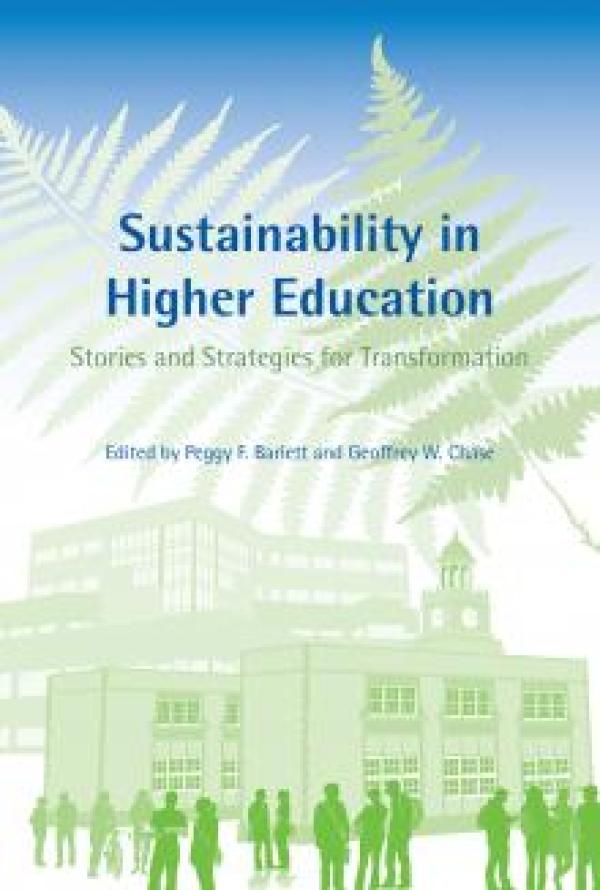
Click Here for Book Review Abstract: In colleges and universities across the United States, students, faculty, and staff are forging new paths to sustainability. From private liberal arts colleges to major research institutions to community colleges, sustainability concerns are being integrated into curricula, policies, and programs. New divisions, degree programs, and courses of study cross traditional disciplinary boundaries; Sustainability Councils become part of campus governance; and new sustainability issues link to historic social and educational missions. In this book, leaders from twenty-four colleges and universities offer their stories of institutional and personal transformation. These stories document both the power of leadership—whether by college presidents, faculty, staff, or student activists—and the potential for institutions to redefine themselves. Chapters recount, among other things, how inclusive campus governance helped mobilize students at the University of South Carolina; how a course at the Menominee Nation’s tribal college linked sustainability and traditional knowledge; how the president of Furman University convinced a conservative campus community to make sustainability a strategic priority; how students at San Diego State University built sustainability into future governance while financing a LEED platinum-certified student center; and how sustainability transformed pedagogy in a lecture class at Penn State. As this book makes clear, there are many paths to sustainability in higher education. These stories offer a snapshot of what has been accomplished and a roadmap to what is possible. (From the Publisher)