Resources
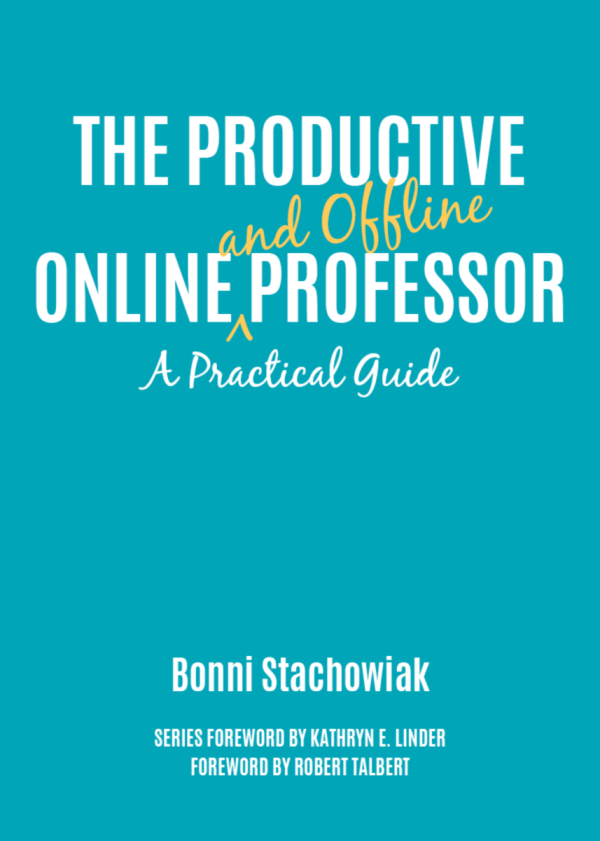
What does it mean to be a productive professor in higher education? What would it feel like to have more peace and productivity? To have nothing fall through the cracks? The Productive Online and Offline Professor is written for today’s busy higher education professional. Through an exploration of what it means to make work meaningful, this book offers practical strategies and tips to support higher education professionals in efficiently managing and effectively using a wide range of technologies and productivity tools. Higher education instructors will find this guide helps them to fulfill their teaching roles with excellence and to build engaging relationships with students while also successfully managing other priorities in their professional and personal lives. The Productive Online Professor assists those who teach online and blended courses with managing their personal productivity. Faculty are often expected to provide support and feedback to learners outside of normal work hours in non-traditional classes. Programs that are designed with more asynchronous content may cause faculty to perceive that it is difficult to ever press the “off button” on their teaching.The author offers guidance and suggests software tools for streamlining communication and productivity that enable faculty to better balance their lives while giving rich feedback to students. Part 1 addresses the challenges in defining productivity and presents a working definition for the text. Part 2 describes the ability to communicate using both synchronous and asynchronous methods, along with ways of enriching such communication. Part 3 describes methods for finding, curating, and sharing relevant knowledge both within one’s courses and to a broader personal learning network (PLN). Part 4 examines specific tools for navigating the unique challenges of productivity while teaching online. It includes ways to grade more productively while still providing rich feedback to students. Part 5 shares techniques for keeping one’s course materials current and relevant in the most efficient ways possible. The Productive Online Professor is a practical guide for how to provide high quality online classes to diverse students. This book shares specific technology and other tools that may be used in charting a course toward greater productivity. It is intended to be a professional resource for fulfilling our roles with excellence and joy, while managing other priorities in our personal and professional lives.(From the Publisher)
This book brings together leading practitioners and scholars engaged in professional development programming for and research on mid-career faculty members. The chapters focus on key areas of career development and advancement that can enhance both individual growth and institutional change to better support mid-career faculties. The mid-career stage is the longest segment of the faculty career and it contains the largest cohort of faculty. Also, mid-career faculty are tasked with being the next generation of faculty leaders and mentors on their respective campuses, with little to no supports to do so effectively, at a time when higher education continues to face unprecedented challenges while managing continued goal of diversifying both the student and faculty bodies. The stories, examples, data, and resources shared in this book will provide inspiration--and reality checks--to the administrators, faculty developers, and department chairs charged with better supporting their faculties as they engage in academic work. Current and prospective faculty members will learn about trends in mid-career faculty development resources, see examples of how to create such supports when they are lacking on their campuses, and gain insights on how to strategically advance their own careers based on the realities of the professoriate. The book features a variety of institution types: community colleges, regional/comprehensive institutions, liberal arts colleges, public research universities, ivy league institutions, international institutions, and those with targeted missions such as HSI/MSI and Jesuit. Topics include faculty development for formal and informal leadership roles; strategies to support professional growth, renewal, time and people management; teaching and learning as a form of scholarship; the role of learning communities and networks as a source of support and professional revitalization; global engagement to support scholarship and teaching; strategies to recruit, retain, and promote underrepresented faculty populations; the policy-practice connection; and gender differences related to key mid-career outcomes. While the authors acknowledge that the challenges facing the mid-career stage are numerous and varying, they offer a counter narrative by looking at ways that faculty and/or institutions can assert themselves to find opportunities within challenging contexts. They suggest that these challenges highlight priority mentoring areas, and support the creation of new and innovative faculty development supports at institutional, departmental, and individual levels. (From the Publisher)
The Soul of Higher Education: Contemplative Pedagogy, Research and Institutional Life for the Twenty-first Century contributes to an understanding of the importance and implications of a contemplative grounding for higher education. It is the sixth in a series entitled Advances in Workplace Spirituality: Theory, Research and Application, which is intended to be an authoritative and comprehensive series in the field. This volume consists of chapters written by noted scholars from both Eastern and Western traditions that shed light on the following questions: • What is an appropriate epistemological grounding for contemplative higher education? How dues the current dominant epistemology in higher education mitigate against contemplative teaching, learning, and research? What alternatives can be offered? • How can a contemplative culture be nurtured in the classroom? What difference does that culture make in teaching and learning? What is the role of individual and institutional leadership in creating and sustaining this culture? • What is contemplative research? How can the emerging field of contemplative studies fit into the twenty-first-century university? • What can faculty and students learn from contemplative practices about how to find peace of mind in a world of higher education characterized by increasing complexity, financial pressures, and conflicts? • What does a contemplative organizational structure look like in higher education? How can committees, faculty meetings, and administrative teams use contemplative practices to work more effectively together? • How can contemplative decision-making processes be used in higher education? Given hierarchies, turf wars, and academics’ propensity for using argument as a weapon, is it possible to introduce contemplative practices into decision-making situations in appropriate ways? (From the Publisher)
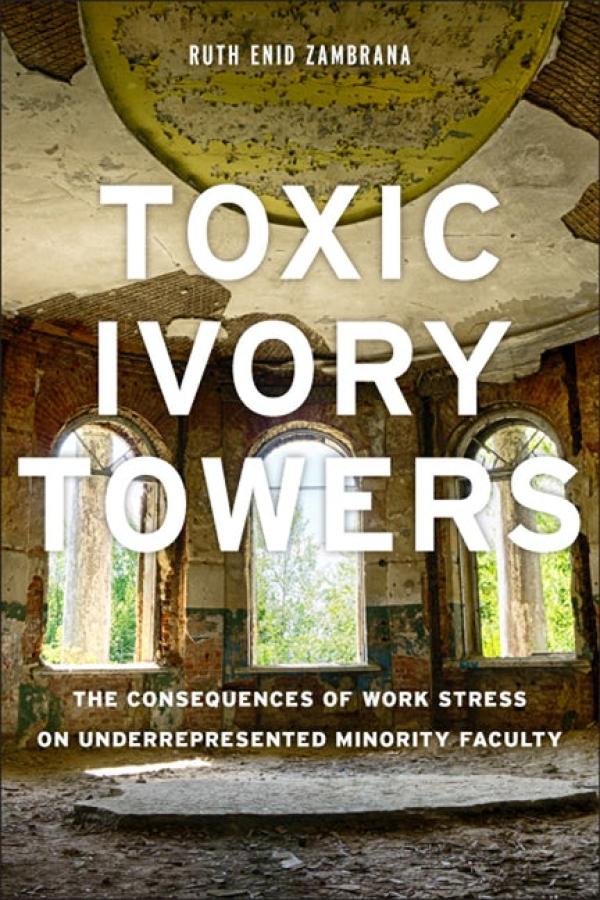
Click Here for Book Review Toxic Ivory Towers seeks to document the professional work experiences of underrepresented minority (URM) faculty in U.S. higher education, and simultaneously address the social and economic inequalities in their life course trajectory. Ruth Enid Zambrana finds that despite the changing demographics of the nation, the percentages of Black and Hispanic faculty have increased only slightly, while the percentages obtaining tenure and earning promotion to full professor have remained relatively stagnant. Toxic Ivory Towers is the first book to take a look at the institutional factors impacting the ability of URM faculty to be successful at their jobs, and to flourish in academia. The book captures not only how various dimensions of identity inequality are expressed in the academy and how these social statuses influence the health and well-being of URM faculty, but also how institutional policies and practices can be used to transform the culture of an institution to increase rates of retention and promotion so URM faculty can thrive. (From the Publisher)
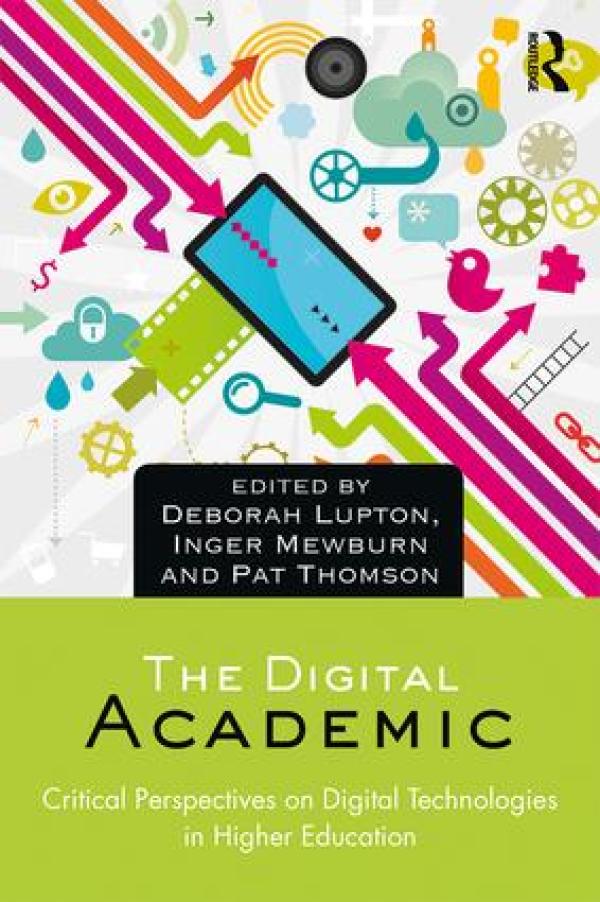
Academic work, like many other professional occupations, has increasingly become digitised. This book brings together leading scholars who examine the impacts, possibilities, politics and drawbacks of working in the contemporary university, using digital technologies. Contributors take a critical perspective in identifying the implications of digitisation for the future of higher education, academic publishing protocols and platforms and academic employment conditions, the ways in which academics engage in their everyday work and as public scholars and relationships with students and other academics. The book includes accounts of using digital media and technologies as part of academic practice across teaching, research administration and scholarship endeavours, as well as theoretical perspectives. The contributors span the spectrum of early to established career academics and are based in education, research administration, sociology, digital humanities, media and communication.(From the Publisher)
In this study we explored faculty and student experiences of accelerated learning. We conducted interviews with faculty members who had delivered the same course in 12 and 6-week timeframes, and we analysed a student survey. Students reported overall positive experiences in the accelerated courses, particularly in the social aspects of learning, higher than usual motivation, and confidence in their learning. However, both faculty and students raised concerns about the scope and timing of assessment tasks, student workload expectations, faculty workload, and administration of courses. We offer recommendations regarding implementation, assessment practices, and management of learning in an accelerated timeframe.

Higher education is a by-the-book, highly structured reality. From syllabus design (written for students as well as for administrators) to navigating the tenure track process; from classroom lesson planning to student assessments; as well as the preconceived even contrived ways articles and books are selected for publication – those of us who teach in the academic world participate in a rigid reality. For a scant few colleagues, this rigorous reality creates spaces for thriving and the production of new knowledge. It is the promise of this constructed reality. Dangerously, the same austere reality creates ease and opportunity for those who are harbingers of racism, sexism, classism, and heterosexism to have tremendous platforms of harm against colleagues and students of color. The strata of oppressive, hegemonic forces in the larger politic of U.S. society are duplicated in the reality of higher education with too few opportunities for checks-and-balances of justice and equity. Subtle and blatant acts of dehumanization go unchallenged. Gestures of ignorance and insensitivity are commonplace. Those colleagues who routinely wield their biases, prejudices, ill wills, and ignorance toward people of color and non-white cultures are too often gatekeepers in this reality. Challenged to navigate this strange reality and stymied to negotiate with persons who would see us fail, there is little sanctuary for us unless we create it for ourselves. While scholarship is my passion and joy, I never feel at home. My experience of displacement/up-rootedness is neither unique nor rare. For African American women and other colleagues who are othered and systemically marginalized, the reality of education is designed so that we remain strangers, even in the familiarity of academic spaces. Our outsider status is galvanized by the white feminist patriarchs, also known as patriarchs-in-drag, who refuse to do critical reflection on relationships with othered women and people of color. Elisabeth Schussler Fiorenza dubbed this experience of oppression in its many forms as kyriarchy. While naming the experience does not alleviate the circumstance, it does make me feel oriented…known. To never be at home is to contend with the accusations that we cannot do “classical” scholarship while at the same time reeling from the critique that our ethnic/cultural approaches are quaint, interesting…exotic. Our work and scholarship is othered along with our personhood. This constant confusion sends firm messages that we are not safe, not welcomed to be authentic or real. In the midst of this zero-sum experience of hostility, we are expected to be grateful for posts designed for occupation by white men. In this environment students quickly clue into those who are unwelcomed and deemed to be without authority, making our classrooms spaces unnecessarily conflictual and contentious. We are not at home. I have often heard othered colleagues describe this reality as the experience of being erased. Surely, as those who are Imago Dei, made in the image and likeness of God, we cannot be summarily negated. I am not sure when I started this habit, but it helps me survive/cope. Each spring, after commencement, I bring a laundry basket to my campus office. I gather up those personal items that adorn my office. I pack up the family photos, artwork, cards, and gifts given by students and friends throughout that year. I pack up my coffee mug, teapot, and the snacks in my desk. I balance my potted plants on the very top so they do not get damaged or squished. With heaping laundry basket in-hand, I move out of my office. Once at home with my laundry basket, I incorporate those items into the décor of my home. My office plants are nestled among the other plants in my living room, home office, and bedroom. The artwork and other items find a place on the shelves and in the bookcases. Then, in late summer, as the fall semester approaches, I make the decision to move back into my office – or not. If I move back in, I go around my house picking and choosing those art pieces that will adorn my campus office and assist my work in the coming year. I discuss with my plants and ask for volunteers to come to my campus office. Once back in my office, I carefully place the photos, paintings, sculptures, and plants. I move back in, only for the year. Knowing I will move out gives me strength and courage. Each year, this ritual helps me navigate the death-dealing space that is the academy. It reminds me of my choice and my freedom. This ritual rekindles my own agency and intrinsic power. I move back in because of my own choice and not out of obligation, confinement, nor to stave off erasure by these institutions. Those political practices designed to divide and conquer, which are meant to keep us feeling unwelcomed, are weakened when I exercise this agency. Moving out of my office each spring lets me know I am free to leave the institutions that do not nurture me or my kind. Knowing I have a choice helps me keep my rage in check. Moving into and out of my office reminds me that I am not homeless. The confusion, disarray, and disturbance that would reasonably result from being unwelcomed has little sting and warrants only momentary guile when I remember that our particularity is our gift to the world from the Divine. We are a people for whom this racist, sexist, homophobic, kyriarachal academic world is a reality that requires the skills of ornery-ness and imaginative cunning—skills for which we are quite adept. The knowledge and belief that the love, sacrifice, and values of our ancestors and wisdom-kin are steadfast provides hope. Audre Lorde wrote, “In our work and in our living, we must recognize that difference is a reason for celebration and growth, rather than a reason for destruction” (Oberlin College Commencement Speech, 1985). A Luta Continua.
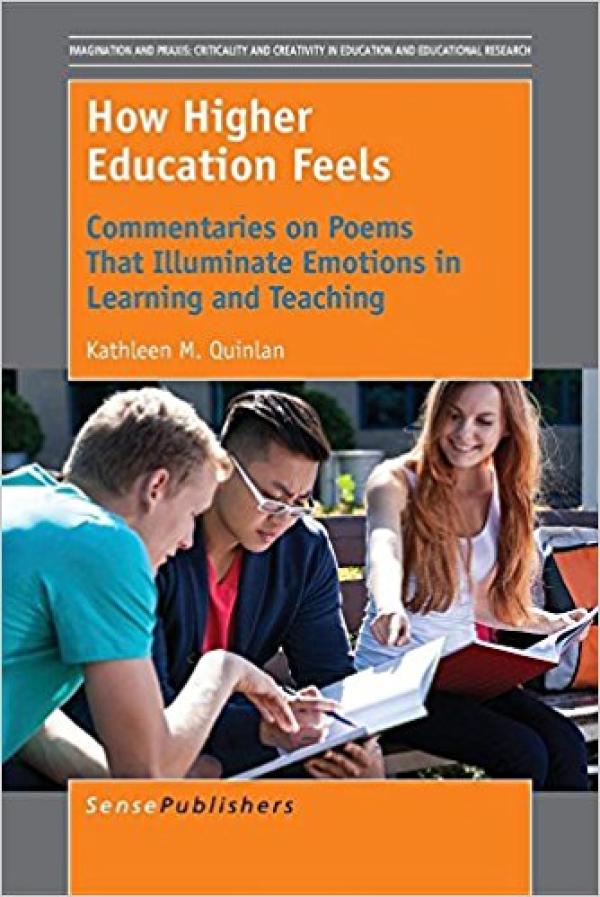
Click Here for Book Review Teaching and learning in higher education can evoke strong feelings, including confusion, anxiety, boredom, curiosity, surprise and exhilaration. These emotions affect students’ learning, progress and overall success. Teachers’ emotions affect how they teach and their relationships and communication with students. Yet the emotional dimensions of teachers’ and students’ experiences are rarely discussed in the context of improving higher education. This book addresses that gap, offering short, evocative case studies to spark conversation among university teachers. It challenges readers to reflect on how higher education feels, to explore the emotional landscape of courses and programmes they create and consider the emotional effects of messages embedded in various policies and practices. Following the student lifecycle from enrollment to reunion, each of the main chapters contains 10 to 15 accessible, emotionally-engaging poems that serve as succinct case studies highlighting how some aspect of learning, teaching or development in higher education feels. Each chapter also contains an expert scholarly commentary that identifies emergent themes across the cases and establishes connections to theory and practice in higher education. The poems-as-case-studies are ideal for use in faculty or educational development workshops or for individual reflection. A variety of theoretical perspectives and associated reflection prompts provide lenses for variously interpreting the poems. An appendix offers suggestions for structuring case discussions as part of educational development activities. The book promotes a person-centered discourse, giving voice to previously neglected aspects of higher education and reminding us that education is essentially a human endeavor. (From the Publisher)
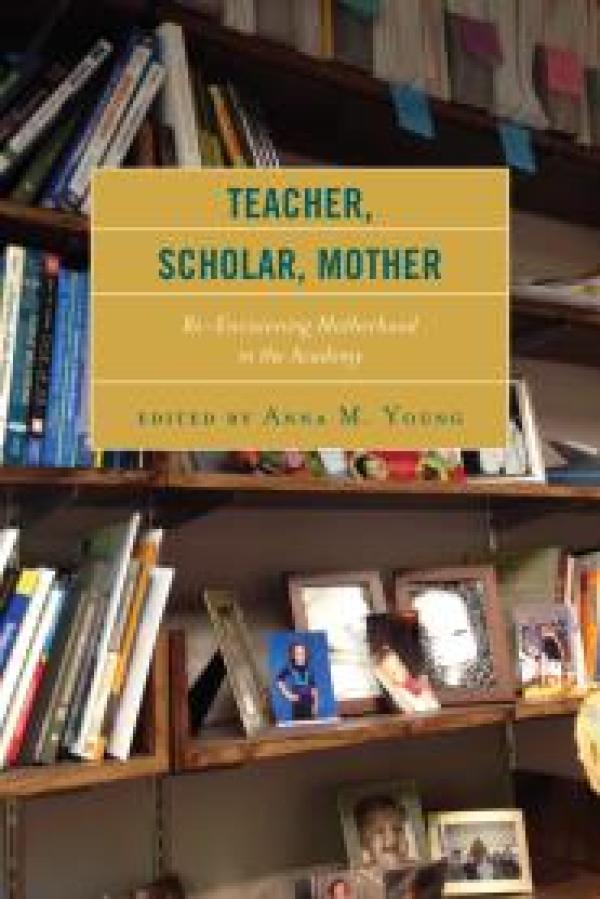
Teacher, Scholar, Mother advances a more productive conversation across disciplines on motherhood through its discussion on intersecting axes of power and privilege. This multi- and trans-disciplinary book features mother scholars who bring their theoretical and disciplinary lenses to bear on questions of identity, practice, policy, institutional memory, progress, and the gendered notion of parenting that still pervades the modern academy. (From the Publisher)
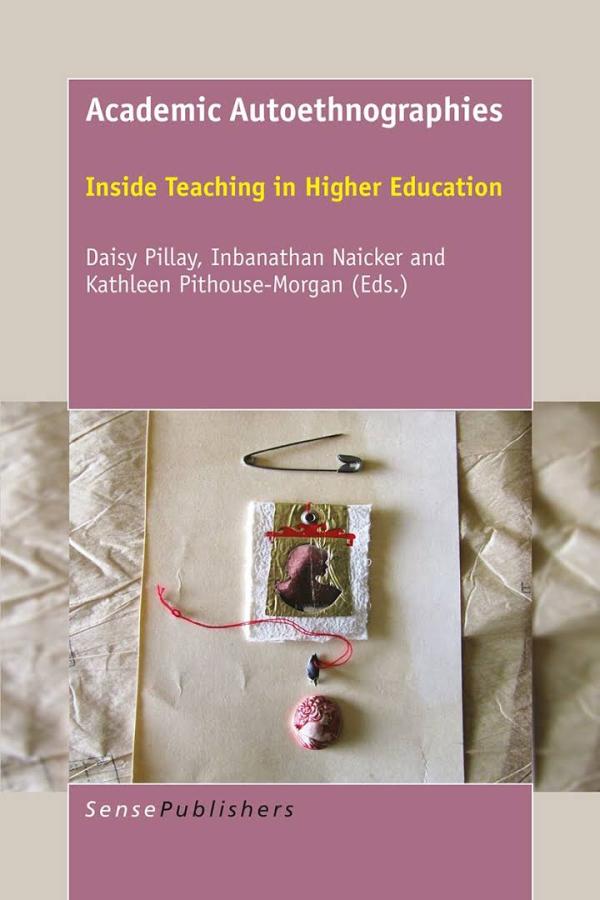
Click Here for Book Review Abstract: Academic Autoethnographies: Inside Teaching in Higher Education invites readers to experience autoethnography as a challenging, complex, and creative research methodology that can produce personally, professionally, and socially useful understandings of teaching and researching in higher education. The peer-reviewed chapters offer innovative and perspicacious explorations of interrelationships between personal autobiographies, lived educational experiences, and wider social and cultural concerns, across diverse disciplines and university contexts. This edited book is distinctive within the existing body of autoethnographic scholarship in that the original research presented has been done in relation to predominantly South African university settings. This research is complemented by contributions from Canadian and Swedish scholars. The sociocultural, educational, and methodological insights communicated in this book will be valuable for specialists in the field of higher education and to those in other academic domains who are interested in self-reflexive, transformative, and creative research methodologies and methods. (From the Publisher)