Resources
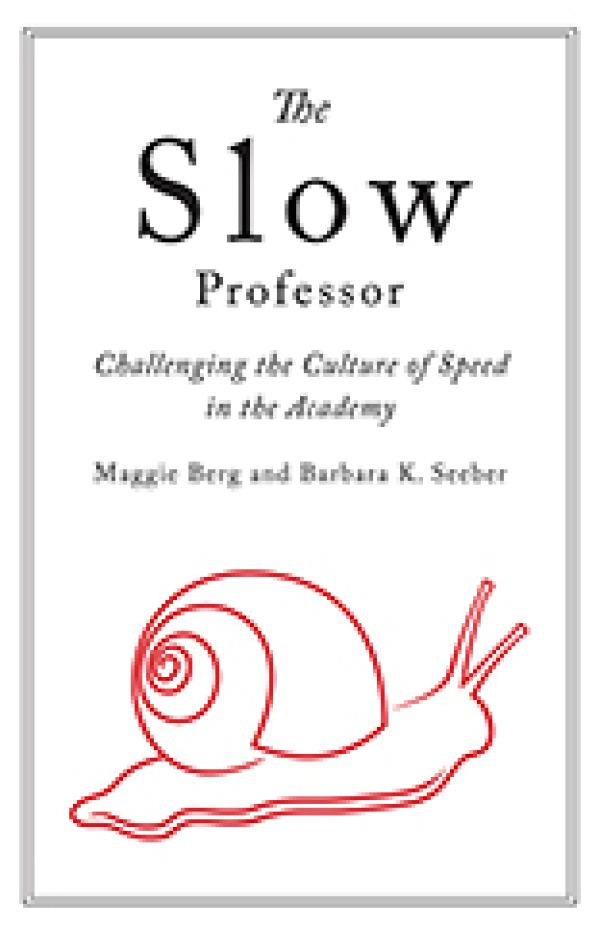
Click Here for Book Review Abstract: If there is one sector of society that should be cultivating deep thought in itself and others, it is academia. Yet the corporatisation of the contemporary university has sped up the clock, demanding increased speed and efficiency from faculty regardless of the consequences for education and scholarship. In The Slow Professor, Maggie Berg and Barbara K. Seeber discuss how adopting the principles of the Slow movement in academic life can counter this erosion of humanistic education. Focusing on the individual faculty member and his or her own professional practice, Berg and Seeber present both an analysis of the culture of speed in the academy and ways of alleviating stress while improving teaching, research, and collegiality. The Slow Professor will be a must-read for anyone in academia concerned about the frantic pace of contemporary university life. (From the Publisher)
Workplace is a refereed, open access journal published by the Institute for Critical Education Studies (ICES) and a collective of scholars in critical university studies, or critical higher education, promoting dignity and integrity in academic work. Contributions are aimed at higher education workplace scholar-activism and dialogue on all issues of academic labor.
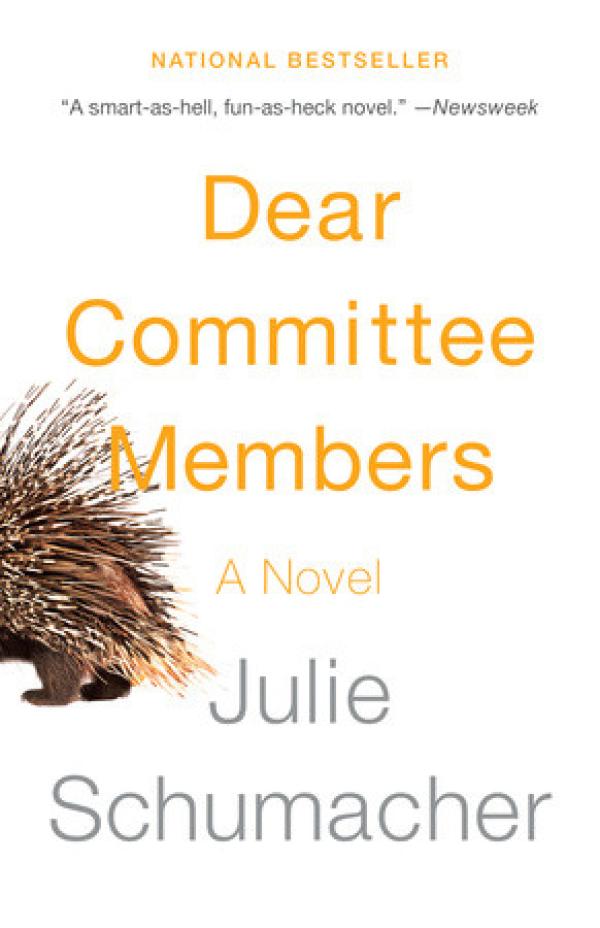
Click Here for Book Review Abstract: Winner of the Thurber Prize for American Humor Jason Fitger is a beleaguered professor of creative writing and literature at Payne University, a small and not very distinguished liberal arts college in the midwest. His once-promising writing career is in the doldrums, as is his romantic life, in part as the result of his unwise use of his private affairs for his novels. His life, a tale of woe, is revealed in a series of hilarious letters of recommendation that Fitger is endlessly called upon by his students and colleagues to produce, each one of which is a small masterpiece of high dudgeon, low spirits, and passive-aggressive strategies. (From the Publisher)
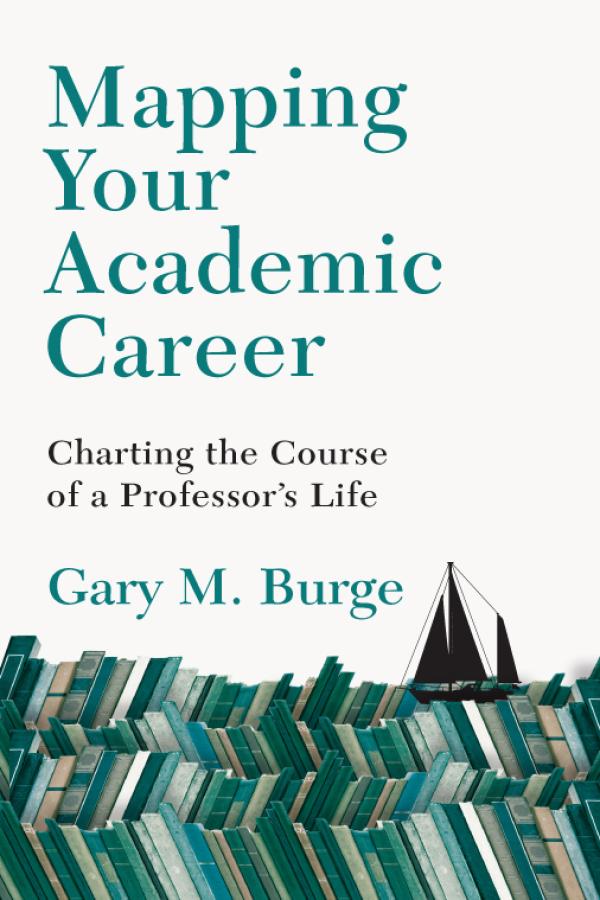
Click Here for Book Review Abstract: You're finishing your first year of teaching. It's been exciting and gratifying, but there've been some wobbly episodes too. How will you carve out a space to flourish? You're feeling secure in mid-career, with some accomplishments to be proud of. But what should success really look like? You're nearing the end of your career, and sometimes apprehensive about the blank slate of retirement. What might it look like to finish well? In Mapping Your Academic Career Gary Burge speaks from decades of teaching, writing and mentoring. Along the way he has experienced and observed the challenges and tensions, the successes and failures of the academic pilgrimage. Now, with discerning wisdom and apt examples, he hosts the conversation he wishes he'd had when he started out as a college professor, identifying three cohorts or stages in the academic career and exploring the challenges, pitfalls and triumphs of each. Wherever you are in your teaching life, this is a book that will reward reading, reflection and discussion. (From the Publisher)
Initial findings from this exploratory study indicate significant questions, such as: why does the focus of faculty work appear to shift and, in later career? How do the administrative and leadership roles often assumed by midlife and mid-career faculty affect other dimensions of faculty work? Is the level of work satisfaction of mid-career faculty a function of the job demands or of life assessment and career questioning? What roles do institutional context and disciplinary field play in the experiences and perceptions of the middle years of the academic life cycle?
Policies should encourage senior professors to engage in periodic review of their performance and professional goals and allow deans and department chairs to negotiate revised responsibilities are necessary to take fuller advantage of the gifts senior faculty can share with their institutions – and to ensure that senior faculty are treated fairly and consistently. 
Despite disparities in the conceptualization of work–life balance (WLB) and work–life harmony (WLH) in the literature, there remains no evidence till date to validate these differences. Furthermore, there are currently no insights that shed light on the relationship between work–life initiatives and key business strategies of contemporary organizations. Hence, the current study investigated the differences between the constructs of WLB and WLH using a cognitive dissonance approach and assessed the impact of work–life interventions, based on these approaches, on individual creativity at work. Hundred participants, age ranging from 18 to 32 years (M = 23.94, SD = 3.87), with at least 6 months of working experience were recruited. Using an online questionnaire, participants were randomly assigned into WLB (n = 55) or WLH (n = 45) conditions. Participants were tasked to complete pre- and post-intervention measures of individual creativity, as well as a manipulation check using a cognitive dissonance scale. Results showed that participants in the WLB condition elicit higher levels of cognitive dissonance compared with participants in the WLH condition. This indicates an implicit difference in the constructs of WLB and harmony. Second, findings also suggest that work–life interventions adopting a WLH approach will have a more positive impact on individuals’ creativity at work compared with interventions targeted at achieving balance. Research, practical, and cultural implications of the findings are discussed in the article.
Monthly postings provide insight and advice for academic deans in theological education. Israel Galindo, Associate Dean for Lifelong Learning at Columbia Theological Seminary, formerly Academic Dean at Baptist Theological Seminary (Richmond), helps leaders apply Bowen Family Systems theory for healthy and effective functioning in home and work settings.

Click Here for Book Review Abstract: The case for a flexible work schedule for faculty has been repeatedly made, with one policy recommendation being part-time positions for tenure-track/tenured faculty (PTTT). Despite some of the benefits of this approach for both faculty and institutions, the PTTT concept is the least implemented policy for faculty flexibility and is poorly understood. This report offers the first comprehensive treatment of PTTT, suggesting that this mode of flexibility enhances recruitment, retention, and engagement of faculty, while offering value-added productivity, planning potential, and faculty loyalty for the institution. Herbers provides data that explore how a PTTT policy can lead to faculty success and satisfaction across the lifespan of a career, and likewise offers analogies and examples of well-established practices that administrators across institution types can adapt to create their own policies. Administrators and faculty will find the author’s policy recommendations, best practices, and solutions to common challenges to be a roadmap for stimulating change in their institutions. This is the 5th issue of the 40th volume of the Jossey-Bass series ASHE Higher Education Report. Each monograph is the definitive analysis of a tough higher education issue, based on thorough research of pertinent literature and institutional experiences. Topics are identified by a national survey. Noted practitioners and scholars are then commissioned to write the reports, with experts providing critical reviews of each manuscript before publication. (From the Publisher)