Resources
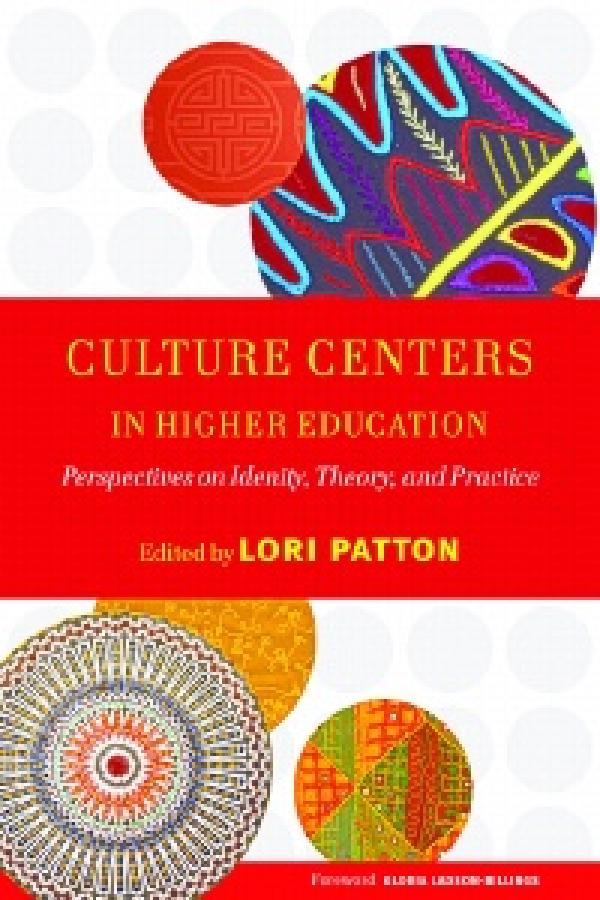
Are cultural centers ethnic enclaves of segregation, or safe havens that provide minority students with social support that promotes persistence and retention? Though Black cultural centers boast a 40-year history, there is much misinformation about them and the ethnic counterparts to which they gave rise. Moreover, little is known about their historical roots, current status, and future prospects. The literature has largely ignored the various culture center models, and the role that such centers play in the experiences of college students. This book fills a significant void in the research on ethnic minority cultural centers, offers the historic background to their establishment and development, considers the circumstances that led to their creation, examines the roles they play on campus, explores their impact on retention and campus climate, and provides guidelines for their management in the light of current issues and future directions. In the first part of this volume, the contributors provide perspectives on culture centers from the point of view of various racial/ethnic identity groups, Latina/o, Asian, American Indian, and African American. Part II offers theoretical perspectives that frame the role of culture centers from the point of view of critical race theory, student development theory, and a social justice framework. Part III focuses specifically on administrative and practice-oriented themes, addressing such issues as the relative merits of full- and part-time staff, of race/ethnic specific as opposed to multicultural centers, relations with the outside community, and integration with academic and student affairs to support the mission of the institution. For administrators and student affairs educators who are unfamiliar with these facilities, and want to support an increasingly diverse student body, this book situates such centers within the overall strategy of improving campus climate, and makes the case for sustaining them. Where none as yet exist, this book offers a rationale and blueprint for creating such centers. For leaders of culture centers this book constitutes a valuable tool for assessing their viability, improving their performance, and ensuring their future relevance – all considerations of increased importance when budgets and resources are strained. This book also provides a foundation for researchers interested in further investigating the role of these centers in higher education. (From the Publisher)
In an age of pressing global issues such as climate change, the necessity for countries to work together to resolve problems affecting multiple nations has never been more important. Interdisciplinarity in higher education is a key to meeting these challenges. Universities need to produce graduates, and leaders, who understand issues from different perspectives, and who can communicate with others outside the confines of their own disciplines. Drawing on contributions from 37 scholars from Australia, New Zealand, Hong Kong, Malaysia, the Netherlands and the United Kingdom, this volume examines issues inherent in providing interdisciplinary education within the structures of universities and proposes ways in which these issues might be best managed. The book has a dual focus on perspectives and practicalities. Themes covered include: the need for graduates who can work within and across multi-disciplinary and multi-professional teams; interdisciplinary leadership; the critical importance of interdisciplinary thinking to meet global challenges; collaboration in interdisciplinary approaches to teaching and learning; the role of institutional and other systems to support interdisciplinary endeavours; the centrality of disciplines; balancing disciplinarity and interdisciplinarity; and the place of interdisciplinarity in graduate outcomes and attributes. Definitional aspects of interdisciplinary higher education and current interdisciplinary practice across a range of contexts are also examined. Contributors represent a wide range of discipline areas, including accounting, academic development, agriculture, food and wine science, biotechnology, employment relations, environmental science, the health sciences, higher education, land and environment, languages and cultures, occupational therapy, science communication, social work and social policy. (From the Publisher)
From the Pubisher Pedagogy of Place focuses on the embodiment of purposefully created space resulting from the creation and enactment of its participants' cultural and social conditions. It is also about education, the purposeful creation of spaces that comprise learning environments, and the aesthetic dimensions of the created space called school. The essays present the concept of space - the place where learning happens and where the lives of student and teacher can thrive or wither - a place rich in human potential. In an attempt to address the diversity of what we define as space, Pedagogy of Place addresses issues around place and identity in three distinct strands: as social, as aesthetic, and as political and historical. As a collection, these essays are attempts to open conversations with persons interested in what counts as curriculum, teaching, and learning within the spaces and places that release human potential and nurture the human spirit.
In spite of soaring tuition costs, more and more students go to college every year. A bachelor’s degree is now required for entry into a growing number of professions. And some parents begin planning for the expense of sending their kids to college when they’re born. Almost everyone strives to go, but almost no one asks the fundamental question posed by Academically Adrift: are undergraduates really learning anything once they get there? For a large proportion of students, Richard Arum and Josipa Roksa’s answer to that question is a definitive no. Their extensive research draws on survey responses, transcript data, and, for the first time, the state-of-the-art Collegiate Learning Assessment, a standardized test administered to students in their first semester and then again at the end of their second year. According to their analysis of more than 2,300 undergraduates at twenty-four institutions, 45 percent of these students demonstrate no significant improvement in a range of skills—including critical thinking, complex reasoning, and writing—during their first two years of college. As troubling as their findings are, Arum and Roksa argue that for many faculty and administrators they will come as no surprise—instead, they are the expected result of a student body distracted by socializing or working and an institutional culture that puts undergraduate learning close to the bottom of the priority list. Academically Adrift holds sobering lessons for students, faculty, administrators, policy makers, and parents—all of whom are implicated in promoting or at least ignoring contemporary campus culture. Higher education faces crises on a number of fronts, but Arum and Roksa’s report that colleges are failing at their most basic mission will demand the attention of us all. (From the Publisher)

Praise for The Heart of Higher Education Palmer and Zajonc have issued a compelling call for change and renewal in higher education. They show us how colleges and universities can be transformed by taking a more integrated approach to teaching and learning that focuses on the inner lives of their students and faculty. At a moment when many are dreaming of an integrative form of higher education that unites intellectual rigor with compassion and love, Palmer and Zajonc invite us to engage in conversations designed to infuse the academy with meaning, purpose, and soul. For those who yearn to transform colleges and universities from sterile, vacuous spaces to places of hope, possibility, and respect for everything human, this is the book you have been waiting for. Parker Palmer and Arthur Zajonc call for a renewal of our commitment to inspiring deeper thinking and educating the whole person. This book should and will inspire debate about our larger purpose, about how we can go beyond the traditional silos in which we work for the sake of individual and institutional transformation. What should be at the center of our teaching and our students' learning? Palmer and Zajonc take up this simple but daunting question and provide the most solid ground yet on which to hold a conversation about the heart of our enterprise. They reimagine higher education in a way commensurate with the magnitude of our problems and offer us practical paths toward implementation. Integrative education is the most important reformation of higher learning since the rise of the modern university. This book can help us achieve it. (From the Publisher)
Degrees of Inequality reveals the powerful patterns of social inequality in American higher education by analyzing how the social background of students shapes nearly every facet of the college experience. Even as the most prestigious institutions claim to open their doors to students from diverse backgrounds, class disparities remain. Just two miles apart stand two institutions that represent the stark class contrast in American higher education. Yale, an elite Ivy League university, boasts accomplished alumni, including national and world leaders in business and politics. Southern Connecticut State University graduates mostly commuter students seeking credential degrees in fields with good job prospects. Ann L. Mullen interviewed students from both universities and found that their college choices and experiences were strongly linked to social background and gender. Yale students, most having generations of family members with college degrees, are encouraged to approach their college years as an opportunity for intellectual and personal enrichment. Southern students, however, perceive a college degree as a path to a better career, and many work full— or part—time jobs to help fund their education. Moving interviews with 100 students at the two institutions highlight how American higher education reinforces the same inequities it has been aiming to transcend. (From the Publisher)

This volume provides new perspectives into the challenges of citizenship education in the age of globalization and in the context of multicultural and conflict-ridden societies. It calls on us to rethink the accepted liberal and national discourses that have long dominated the conceptualization and practice of citizenship and citizenship education in light of social conflict, globalization, terrorism, and the spread of an extreme form of capitalism. The contributors of the volume identify the main challenges to the role of citizenship education in the context of globalization, conflicts and the changes to the institution of citizenship they entail and critically examine the ways in which schools and education systems currently address – and may be able to improve – the role of citizenship education in conflict-ridden and multicultural contexts. (From the Publisher)
This book grew out of a project – involving deans and directors of teaching centers and diversity offices from six institutions – to instigate discussions among teachers and administrators about implementing socially just practices in their classrooms, departments, and offices. The purpose was to explore how best to foster such conversations across departments and functions within an institution, as well as between institutions. This book presents the theoretical framework used, and many of the successful projects to which it gave rise. Recognizing that many faculty have little preparation for teaching students whose backgrounds, culture, and educational socialization differ from theirs, the opening foundational section asks teachers to attend closely to their and their students’ relative power and positionality in the classroom, and to the impact of the materials, resources and pedagogical approaches employed. Further chapters offer analytical tools to promote inquiry and change. The concluding sections of the book demonstrate how intra- and inter-institutional collaborations inspired teachers to rise to the challenge of their campuses’ commitments to diversity. Among the examples presented is an initiative involving the faculty development coordinator, and faculty from a wide range of domains at DePauw University, who built upon an existing ethics initiative to embed social justice across the curriculum. In another, professors of mathematics from three institutions describe how they collaborated to create socially just classrooms that both serve mathematical learning, and support service learning or community-based learning activities. The final essay by a student from the Maldives, describing how she navigated the chasm between life in an American college and her family circumstances, will reinforce the reader’s commitment to establishing social justice in the academy. This book provides individual faculty, faculty developers and diversity officers with the concepts, reflective tools, and collaborative models, as well as a wealth of examples, to confidently embark on the path to transforming educational practice. (From the Publisher)
Understanding the Working College Student: New Research and Its Implications for Policy and Practice
How appropriate for today and for the future are the policies and practices of higher education that largely assume a norm of traditional-age students with minimal on-campus, or no, work commitments? Despite the fact that work is a fundamental part of life for nearly half of all undergraduate students – with a substantial number of “traditional” dependent undergraduates in employment, and working independent undergraduates averaging 34.5 hours per week – little attention has been given to how working influences the integration and engagement experiences of students who work, especially those who work full-time, or how the benefits and costs of working differ between traditional age-students and adult students. The high, and increasing, prevalence and intensity of working among both dependent and independent students raises a number of important questions for public policymakers, college administrators, faculty, academic advisors, student services and financial aid staff, and institutional and educational researchers, including: Why do so many college students work so many hours? What are the characteristics of undergraduates who work? What are the implications of working for students’ educational experiences and outcomes? And, how can public and institutional policymakers promote the educational success of undergraduate students who work? This book offers the most complete and comprehensive conceptualization of the “working college student” available. It provides a multi-faceted picture of the characteristics, experiences, and challenges of working college students and a more complete understanding of the heterogeneity underlying the label “undergraduates who work” and the implications of working for undergraduate students’ educational experiences and outcomes. The volume stresses the importance of recognizing the value and contribution of adult learners to higher education, and takes issue with the appropriateness of the term “non-traditional” itself, both because of the prevalence of this group, and because it allows higher education institutions to avoid considering changes that will meet the needs of this population, including changes in course offerings, course scheduling, financial aid, and pedagogy. (From the Publisher)
Hugh Heclo's recent book On Thinking Institutionally (Paradigm Publishers, 2008) analyzes changes that have taken place in the past half century in how North Americans tend to think and act in institutions. The volume is receiving particular attention as it can be applied to higher education and to religious denominations, and so deserves consideration by those who teach in theology and religious studies. At an October 2009 conference, The Wabash Center hosted a lively discussion of Heclo's volume among invited religion and theology scholars, which resulted in the present compilation of four short responses to the book. What was and is clear from these responses is that while Heclo has identified a crucial issue, his analysis and prescription leave important theoretical and practical questions untouched. Indeed part of the energy around the discussion of the book flowed from the ways in which his lack of attention to social class, gender, race, and age circumscribed his ability to robustly describe and diagnose the challenge that gave rise to his book. In order to orient readers to the volume and discussion of it, the "Conversation" begins with a descriptive review of the book.