Resources
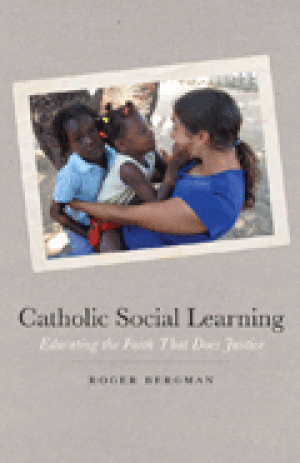
The canon for Catholic social teaching spreads to six hundred pages, yet fewer than two pages are devoted to Catholic social learning or pedagogy. In this long-needed book, Roger Bergman begins to correct that gross imbalance. He asks: How do we educate ("lead out") the faith that does justice? How is commitment to social justice provoked and sustained over a lifetime? To address these questions, Bergman weaves what he has learned from thirty years as a faith-that-does-justice educator with the best of current scholarship and historical authorities. He reflects on personal experience; the experience of Church leaders, lay activists, and university students; and the few words the tradition itself has to say about a pedagogy for justice. Catholic Social Learning explores the foundations of this pedagogy, demonstrates its practical applications, and illuminates why and how it is fundamental to Catholic higher education. Part I identifies personal encounters with the poor and marginalized as key to stimulating a hunger and thirst for justice. Part II presents three applications of Catholic social learning: cross-cultural immersion as illustrated by Creighton University's Semestre Dominicano program; community-based service learning; and the teaching of moral exemplars such as Dorothy Day, Rev. Martin Luther King Jr., and Archbishop Oscar Romero. Part III then elucidates how a pedagogy for justice applies to the traditional liberal educational mission of the Catholic university, and how it can be put into action. Catholic Social Learning is both a valuable, practical resource for Christian educators and an important step forward in the development of a transformative pedagogy. Roger Bergman is the founding director of the Justice and Peace Studies Program at Creighton University, where he is also Associate Professor in the Department of Sociology and Anthropology. (From the Publisher)
While many institutions have developed policies to address the myriad needs of Millennial college students and their parents, inherent in many of these initiatives is the underlying assumption that this student population is a homogeneous group. This book is significant because it addresses and explores the characteristics and experiences of Millennials from an array of perspectives, taking into account not only racial and ethnic identity but also cultural background, sexual orientation, and socioeconomic status differences—all factors contributing to how these students interface with academe. In providing a “voice” to “voiceless” populations of African American, Asian American, Bi/Multi-Racial, Latino, Native American, and LGBT millennial college students, this book engages with such questions as: Does the term “Millennial” apply to these under-represented students? What role does technology, pop culture, sexual orientation, and race politics play in the identity development for these populations? Do our current minority development theories apply to these groups? And, ultimately, are higher education institutions prepared to meet both the cultural and developmental needs of diverse minority groups of Millennial college students?” This book is addressed primarily to college and university administrators and faculty members who seek greater depth and understanding of the issues associated with diverse Millennial college student populations. This book informs readers about the ways in which this cohort differs from their majority counterparts to open a dialogue about how faculty members and administrators can meet their needs effectively both inside and outside the classroom. It will also be of value to student affairs personnel, students enrolled in graduate level courses in higher education and other social science courses that explore issues of college student development and diversity, particularly students planning to work with diverse Millennial college students in both clinical or practical work settings. (From the Publisher)

This project proposes to look at the emergence of Black theology as a discipline within the academy and how Black theology may serve as a resource for excellence in teaching. (From the Publisher)
From the Publisher Understanding college students' intellectual development is at the heart of effective educational practice. How do college students learn? How can educators maximize intellectual development in the college environment for both sexes—both in and out of the classroom? In this book Marcia B. Baxter Magolda demonstrates how educators can use a deeper understanding of the way students learn to teach more effectively. Drawing on a unique longitudinal study of more than one hundred college students, both male and female—and presenting information not available in single-gender studies—the author explains surprising gender-related patterns that affect the way students develop. Baxter Magolda uses data gathered from in-depth interviews over a five-year period to reveal four distinct "ways of knowing." The book provides useful real-life examples of how instructional approaches, class expectations, peer interaction, evaluation methods, and other factors affect intellectual development in the classroom. Similarly, the author demonstrates how peer relationships, student organizations, educational advising, internships, employment, and international and cultural exchange can support and develop complex learning beyond the classroom. "Knowing and Reasoning in College" provides practical recommendations on how to respond to each of the four ways of knowing. It shows how, by designing instruction and interaction to reach students at every level, educators can maximize learning, promote skill acquisition and development of complex reasoning, and enrich students' overall college experience. (PsycINFO Database Record (c) 2012 APA, all rights reserved)
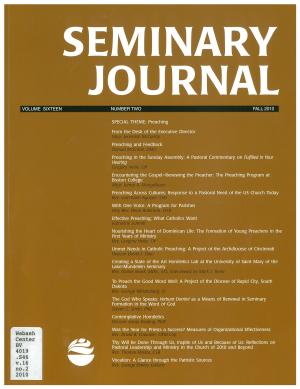
Journal Issue.

Journal Issue.

Journal Issue.

The Schooled Heart addresses a basic question about the nature of the university: should moral education figure among the university's purposes? This volume offers an affirmative response to that question. A central purpose of the university is the moral formation of students—what Beaty and Henry call the schooling of the heart. (From the Publisher)
Synthesizing the best current thinking about learning, course design, and promoting student achievement, this is a guide to developing college instruction that has clear purpose, is well integrated into the curriculum, and improves student learning in predictable and measurable ways. The process involves developing a transparent course blueprint, focused on a limited number of key concepts and ideas, related tasks, and corresponding performance criteria; as well as on frequent practice opportunities, and early identification of potential learning barriers. Idea-based Learning takes as its point of departure the big conceptual ideas of a discipline that give structure and unity to a course and even to the curriculum, as opposed to a focus on content that can lead to teaching sequences of loosely-related topics; and aligns with notions of student-centered and outcomes-based learning environments. Adopting a backwards design model, it begins with three parallel processes: first, identifying the material that is crucial for conceptual understanding; second, articulating a clear rationale for how to choose learning outcomes based on student needs and intellectual readiness; and finally, aligning the learning outcomes with the instructional requirements of the authentic performance tasks. The resulting syllabi ensure cohesion between sections of the same course as well as between courses within a whole curriculum, assuring the progressive development of students’ skills and knowledge. Key elements of IBL include: * Helping students see the big picture * Building courses around one or more authentic performance tasks that illuminate the core concepts of the discipline * Clearly identifying performance criteria for all tasks * Incorporating practice in the competencies that are deemed important for students’ success * By placing the onus of learning on the student, liberating faculty to take on the role of learning coaches * Designing tasks that help students unlearn simplistic ideas and replace them with improved understandings Edmund Hansen expertly guides the reader through the steps of the process, providing examples along the way, and concluding with a sample course design document and syllabus that illustrate the principles he propounds. (From the Publisher)
Learning in a Musical Key examines the multidimensional problem of the relationship between music and theological education. Lisa Hess argues that, in a delightful and baffling way, musical learning has the potential to significantly alter and inform our conception of the nature and process of theological learning. In exploring this exciting intersection of musical learning and theological training, Hess asks two probing questions. First, What does learning from music in a performative mode require? Classical modes of theological education often founder on a dichotomy between theologically musical and educational discourses. It is extremely difficult for many to see how the perceivedly nonmusical learn from music. Is musicality a universally human potential? In exploring this question Hess turns to the music-learning theory of Edwin Gordon, which explores music's unique mode of teaching/learning, its primarily aural-oral mode. This challenge leads to the study's second question: How does a theologian, in the disciplinary sense, integrate a performative mode into critical discourse? Tracking the critical movements of this problem, Hess provides an inherited, transformational logic as a feasible path for integrating a performative mode into multidimensional learning. This approach emerges as a distinctly relational, embodied, multidimensional, and non-correlational performative-mode theology that breaks new ground in the contemporary theological landscape. As an implicitly trinitarian method, rooted in the relationality of God, this non-correlational method offers a practical theological contribution to the discipline of Christian spirituality, newly claimed here as a discipline of transformative teaching/learning through the highly contextualized and self-implicated scholar into relationally formed communities, and ultimately into the world. (From the Publisher)
Wabash Center Staff Contact
Sarah Farmer, Ph.D.
Associate Director
Wabash Center
farmers@wabash.edu