Resources

Much of what is written about colleges and universities ties rapidly rising tuition to dysfunctional behavior in the academy. Common targets of dysfunction include prestige games among universities, gold plated amenities, and bloated administration. This book offers a different view. To explain rising college cost, the authors place the higher education industry firmly within the larger economic history of the United States. The trajectory of college cost is similar to cost behavior in many other industries, and this is no coincidence. Higher education is a personal service that relies on highly educated labor. A technological trio of broad economic forces has come together in the last thirty years to cause higher education costs, and costs in many other industries, to rise much more rapidly than the inflation rate. The main culprit is economic growth itself. This finding does not mean that all is well in American higher education. A college education has become less reachable to a broad swathe of the American public at the same time that the market demand for highly educated people has soared. This affordability problem has deep roots. The authors explore how cost pressure, the changing wage structure of the US economy, and the complexity of financial aid policy combine to reduce access to higher education below what we need in the 21st century labor market. This book is a call to calm the rhetoric of blame and to instead find policies that will increase access to higher education while preserving the quality of our colleges and universities. (From the Publisher)

Journal Issue.
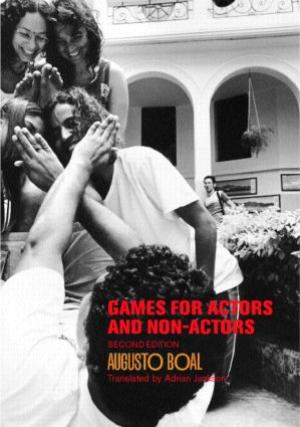
Games for Actors and Non-Actors is the classic and best selling book by the founder of Theatre of the Oppressed, Augusto Boal. It sets out the principles and practice of Boal's revolutionary Method, showing how theatre can be used to transform and liberate everyone – actors and non-actors alike! This thoroughly updated and substantially revised second edition includes: - two new essays by Boal on major recent projects in Brazil - Boal's description of his work with the Royal Shakespeare Company - a revised introduction and translator's preface - a collection of photographs taken during Boal's workshops, commissioned for this edition - new reflections on Forum Theatre. (From the Publisher)
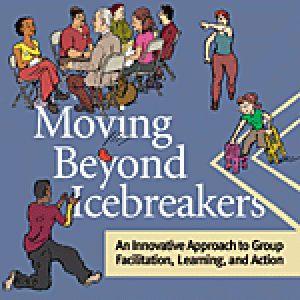
This book captures TE's approach to successful group facilitation, which works in many different environments with both youth and adult groups of all kinds. Contains more than 300 interactive exercises and explains how to use them within a meeting structure that's bound to get the results your group needs! Find out more at MovingBeyondIcebreakers.org: See excerpts from the book, see what people have said about it, and order online. TE has 10 short videos posted on YouTube that illustrate how we work interactively to engage groups of youth and adults. See exercises in action from Moving Beyond Icebreakers! - Concentric Circles - Make It Up: Paper Chase - Wordstorm - Evaluation - The Human Knot - Name Wave - Warm-up Questions - Bag Toss - Zip Zap Zup with Foot-Stamp - Wind Blows with Word (From the Publisher)
A special section of "Teaching Theology and Religion" that collects short essays providing snapshots of how religion is taught in the undergraduate (college/university) curriculum in 9 countries around the world: Denmark, Ireland, Turkey, Botswana, Japan, Malaysia, Japan, New Zealand, and Brazil.
Journal Issue. Full text is available online.
This article argues that attention to material culture can enhance teaching classical rabbinic literature (Talmud, Midrash, and related Jewish texts from the first seven centuries C.E.) at universities. Following an examination of broader scholarship on teaching and learning on using visuals, this article explores four ways in which material culture can help instructors teach rabbinics to students without background in Jewish studies or the relevant languages (Hebrew, Aramaic). It builds upon teaching other areas of biblical and religious studies (Hebrew Bible, New Testament, and teaching rabbinics at liberal seminaries), research methods, and broader scholarship on using visuals and material culture for pedagogical purposes. Contributing to these fields, this article addresses a lacuna in research on teaching rabbinic literature at secular institutions of higher learning and models ways to bring material culture into religious studies classrooms.
A collection of one page Teaching Tactics: S. Brent Plate's introductory essay orients the reader to the academic move toward material text studies, a wide range of research questions and pedagogical practices that includes attention to the history of the book, book technologies, the social habits of readership especially in relation to print culture, and issues raised in media studies about differences in verbal communication. This introduction is followed by a series of one-page Teaching Tactics that prompt students to ask about the material conditions in and through which scriptures acquire meaning. Students are challenged to become aware of the sensorial nature of sacred texts, and of communication itself. They touch, see, and hear in new ways, learning with their bodies.
An undergraduate liberal arts education can help students be not simply shaped by tradition but also shapers of tradition. Specifically, undergraduate theological education, aimed at ministry preparation in a liberal arts setting, can seek to graduate students who are responsible shapers of the traditions that shape them, that is, who are tradents. The work of a tradent involves active engagement that requires skills and capacities well beyond simply passing on the past formulations of a tradition. The pedagogical question, then, is how to engage in undergraduate theological education if this image of the tradent is what we have in mind for our students. Three aspects of this image can serve as pervasive or recurrent themes across the structure of a major or program. One aspect is the interpretive nature of the tradent's work, a second is facility with traditions, and a third is the creative, constructive work of thinking theologically. Whatever particular traditions characterize a department's context, the image of students as tradents can help focus pedagogical reflection on the department's work: teaching students as shapers of the traditions that shape them.
The essays collected in this manuscript respond to “How We Teach Introductory Bible Courses: A Comparative and Historical Sampling” by Collin Cornell and Joel M. LeMon, published in this issue of the journal.
Wabash Center Staff Contact
Sarah Farmer, Ph.D.
Associate Director
Wabash Center
farmers@wabash.edu