Resources
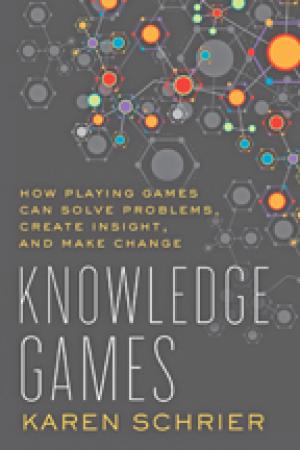
Click Here for Book Review Abstract: Imagine if new knowledge and insights came not just from research centers, think tanks, and universities but also from games, of all things. Video games have been viewed as causing social problems, but what if they actually helped solve them? This question drives Karen Schrier’s Knowledge Games, which seeks to uncover the potentials and pitfalls of using games to make discoveries, solve real-world problems, and better understand our world. For example, so-called knowledge games --such as Foldit, a protein-folding puzzle game, SchoolLife, which crowdsources bullying interventions, and Reverse the Odds, in which mobile game players analyze breast cancer data ---are already being used by researchers to gain scientific, psychological, and humanistic insights. Schrier argues that knowledge games are potentially powerful because of their ability to motivate a crowd of problem solvers within a dynamic system while also tapping into the innovative data processing and computational abilities of games. In the near future, Schrier asserts, knowledge games may be created to understand and predict voting behavior, climate concerns, historical perspectives, online harassment, susceptibility to depression, or optimal advertising strategies, among other things. In addition to investigating the intersection of games, problem solving, and crowdsourcing, Schrier examines what happens when knowledge emerges from games and game players rather than scientists, professionals, and researchers. This accessible book also critiques the limits and implications of games and considers how they may redefine what it means to produce knowledge, to play, to educate, and to be a citizen. (From the Publisher)
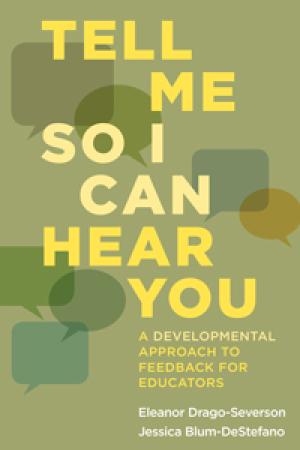
Click Here for Book Review Abstract: In Tell Me So I Can Hear You, Eleanor Drago-Severson and Jessica Blum-DeStefano show how education leaders can learn to deliver feedback in a way that strengthens relationships as well as performance and builds the capacity for growth. Drawing on constructive-developmental theory, the authors describe four stages of adult growth and development and explain how to differentiate feedback for colleagues with different “ways of knowing,” which include: - Instrumental knowers, who tend to see things in black and white (“Did I do it right or wrong?”) and may need to develop the capacity for reflection. - Socializing knowers, who are concerned with maintaining relationships (“What do you want me to do?”) and may need support developing their own ideas. - Self-authoring knowers, who have strong ideologies and values (“How does this fit with my goals and vision?”) and may need help with perspective taking. - Self-transformative knowers, who are able to examine issues from multiple points of view (“How can I understand this more deeply?”) and may need guidance in resolving tensions and contradictions. The authors show how leaders can provide feedback in ways that “meet people where they are” while expanding the developmental capacities educators bring to their work. Drago-Severson and Blum-DeStefano provide real-life examples with practical strategies for creating a safe space for feedback, finding the right words, and bridging feedback and action. Tell Me So I Can Hear You offers invaluable guidance to help educators support a culture of learning in classrooms, schools, and districts. (From the Publisher)
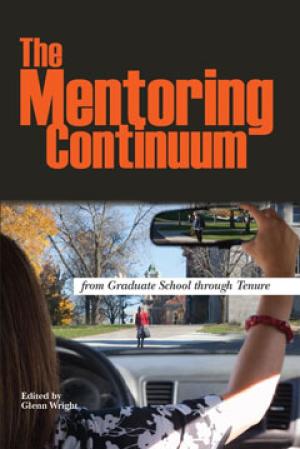
Skill at mentoring has . . . attained a certain cachet among those at all career stages who find in it an alternative way of being in academe-one that tilts away from the endemic competition of the research environment in favor of cooperation and mutual purpose. Part of mentoring’s appeal lies in its ability to gesture in two directions at once: forward . . . to new modalities and more egalitarian relationships, and backward, to a tradition of cross-generational support and identification as old as universities themselves, and that continues to feed the romance of the academic life in the minds of would-be faculty. (From the Publisher)
Journal Issue. Full text is available online.
Journal Issue.
In May 2008, a group of women of color who teach religious studies in predominantly white colleges and universities came together at Texas Christian University in a Wabash Center for Teaching Theology and Religion consultation. The group examined what happens, both to them and with students, when women of color enter the space of the religion classroom, how their presence affects teaching and learning, and what strategies we might employ to ease interactions among students and teachers. This essay is a reflection on a crucial theme that we discovered in the consultation: authority.
Is higher education preparing our students for a world that is increasingly complex and volatile, and in which they will have to contend with uncertainty and ambiguity? Are we addressing the concerns of employers who complain that graduates do not possess the creative, critical thinking, and communication skills needed in the workplace? This book harnesses what we have learned from innovations in teaching, from neuroscience, experiential learning, and studies on mindfulness and personal development to transform how we deliver and create new knowledge, and indeed transform our students, developing their capacities for adaptive boundary spanning. Starting from the premise that our current linear, course-based, educational practices are frequently at odds with how our neurological system facilitates learning and personal development, the authors set out an alternative model that emphasizes a holistic approach to education that integrates mindful inquiry practice with self-authorship and the regulation of emotion as the cornerstones of learning, while demonstrating how these align with the latest discoveries in neuroscience. The book closes by offering practical ideas for implementation, showing how simple refinements in classroom and out-of-classroom experiences can create foundations for students to develop key skills that will enhance adaptive problem solving, creativity, overall wellbeing, innovation, resilience, compassion, and ultimately world peace. (From the Publisher)
Click Here for Book Review Abstract: Promoting learning among college students is an elusive challenge, and all the more so when faculty and students come from differing cultures. This comprehensive guide addresses the continuing gaps in our knowledge about the role of culture in learning; and offers an empirically-based framework and model, together with practical strategies, to assist faculty in transforming college teaching for all their students through an understanding of and teaching to their strengths. Recognizing that each student learns in culturally influenced ways, and that each instructor’s teaching is equally influenced by her or his background and experiences, the authors offer an approach by which teachers can progressively learn about culture while they transform their teaching through reflection and the application of new practices that enrich student learning. The key premise of the book is that deepening student learning and increasing retention and graduation rates requires teaching from a strengths based perspective that recognizes the cultural assets that students bring to higher education, and to their own learning. Derived through research and practice, the authors present their Model of Cultural Frameworks in College Teaching and Learning that highlights eight continua towards achieving the transformation of teaching, and developing more culturally balanced and inclusive practices, over time. They present techniques – illustrated by numerous examples and narratives – for building on cultural strengths in teaching; offer tips and strategies for teaching through cultural dilemmas; and provide culturally reflective exercises. This guide is intended for all faculty, faculty developers or administrators in higher education concerned with equitable outcomes in higher education and with ensuring that all student cultural groups learn and graduate at the same rates. (From the Publisher)
Click Here for Book Review Latino males are effectively vanishing from the American higher education pipeline. Even as the number of Latinas/os attending college has actually increased steadily over the last few decades, the proportional representation of Latino males continues to slide relative to their Latina female counterparts. The question of why Latino males are losing ground in accessing higher education—relative to their peers—is an important and complex one, and it lies at the heart of this book. There are several broad themes highlighted, catalogued along with the four dimensions of policy, theory, research, and practice. The contributors to this book present new research on factors that inhibit or promote Latino success in both four-year institutions and community colleges in order to inform both policy and practice. They explore the social-cultural factors, peer dynamics, and labor force demands that may be perpetuating the growing gender gap, and consider what lessons can be learned from research on the success of Latinas. This book also closely examines key practices that enable first generation Latino male undergraduates to succeed which may seem counterintuitive to institutional expectations and preconceived notions of student behavior. Using narrative data, the book also explores the role of family in persistence; outlines how Latino men conceptualize fulfilling expectations, negotiate the emasculization of the educational process, and how they confront racialization in the pursuit of a higher education; uncovers attitudes to help-seeking that are detrimental to their success: and analyzes how those who succeed and progress in college apply their social capital – whether aspirational, navigational, social, linguistic, familial, or resistant. While uncovering the lack of awareness at all levels of our colleges and universities about the depth and severity of the challenges facing Latino males, this book provides the foundation for rethinking policy; challenges leaders to institutionalize male-focused programs and services; and presents data to inform needed changes in practice for outreach and retention. (From the Publisher)
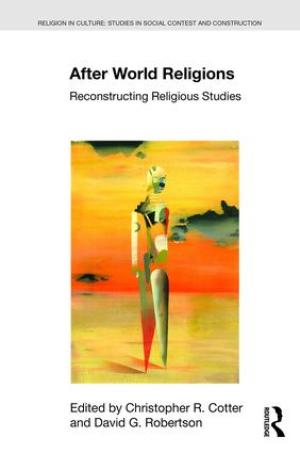
Click Here for Book Review Abstract: The World Religions Paradigm has been the subject of critique and controversy in Religious Studies for many years. After World Religions provides a rationale for overhauling the World Religions curriculum, as well as a roadmap for doing so. The volume offers concise and practical introductions to cutting-edge Religious Studies method and theory, introducing a wide range of pedagogical situations and innovative solutions. An international team of scholars addresses the challenges presented in their different departmental, institutional, and geographical contexts. Instructors developing syllabi will find supplementary reading lists and specific suggestions to help guide their teaching. Students at all levels will find the book an invaluable entry point into an area of ongoing scholarly debate. (From the Publisher)
Wabash Center Staff Contact
Sarah Farmer, Ph.D.
Associate Director
Wabash Center
farmers@wabash.edu