Resources
Teaching theology within academic institutions with confessional commitments and theologically conservative students requires holding together, in creative tension, two pedagogical goals. The challenge is to promote rigorous academic inquiry by encouraging student openness to engagement with perspectives that challenge their own beliefs while simultaneously constructing a course that is experienced as a safe space where students do not feel their personal faith is under attack. This essay presents the argument that a methodological framework for introductory theology courses informed by Alasdair MacIntyre's reflections on the nature of living traditions holds great promise for achieving these objectives. The essay will also describe how a creative extended analogy drawn from the game of basketball facilitates student comprehension of this initially abstract intellectual framework. Finally, the essay will offer some representative examples of student participation in course online discussion forums in order to illustrate the effectiveness of this approach for student learning.
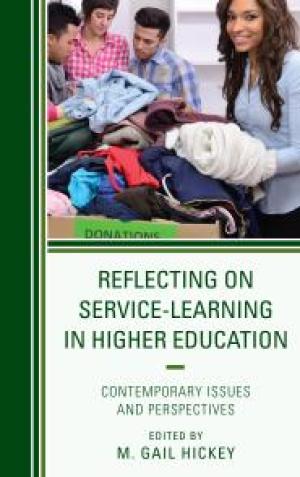
Click Here for Book Review Abstract: Reflecting on Service-Learning in Higher Education: Contemporary Issues and Perspectives examines forms of pedagogy such as service-learning, experiential learning, and problem-based learning in order to determine how students make connections between and among abstract academic concepts and real-life issues. This edited collection is divided into three sections—“Reflecting on Community Partnerships,” “Reflecting on Classroom Practice,” and “Reflecting on Diversity”—so as to represent interdisciplinary subjects, diverse student populations, and differing instructional perspectives about service-learning in higher education. Contributors provide service-learning programs and plans that can be replicated or adapted at other institutions of higher education. This book is recommended for scholars and practitioners of education. (From the Publisher)
Click Here for Book Review Abstract: This book is about teaching for professional practice and explores ways to engage students in the classroom. It draws on the principles of rigorous scholarship and focuses on interactive learning between the class and the professor and among the students. Each contributor addresses the need to connect theory with community practice, deploying different methods in different contexts, and sharing scholarly reflections about how to improve the craft of teaching. The essays offer practical suggestions that allow readers to adapt and apply these ideas in their own classrooms to suit their particular contexts and share the outcomes of that process. (From the Publisher)

Click Here for Book Review Abstract: At a time of impending demographic shifts, faculty and administrators in higher education around the world are becoming aware of the need to address the systemic practices and barriers that contribute to inequitable educational outcomes of racially and ethnically diverse students. Focusing on the higher education learning environment, this volume illuminates the global relevance of critical and inclusive pedagogies (CIP), and demonstrates how their application can transform the teaching and learning process and promote more equitable educational outcomes among all students, but especially racially minoritized students. The examples in this book illustrate the importance of recognizing the detrimental impact of dominant ideologies, of evaluating who is being included in and excluded from the learning process, and paying attention to when teaching fails to consider students’ varying social, psychological, physical and/or emotional needs. This edited volume brings CIP into the realm of comparative education by gathering scholars from across academic disciplines and countries to explore how these pedagogies not only promote deep learning among students, but also better equip instructors to attend to the needs of diverse students by prioritizing their intellectual and social development; creating identity affirming learning environments that foster high expectations; recognizing the value of the cultural and national differences that learners bring to the educational experience; and engaging the “whole” student in the teaching and learning process. (From the Publisher)
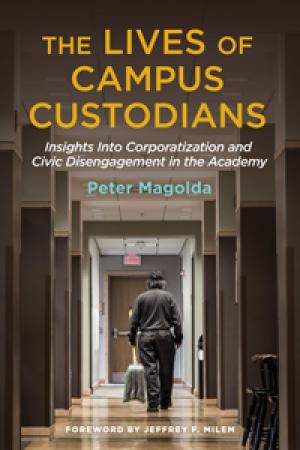
Click Here for Book Review This unique study uncovers the lives and working conditions of a group of individuals who are usually rendered invisible on college campuses--the custodians who daily clean the offices, residence halls, bathrooms and public spaces. In doing so it also reveals universities’ equally invisible practices that frequently contradict their espoused values of inclusion and equity, and their profession that those on the margins are important members of the campus community. This vivid ethnography is the fruit of the year’s fieldwork that Peter Magolda’s undertook at two universities. His purpose was to shine a light on a subculture that neither decision-makers nor campus community members know very much about, let alone understand the motivations and aspirations of those who perform this work; and to pose fundamental questions about the moral implications of the corporatization of higher education and its impact on its lowest paid and most vulnerable employees. Working alongside and learning about the lives of over thirty janitorial staff, Peter Magolda becomes privy to acts of courage, resilience, and inspiration, as well as witness to their work ethic, and to instances of intolerance, inequity, and injustices. We learn the stories of remarkable people, and about their daily concerns, their fears and contributions. Peter Magolda raises such questions as: Does the academy still believe wisdom is exclusive to particular professions or classes of people? Are universities really inclusive? Is addressing service workers’ concerns part of the mission of higher education? If universities profess to value education, why make it difficult for those on the margins, such as custodians, to “get educated.” The book concludes with the research participants’ and the author’s reflections about ways that colleges can improve the lives of those whose underpaid and unremarked labor is so essential to the smooth running of their campuses. Appendices provide information about the research methodology and methods, as well as a discussion of the influence of corporate managerialism on ethnographic research. (From the Publisher)

This book questions some of our most ingrained assumptions, not only about the nature of teaching and learning, but about what constitutes education, and about the cultural determinants of what is taught. What if who you think you are profoundly affects what and how you learn? Since Descartes, teachers in the Western tradition have dismissed the role of self in learning. What if our beliefs about self and learning are wrong, and relevance of knowledge to self actually enhances learning, as current research suggests? Jane Fried deconstructs the Grand Western Narrative of teaching and learning, describing it is a cultural fishbowl through which we see the world, rarely aware of the fishbowl itself, be it disciplinary constructs or the definition of liberal education. She leads us on a journey to question “the way things are”; to attend to the personal narratives of others from ethnic, racial and faith groups different from ourselves; to rediscover self-authorship as the core task of learning in college; and to empower ourselves and students to navigate the disorientation of the Alice in Wonderland rabbit holes of modern life. This is a book for all educators concerned about the purpose of college and of the liberal arts in the 21st century, and what it is we should reasonably expect students to learn. Jane Fried both upends many received ideas and offers constructive insights based on science and evidence, and does so in an engaging way that will stimulate reflection. (From the Publisher)
Community-based research (CBR) refers to collaborative investigation by academics and non-academic community members that fosters positive change on a local level. Despite recent trends toward engaged scholarship, few publications demonstrate how to effectively integrate CBR into academic course work or take advantage of its potential for achieving community change. Community-Based Research: Teaching for Community Impact fills these gaps by providing: * An overview of language and methods used by professionals engaged in CBR * A framework for orienting CBR toward concrete community outcomes * Effective ways to integrate CBR into course content, student-driven projects, and initiatives spanning disciplines, curricula, campuses and countries * Lessons learned in working toward positive outcomes for students and in communities This text is designed for faculty, graduate students, service-learning and other engaged learning and scholarship practitioners, alliance members, special interest groups, and organizations that desire to strengthen student learning and utilize research for improvement in their communities. (From the Publisher)
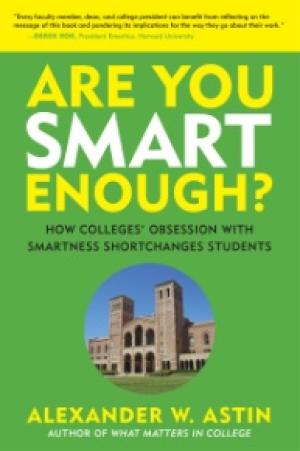
Click Here for Book Review This book explores the many ways in which the obsession with “being smart” distorts the life of a typical college or university, and how this obsession leads to a higher education that shortchanges the majority of students, and by extension, our society’s need for an educated population. The author calls on his colleagues in higher education to return the focus to the true mission of developing the potential of each student: However “smart” they are when they get to college, both the student and the college should be able to show what they learned while there. Unfortunately, colleges and universities have embraced two very narrow definitions of smartness: the course grade and especially the standardized test. A large body of research shows that it will be very difficult for colleges to fulfill their stated mission unless they substantially broaden their conception to include student qualities such as leadership, social responsibility, honesty, empathy, and citizenship. Specifically, the book grapples with issues such as the following: • Why America’s 3,000-plus colleges and universities have evolved into a hierarchical pecking order, where institutions compete with each other to recruit “smart” students, and where a handful of elite institutions at the top of the pecking order enroll the “smartest” students. • Why higher education favors its smartest students to the point where the “not so smart” students get second-class treatment. • Why so many colleges find it difficult to make good on their commitment to affirmative action and “equality of opportunity.” • Why college faculties tend to value being smart more than developing students’ smartness (i.e., teaching and learning). (From the Publisher)
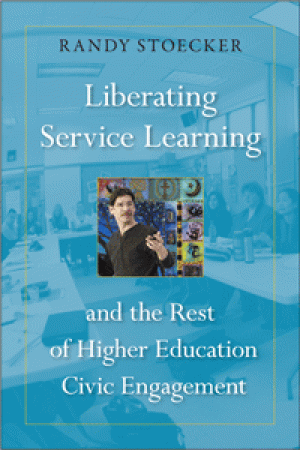
Click Here for Book Review Abstract: Randy Stoecker has been "practicing" forms of community-engaged scholarship, including service learning, for thirty years now, and he readily admits, "Practice does not make perfect." In his highly personal critique, Liberating Service Learning and the Rest of Higher Education Civic Engagement, the author worries about the contradictions, unrealized potential, and unrecognized urgency of the causes as well as the risks and rewards of this work. Here, Stoecker questions the prioritization and theoretical/philosophical underpinnings of the core concepts of service learning: 1. learning, 2. service, 3. community, and 4. change. By "liberating" service learning, he suggests reversing the prioritization of the concepts, starting with change, then community, then service, and then learning. In doing so, he clarifies the benefits and purpose of this work, arguing that it will create greater pedagogical and community impact. Liberating Service Learning and the Rest of Higher Education Civic Engagement challenges—and hopefully will change—our thinking about higher education community engagement. (From the Publisher)
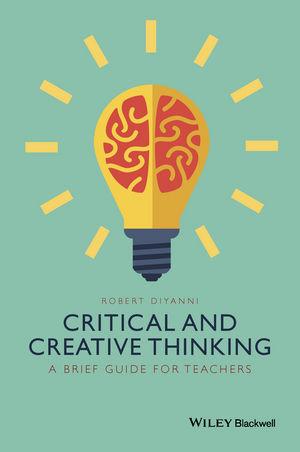
Click Here for Book Review Abstract: Critical and Creative Thinking: A Guide for Teachers reveals ways to develop a capacity to think both critically and creatively in practical and productive ways. - Explains why critical and creative thinking complement each other with clear examples - Provides a practical toolkit of cognitive techniques for generating and evaluating ideas using both creative and critical thinking - Enriches the discussion of creative and critical intersections with brief “inter-chapters” based on the thinking habits of Leonardo da Vinci - Offers an overview of current trends in critical and creative thinking, with applications across a spectrum of disciplines (From the Publisher)
Wabash Center Staff Contact
Sarah Farmer, Ph.D.
Associate Director
Wabash Center
farmers@wabash.edu