Scholarship on Teaching
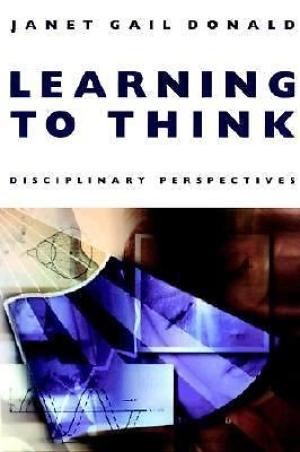
Learning to think in a discipline is a demanding scholarly task that is not often associated with the development of university students. Although the intellectual development of postsecondary students is gaining increased attention, relating student development to the process of inquiry in different disciplines is unexplored terrain. This book attempts to come to a deeper understanding of thinking processes by exploring the approaches to thinking taken in different disciplines and then considering how these could be applied to student intellectual development. Drawing on more than twenty-five years of research, Janet Donald shows how knowledge is structured and how professors and students perceive learning in their fields-and offers strategies for constructing and using knowledge that will help postsecondary institutions to promote students' intellectual development within and across the disciplines. The author first creates a framework for understanding student intellectual development and for learning to think in different disciplines. In succeeding chapters, she describes the principal methods of inquiry in each discipline and their effects on learning to think, examining what this means for students and how we might use it to improve the instructional process. For faculty members, this book provides insight into the representation and development of curricula, courses, and programs to improve teaching and learning processes. Professors of education may find a specific use for the comparisons across disciplines in planning courses on teaching methods, as an aid in providing students with insight into how disciplines or fields of study are constructed, and in refining their own conceptual framework in their field. Administrators, particularly of programs and departments, will find suggestions for policy initiatives that are needed to create a supportive learning environment and for organizing teaching and learning. (From the Publisher)
Developing Adult Learners highlights the powerful and compelling voices of teachers and students who have discovered the excitement of growing and changing through learning. It is full of pragmatic advice for faculty members, part-time instructors, workplace educators, leadership trainers, and virtually anyone dedicated to helping adult learners achieve rich and rewarding experiences. (From the Publisher)

We live in a culture defined and sustained by technology. Usually we equate this access to technology with opportunity, affluence, even happiness: the good life. Albert Borgmann's Power Failure raises some crucial, if disconcerting, questions: If technology liberates us, exactly what kind of liberation does it promise? Do we really feel free? Are we prospering, and by what definition? Borgmann looks at the relationship between Christianity and technology by examining some of the invisible dangers of a technology-driven lifestyle. Specifically, he points out how devices and consumption have replaced physical things and practices in everyday life. Power Failure calls us to vigorous Christian practice in a technological age. These practices include citizen-based decision making, communal celebrations, and a vital connection with the table and the word through daily shared meals and the discipline of reading. Examining the influences that shape people, this unique and insightful text will appeal to anyone interested in technology, philosophy, or cultural critique. Chapters include The Moral Significance of the Material Culture, Contingency and Grace, Power and Care, and The Culture of the Word and the Culture of the Table. (From the Publisher)
Here's a concise, practical guide to mastering the art of research. Filled with the tested strategies and expert advice of three distinguished scholars, this book helps you plan, carry out, and report on research in any field, at any level - a term paper, a dissertation, an article, or a book. The Craft of Research is about more than the mechanics of fact gathering: it's a unique introduction to doing research effectively. Clearly written and easy to use, it teaches the skills that are essential to the success of any research project. Wayne Booth, Gregory Colomb, and Joseph Williams chart every stage of the research process, from finding a topic and generating research questions about it to marshalling evidence, constructing arguments, creating a first draft, and revising that draft for a final report that meets the needs of a community of readers. (From the Publisher)
Journal Issue.
In this book, Grant Wiggins outlines design standards for performance-based assessments that promise students - no matter what their ability - clear and worthy performance targets, useful feedback, coaching, and the opportunity to progress toward excellence. Educative Assessment furnishes the information needed to design performance-based assessments, craft performance tasks that meet rigorous educational standards, score assessments fairly, and structure and judge student portfolios. It also shows how performance assessment can be used to improve curriculum and instruction, grading, and reporting, as well as teacher accountability. In addition, the book includes numerous design templates and flowcharts, strategies for design and troubleshooting, and myriad examples of assessment tasks and scoring rubrics that Wiggins has developed and repeatedly refined using feedback from clients in schools, districts, and state departments of education. (From the Publisher)
Scrutinizes the theoretical links between critique and prescription. Examines the growing wisdom on student learning, college outcomes, and different options for instruction and assessment. (From the Publisher)

Self-regulated learning is an important new area of research on college learning and teaching. The purpose of this volume of New Directions for Teaching and Learning is to provide a sampling of some of the central issues regarding self-regulated learning in college courses and classrooms. These issues include the definition of self-regulated learning, how to improve students' self-regulated learning, and how faculty can use the ideas from this research to improve their own teaching. The chapters in this volume reflect current research and thinking about self-regulated learning for college students. While more research and development is needed on this topic, the authors provide an immediate context for efforts to improve college learning and teaching. This is the 63rd issue of the quarterly journal New Directions for Teaching and Learning. (From the Publisher)
This is Gene Maeroff's "report from the front" on the short history and status of online learning in the United States and around the world. Maeroff is a reporter who takes you to the schools from Penn State's World Campus to the Florida Virtual School to the newly emerging online learning initiatives in Afghanistan. His journey ultimately provides a snapshot of the way in which technology is changing the minds of people with regard to the nature of higher education. He looks at the method of electronic delivery, the quality of the information being delivered and quality of interaction it engenders. He looks at the way learners are adapting to this new technology and how much responsibility is put on the student's shoulders. Finally, and maybe tellingly, he looks at the business of online learning. (From the Publisher)
Journal Issue. Full text is available online.