Resources
One page Teaching Tactic: students learn to create models in order to increase their grasp of nuanced theological arguments.
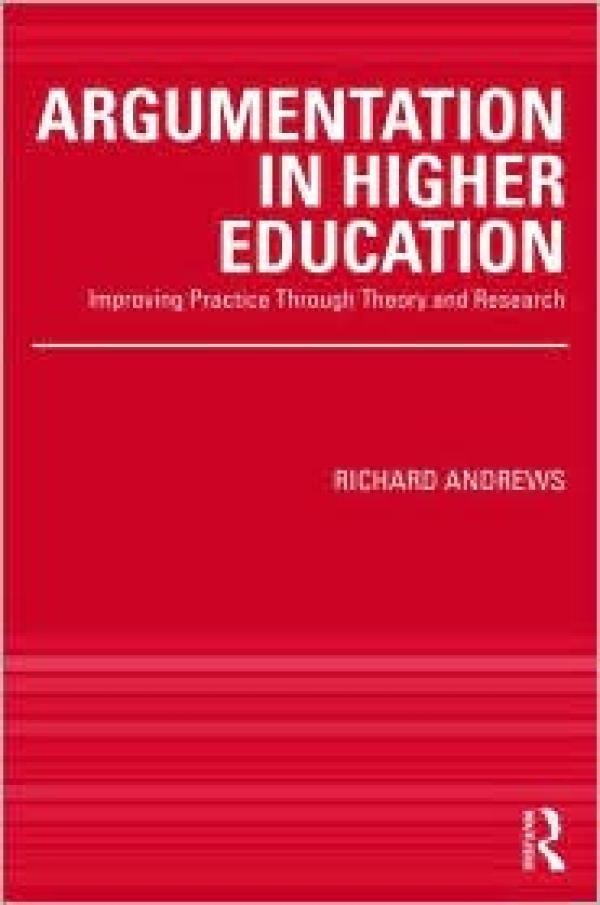
Argumentation in Higher Education offers professors, lecturers and researchers informative guidance for teaching effective argumentation skills to their undergraduate and graduate students. This professional guide aims to make the complex topic of argumentation open and transparent. Grounded in empirical research and theory, but with student voices heard strongly throughout, this book fills the gap of argumentation instruction for the undergraduate and graduate level. Written to enlighten even the most experienced professor, this text contributes to a better understanding of the demands of speaking, writing, and visual argumentation in higher education, and will undoubtedly inform and enhance course design. The book argues for a more explicit treatment of argument (the product) and argumentation (the process) in higher education, so that the ground rules of the academic discipline in question are made clear. Each chapter concludes with practical exercises for staff development use. Topics discussed include: The importance of argument The current state of argumentation in higher education Generic skills in argumentation The balance between generic and discipline specific skills Information communication technologies and visual argumentation How can we best teach argumentation so that students feel fully empowered in their academic composition? Professors (new and experienced), lecturers, researchers, professional developers and writing coaches worldwide grappling with this question will find this accessible text to be an extremely valuable resource. Richard Andrews is Professor in English at the Institute of Education, University of London. (From the Publisher)
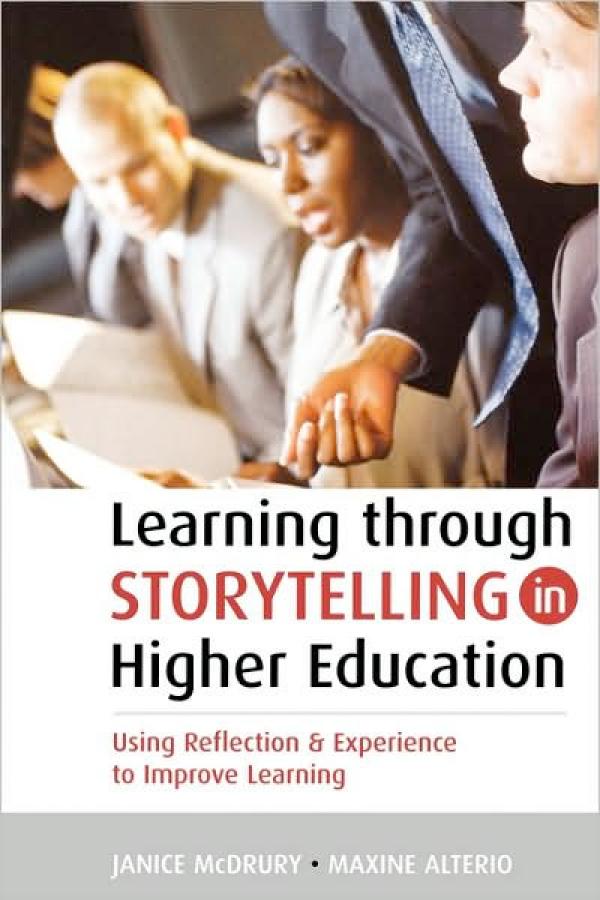
Learning through Storytelling in Higher Education: Using Reflection & Experience to Improve Learning
"Learning Through Storytelling in Higher Education" explores ways of using storytelling as a teaching and learning tool. When storytelling is formalized in meaningful ways, it can capture everyday examples of practice and turn them into an opportunity to learn - encouraging both reflection, a deeper understanding of a topic and stimulating critical thinking skills. The technique can accommodate diverse cultural, emotional and experiential incidents, and may be used in many different contexts eg formal/informal; one-on-one/group setting. The authors outline the different models of storytelling and explain how to make use of this technique and encourage a 'storytelling culture' within the workplace or in tutorial sessions. Academic yet accessible, this book provides a new perspective on learning techniques and will be a great asset to any educator looking to improve reflective practice. (From the Publisher)
Journal Issue. Full text is available online.
The dissimilarity that exists between the historical and cultural situation of North American college students and the world described by the biblical authors poses a problem for theological and religious education. While the biblical authors tell fantastic stories of miracle and magic, the scientific and technological paradigm prevalent in western culture emphasizes the gathering of objective facts in the name of efficiency and pragmatism. Theological education tends to respond to this situation by embracing either a program of historical criticism or a form of Biblicism, both of which reinforce an objectivist approach to education. What is needed in theological education is an approach that "re-mythologizes" the Bible, enabling students to hear the theological message of the text addressed to their cultural and historical situation. One way this approach can be encouraged is through the teaching of the biblical text in conversation with the contemporary stories found in popular culture.
In an attempt to engage students' higher-order thinking skills, we developed a documentary filmmaking project for our introduction to theology course. By documenting certain aspects of the theology of John Wesley and John Henry Newman (God, creation, revelation, Jesus, the church), students were able to delve deeply into these themes, better understanding them and their interrelationships. The project helped the students to actively practice historical theology, rather than passively learn about it through lectures. In addition, the project emphasized research skills, quality of writing and creative production, and a professional presentation at a screening.
A 1000 word essay on using media to teach theory.
Teaching students to doubt, that is, to "test," theological arguments as one might test any other kind of knowledge is challenging in that the warrant for such testing is not immediately clear. Stephen Toulmin, Richard Rieke, and Allan Janik's model of reasoning provides a conceptual framework that demonstrates the logical relationships between a claim, its grounds, warrants, and backing for warrants. Against such a model, the instructor and students may study religious claims, both biblical and theological, with the aim of analyzing the ways such claims find support or a lack of support depending upon the particular ways that claims and evidence have competing warrants. Several pedagogical benefits ensue. First, students see that the validity for theological claims rests as much upon warrants as it does upon grounding. Second, searching for ancient warrants privileges historical-critical investigation. Third, competing warrants for contradictory theological claims summon pedagogical metaphors of process and development.
A Grinnell College (Iowa) study investigated whether students (n=200) felt that balanced discussion of racial/diversity issues was possible and why they did or did not want to discuss the issues. Most thought balanced discussion was impossible, feared a single viewpoint would dominate, and feared reprisal for speaking against the dominant perspective. Further findings and implications are discussed.
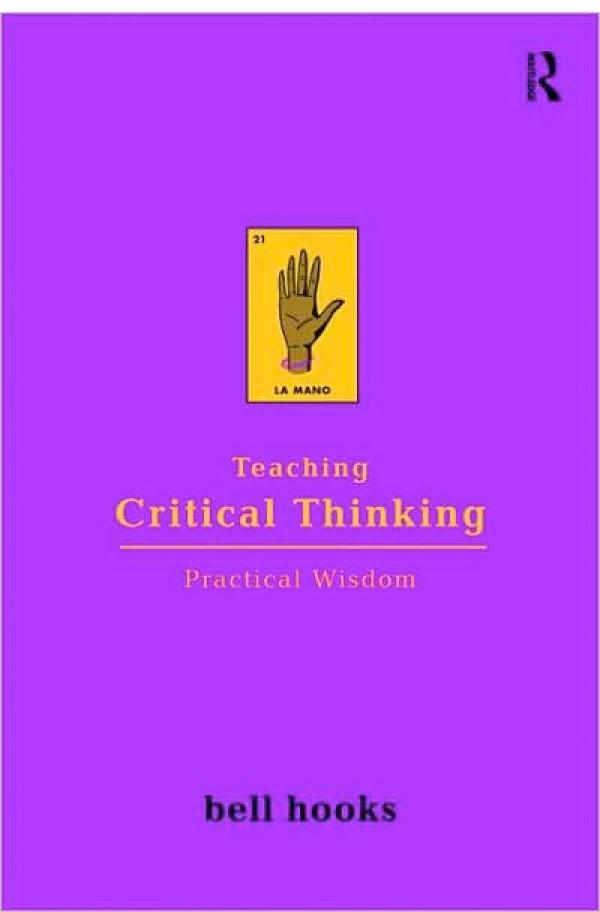
In Teaching Critical Thinking, renowned cultural critic and progressive educator bell hooks addresses some of the most compelling issues facing teaching issues facing teachers in and out of the classroom today. In a series of short, accessible, and enlightening essays, hooks explores of the confounding and sometimes controversial topics that teachers and students have urged her to address since the publication of the previous best-selling volums in her Teaching series, Teaching to Transgress and Teaching Community. The issues are varied and broad, from whether meaningful teaching can take place in a large classroom setting to confronting issues of self-esteem. One professor, for example, asked how black female professors can maintain positive authority in a classroom without being seen through the lens of negative racist, sexist stereotypes. One teacher asked how to handle tears in the classroom. while another wanted to know how to use humor as a tool for learning. Addressing questions of race, gender, and class in this work, hooks discusses the complex balance that allows us to teach, value, and learn from works written by racist and sexist authors. Highlighting the importance of reading, she insists on the primacy of free speech, a democratic education of literacy. Throughout these essays, she celebrates the transformative power of critical thinking. This is provocative, powerful, and joyful intellectual work. It is a must read for anyone who is at all interested in education today. (From the Publisher)