Resources
Journal Issue.
Journal Issue.
Journal Issue.
Journal Issue.
Journal Issue.
Because the drive toward external assessment speaks almost exclusively in terms of standardized testing, we need to be reminded of the internal purposes of assessment: measuring learning for both student and teacher so that instruction can be adjusted and improved. This book is written for college instructors who are striving to creatively change assessment practice to better reflect learner-centered teaching. It is intended to consider not only the multiple ways in which individuals learn content, but also the multiple avenues to assessment the variety of learning styles demands. Creative assessment is defined here as assessments that spin, twist, and reform what might be a standard kind of assessment in an ordinary classroom. Instructors should use these examples of creative assessment as starting points, and as the beginnings of an internal discussion on what matters most in the courses they teach: What components of each course count the most for solving a range of problems in the discipline? If facts are important, and they usually are, how can they be used to support a flexible approach to thinking, solving, considering options, and gathering and interpreting evidence? What are the facts not telling us? (From the Publisher)
This book shows college instructors how to communicate their course organization to students in a graphic syllabus—a one-page diagram, flowchart, or concept map of the topical organization—and an outcomes map—a one-page flowchart of the sequence of student learning objectives and outcomes from the foundational through the mediating to the ultimate. It also documents the positive impact that graphics have on student learning and cautions readers about common errors in designing graphic syllabi. (From the Publisher)
This book presents novel and interesting ways of teaching archaeological concepts and processes to college and university students. Seeking alternatives to the formal lecture format, the various contributions seek better ways of communicating the complexities of human behavior and of engaging students in active learning about the past. This collection of imaginative exercises designed by 20 master instructors on three continents includes role-playing, games, simulations, activities, and performance, all designed to teach archaeological ideas in interesting and engaging ways. Sponsored by the World Archaeological Congress. (From the Publisher)
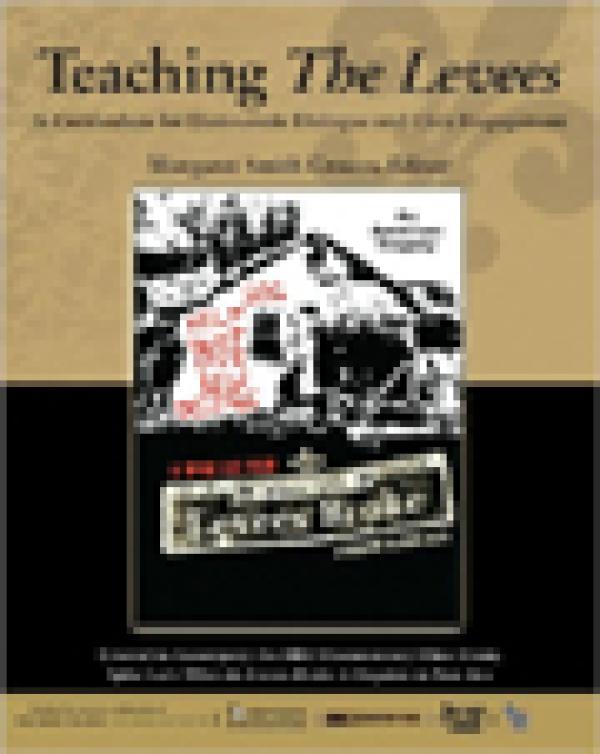
Abstract: One powerful response to the disaster of Hurricane Katrina was the Peabody Award-winning HBO documentary film event, When the Levees Broke: A Requiem in Four Acts, by Spike Lee. Now, through the generosity of the Rockefeller foundaiton, faculty and staff at Teachers College, Columbia University have created this compelling curriculum guide, based on the documentary and for use in high schools, colleges and community groups. In September 2007, through a generous collaboration between The Rockefeller Foundation, Teachers College, and HBO, 30,000 copies of a new curriculum package addressing the issues of citizenship, race, class and poverty raised in the aftermath of Katrina were distributed to school, college and community educators. The package included a copy of Spike Lee and HBO's epic documentary, 'When the Levees Broke: A Requiem in Four Acts,' as well as the highly acclaimed multidisciplinary curriculum guide, Teaching The Levees. Due to the continued immense demand for this resource, the accompanying curriculum guide is now available for purchase. Teaching The Levees, developed by faculty at Teachers College, Columbia University, includes chapters on history, media literacy, civics, economics and geography. (From the Publisher)
Journal Issue.