Resources
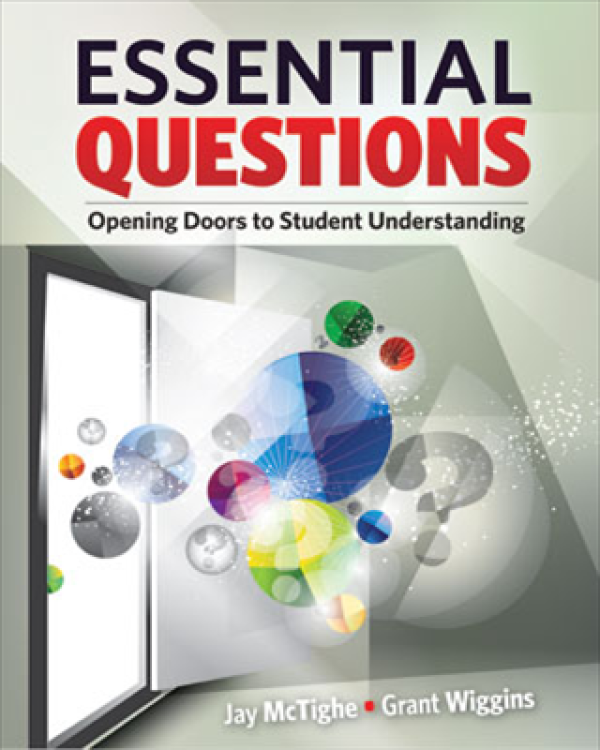
What are “essential questions,” and how do they differ from other kinds of questions? What’s so great about them? Why should you design and use essential questions in your classroom? Essential questions (EQs) help target standards as you organize curriculum content into coherent units that yield focused and thoughtful learning. In the classroom, EQs are used to stimulate students’ discussions and promote a deeper understanding of the content. Whether you are an Understanding by Design (UbD) devotee or are searching for ways to address standards—local or Common Core State Standards—in an engaging way, Jay McTighe and Grant Wiggins provide practical guidance on how to design, initiate, and embed inquiry-based teaching and learning in your classroom. Offering dozens of examples, the authors explore the usefulness of EQs in all K–12 content areas, including skill-based areas such as math, PE, language instruction, and arts education. As an important element of their backward design approach to designing curriculum, instruction, and assessment, the authors - Give a comprehensive explanation of why EQs are so important; - Explore seven defining characteristics of EQs; - Distinguish between topical and overarching questions and their uses; - Outline the rationale for using EQs as the focal point in creating units of study; and - Show how to create effective EQs, working from sources including standards, desired understandings, and student misconceptions. Using essential questions can be challenging—for both teachers and students—and this book provides guidance through practical and proven processes, as well as suggested “response strategies” to encourage student engagement. Finally, you will learn how to create a culture of inquiry so that all members of the educational community—students, teachers, and administrators—benefit from the increased rigor and deepened understanding that emerge when essential questions become a guiding force for learners of all ages. (From the Publisher)
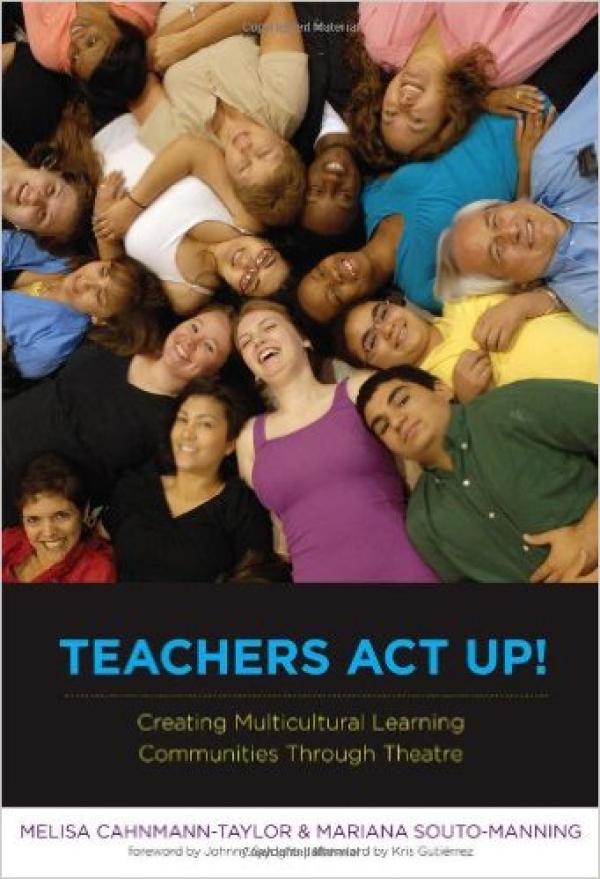
If teachers want to create positive change in the lives of their students, then they must first be able to create positive change in their own lives. This book describes a powerful professional development approach that merges the scholarship of critical pedagogy with the Theatre of the Oppressed. Participants “act up” in order to explore real-life scenarios and rehearse difficult conversations they are likely to have with colleagues, students, administrators, and parents. The authors have practiced the theatrical strategies presented here with pre- and in-service teachers in numerous contexts, including college courses, professional development seminars, and PreK–12 classrooms. They include step-by-step instructions and vivid photographs to help readers use these revolutionary theatre strategies in their own contexts for a truly unique learning experience. (From the Publisher)

Journal Issue.
The “Make Your Own Religion” class project was designed to address a perceived need to introduce more theoretical thinking about religion into a typical religion survey course, and to do so in such a way that students would experience the wonder of theoretical discovery, and through or because of that discovery hopefully both better retain knowledge gained from the project and nurture within themselves the practice of thinking more analytically about religion (and other social and cultural things). Despite a number of challenges and unresolved questions associated with the project, it has proven relatively successful at introducing and provoking theoretical thinking about religion in a compressed period of time, without taking an inordinate number of class periods away from the survey itself. A brief description and analysis of the assignment is followed by four short responses.
One page Teaching Tactic: using visual arts in the biblical studies classroom.
One page Teaching Tactic: a method for engaging students' religious questions in an Islamic Studies course

Journal Issue.
Click Here for Book Review Abstract: In this volume, the authors focus on the importance of inclusive teaching and the role faculty can play in helping students achieve, though not necessarily in the same way. To teach with a focus on inclusion means to believe that every person has the ability to learn. It means that most individuals want to learn, to improve their ability to better understand the world in which they live, and to be able to navigate their pathways of life. This volume includes the following topics: - best practices for teaching students with social, economic, gender, or ethnic differences - adjustments to the teaching and learning process to focus on inclusion - strategies for teaching that help learners connect what they know with the information presented - environments that maximize learners’ academic and social growth. The premise of inclusive teaching works to demonstrate that all people can and do learn. Educators and administrators can incorporate the techniques of inclusive learning and help learners retain more information. This is the 141st volume of the quarterly Jossey-Bass higher education series New Directions for Teaching and Learning. It offers a comprehensive range of ideas and techniques for improving college teaching based on the experience of seasoned instructors and the latest findings of educational and psychological researchers. (From the Publisher)
Click Here for Book Review Abstract: Despite a growing body of research on teaching methods, instructors lack a comprehensive resource that highlights and synthesizes proven approaches. Teaching for Learning fills that gap. Each of the one hundred and one entries: - describes an approach and lists its essential features and elements - demonstrates how that approach has been used in education, including specific examples from different disciplines - reviews findings from the research literature - describes techniques to improve effectiveness. Teaching for Learning provides instructors with a resource grounded in the academic knowledge base, written in an easily accessible, engaging, and practical style. (From the Publisher)
Click Here for Book Review Abstract: Our primary goal in assembling this collection is to convince faculty to experiment with the “flipped” classroom. Given the techtonic shift, providing educators with an abundance of electronic resources, as well as the nature of today’s students, every faculty member needs to consider the possibilities of the flip. Now that active learning has been demonstrated by research to be more effective than the pure sage-on-the-stage paradigm, flipping is a natural outgrowth with its recognition that classroom time needs to be dedicated to activities by the instructor, the individual students, and groups that promote a deeper learning of the material. This book offers a guide for those faculty members wishing to make the first steps, taking the instructor from preparation for the flipped class experience through actual out-of-class assignments, in-class activities, electronic resources available for support, and even assessment of student performance and class effectiveness. (From the Publisher)