Resources
Journal Issue.
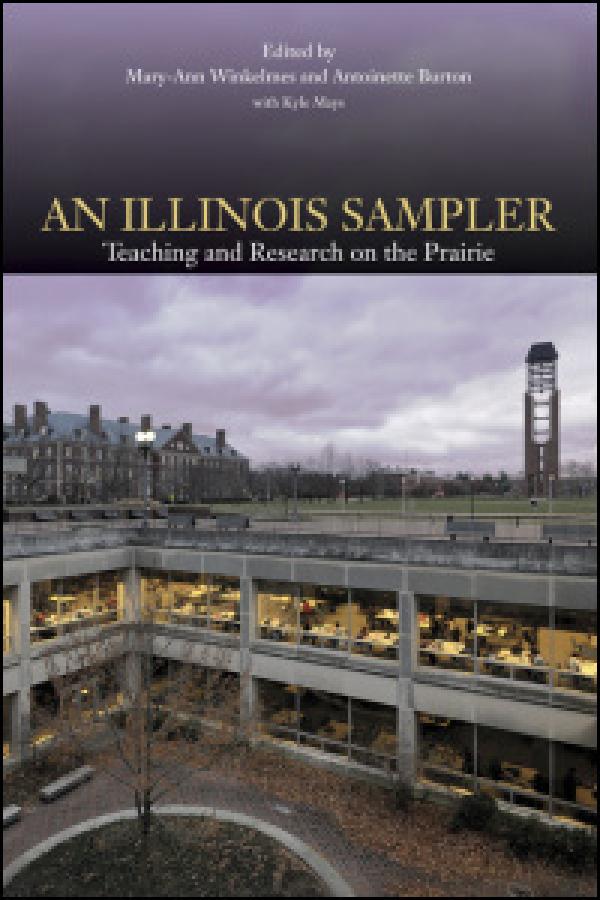
Click Here for Book Review Abstract: How world-class research makes its way into lecture halls and seminar rooms Major research universities expect faculty to conduct significant research but also to excel as teachers. Too often those outside the classroom assume that these two functions have little in common when in fact the best teachers conduct exciting and innovative research that provides students the opportunity to learn by doing. An Illinois Sampler presents personal accounts from faculty members at the University of Illinois at Urbana-Champaign and other contributors, about their research and how it enriches and energizes their teaching. Contributors from the humanities, engineering, social and natural sciences, and other disciplines explore how ideas, methods, and materials merge to lead their students down life-changing paths to creativity, discovery, and solutions. As faculty introduce their classes to work conducted from the Illinois prairie to the farms of Africa, from densely populated cities to dense computer coding, they generate an atmosphere where research, teaching, and learning thrive inside a feedback loop of education across disciplines. Aimed at alumni and prospective students interested in the university's ongoing mission, as well as current faculty and students wishing to stay up to date on the diverse work being done around them, An Illinois Sampler offers a rare glimpse into the impact of cutting-edge research on undergraduate education in a rapidly changing world. The book also showcases the best, the most ambitious, and the most effective teaching practices developed and nurtured at one of the world's premier research universities. "The late Ernie Boyer inspired his readers when he wrote about the 'scholarship' of teaching. Years later, the engagement of faculty in the scholarly assessment of what students know and can do and in the exploration of ways in which these outcomes might be improved remains a formidable challenge. This is especially the case in complex research universities. In this timely volume and in fields as diverse as dance, geology, music, medicine, kinesiology, mathematics, engineering, and microbiology we have firsthand accounts of what faculty members are doing to make a better tomorrow. The narratives are as inspiring as they are practical and deserve to be shared and read by those who care about the quality of American universities."--Stanley Ikenberry, President Emeritus of the University of Illinois "The land-grant model is discovery of new knowledge, teaching students, and engaging the broader community. Something is lost when you try to separate the three concepts because they are mutually enriching--discovery comes in part by engaging the community, discovery by faculty and students strengthens education, etcetera. In this time of accountability and scarce resources, the academy must better explain this integration of effort, particularly in connection with the allocation of faculty time and compensation to research and engagement. The stories of scholar-educators from the University of Illinois, one of the great land-grant universities of the country, wonderfully illustrate how this all works."--Peter McPherson, President Emeritus of Michigan State University and President of the Association of Public and Land-grant Universities (From the Publisher)
Nine contributors to the Wabash Center's “Race Matters” blog (https://www.wabashcenter.wabash.edu/category/race-matters-in-the-classroom/) provide short teaching tactics they have used to help students engage difference in meaningful ways. 
Journal Issue.
One page Teaching Tactic: dividing up students into separate "expert groups" helps them master difficult reading assignments.
In this essay, I examine the following pedagogical question: how can we unlock students' mistaken notions that religious “traditions” are monoliths, and instead help them to recognize, puzzle over, and appreciate the complex multiplicity and vibrant set of doctrinal and ritual conversations that characterize religious traditions? More specifically, how can we teach students to recognize these differences with respect to a religion's notions of god? And how can we do so even when students are particularly stuck on, invested in, or trained to see homogeneity? In answer to these questions, I present an exercise that I have used in my World Religions courses. This exercise – which I call the “Council of Newton” (named for the building in which I first taught it) – is particularly effective because it helps students uncover and wrestle with this diversity at two levels: conceptually and historically.
This article considers the challenges inherent when teaching about new religious movements (“cults”), how successful instructors have surmounted them, and how teacher-scholars in other fields of religious studies can benefit from a discussion of the successful teaching of new religions. I note that student-centered pedagogies are crucial to teaching new religions, particularly if students disrupt and defamiliarize the assumed and reified categories of “cult” and “religion.” I argue that what works in a classroom focusing on new religious movements will work more broadly in religious studies classrooms, since the challenges of the former are reproduced in the latter.
One page Teaching Tactic: in an introductory Biblical Hebrew course, students master one word, study passages in which it occurs, and preach on it.
One page Teaching Tactic: in groups, students perform roles of different theorists as they discuss case studies in ministry.
One page Teaching Tactic: a series of student pairings discuss questions about religious identity in a World Religions Course.