Resources
Journal Issue.
A project team developing resources for teaching Biblical languages using methods borrowed from the field of Second Language Acquisition used for modern languages. 
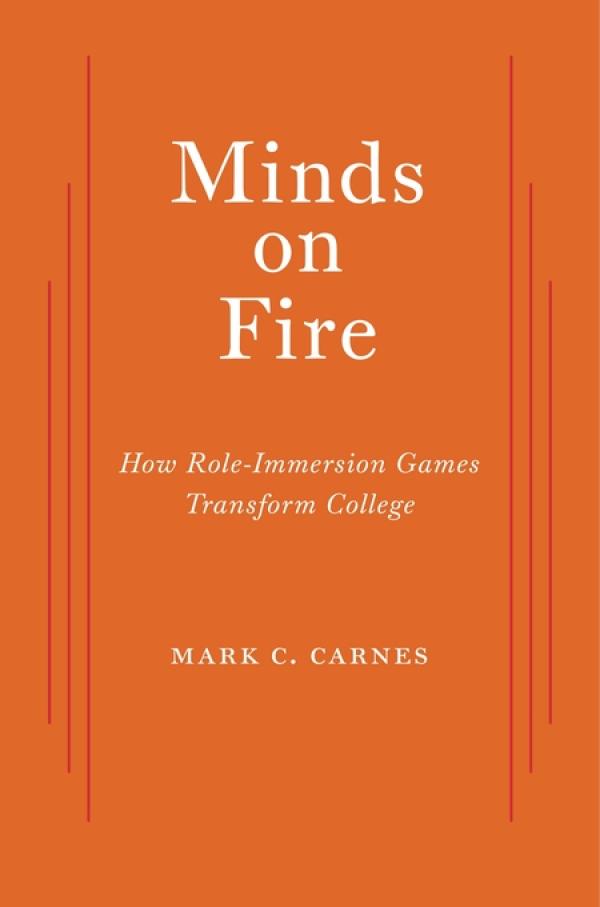
Click Here for Book Review Abstract: Why are so many students intellectually disengaged? Faculty, administrators, and tuition-paying parents have been asking this question for nearly two centuries. And the answer is always more or less the same: students are so deeply absorbed in competitive social play (fraternities, sports, beer pong, World of Warcraft, social media) that they neglect academics. In Minds on Fire, Mark Carnes shows how role-immersion games channel students’ competitive (and sometimes mischievous) impulses into transformative learning experiences. His discussion is based on interviews with scores of students and faculty who have used a pedagogy called Reacting to the Past, which features month-long games set during the French revolution, Galileo’s trial, the partition of India, and dozens of other epochal moments in disciplines ranging from art history to the sciences. These games have spread to over three hundred campuses around the world, where many of their benefits defy expectations. Students think more critically by internalizing alternative selves, and they understand the past better by filtering it through their present. Fierce competition between opposing sides leads to strong community bonds among teammates and develops speaking, writing, leadership, and problem-solving skills. Minds on Fire is a provocative critique of educational reformers who deplored role-playing pedagogies, from Plato to Dewey to Erikson. Carnes also makes an impassioned appeal for pedagogical innovation. At a time when cost-cutting legislators and trustees are increasingly drawn to online learning, Carnes focuses on how bricks-and-mortar institutions of higher education can set young minds on fire. (From the Publisher)
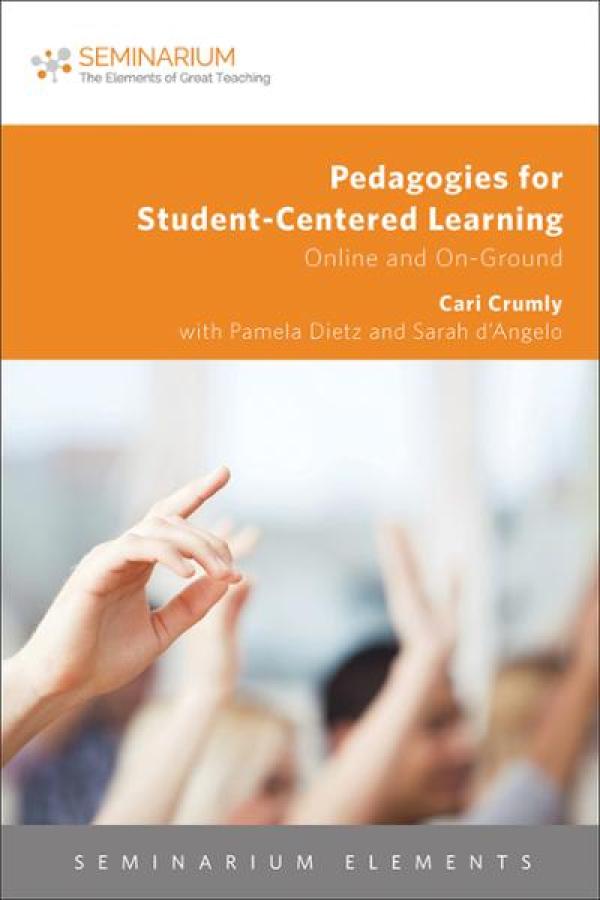
Click Here for Book Review Abstract: What comes to mind when you hear student-centered learning? Do you immediately see a classroom without a teacher? Do you see students teaching other students? How do you know which pedagogies to use when designing the best learning environment? The question of determining what pedagogies to use within the classroom (on-ground or virtual) can often plague teachers given today's student. This book will help you to identify the difference between teacher-centered and student-centered learning and the various pedagogies commonly associated with each. This book will draw upon the research and experience of three different educators and their pedagogical variations and uses within the classroom and online. Crumly’s synopsis of student-centered learning and suggested action is followed by a collaborative dialogue with Pamela Dietz and Sarah d'Angelo. Dietz and d'Angelo provide practical commentary regarding the successful implementation of Crumly's proposed approaches. As a group, Crumly, Dietz, and d'Angelo create a text that extends pedagogical innovation in inspiring but practical ways. (From the Publisher)
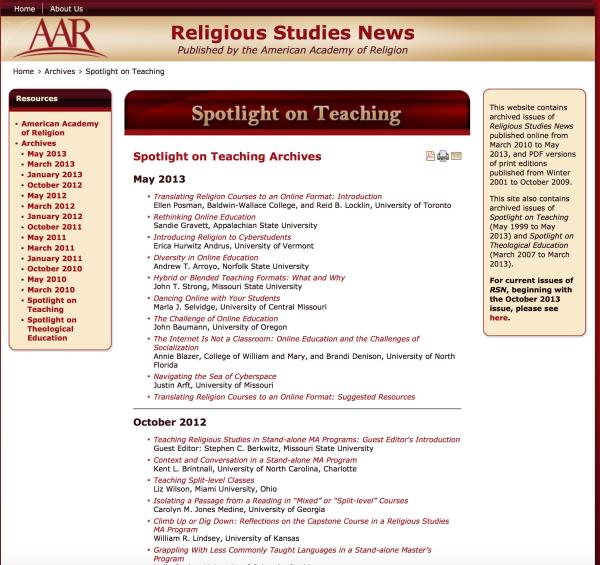
Journal Issue. Full text is available online.
Journal Issue.
Journal Issue.
Although comparative theology is a continuously growing method in the study of religion, it is still relatively new and not widely accepted in either confessional or secular institutions. Scholars may face difficulty when seeking their institutions' acceptance for a comparative theology course. One way of generating interest and approval for such a course is by designing it from the center of the institution's mission. Professors can look to the institution's mission as a resource for teaching comparatively. We offer four examples from Catholic institutions of how this might be done. Reid Locklin offers further insights in his response to our explorations.
A 1000 word essay in response to a Call for Papers: “Compare the pedagogy of your classroom and a Wabash workshop"
A 1000 word essay in response to a Call for Papers: “Compare the pedagogy of your classroom and a Wabash workshop"