Resources
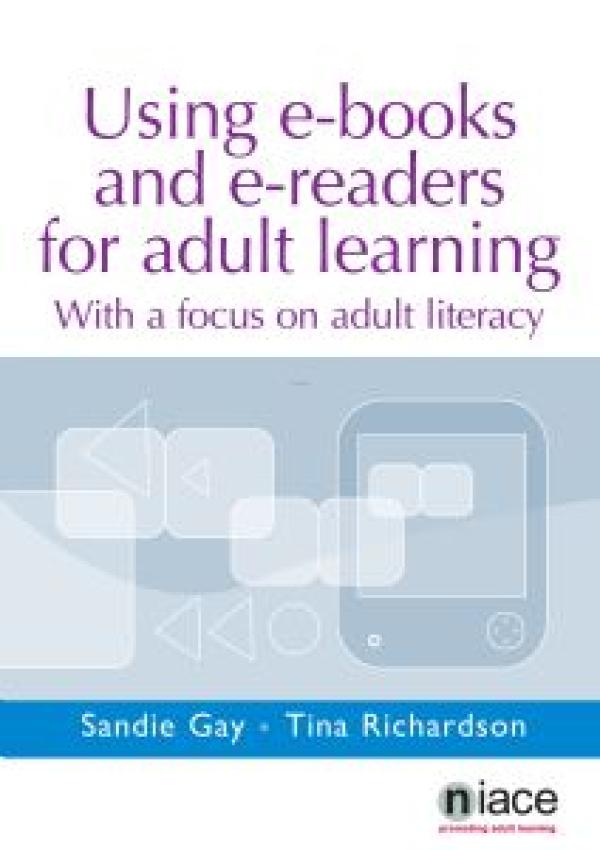
Click Here for Book Review Abstract: With e-books increasingly becoming an everyday and high-profile technology, how can they be used most effectively to help develop literacy skills, cultivate a love of reading, provide greater accessibility to texts for all, and offer portable access to a vast range of resources? Specifically written with the adult education sector in mind, this invaluable and straightforward guide will take the reader through the advantages and effective features that e-books have to offer. The text covers the necessities in e-book technologies: how to take advantage of the features that e-books offer adult learners * the options available, including dedicated e-readers, tablets, and smartphones * the costs * technical and management issues * real-world case studies of current uses and experiences in adult learning settings * current research and projects * pointers on the innovative uses of e-book technologies. The book also includes a chapter on useful links. It is a timely, original, and practical guide to a popular and increasingly accessible technology, with a specific focus on applications to adult learning. (From the Publisher.)
This book is designed as a practical resource that reviews some of the most helpful approaches and exercises that teachers use when working with adult learners. Written in an accessible style, with numerous examples of practical applications scattered throughout the text, the book does not assume any prior experience with adult learning theory or adult educational history and philosophy on the reader's part. The book invites the reader into a conversation about some of the major challenges and problems involved in teaching adults, a conversation which draws on the author's long history of working with adult learners to describe how to understand and respond to these same challenges and problems. (From the Publisher)
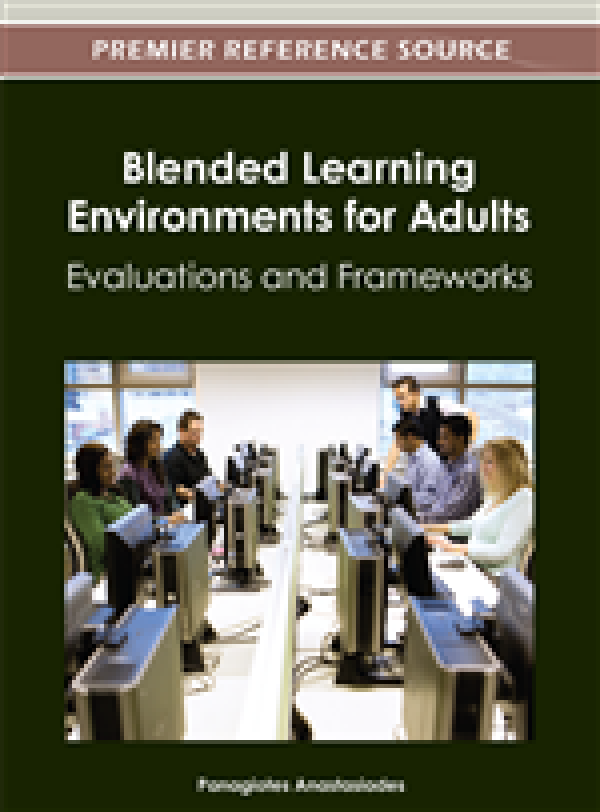
There is a general notion that adult education literature generally supports the idea that teaching adults should be approached in a different way than teaching children. Adult learners include working adults with family responsibilities, older workers who may not feel confident about returning to school and people who are currently in the workforce and who need to upgrade skills and knowledge. The combination of synchronous and asynchronous transmission with face to face instruction allow for the implementation of a new Blended Collaborative Learning Environment, which is flexible in terms of location, time, and pace of adult learners. Blended Learning Environments for Adults: Evaluations and Frameworks demonstrates the view that Information and Communication Technologies should not be considered as a neutral teaching medium, but instead be implemented under pedagogical conditions; aiming at the development of critical thinking through their creative integration into the social and cultural context. This comprehensive collection brings a group of scholars in order to build up a pedagogical approach and analytical implementation steps and directions for designing and implementing Blended Learning Collaborative Environments for adults. (From the Publisher)
This paper explores how adult learners in a college composition course resisted pedagogies and teaching strategies designed to critically examine student and teacher assumptions about classism, racism, and sexism as well as other oppressive structures and discourses.
New Directions for Teaching & Learning, Number 131 While issues of interpersonal boundaries between faculty and students is not new, more recent influences such as evolving technology and current generational differences have created a new set of dilemmas. How do we set appropriate expectations regarding e-mail response time in a twenty-four-hour, seven-day-a-week Internet-connected culture? How do we maintain our authority with a generation that views the syllabus as negotiable? Complex questions about power, positionality, connection, distance, and privacy underlie these decision points. This sourcebook provides an in-depth look at interpersonal boundaries between faculty and students, giving consideration to the deeper contextual factors and power dynamics that inform how we set, adjust, and maintain boundaries as educators. This is the 131st volume of this Jossey-Bass higher education series. New Directions for Teaching and Learning offers a comprehensive range of ideas and techniques for improving college teaching based on the experience of seasoned instructors and the latest findings of educational and psychological researchers. From the Publisher
A detailed philosophical debate on the nature of expertise is long overdue and Dimensions of Expertise opens up that debate. Christopher Winch firstly explores an account of know-how, derived primarily from the pioneering work of Gilbert Ryle, and moves on to relate this epistemological debate to discussions concerning the nature of expertise in vocational and professional education, including attempts to provide a theory of expertise. (From the Publisher)
In this comprehensive resource, Raymond J. Wlodkowski and Margery B. Ginsberg describe how to meet the challenge of teaching intensive and accelerated courses to nontraditional learners and working adults. By making motivation and cultural relevance essential to instruction, they clearly show what instructors can do to enhance learning in classes that can last from three to six hours. Teaching Intensive and Accelerated Courses makes full use of the authors' twenty years of experience researching and teaching accelerated courses, along with selected strategies from Wlodkowski's classic Enhancing Adult Motivation to Learn, to offer tried-and-true practices instructors can use to provide continuously engaging learning. (From the Publisher)
The article synthesizes and critiques the social science, education, and adult education literature related to the examination of Whiteness and White privilege and offers recommendations for the field of adult education. By examining the historically changing nature of Whiteness, the major themes in this literature are discussed, along with the relevance of these themes for adult education research and practice. In reviewing the current efforts to name and challenge White privilege, the article provides recommendations for moving beyond naming and critiquing White privilege and racism in the field of adult education to challenging and transforming their impact.
The concept of learning styles is based on the theory that an individual responds to educational experiences with consistent behavior and performance patterns. The complexity of the construct, the psychometric problems related to its measurement, and the enigmatic relationship between culture and the teaching and learning process means that the body of research on learning styles must be interpreted and applied carefully. Analyses presented in this paper suggest that the widespread conclusions in the literature that African American, Hispanic American, and Indian students are field-dependent learners who prosper academically when taught with field-dependent teaching strategies are premature and conjectural. Research does not support the supposition that members of a particular ethnic group have the same learning style. The body of research does have implications for enhancing the academic achievement of culturally diverse students by reminding teachers to be alert to individual students' learning styles as well as their own actions and methods in reference to their students' cultural experiences and preferred learning environments.
Praise for Radicalizing Learning This is a book that is so interesting that I had trouble putting it down. It is well written; there is new material; it articulates familiar concepts in such novel ways that your thought patterns get hijacked reading it. Adult learning and its processes are examined from a socialist perspective with a focus on social justice. Stephen Brookfield and John Holst have written a monumental text in the field of adult education. It is a bold, ambitious book, beautifully written and uncompromising in its social justice agenda. It is sure to become a classic in the field. This book offers new readings of the theory, politics, policy, and practice of radical adult education and learning where people's lives are understood as complex and interrelated matters. Brookfield and Holst's poetics and deeply human prose sound rebellious; the authors confront some of the main radical trends in the field of adult education including critical theory, transformative learning, and popular education. (From the Publisher)