Blogs

It was by now a pretty well-known social experiment. A man dressed like a homeless person collapses on the street and is ignored by pedestrians; when the same person puts on a business suit and collapses on the same street, however, a number of strangers quickly come to his aid. Unfortunately, appearance does matter, and it matters also in the classroom. Let me turn now to share my own experiences with two students in my very first course that I taught as a full-time professor. Student One It was literally my first day of class in the seminary. I was both anxious and excited. After giving out and going through the syllabus, I followed my lesson plan on which I had worked tirelessly all summer long. When time was up, I was secretly congratulating myself for making what I thought to be a wonderful first impression, especially when a couple of students came up to me and said that they were really “psyched” for the course. Then a white woman student who looked to me to be in her fifties introduced herself to me with not only her name but also her credentials. She said that she had a doctorate in adult education and that she could tell that I had little knowledge or experience with adult education (of course, I had told everyone at the beginning of the class that this was my very first year teaching at the seminary). She followed up and commented that my syllabus was too long and too intimidating and that I talked too fast, gave too much material, and failed to provide students any handouts. I was floored and a little embarrassed, but I managed to keep myself calm and said something to the effect that I would try to provide some handouts and that I would always be available for conversations if she had any questions about the course. Unfortunately, my “invitation” resulted in one after-class encounter that has remained vivid in my memory even almost twenty years later. I had just returned a written assignment to the class, and this woman came up after class again and asked me why she got a particular grade. (It was not a bad grade, as I remember that it was in the B range.) Since I always provide ample comments on student papers, I pointed those out and explained that her paper could be better and more tightly organized. To my surprise, she responded by saying that my “problem” had to do with the fact that English was not my first language and that I did not understand that there was a kind of writing “in the West” known as stream-of-consciousness. Would she feel the same liberty to approach a white male professor and say something like this if she got a B-range grade from him? I think not. Student Two It was time to look at my very first set of course evaluations as a full-time professor. This time, I was more anxious than excited. One particular student comment stood out among the—thankfully—many affirmative and encouraging evaluations that I had received. This student basically said he or she had gotten to the classroom feeling very tired from a long day of work as well as feeling rather frustrated as this was his or her first day in seminary. Sitting at the back of the classroom, this student said he or she felt even worse when I walked into the classroom and stood behind the lectern as the instructor for the course. I could not repeat it verbatim but it went something like this: “I could tell it was going to be a disaster as soon as I saw him, but then Professor Liew started to speak and I was immediately energized and engaged.” I am grateful and glad that, based upon a very positive evaluation, this particular student was able to learn from me and with me, but what this student assumed upon just seeing me is most telling. Why would he or she make the foregone conclusion that the course was going to be bad as soon as I showed up? Yes, there is another “appearance” that one cannot change as easily as putting on or taking off a piece of garment. These two students taught me early on in my teaching career that students carry all kinds of assumptions, racialized or otherwise, with them into the classroom, and so I have to be prepared for them. Of course, we as teachers are not immune to this: we have assumptions that lead us to think, act, speak, and make evaluations in particular ways with particular persons. If teaching is truly one of the best ways to learn, I want and need to learn from these early experiences in my teaching career how students may also need to prepare for class in ways that go way beyond what are listed on their syllabi. Allow me to share the following video by some students at the Rhode Island School of Design as we all work to plan and prepare for the beginning of a new academic year (note that the video contains strong language that some may find offensive). The video raises a host of issues and questions to consider. What questions arose for you as you think about your own teaching? What might it mean for students and teachers to “veil” themselves in classroom contexts? Social DNA comes with the bodies that enter our classrooms, but it can also be addressed and even changed by what we do in our classes.
This is the new side bar for Web Site On Religion, this page is named (custom-sidebar-website_on_religion)
This is the new side bar for Syllabi, this page is named (custom-sidebar-syllabi)
This is the new side bar for scholarship, this page is named (custom-sidebar-scholarship)
This is the new side bar for Blog, this page is named (custom-sidebar-post)
This is the new side bar for programs, this page is named (custom-sidebar-page)
This is the new side bar for grants, this page is named (custom-sidebar-grants)
This is the new side bar for Books Reviews, this page is named (custom-sidebar-book_reviews)
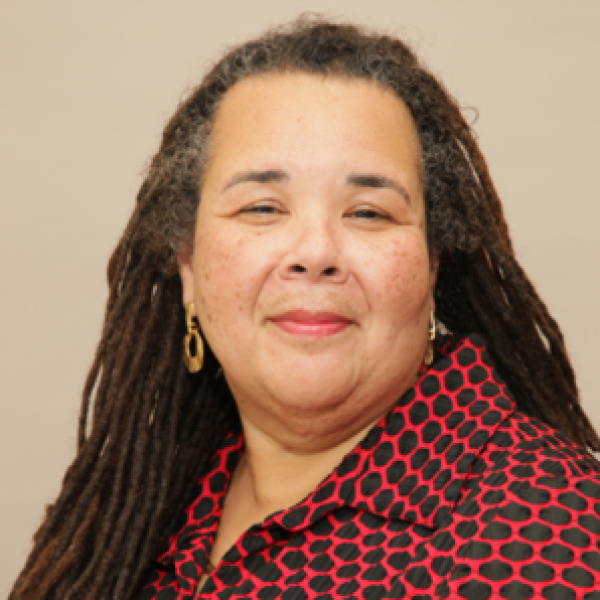
My grandmother used to speak in adages, parables, metaphors, similes and symbols. Now I call her proclivity for language, literature, and meaning-making “wisdom-speak.” Then, I thought she was being corny. She knew her wisdom-speak was meant to teach me enough until I am ready to know more. Her adages came from bible verses, poetry lines, and quotes from novels, cultural remembrances and living life as an African American woman in the USA, born in 1887. Folks like Langston Hughes, Booker T. Washington, Sojourner Truth, Pearl Bailey, Jesus, and Sarah Vaughn were regularly invoked. Wisdom-speak is colorful, witty language - easy to recall and recite, with a depth of multiple meanings. Wisdom-speak is part of everyday conversation. It is a pithy quote or well-placed refrain woven into a conversation like salt on fried fish. It is accompanied by a hmmm or tongue click, a foot pat, a shoulder shrug or an eye roll. Wisdom-speak is a body, mind and spirit lesson. Grandmother Vyola would say, “All that is is not visible.” As a child, I thought she meant that there is more to creation than what can be witnessed with the naked eye. If knowing is only about what is directly in front of us – then we miss so very much of all that is. Learning to see the invisible is the task of knowing. Learning the ways of the wind and the saints, angels, ancestors, cherubim and seraphim; the dream world and the day dreaming world; the ways of prayer and meditation are the learning of the invisible. Then as a young adult, I decided she was talking about identity politics and the politics of domination. The genderless politics of patriarchy, with its racist undertones and dictates, considers much of “all that is” to be too much for women, many children, and most men. The truncation of imagination engineered by systems of domination and control renders the capacity of many people as inferior thus negating all that is. Poverty drastically limits opportunities for in-depth exploration – so when we meet persons who have carved out an education in the wake of social depravity we should be in awe. As a young adult, I came to understand good teaching meant finding ways of seeing the manifestations of oppression in my own classrooms, church, society, and world. And I encountered Alice Walker and figured Grandmother Vyloa was talking about what Dr. Walker was talking about. Grandmother Vyola is resonant with novelist, poet Alice Walker’s four-part definition of a “Womanist” from In Search of Our Mothers’ Gardens: Womanist Prose, 1983. The first part of the definition reads in part: “….Wanting to know more and in greater depth than is considered ‘good’ for one.” It seems as though Vyola and Alice were cut from the same cloth. In the last few days, I have turned my attention exclusively toward preparation for school. I have my head down as I put finishing touches on my syllabi, design learning activities, schedule guest colleagues, locate films, and order art supplies. My mode is one of efficiency and my mood is closed off. I am, in my planning, working from an attitude of indubitability. I have a clarity about what I will teach, how I will teach and what my students will learn. While immersed in my preparations, grandmother whispered in my ear. Grandmother Vyola says that patent planning is not good for me or my students. She advises that the better way is to be more opened ended – like Jesus’ parables. Allow the students’ voice to affect most aspects of the course design, not just the convenient parts. Consider that you cannot see all there is to see so leave room for your own learning while you teach. Most of all, the plan that that which is revealed will be marvelous and know it is unplannable, but can be readied for – Get Ready! I have learned to pause when grandmother speaks. I take a second look at my plans and see that I have relied, a bit, on stale redundancy and a few too many current conventions. I recognize that when I start telling myself I know what will happen, what can happen in my own classroom – I am in danger of not allowing for surprise, the unexpected, or the un-expectable activity of Spirit. My grandmothers Vyola and Alice remind me that my certainty is likely a trap. If I plan for only what I know, only what I can see, only for what I can do – then I am not being womanish, not acknowledging all that is in the world. With this wisdom, I have begun to incorporate more ways of acknowledging the hegemonic forces which hide in our midst. I have adjusted and added ways which invoke the freedoms of learning for my students – freedoms like their own questioning, curiosity, and concerns being integrated into the full length of the course. School starts the week before Labor Day --- I am less certain of my plans and better for it.
As we go back to the classroom (and shake off the dust of summer), we all have mixed feelings and expectations. While some of us will just go back to the normal, others will be anxious and perhaps fearful about a new semester. The beginning of a semester can carry a feeling of being displaced, a sense that we don’t know what is coming our way and what is next. In one word: the lack of control. That is why we occupied so much of our syllabi in order to gain immediate control of that space we actually cannot control, and in fact never have controlled. What will my class be made of? How many students and who are they? Will we be able to control everything? Be fair with everybody? Be attentive to our own tasks, juggling the school’s demands and all that the teacher hopes for? The specific details of the practical aspects of our syllabus, the division of tasks, the proper tools to be used, the connections to be made, the boundaries to be established. In truth these are questions that only end when classes are over after a whole semester. Besides, after being away from the classroom for a while we may feel a little out of joint, as if the classroom is again a foreign/home space, until the map we draw (our syllabus) will help us travel through this newly foreign terrain. In our classrooms we are both professors and educators. Rubem Alves makes a distinction of these two roles. He says: “A professor is an employee of institutions that manage lagoons and puddles, specialist in reproduction, an instrument of the social apparel of the state. As the educator, on the contrary, [the professor] is a founder of worlds, mediator of hopes, pastor of projects.” [1] As we go back I wonder how our duties as professors will cast a shadow over the role of the educator. Will our pedagogies be more faithful to the management of forms of reproductions or attentive to the ways our students can become more expanded, more fully human beings? Will we dare to be a “mediator of hopes,” or a “pastor of projects?” If we only trust the readings of our classes we are more professors than educators. If we believe that the evaluation can only take a form of a formal final paper we will not tap into the rich resources of our students. If we make classrooms be a “one fit for all” place, we will make our educator side slip into the perfectly devilish/delightful combination of institutional bureaucracy and personal fears. A combination where students pay the price of teachers whose hope is confounded by fear. In classrooms we are educators! That is why we gather together: to share knowledge as we share tastes, to share complexities and differences as we share life together. But in order to get there, we must be awakened! That is what Alves says of how to prepare the educator: “is necessary to wake her/him up… its enough that we call them from their sleep, by an act of love and courage. And when awakened, they will repeat the miracle of the instauration of new worlds.”[2] I think we are very good at managing lagoons and puddles. However, our task as we begin our semester is to be awakened into the educators that live inside of us and be(come) a co-founder of worlds in our students, a stretcher of horizons, jokers of our common worlds and satirists of our own stupidity, doing what we do with a sense of praxis that will be able to transform actions, gestures, movements, feelings and create possibilities. In a word: dreamers of new realities! Paulo Freire talks about this dreamer in a more academic language. Forgive the sexist language: “Because he admires the world and therefore objectifies it, because he grasps and comprehends reality and transforms it in his action-reflection, man is a being of praxis. Even more so, man in praxis… His ontological vocation, which he ought to existentiate, is that of a subject who operates on and transforms the world. Subjugated to concrete conditions that transform him into an object, man will be sacrificing his fundamental vocation… Nobody is if he prevents others from being.”[3] Every dreamer must start in reality, it the midst of contrasts, racial divides, economic disparities, political dualisms, violent neighborhoods, dialectical complexities and all kinds of conflicts. We must make unhidden the social processes of reality that prevent change and transformation especially for minorities and oppressed people. Educators can (be)come the very material they use in the classroom, the texts they read, the dialogues they have, the educational tools they use, the theories they choose and the very awareness of what kind of pedagogy that they foster. We are caught into this action-reflection that stirs up, criticizes and amplifies theories and praxis. We are not detached from the world, but rather we are the result and consequence of the world we create. Our pedagogies are not meant to keep the status quo but to transform things and people, even if we know that what we do will not transform anything or anybody. More than anything we must keep our fundamental vocation as teachers, whatever that might be, so we will not prevent students from being the fullest they can be, in the owning of their bodies, their feelings, their thoughts and their capacity to reach out, to expand, and to listen to their own selves. As we go back to the classroom, let us awaken ourselves into the praxis of being educators! Dreaming dreams of new worlds and human beings fully stretched, while hoping for a good semester with all the rights and wrongs we will certainly make if we dare to be “a founder of worlds, mediator of hopes, pastor of projects.” [1] Rubem Alves, Conversas com quem gosta de ensinar. (São Paulo: Cortez Editora, 1980), 27. [2] Ibid. [3] Paulo Freire, La Concepción problematizadora de la educación y la homanización.” Cristianismo y Sociedad. Montevideo, 1968, 18. Freire... quoted by Carlos Alberto Torres, "Dialetics, Conflict, and Dialogue," in Moacir Gadotti, Pedagogy of Praxis: A Dialectical Philosophy of Education (New York: Suny Press, 1996).
Categories
Write for us
We invite friends and colleagues of the Wabash Center from across North America to contribute periodic blog posts for one of our several blog series.
Contact:
Donald Quist
quistd@wabash.edu
Educational Design Manager, Wabash Center
Most Popular
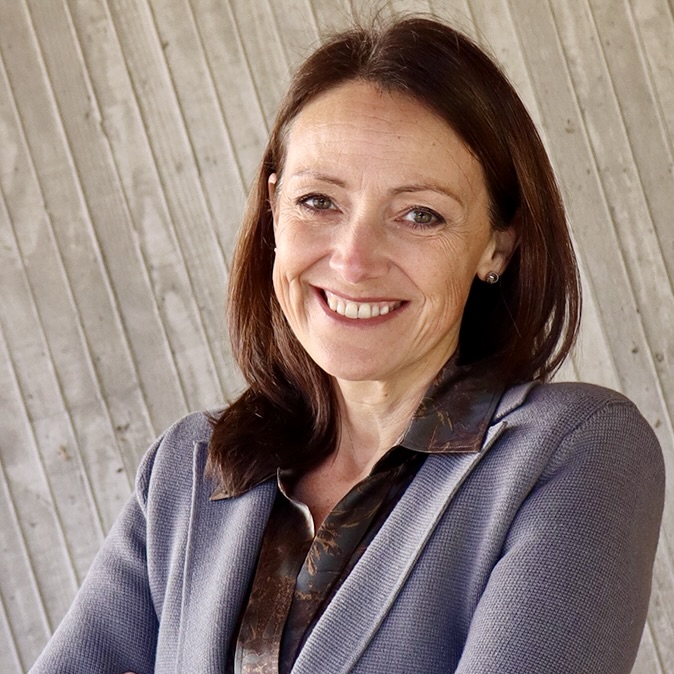
Why I Talk to My Students Every Semester About Gender Bias in Teaching Evaluations
Posted by Gabrielle Thomas on January 13, 2026

Reading for Orpah: Rethinking the Bible’s Marginal Characters (Part One)
Posted by Laura Carlson Hasler on September 22, 2025

Plagiarism as Gaslighting in the Time of Artificial Intelligence
Posted by Brian Hillman on September 8, 2025

Teaching Buddhism, Mindfulness, and Whiteness
Posted by Anna Lännström on April 7, 2025
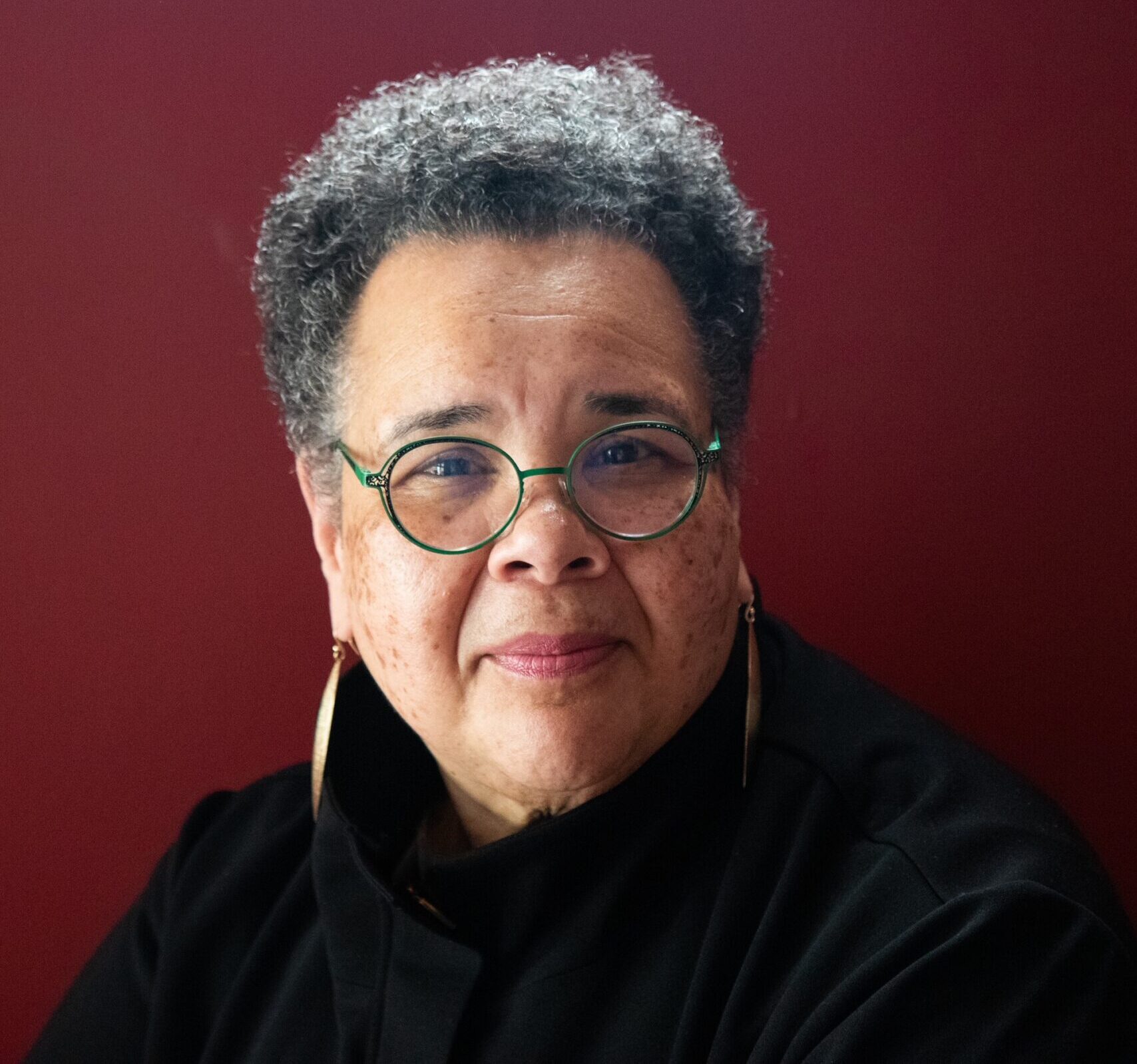
On Being Neighbored
Posted by Nancy Lynne Westfield, Ph.D. on May 1, 2026