Resources
Although this handbook is primarily for design in educational technology much of it can be applied to the educational ecology of religious studies and theological education. It is also useful for discussions of basic learning theory and for applying technology to the task of teaching. Chapter 3, “The Ecology of Resources,” provides a model of the learner’s context and identifies steps to map the learner’s ecology of resources (33-51). Some of these steps may be familiar to seasoned educators. Those unfamiliar with these steps will find help that deepens their understanding and practice of teaching. Perhaps most notable here concerns the identification of filters, both positive and negative, through which the resources of the teaching environment, people and tools involved, and knowledge and skills required interact with the learners. A chapter on assessment of student learning of twenty-first century skills focuses on collaborative problem-solving (53-64). This section provides a table that lists three indicators for success: action, interaction, and task completion, with brief descriptions of each. It then details three levels of quality criteria for each (low, medium, and high) with descriptions about each criteria level. The criteria, in particular, could be helpful for assessing an exploration of religion-based bullying in classroom contexts, for instance. Context, Activities, Roles, Stakeholders, and Skills (CARRS), in a chapter on involving young people in design, provides a useful structure not only for the design of software but also for the development of a single class or an entire course (101-11). Each element involved will be familiar to seasoned teachers, but the scheme’s attention to developing the abilities of young participants to contribute is especially useful for beginning teachers. “Designing for Seamless Learning” (146-157) creatively claims mobile technology ? such as cell phones and tablets – can be helpful for student learning. Seamless learning emphasizes continuity of learning within and beyond the classroom. Table 13.1 lists ten characteristics and shows specific ways by which mobile technology supports seamless learning: it is learner (user) centered, an everyday life experience; it functions across time, across location, and across social groups; it flows naturally across different situations, or can be situated (wherever needed); is cumulative, personalized, and accommodates versatile learning activities. Perhaps students studying worship, for instance, might be encouraged to report or note kinds of worship in their community. Prompts for learning (scaffolds) have been a staple of classroom education for decades, and the chapter on “Scaffolding Learning in a Learning Management System” (241-255) extends that tool beyond the traditional classroom. Using internet tools to provide feedback, clarify assignments, engage in dialogue, and so forth engages the learner outside of the class in a range of ways to prompt learning. Chapter 21 includes a discussion of the use and challenges of Second Life, a virtual reality construct, for educational purposes (366-369). The use of software gaming programs for teaching religion and theology is a growing area of practice. This chapter is timely. Additional thought-provoking approaches to teaching practice are outlined within this book’s forty-three chapters. This book could be purchased by the library, in paperback or ebook format, so that faculty in a department or theological school could have access to it. It is a stimulating tool that encourages a range of technological tool uses in ways appropriate to religious and theological education.
Henriksen’s edited volume, What Did You Learn in the Real World Today, is a collection of sophisticated and philosophically-grounded essays that shift pedagogical foci from how we teach to “what is learned” and “how is it learned” (18). The dense essays are divided into three sections. First is knowledge, learning and practice; next is the role a student’s body plays in learning and constructing new knowledge; finally, there is problem-based learning (PBL) and practicum. The Danish Aalborg University Press funded and published the project and the specific case studies (five of the eleven chapters) do reflect a public Norwegian graduate engineering program. That said, the essays, particularly in the first and second sections, have much wider relevance for re-thinking teaching practices in any discipline from the perspective of learning. They convincingly argue that applied understanding “in the real world” generates new knowledge that beneficially challenges and reshapes the theory and tradition we teach in our classrooms. It seems odd that a book promoting practicums and problem based learning is so thoroughly steeped in philosophical theory. But this is precisely the point. The essays here challenge the presumed “theory-practice dichotomy” (for example 23, 35, 53-4) by engaging the philosophical discussions of Aristotle, Dewey, Gadamer, Freire, and Bourdieu with case studies on practicums. The discussions of “techne, epistemi, poiein,” and so forth, break open the categories of “knowledge” and “learning” in fruitful ways (28-9). Student activity thus mediates thinking and being (40). The authors advocate for problem-based learning (53) that engages each student in a dialectic of dynamic knowing and doing rather than a direct transfer of static knowledge (what my students call “regurgitation”) through the “banking model” (54). This is a post-modern, and even a post-rationalist (chapter 4), exploration of learning. By challenging the primacy of theory over practice, of thinking over doing, these essays seek to integrate the whole student into the learning process (such as “Embodiment as the Existential Soil of Practice” by Thøgersen, 69-80). Indeed, the concept of learning as transformation is palpable across all of the essays (5, 23) and includes aesthetic and ethical dimensions of learning (58-8). This is helpful thinking for Liberal Arts institutions that will appreciate the argument for how and what students learn as grounded in the moral aspects of techne and phronesis rather than the more abstracted (from “real life”) episteme (60-1). Henriksen introduces the project in chapter 1 and alternates between philosophical theory in one chapter and concrete case studies in the next. Chapters 2 (on “epistemology, learning, and practice” and 3 (“the logic of practice”) are the philosophical grounding for Henriksen’s case study on an engineering practicum in chapter 4. Learning is not absorption and “reproduction,” but is instead the “production” of knowledge that comes through the engaged learning of the practicum (19). Chapter 5 then lays the next philosophical groundwork (what is the role of the physical body in learning) for the case study in chapter 6 that examines body language and spatial relationships in medical consultations to evaluate the use of electronic health records in Danish hospitals. More technology renders the physical presence of the patient irrelevant. Chapter 7, perhaps the weakest chapter, connects Dewey’s “process of inquiry” with Gadamer’s “hermeneutics” to describe how a student locates herself in a professional (“swampy”) context and negotiates solutions using both practical and theoretical tools. Chapter 8 offers support for this solution in the “real-world-on-campus” case study from the Aalborg Problem Based Learning model. Chapters 9 and 10 respectively evaluate PBL by analyzing student “employability,” the role of the university engaged in the world, and the success of Aalborg’s PBL model in multiple European contexts. Further integration and incorporation of the practicum into university curricula demands a dialectical conversation between case studies in the field, classrooms, and campuses so that theory and practice are mutually reshaping one another. In the final analysis, What Did You Learn in the Real World requires effort, not only to appreciate the threads of the philosophical conversations, or the (mostly) northern European educational contexts, but also because the English phrasing is rough and not intuitive for native speakers. That said, although Scandinavian engineering programs are quite remote from U.S. seminaries or even undergraduate Liberal Arts institutions, the bulk of these essays open fascinating conversations about learning, knowledge, and engagement of the whole person – student and teacher (à la Freire) – in both study and practice. In other words, the deep wrestling with antecedent philosophers and pedagogues to articulate what students learn in practicum and how students learn it has much to offer our collective thinking about engaged learning in diverse institutional contexts. It becomes quite clear that “how we learn” does and will have consequences for what we learn, and especially for how we construct knowledge.
This book is dedicated to a full-orbed challenge to discrimination – and promotion of multiculturalism – in higher education, from the classroom to “changes in the cultures, structures, and policies of the institution” (194). It will benefit faculty and administrators seeking to better understand, promote, and implement solutions regarding various diversities in university contexts. While Christian educators may question certain philosophical and religious presuppositions being advocated, many descriptive, reflective, and practical insights can be critically embraced for pedagogy and classroom, course development, broader curricular intentions, and governing cultures and mechanisms. Perhaps centrally beneficial to faculty are the narratives of diverse women and men faculty – white and of color, representing both natural science and social science disciplines – responding to a face-to-face interview protocol of open-ended and broad questions: queries seeking responses to eight topical areas primarily focused on teaching and diversity, race and gendered experiences, general diversity issues in higher education, and agential roles in supporting or bringing change involving diversity and multiculturalism (26-28). This work’s broad purpose is to explore how university faculty members of various races, ethnicities, and genders – awarded for undergraduate teaching effectiveness in diverse classroom environments – engage demands and expectations from students, from higher education as a social institution, and from themselves, in racially and ethnically diverse classrooms: especially toward improving the teaching-learning process (viii-ix). The book comprises four parts: background and context, difference and diversity in classroom interactions, identity role examination, and larger contexts and change. Each part contains three chapters. References are extensive and effectively utilized and the index is well-designed. The opening chapter argues that white male dominance in university settings significantly affects white women and faculty of color, as well as students, especially of non-majority groups. Negatively, this includes exclusion and discrimination via traditions that focus on individualistic value orientation and norms that “diminish the importance of teamwork and skills in interactions among the faculty,” leading to a sense of isolation and lack of community (3). In the classroom the individual achievement emphasis, combined with presumed universalistic norms related to tests or criteria as indicators of merit, entail pedagogical approaches that minimize students’ cultural and socioeconomic identities, backgrounds, and relationships, undermining collaborative learning. Nevertheless, all faculty are responsible for personal and organizational change, whether white faculty especially using their authority to adopt practices that challenge the commonplace habitus, or underrepresented faculty utilizing the margin for building communities of marginalized faculty and links to communities and groups outside academia (19). Chapter 2 outlines the project/study design and purpose, “to explore the ways in which faculty members’ social identities impact their experience in the university, especially but not solely in the classroom” (21), while Chapter 3 describes and elaborates “five major constitutive elements of conflict in the educational setting” – the instructor, the student, the pedagogical approach, the classroom space, and the course material – that help readers decipher “how varied forms of conflict emerge given the different ways in which these elements converge” (39). Each element is expounded in later chapters. It seems appropriate to conclude this review with a primary thesis of the book: “ultimately, whatever the causes of perceived challenges to authority and expertise, the key pedagogical dilemma for faculty is to work at ensuring and preserving the authority that has a place in relationships with students while also maintaining an inquiring, empowering, and vibrant educational climate” (63).
Whose side are we on when we teach (4)? Theological education and religious studies have sometimes been the type of elitist, domesticating education that Paulo Freire warned against – education that supported colonial powers. Peter Mayo’s book is not written specifically for teachers in seminaries or religious studies, but it offers both challenge and resources for profound reflection on issues of the politics of knowledge relevant to all theological and religious work. Mayo calls educators to move toward social justice and revitalization of the public sphere in ways reminiscent of Freire. Through Mayo, readers find companions in liberating movements for an authentically dialogical approach to education. What’s more, Mayo offers encouragement through his awareness of the movements of “globalization from below,” insisting on integration of theory and practice for substantive democracy. First, Mayo poses pedagogical and philosophical questions situating Freire’s contribution in the tradition of John Dewey’s “education for democracy” (36). Readers must consider Mayo’s judicious acknowledgement of both the excesses and contributions of socialism, Marxism, and Neo-Marxist thought. Furthermore, readers are challenged to consider ways their pedagogy approaches knowledge as dynamic rather than static (92). Next, Mayo explores common ground for potential partnerships rooted in shared work and theory. Postcolonial, peace activist, anti-racism, neo-Marxist, liberation feminist, and other emancipatory educators will find companions in this call to confront the spread of hegemonic global capitalism. Like an invitation to a remarkable symposium, the gift in Mayo’s book is an introduction to the work of key figures who echo Freire including: Lorenzo Milani, Margaret Ledwith, Julius Nyerere, Paula Allman, Antonia Darder, and Henry Giroux. Each of these thinkers invites study in their own diverse contexts. Mayo points out common threads of shared praxis and analysis in their work providing directions for further study and unifying a growing movement. In this way, Mayo’s book offers encouragement for those engaged in critical, emancipatory work. Despite evidence of increasing militarism and corporate encroachment on daily life, the reader finds sustaining encouragement in growing global movements for social transformation. We are encouraged by robust manifestations of Freire’s influence that extend from Brazil around the world, in places including: Malta, Italy, California, Nottingham, England, Rhode Island, and Tanzania. Mayo illustrates local educators/actors confronting corporate globalization while at the same time weaving together transnational networks of support. Educators in theology and religious studies will find rich resources for pedagogy that is both critical and emancipatory in this volume. The breadth of voices included and the depth of Mayo’s familiarity with Freire’s ethos and writing spark new dialogue for transformational teaching. Although this book could be accused of being overly ideological, those making such an accusation could be called to examine their own political commitments for complicity with systems of injustice. If teachers were true to Freire’s vision, we would be in conversation with each other across borders and cultural contexts. Mayo both models and invites us to join that work uniting reflection and action. Problems of xenophobia, racism, and cultural accommodation persist in theological education and religious studies as well as other forms of higher education. Educators interested in political mobilization, community development, and liberating praxis will find Mayo posing key problems in transformative ways.
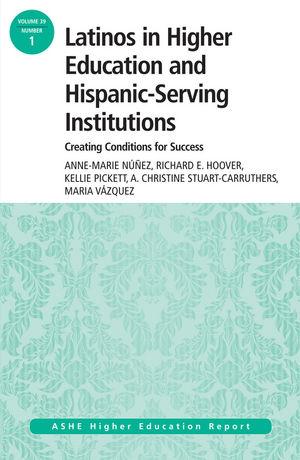
Much is at stake in the effort to improve the success of Latino/a students in American higher education. The remarkable growth of this population in recent years is expected to continue well into the twenty-first century, and higher education remains one of the surest routes to long-term stability in our society. At the same time, Latino/as continue to lag behind other racial/ethnic groups in higher educational attainment. Recognizing that American colleges and universities were not established with the distinctive needs of the Latino/a demographic in mind, researchers in education have spent the last two decades investigating ways to identify and dismantle barriers to Latino/a success. Each of the five authors in this volume have made significant contributions to this body of research and are well-poised to help guide the reader through the considerable results. This volume, part of a series published by the Association for the Study of Higher Education (ASHE), begins with an overview of the demographic diversity that characterizes the population conventionally designated as Latino/a or Hispanic (the authors use these terms interchangeably). By briefly addressing the distinctive attributes of various ethnic subgroups, the authors highlight the variety of nationalities, languages, and other variables that characterize this population. The pan-ethnic terminology, however, does highlight shared challenges that Latino/a college students often face, including racism, difficulties building community (Chapter 3), and frequent deficiencies in college readiness (Chapter 4). After summarizing research on the most pressing challenges facing Latino/a college students, the authors turn to approaches that have been attempted more broadly, that is those intended to address needs of various under-represented groups (Chapter 5), as well approaches more narrowly focused on the distinctive needs of Latino/a students (Chapter 6). A variety of promising programs are presented, with potential impact on virtually every aspect of college life: academic, financial, cultural, and social. The authors devote particular attention to initiatives that build on the resources Latino/a students already possess. Programs that perceive the strong ties characterizing many Latino/a families as a potential asset, for example, have proven to be more effective than those that cast familial bonds as potentially hindering student success. The clearly written overview of the origins and development of Hispanic Serving Institutions (HSIs) in Chapter 7 adds to the usefulness of the volume, as does the practical recommendations for faculty in the concluding chapter. The authors cite a recent study, for example, which suggests that when faculty are conceptualized as “retention agents,” a healthy shift in institutional norms can occur. Although this volume will be of interest to Religious Studies and Theology faculty and administrators at a variety of institutions, those employed at current or emerging HSIs will find its overview of recent research to be particularly valuable as we strive to enhance our institutional effectiveness with Latino/a students. Indeed, the text suggests that those who teach or work in religion and theology may even have a distinctive role to play; among the cultural patterns or orientations identified as being typically shared by Latino/as is an emphasis on religious faith and spirituality. This orientation suggests that faculty and administrators in these areas are well-positioned to have an impact on the educational experience of our Latino/a students.This well-written survey makes a strong case for prioritizing such efforts.
Kate Blanchard Last Wednesday most of us opened our cyber-devices to a feed full of news about three young Muslim students in North Carolina who were murdered at home by a gun-toting white neighbor, apparently acting in defense of some...

Jennifer Harvey Associate Professor Drake University In some ways it’s really simple. If we had genuinely multi-racial classrooms in the U.S. the challenge of race in those same rooms would be much less of one. We so quickly find ourselves embroiled in an oh-so-familiar conversation when the pedagogical question becomes how to best teach race, privilege, U.S. religious history, ethics, and justice in the religion and theology classroom. How do we keep white students from shutting down? How do we get them to understand? How do we enable them to recognize their stake in such learning when so few of them have had to..
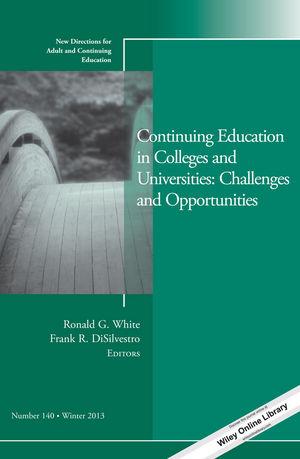
That continuing education (CE) was only recently added to many traditional programs makes it understandable that it has still to gain the respect of some departments in many colleges and universities. Certain trends – well-outlined in this book – have brought CE to the fore in the academy, and readers who have not recognized these trends will have to account for their institutions’ tardiness in catching up. Ten essays chart these developments, each exploring some facet of the CE phenomena. The essays are more practical than speculative; they orient the reader to relevant knowledge about current trends and how best to implement a state-of-the-art CE program. The economy and the technological boom are the major incentives for CE development, and the implications each has for such programs are well-covered in the essays. While disposable income has made CE attractive for the self-enrichment of a healthily aging population, retooling the present workforce to adapt to a changing economy indicates a significant need and opportunity for business and academia, respectively. Hence, CE’s profitability must be considered more closely, advantageous as it is for revenue-conscious higher education. Lisa Braverman’s essay explains why educators do well to note business practices (sometimes a loathed subject in academia), demographics, marketing, and innovation when designing CE programs. Nontraditional students will only increase in the near future, and effective marketing of CE will require innovation and nuance since marketing to nontraditional learners in the workforce differs significantly from traditional recruitment. To this end, some schools have enhanced their CE marketing departments, realizing that sophisticated use of social media and a better understanding of adult learners’ needs are more effective than the former “one size fits all” modes of recruitment based on criteria geared toward traditional students. Rebecca Nichols’s article addresses the role of the community college as a partner in economic development. Not only do these schools meet needs in retooling the workforce, but they also play a role in creating jobs. To this end, Nichols offers seven examples of innovative community college programs around the country. The essays acknowledge online education as the greatest recent innovation affecting CE. While nontraditional students continue to prefer brick-and-mortar campuses, they are opting for online education (38 percent by one survey) for its efficiency, a trend productive of increased revenue streams but one yet to gain more widespread acceptance and improvement of delivery. MOOC impact is considerable and is discussed in several of the essays. Another specific factor for CE is “Prior Learning Assessment” (PLA), or the acceptance of work and life experience (such as military service) in addition to or in lieu of “seat time” credit hours. While this practice is not new, Rebecca Klein-Collins and Judith B. Wertherin argue that it is fueled by adult learners’ need to complete a degree quickly and to attract older workers. Left unanswered are questions about the merit of “life experiences” that cannot be readily measured in any way equivalent to classroom assignments. Successful CE programs require the cooperation and understanding of their sponsoring institutions even as these programs keep in line with institutional missions. They also build lasting relationships with regional business, industry, and other entities requiring employees to keep updated certification. Such are the challenges and opportunities before CE programs everywhere.
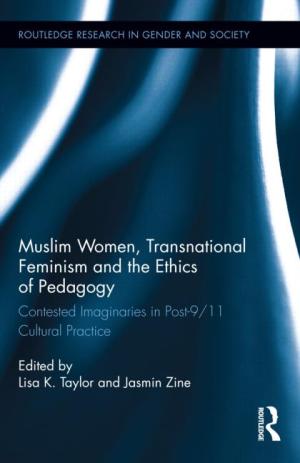
Speaking about her identity as a Muslim woman, spoken-word poet Sofia Baig said, “At a certain point, you have to raise your voice and fight to take it back” (275). In that spirit, this volume unites reflection and action for transformational pedagogy. By teaching readers to recognize negative stereotypes about Muslim women and exposing complicity with imperialism in some uncritical forms of multiculturalism, these essays make a significant contribution to social justice education. Collectively these authors model the transnational feminist praxis they propose. The volume offers a treasury of references to Muslim women artists as well as caution about the ways that some authentic voices have been commodified and co-opted. Interviews with artists expand and enrich the scholarly examination of pedagogical questions regarding authority, agency, representation, and identity. Contributors present an impressive array of arguments that problematize pervasive errors in “liberal” or “Western” feminism because it has contributed to simplistic and oppressive images of Muslim women in ways that feed the justification for violence, war, and imperialism. For example, Megan MacDonald effectively demonstrates how glib ideals of the “universality of global sisterhood” can be co-opted to justify “the occupation’s military industrial agenda” if Muslim women are reduced to oppressed victims in need of rescue (39). Similarly, Catherine Burwell warns about exploitive trends in marketing and uncritical reading of fiction featured by North American women’s book clubs that sometimes perpetuate those negative images. Over and over, these writers examine the dangers of depoliticizing and disconnecting women’s voices from historical context. At the same time, these scholars call for art and critical education in both public and academic settings that broadens and deepens antiracist, anticolonial, transnational feminist cultural production. For instance, the creation of the “Hijabi Monologues,” by Sahar Ishtiaque Ullah actively counters the “conflation of Middle East and Arab and Muslim” (286). Readers get a glimpse of what Mehre Gomez Fonseca calls “pedagogical means to unlearn Arabphobia and Islamaphobia” (198). These artists, scholars, and educators warn readers against unethical use of some literature written by Muslim women that is quite well known. At the same time, they introduce readers to new artists whose work may be less familiar. Full transcripts of interviews with Muslim women artists include: conversations with novelist Mohja Kahf, documentary filmmaker and writer Zarqa Nawaz, curator and writer Rasha Salti, editor and publisher Tayyibah Taylor, spoken-word poet Sofia Baig, theater director and writer Sahar Ullah, and visual artist Jamelie Hassan. Social justice educators committed to antiracism, anticolonialism, and transnational feminism will appreciate this corrective to mistakes that many of us have unwittingly made. Readers find suggestions for anticolonial praxis such as “ethical practices for reading across difference” examining privilege and power, and opening up “space of dialogue, debate, and dissent” (195). The book will be of particular interest to those who teach religious studies, feminist studies, and multicultural literature.

This volume engages current debates on establishing or maintaining quality online education, instructional practices, and educational innovation. The book is divided into four parts: (1) five essays on “overview and implications of practices and processes for assuring quality,” (2) six essays on “quality assurance and continuous improvement at the course design and teaching levels,” (3) six essays on “processes for assuring quality at resource and program levels,” and (4) two essays of “final thoughts.” Thirty-nine education practitioners wrote either single-authored or multi-authored essays for this collection of nineteen articles. Some of them direct online education, quality control, or program assessment. A few others serve in K-12 online learning programs. A couple of contributors hold communications or marketing appointments. Nearly all hold administrative educational leadership or are academic researchers or professors. Many of the authors work at institutions of higher learning located in Pennsylvania. Others teach at institutions located in Colorado, Illinois, Maryland, Pittsburgh, Virginia, West Virginia, Washington DC, and British Columbia. On the book’s coverage of topics, I expected to find and found, pieces about improving course design, determining effectiveness and faculty development, and reviewing culturally diverse student populations. Significant online education concerns are addressed in stand-alone essays: ethics, academic advising, learning analytics, knowledge management, contact hours in online education, and accreditation. The volume also includes a helpful essay on concerns about online accessibility (including reaching disabled persons), affordability, and accountability. Interesting contributions include “The Sloan Consortium Pillars and Quality Scorecard,” that is used to benchmark effectiveness, efficiencies, and innovation, and “The Power of a Collaborative, Collegial Approach to Improving Online Teaching and Learning.” Of notable mention is the careful attempt throughout to focus on issues related to: government – federal, state, and district levels, accrediting agencies, professional bodies, faculty, managers/administrators, controllers, assessors, and learners. Teaching Theology & Religion readers may find a number of relevant essays. The volume does not engage theological education or religious studies in the liberal arts. Still, discussions and principles raised are transposable to online religious education. Online religion studies and theology programs continue to become more popular. A 2012 study of online education in the United States shows that 70 percent of higher education institutions surveyed have recognized the critical importance of online education; 6.7 million students enrolled in at least one online course (I. Elaine Allen and Jeff Seaman, Changing Course, Babson Survey Research Group, Pearson Education, and Sloan Consortium, 2013). An August 2014 web search at www.GradSchools.com lists more than 150 accredited online religious programs: 51 doctorates, 138 masters, 22 certificates, and 7 hybrid programs. Religious community online has been empirically investigated (Heidi Campbell, Exploring Religious Community Online, Peter Lang, 2005). In time, religious educators will also study this phenomenon. Until then, religious educational administrators and leaders can contextualize insights from this volume with classical areas of program creation and evaluation in curriculum, instruction, institution, faculty, and student components, to provide innovative online educational program.
Wabash Center Staff Contact
Rachelle Green, Ph.D.
Associate Director
Wabash Center
greenr@wabash.edu