Resources

At the risk of sounding trite – this is a good book and is well worth spending some serious time engaging. I approached it with a certain amount of skepticism, but was rapidly converted to the sensibility and obligation of sustainability within the context of higher education. The authors clearly demonstrate that there are a number of ways to approach the challenge, offering practical insight for taking up the task. The book is divided into six sections, with four articles in each: Leadership and Commitment, Curricular Transformation, Defining the Paradigm for Change, Institutional Mission and the Culture of Sustainability, Accountability, and Professional and Personal Transformation. The authors approach the topic of sustainability from a number of angles and situations. They represent the range of higher education, from the community college to the major research university, both state and private. A careful reading will provide insight into how sustainability can be introduced into the maintenance of physical plants, curricula, teaching practice, and campus life and community. Most importantly, and this is a subtext woven throughout the book, there are multiple, practical descriptions of how a culture of sustainability can be established. Tactics for funding the movement to sustainability are also presented in a number of the narratives. The section on Accountability was one of the more engaging; if the task of creating a sustainable campus and culture is to be achieved there must be ongoing accountability, at every level. The first chapter, Sustainability Strategic Planning: Establishing Accountability in a World of Distractions (18), by Julie Newman of Yale, describes how “raising the bar” for sustainability was achieved at a large, prestigious and very diverse educational institution. As she puts it, “The course of action from vision to implementation calls for walking a fine line between enabling a creative process of continuous improvement over the long term while setting and achieving incremental, measureable, and impactful goal along the way” (221). Newman’s description of the walk to accountability could easily fit most educational institutions. Sustainability in Higher Education issues an unwritten challenge to those engaged in religious and theological education. There are no theological schools included in the book. While there is a description of Spelman University’s development of a “wellness program” as one of the ways to sustainability, there is no mention of a spiritual component. Santa Clara University’s Jesuit president, Michael Engh, is cited calling for a more just and sustainable world and for ethical implications being explored, but there is no direct appeal to theological method or thought. In the chapter Living the Questions (22), only two paragraphs were devoted to whether or not spiritual traditions could be engaged (268-9). The vision of creation in Genesis, and the hopefulness God has in it, as witnessed in the Incarnation, might also provide justification for developing cultures of sustainability. Theological educators should consider the challenge, and explore how faith contributes to a culture of sustainability. This is a good book that prods us to think along those lines.
In 2000, Fr. Peter-Hans Kolvenbach, then Superior General of the Society of Jesus, delivered a landmark address entitled “The Service of Faith and the Promotion of Justice in American Jesuit Higher Education.” In it, he raises the question, what is the “whole person” that Jesuit institutions seek to educate? His answer: “Tomorrow’s ‘whole person’ cannot be whole without an educated awareness of society and culture with which to contribute socially, generously, in the real world… [Students] should learn to perceive, think, judge, and act for the rights of others, especially the disadvantaged and the oppressed” (11). Spurred on by the sentiments expressed by Fr. Kolvenbach and others, faculty and administrators at Jesuit universities across the nation have developed a remarkable array of responses to the call for justice in education. The task of Mary Beth Combs and Patricia Ruggiano Schmidt’s edited volume was to gather many of those who have been responsible for the progress in justice education made in Jesuit institutions in the last decade and a half, highlight their work, and give them a platform from which to share what they have learned in the process about effectively educating for justice. They have succeeded admirably. The first two sections feature ways in which faculty evoke in their students the kind of solidarity with the oppressed and marginalized from which the work of justice springs. Readers of this journal will find particularly evocative and potentially useful Carol Kelly and Christopher Pramuk’s use of the arts, particularly music, to open students’ minds to appreciating how the world looks from the perspective of the poor and neglected among us. Many of the essays focus on various kinds of “academic immersion.” These range from something as simple as incorporating a strategic service learning component into a class, to summer courses abroad where advanced students work to help a population in need, to a full semester living and learning among some of the world’s poorest inhabitants. Another theme addressed in several essays is curricular change at the department or college level. This is perhaps a more daunting task, as it requires the cooperation of faculty and administrators. But there is also an opportunity here for departments of religion, in our often secularizing institutions, to perhaps discover a new means of making the content of our discipline more relevant to the practical concerns of our students and the world outside our classroom. The third section contains a number of reflections on establishing more justice-centered institutional modi operandi. These will interest faculty concerned with shaping campus culture outside their own classroom. On occasion, the authors press their conclusions about what “works” beyond the warrant of their limited experiences. Nevertheless, this book remains an excellent source of inspiration and ideas for bringing students into contact with “the gritty reality of this world” (11), so that they not only learn the content of their discipline, but also begin to discover possibilities for its meaningful application in the service of justice. I highly recommend it as a starting place for thinking about how to make any course or program in religion a more transformative, justice-centered endeavor.
This interdisciplinary collection of twenty essays makes the case for the benefits of collaborative thinking in a variety of settings. These brief essays are packed with useful classroom activities to promote collaborative learning. Several essays offer first-hand examples of how collaborative learning is vital to architecture, industry, orchestras, theater, and athletics. Few would dispute that these are team-based enterprises. Still, these experiential accounts yield worthwhile reminders. Readers will also appreciate the contributions from researchers in the cognitive sciences. The neuroscience behind collaborative thinking is presented in clear and jargon-free language. Evolutionary biologists reveal how the human brain evolved to allow more complex social organizations. Neuroscientific research explores how brain structure and function are enhanced in collaborative settings. Moreover, good collaborative work dispels our instinct for survival and engages our capacity for emotional awareness and control. In addition to increasing the brain’s plasticity, there are chemical benefits to thinking with others. Collaborative activities release dopamine and other pleasurable chemicals in the brain. So if interdependent thinking is so good for the brain and for human well-being, why is it so hard to achieve in the classroom? The remaining essays illumine both obstacles to and strategies for promoting interdependent thinking. Many contributors focus on the important role the facilitator plays in teaching others to become better listeners, to develop skills such as empathy, paraphrasing, productive questioning, as well as managing gender and cultural dynamics. Some essays offer productive verbal cues and exercises to promote better collaborative thinking in the classroom. Yet, this is more than a “talking cure” to our false sense of independence or autonomy. One essay, by David Hylerle and Larry Alper questions whether verbal expression alone is too linear to capture the highly associative and non-linear patterns in collaborative thinking. They thereby promote the use of visual tools and cognitive maps to capture and advance more interdependent non-linear thinking. Although presuming K-12 settings, this volume has much to offer college and seminary professors who value engaged and productive classroom discussion. First, it provides useful essays on telling the difference between activities that promote shared thinking and those that generate more meaningful interdependent thinking. In addition to providing a detailed index, several essays include helpful comparative tables of collaborative discussion strategies (for example, pausing, paraphrasing, posing questions, providing data, generating ideas, attention to self and to other, and positive dispositions) and the nature of independent, shared, and interdependent thinking. Lately, a bestseller – Susan Cain’s Quiet: The Power of Introverts in a World that Can’t Stop Talking (Broadway Books, 2013) – asks whether group work ignores some important voices. The Power of the Social Brain offers a welcome counterpoint to Cain’s caveats. The essays here remind faculty of the need to foster meaningful group work. Educators will appreciate this volume’s concrete suggestions for cultivating effective strategies to make classrooms even richer transformational spaces.
University of Washington colleagues and scholars Beyer, Taylor, and Gillmore began their work in assessment with a rather simple – but important – question: “Without external pressure to do so, do faculty make changes to their teaching?” (17). To answer this and the subsequent follow-ups (“If so, what changes?” and “Why?”), they engaged in an extensive, qualitative study that drew from a sample of fifty-five male and female faculty members and eight graduate students of various ethnicities and in different stages of their professional careers. The findings of their study, they argue, challenge the prevailing image of professors as disengaged from anything other than their research, and show that faculty remain deeply engaged simultaneously with both their research and with current pedagogical methods, best practices, new and emerging technologies, and – above all – the development of critical engagement for their students with their respective disciplines. Perhaps most surprising, they argue, is that the findings of this study demonstrate that professors exhibit a desire for improved teaching even though most have not received teaching-training and even in the absence of external pressures. Then why change? A faculty member makes it through the semester, notes intact; what, then, stimulates the need for any change at all? Beyer, Taylor, and Gillmore’s findings reveal that even with increased interest in the development of “best practices” among faculty at institutions of higher learning (91), change in the classroom is driven by interaction between faculty and their students (91), and generally takes one of two forms: internal or external. In the case of internal change, faculty work to introduce methods that encourage greater, earlier, and deeper engagement with their own course content. This type of change is often induced by assessment, observation, or conversation between faculty and student. External changes, on the other hand, are introduced as a result of workshop activity, collegial conversation, and observation. It is worth noting that external change accounts for the smallest percentage of reasons for change, a mere 12 percent (105). This book is valuable for revealing in quantifiable terms what many in this field already know; that teaching is a dynamic and malleable activity. But what it also reveals is that the greatest changes in the classroom occur when professors are tuned into the intimate voice of their own discipline, within the context of their own classroom. External influences and opportunities are important, but what appears to be more important is the willingness of a professor to pay rigorous attention to the needs of particular groups of learners, at particular moments in time. And though it should not be necessary to provide evidence of how hard professors work and how much they care, it is nice to have this study as evidence.

Readers who believe there ought to be profound differences between universities and businesses will rejoice in reading these probing and rousing responses to the commodification of education, theorized here as one result of “the global dominance of neoliberalism”(5). The voices in this collection, primarily scholars in the United Kingdom, turn to critical pedagogy, broadly defined, as the best resource for unmasking and dethroning the dehumanization of this ethos. While Paolo Freire’s thought undergirds the collection, these scholars draw on a wide array of critical theorists to address many intertwined issues regarding the inherently political nature of education and its transformative and justice building potential. After a short introduction which traces the broad outlines of its critical approach, the collection divides into two parts. Part One, “Perspectives on the Crisis in Education,” includes four essays by U.K. scholars and Part Two, “Dialogues on Critical Pedagogy and Popular Education,” consists of edited transcripts of six interviews, originally podcasts funded by the U.K. Higher Education Academy Subject Centre for Sociology, Anthropology, and Politics. Each interview, conducted by one of the editors of the volume, is with an educator who has been shaped by and employs critical pedagogy. The outstanding first two essays, co-authored by the editors, explore issues of student debt and consumerist pedagogies. Each of these essays offer careful, convincing, and devastating analysis of ways by which what is “sold” as beneficial to students (for example, student loans, use of student evaluations) often works against their best interests. The third essay draws cogent connections between critical pedagogy and radical democracy, concluding with an emphasis that, while critique is necessary, it is limited by remaining within the frame of the oppressive structures it opposes. Insights of critique must be used to build new structures, new ways of relating and forging solidarities for change. In the fourth essay, the author reflects on student response to her critical pedagogy in a Master’s level class. In Part Two, the six interviews are conducted with professors of social work, sociology, community education, information management, education, and aboriginal studies. As editor Singh explains, the decision to include interviews is intended to present critical dialogue as process. In addition, after each interview there are helpful lists of references and suggested readings. In one interview, Freire’s Catholic heritage is acknowledged and the interviewer refers to his own unspecified “tradition” (presumably Sikh), but without the development which would have been fascinating to read. Religious studies teachers may be disappointed that, aside from this glancing reference and aspects of the interview on indigenous knowing, there are no attempts to integrate religious or spiritual concerns with the ethical contours of critical pedagogy. Unfortunately, numerous typographical errors also are evident throughout the book, including occasional omission of an important word (such as “not”). But for those committed to higher education as a social good, this collection will be provocative and inspiring.
This edited volume of seventeen articles explores the impact of mobile technologies on the field of education. In the Foreword, authors Greg Levitt and Steven Grubaugh believe “we are at the forefront of a computing paradigm shift that will change how teachers and students interact with the world of educational connectivity, content, pedagogy, and learning” (xiv). Since the introduction of the first touch screen cell phones in 2007, mLearning [mobile learning] educators have been engaging the possibilities and potential of this technology for education. The editor argues that the capabilities of mobile technologies make “each student’s end user experience with mobile learning . . . much richer than it might be on a computer” (xiv). The authors represent a variety of disciplines including education, management, engineering, computer science, and instructional technology. The volume is divided into two sections. The first offers fourteen chapters on the theme of pedagogical applications for the best practices in mobile technology integration (xvii). These articles explore a variety of platforms including e-readers, i-Pads, GPS devices, and various mobile phones and tablets. These devices give mLearning “two distinct features… [one,] it allows educational processes to take place anywhere and at any time; and two, it includes any kind of handheld device which is small and easy to carry and that uses a communication technology” (194). Several articles engage BYOD [bring your own device] programs, new literacies, digital storytelling, microblogging, web 2.0 and 3.0, social media, and flipped learning. They examine the impact of moving from static information to interactive and socially connected, collaboratively produced information with Web 2.0 and 3.0 tools. They argue that mobile devices shift pedagogy from a teacher-centered classroom to a student-centered one (124). The second section provides three chapters on the subjects of social applications and tools for effective mobile technology integration (xviii). The articles examine user-generated content and the social implications of mLearning for global learning. Even though none of these articles specifically address theological education, mLearning will impact theological education in the near future. Seminaries and Schools of Theology have been slow to incorporate new technologies into instruction. However, as the text points out, the adoption rate of mobile devices worldwide has outpaced all past technologies including radio, television, desktop computer, and laptop computers (206) and theological education will need to address this societal change. The power and the challenge of mLearning is that it is constantly changing. What an author explores in an article today might be outdated by the time it is published. The epistemological questions and approaches of this text will remain valid for years, but the technological applications will only be valid for a few years. Designing a twenty-first century theological curriculum requires faculty to prepare students to live, work, and do ministry in an increasingly complex, technologically savvy world, and this volume is a good discussion starter. Two important technological issues are highlighted for schools to consider: what is their capacity to integrate mLearning devices with their existing platforms, and will the school provide the device or ask students to use their own (197). For administrators and faculty who want to investigate mLearning, chapter 13 “Quality Education for Children, Youth, and Adults Through Mobile Learning,” and chapter 14 “The Changing Roles of Faculty and Students when Mobile Devices Enter the Higher Education Classroom,” provide an excellent introduction to the field, suggest implications for pedagogical practices, and outline advantages and challenges of this technology for learning. This book is recommended for theological libraries which support institutions with online education programs.

Roger Nam This morning, I received an email concerning course schedule decisions for Spring 2016. It seemed so far away until I realized that it is already 2015. Unbelievably, seven years have passed since I finished my degree and entered my first full time appointment. For most of us, the...

Theological schools are complex institutional systems with many interlocking "moving parts." In most schools, the curriculum is the engine that drives the institution, influencing all aspects of the seminary, from the makeup of the student body, recruitment, faculty hires and...
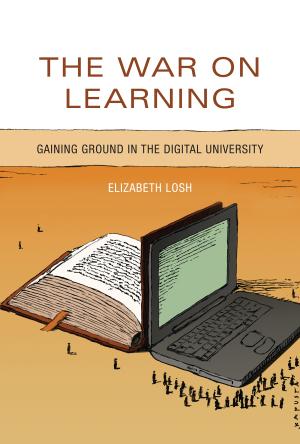
The War on Learning is an important contribution to public debate on new instructional technologies and the future of the university. A scholar of media history and digital rhetoric, Elizabeth Losh clarifies charged issues with her knowledge of historical context and a talent for cutting through publicity to identify the most important facts. In her first chapter, Losh describes how Good Morning America hoped to use her as “a voice of moral outrage” in response to online videos showcasing techniques for cheating on exams (19). To their disappointment, Losh was unwilling to paint an uncomplicated “us versus them” picture of how professors and students use technology. Losh’s thesis is that both sides are engaged in an “incredibly destructive war on learning itself by emphasizing competition and conflict rather than cooperation” (26). In her second chapter, Losh uses her teaching experiences to illuminate the “rhetoric of crisis” around the status of education in our culture (46). As a literature review which explains key moments in a conflict that is wide enough to include policing of student Internet activity and calls for the end of universities as we know them, it is here that Losh’s thesis is at its most persuasive. In the third chapter, “On Camera,” Losh explains how the online sharing of lectures turned one professor into a beloved celebrity and another into an object of ridicule. The war on learning is a costly distraction from the “digital literacy and competence in digital rhetoric” that is professionally important for both professors and students (89). The pedagogy of distance learning is reviewed in chapter 4 with the salient observation that the online lecture “often is more likely to resemble a traffic school tutorial rather than a compelling professorial performance” (109). Chapter 5 discusses “The Rhetoric of the Open Courseware Movement” with a critique of the optimism around platforms like Coursera and edX that is nevertheless respectful of their potential. Chapter 6 examines the technological struggle over plagiarism and the rise of Turnitin as a somewhat ethically ambiguous policing tool. Chapters 7 and 8 consider the merits of gadget distribution (for example, iPods and iPads) and efforts to create educational video games respectively. In the ninth chapter, Losh lays out six clear suggestions for making the digital university “more inclusive, generative, just, and constructive” based on “two decades in the trenches” (224). Losh argues that knowledge of the history of instructional technology and reflection on learning as process rather than product should precede elaborate plans for the digital university. This is not a book for professors seeking a step-by-step guide for bringing technology into their classrooms. Losh, in fact, mentions that she wrote this volume with college presidents in mind (14). I recommend it to anyone wanting a broader picture of how technology might impact the future of university education. With well-chosen case studies Losh provides a crash course on the history of instructional technologies and deep reflection on their implications.
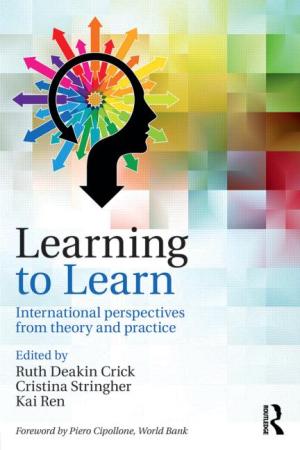
“Learning to learn” is a strong and appellative concept for people involved and interested in education. The book’s title suggests a continuous search for an appropriate and practical understanding of the meaning of “learning to learn,” and its significance in the practice at various levels. “Learning to learn” is viewed as a holistic and dynamic concept that encompasses relationships with learning, reasoning, knowledge, consciousness, critical thinking, working memory, education self-awareness, motivation, lifelong learning, life-wide learning, inference, systems of thinking, spiritual matters, social heritages, cultural contexts, and “natural learning” as an ordinary activity with others. The concept is also related to fields of knowledge such as education, psychology, sociology, and so forth, and it is presented as a paradigm in continuous construction. This book is strategically divided in two main parts; (1) theory and (2) international research and practices. Seeking for a comprehensive view of education, the first part engages the reader in the concept of “learning to learn” from a theoretical and philosophical perspective, bringing together an extensive list of definitions, visualizations, and considerations related to the subject. The second part offers research based on nine case studies showing how “learning to learn” works in the practical arena in schools, curriculums, educational polices, and teachers’ pedagogical practices. However, even though the book does not deal directly with specific pedagogical strategies in the classroom, the discussion offers good insights and approaches that can enhance the practice of teaching. This aspect is further advanced by the authors’ emphases in explaining the methodologies used in the research. “As an organizing concept in education. . . learning to learn” not only deals with scientific matters concerning learning, but also with curriculum, pedagogy, and educational policies within the politics of a particular context (xv). Written from an international perspective, the book takes into account the educational experiences and practices from a few European countries, China (Hong Kong), Australia and New Zealand, and considers one example from the United States. Nonetheless, the authors’ intentions are clear − to influence and offer relevant applications for an international understanding of what “learning to learn” means for a global world. That said, additional approaches from Africa and Latin American countries are strongly needed. Learning to Learn can serve as something of a paradigm for excellence in education and learning. It can also function as a helpful text for reflecting on the meta-competencies required to be fully efficient in contemporary vocational contexts. This meta-competency includes a strategic competence for lifelong learning (93). The challenge of this discussion for religious and theological educators is evident -- it requires educators to examine the applications of “learning to learn” in their particular educational practices. Educators will benefit from reading this book and may feel motivated to read the extended literature references in the book, particularly those concerning recent texts advancing new theoretical approaches on this topic. Furthermore, educators will benefit from the rich research data discussed in the theoretical and practical sections. This material represents an excellent source for advancing new research, while at the same time offering useful applications for educators’ practices in their individual higher educational contexts.
Wabash Center Staff Contact
Rachelle Green, Ph.D.
Associate Director
Wabash Center
greenr@wabash.edu