Resources
Provides 30 practical ideas for the improvement of instruction based on critical thinking concepts and tools. It builds on, and goes beyond, the ideas in the mini-guide Active and Cooperative Learning. It cultivates student learning encouraged in the How to Study and Learn mini-guide. (From the Publisher)
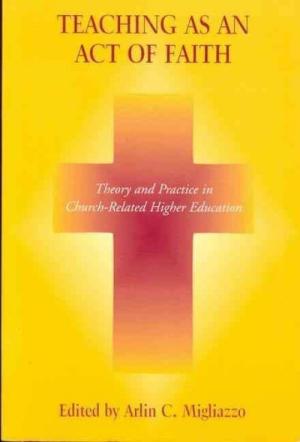
Interest in church-related higher education has increased greatly in recent years. Teaching as an Act of Faith is a practical guidebook on strategies to incarnate mission and epitomize theological and theoretical reflection in the classroom. In original essays, distinguished practitioners from fourteen liberal arts disciplines and Roman Catholic, Wesleyan, Anabaptist, Lutheran, and Reformed traditions demonstrate how they have been able link religious values more directly to their teaching. (From the Publisher)
Here is one teacher's story about his personal journey toward a safe classroom for his students. He explains how new technologies, rising education costs - but most important personal, inward changes - forced a reexamination of his teaching methods and goals. (From the Publisher)
AAR Teaching Religious Studies Series (Oxford University Press) Claude Levi-Strauss's mid-twentieth century work in structural anthropology revolutionized the study of myth, kinship, and totemism, with lasting effects in cultural studies generally and especially in religious studies. This book provides an introduction to this revolution through generous reproductions of some of Levi-Strauss's most important writing on religion. Reactions and responses, both positive and negative, to the revolution are also included, as well as some of Levi-Strauss's replies to his critics. A general introduction by the volume editor provides a framework for understanding the historical development and contemporary meaning of structuralism for religious studies. This volume provides an unparalleled resource for teaching students about structuralism through Levi-Strauss's own essays and classic critiques of the theory. (From the Publisher)
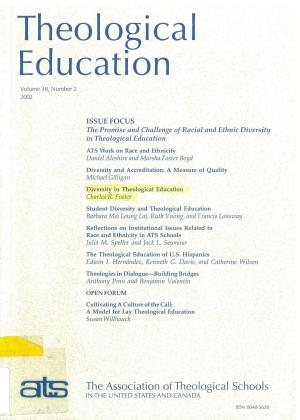
Journal Issue. Full text is available online.
Journal Issue.
This work examines the landscape of religiously affiliated higher education in America from the perspective of faculty members critically committed to the future of church-related institutions. The book includes articles on a variety of topics from members of the Rhodes Consultation on the Future of the Church-Related College, a project that has involved ninety church-related institutions since 1996. (From the Publisher)
Few people have influenced the development of Christian schools in the Reformed tradition in North America and around the world as much as Nicholas Wolterstorff. As a tribute to his contributions, educators Gloria Goris Stronks and Clarence W. Joldersma have drawn together the world-renowned Christian philosopher's thoughts and reflections on Christian education over the last three decades. The guiding principle in making selections was the inclusion of pieces that discuss what makes education truly Christian. Wolterstorff's writings on education are divided into four sections that focus on the nature of Christian education, the criticisms of Christian education, Christian learning within a pluralistic society, and the goals of Christian education. Of special interest is Wolterstorff's increasing concern with the role of justice in Christian education. Educating for Life portrays Wolterstorff's evolving thinking on education while paying tribute to him as one of the premier Christian philosophers of our day. (From the Publisher)
From the Publisher "Those who ponder these pages will be renewed to love God with all their minds, to pursue truth, and to live faithfully."--David S. Dockery, Union University What purpose do purely intellectual pursuits have in the lives of Christians? Why should Christians study subjects that have little bearing on their future careers and ministry? In a style reminiscent of the work of Arthur Holmes and Harry Blamires, veteran professor of philosophy Clifford Williams addresses these issues and more in this succinct and accessible examination of the life of the mind. Christians cultivating the life of the mind actively pursue situations and discussions that require experimentation, reflection, and perseverance. They are interested in the acquisition of knowledge that is both unrelated and directly related to their faith. Williams answers common Christian objections to such activities, describes the virtues of the person who engages in the life of the mind, and asserts that the life of the mind is justifiably a Christian calling. The Life of the Mind, the newest addition to the RenewedMinds imprint, is directed toward students contemplating the importance of college and intellectual activity in general, but it will be enjoyed by all committed to developing a Christian mind.
Wabash Center Staff Contact
Rachelle Green, Ph.D.
Associate Director
Wabash Center
greenr@wabash.edu