Resources
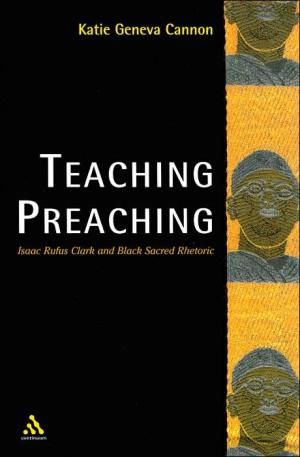
In Teaching Preaching, Katie Cannon, one of Clark's myriad preaching proteges, conceives her role as purely "presentational": "to bring Clark face to face with a reading audience, allow him to explain the formal elements of preaching from the inside out, and let each lecture mediate its own message." She also allows Clark to speak in his own expressive vernacular, with its double negatives, deliberate redundancy, signifying wordplay, and colloquially coined cussedness. While Clark lucidly explicates all the elements of sermon preparation and delivery, he never tires of stressing the development of a "theoethical consciousness": "a transformative vision that focuses on Jesus as the chief cornerstone of the preaching person as well as of the preaching subject." This book will be an invaluable resource for ministers who struggle from Sunday to Sunday to find their ethical voice in the preparation of each and every sermon. (From the Publisher)
Have three decades of integration and multicultural initiatives in higher education delivered a better education to all students? Are majority and minority students reaping similar benefits, specifically in predominantly white colleges? Do we know what a multicultural campus should look like, and how to design one that is welcoming to all students and promotes a learning environment? Through a unique qualitative study involving seven colleges and universities considered national models of commitment to diversity, this book presents the views and voices of minority students on what has been achieved and what remains to be done. The direct quotations that form the core of this book give voice to Black, Hispanic, Asian, Native American and bi-racial students. They offer in their own words their perceptions of their campus cultures and practices, the tensions they encounter and what works for them. Rather than elaborating or recommending specific models or solutions, this book aims to provide insights that will enable the reader better to understand and articulate the issues that need to be addressed to achieve a well-adapted multicultural campus. Presidents, academic affairs professionals, student affairs personnel and faculty concerned with equity and diversity will find this book helpful and enlightening. (From the Publisher)
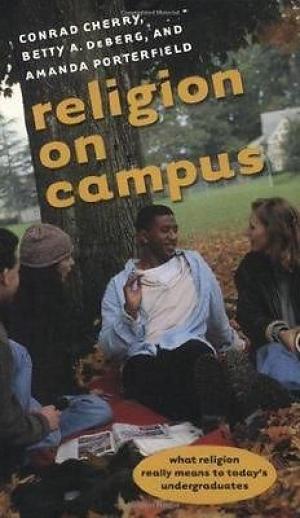
The first intensive, close-up investigation of the practice and teaching of religion at American colleges and universities, Religion on Campus is an indispensable resource for all who want to understand what religion really means to today's undergraduates. To explore firsthand how college students understand, practice, and learn about religion, the authors visited four very different U.S. campuses: a Roman Catholic university in the East, a state university in the West, a historically black university in the South, and a Lutheran liberal arts college in the North. They interviewed students, faculty members, and administrators; attended classes; participated in worship services; observed prayer and Bible study groups; and surveyed the general ethos of each campus. The resulting study makes fascinating and important reading for anyone--including students, parents, teachers, administrators, clergy, and scholars--concerned with the future of young Americans. Challenging theories of the secularization of higher education and the decline of religion on campus, this book reveals that both the practice and the study of religion are thriving, nourished by a campus culture of diversity, tolerance, and choice.(From the Publisher)
AAR Teaching Religious Studies Series (Oxford University Press) Despite the importance of Islam in global affairs and the role of Islamic Studies in Religious Studies, little attention has been given to the basic questions of how Islam should be taught. This volume brings together a number of leading scholars of Islamic Studies with rich experience in teaching Islam in a diversity of undergraduate settings, from large public universities to small private colleges. Topics addressed include Islamic law, the Quran, Sufism, women in Islam, Islam in America, and teaching about Islam through Arabic literature and the use of new information technology. Along with providing practical information about structuring courses and assignments, the contributors examine the place of Islamic Studies in the larger theoretical framework of Religious Studies and liberal arts curricula. (From the Publisher)
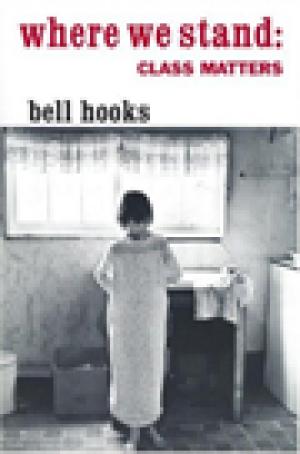
Drawing on both her roots in Kentucky and her adventures with Manhattan Coop boards, Where We Stand is a successful black woman's reflection - personal, straight forward, and rigorously honest - on how our dilemmas of class and race are intertwined, and how we can find ways to think beyond them. (From the Publisher)

Using Cases in Higher Education: A Guide for Faculty and Administrators is an essential resource created for faculty and administrators who utilize case studies to analyze, assess, and respond to the complex and difficult issues facing higher education leaders. While this volume will prove useful with any case study, it is specifically designed to complement the series of casebooks and teaching notes, starting with Casebook I: Faculty Employment Policies and Teaching Notes to Casebook I: Faculty Employment Policies. (From the Publisher)

Intended as a resource to assist faculty and campuses in thinking carefully about ethical dimensions of the scholarship of teaching and learning, Ethics of Inquiry provides an overview of the issues, sets the context and offers multiple perspectives from which to view these issues. The volume includes seven case studies by scholars of teaching and learning reflecting on ethical dimensions and dilemmas in their work. Each case is followed by three commentaries by respondents, including students, with diverse points of view. (From the Publisher)

Journal Issue.
Wabash Center Staff Contact
Rachelle Green, Ph.D.
Associate Director
Wabash Center
greenr@wabash.edu