Resources
Order and Partialities explores the complex and problematic relations among postcolonial literatures and theories, the people who teach them at the university level, and the institutions in which they are taught. Each essay traces a path through these relations; yet each also comments on the fundamental paradox and contradiction within which these relations operate: that they must engage with the powerful, labyrinthine apparatus of Western cultural hegemony--a set of systematic, interpretative procedures corresponding to, and in service of, a regime of ideological expectations and its institutional representatives--in order to disengage themselves from its operations. There is no way to teach these relations without entering, oneself, into the entanglements of postcolonial power. (From the Publisher)
Four primary factors are relevant to social and cultural diversity in the college classroom: students, teachers, course content, and teaching methods. Faculty can use understanding of these factors and their interrelationships to facilitate learning in an increasingly multicultural environment.

This book offers a close-up look at theological education in the United States today. The authors' goal is to understand the ways in which institutional culture affects the outcome of the educational process. To that end they undertake ethnographic studies of two seminaries - one evangelical and one mainline Protestant. These studies, written in a lively journalistic style, make up the first part of the book and offer fascinating portraits of two very different intellectual, religious, and social worlds. The authors then go on to examine these disparate environments and suggest how, in each case, school culture acts as an agent of educational change. This unique and practical study should be of great interest to both students and scholars of American religion, to theological educators, and to educators generally. (From the Publisher)
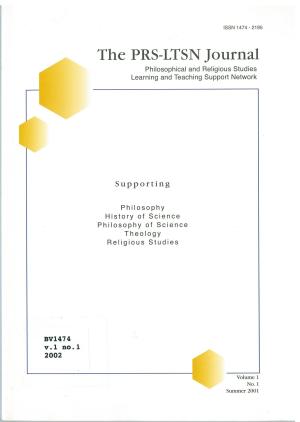
Journal Issue.

Journal Issue.
The majority of undergraduate instructors hold contingent appointments, a term used here to include not only the non-tenure-track part-time faculty but also many instructional staff who lack faculty status, an increasing proportion of full-time non-tenure track faculty, and a substantial number of graduate student teaching assistants. This volume seeks to foster a dialogue, long overdue, between those who believe that the academy has failed to give adequate respect and support to undergraduate instruction and those who believe that the academy has failed to give adequate support and respect to the selection and terms and conditions of employment of undergraduate instructors. It may be that the increasing dependence on contingent appointments imperils undergraduate learning no less than it imperils the future of the academic profession. (From the Publisher)
Teaching can happen anywhere, at any time - not just in classrooms but in churches, in bookstores, in homes, anywhere people get together to share ideas that affect their daily life. In Teaching Community, bell hooks shows how complex ideas of cultural theory can be simplified and made relevant to the lives of working people, and how the values of shared knowledge and learning can be a catalyst for progressive social change. Teaching - so often undervalued in our society - can be a joyous and inclusive activity and, as hooks shows, can never be confined to the classroom. (From the Publisher)

Steal This University explores the paradox of academic labor. Universities do not exist to generate a profit from capital investment, yet contemporary universities are increasingly using corporations as their model for internal organization. While the media, politicians, business leaders and the general public all seem to share a remarkable consensus that higher education is indispensable to the future of nations and individuals alike, within academia bitter conflicts brew over the shape of tomorrow's universities. Contributors to the volume range from the star academic to the disgruntled adjunct and each bring a unique perspective to the discussion on the academy's over-reliance on adjuncts and teaching assistants, the debate over tenure and to the valiant efforts to organize unions and win rights. (From the Publisher)
Wabash Center Staff Contact
Rachelle Green, Ph.D.
Associate Director
Wabash Center
greenr@wabash.edu