Resources
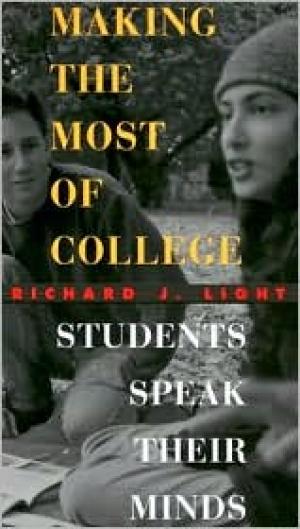
Why Do Some Students make the most of college, while others struggle and look back on years of missed deadlines and missed opportunities? What choices can students make, and what can teachers and university leaders do, to improve more students' experiences and help them achieve the most from their time and money? Most important, how is the increasing diversity on campus -- cultural, racial, and religious -- affecting education? What can students and faculty do to benefit from differences, and even learn from the inevitable moments of misunderstanding and awkwardness? From his ten years of interviews with Harvard seniors, Richard Light distills encouraging -- and surprisingly practical -- answers to fundamental questions. How can you choose classes wisely? What's the best way to study? Why do some professors inspire and others leave you cold? (From the Publisher)
In addition to his notable work as a premier Christian philosopher, Nicholas Wolterstorff has become a leading voice on faith-based higher education. This volume gathers the best of Wolterstorff's essays from the past twenty-five years dealing collectively with the purpose of Christian higher education and the nature of academic learning. Integrated throughout by the biblical idea of shalom, these nineteen essays present a robust framework for thinking about education that combines a Reformed confessional perspective with a radical social conscience and an increasingly progressivist pedagogy. Wolterstorff develops his ideas in relation to an astonishing variety of thinkers ranging from Calvin, Kuyper, and Jellema to Augustine, Aquinas, and Kant to Weber, Habermas, and MacIntyre. In the process, he critiques various models of education, classic foundationalism, modernization theory, liberal arts, and academic freedom. (From the Publisher)
Radical Presence is a book about our lives as well as our work, suggesting that the "secrets" of good teaching are the same as the secrets of good living. (From the Publisher)
U.S. colleges and universities are witnessing increased diversity in their student bodies, yet many faculty members continue to use outdated modes of instruction, creating potentially harmful learning environments. This timely book addresses this problem, guiding educators toward a better understanding of how changes in the student population require new approaches to classroom learning. (From the Publisher)

Journal Issue.

Journal Issue.
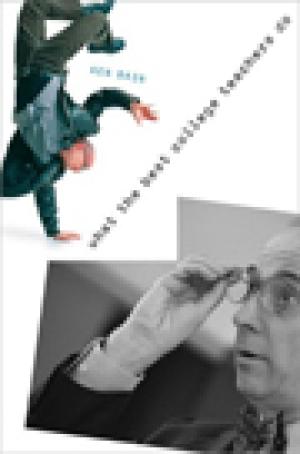
Winner of the Virginia and Warren Stone Prize awarded annually by Harvard University Press for an outstanding book on education and society. What makes a great teacher great? Who are the professors students remember long after graduation? This book, the conclusion of a fifteen-year study of nearly one hundred college teachers in a wide variety of fields and universities, offers valuable answers for all educators. The short answer is -- it's not what teachers do, it's what they understand. Lesson plans and lecture notes matter less than the special way teachers comprehend the subject and value human learning. Whether historians or physicists, in El Paso or St. Paul, the best teachers know their subjects inside and out -- but they also know how to engage and challenge students and to provoke impassioned responses. Most of all, they believe two things fervently: that teaching matters and that students can learn. In stories both humorous and touching, Ken Bain describes examples of ingenuity and compassion, of students' discoveries of new ideas and the depth of their own potential. What the Best College Teachers Do is a treasure trove of insight and inspiration for first-year teachers and seasoned educators alike. (From the Publisher)
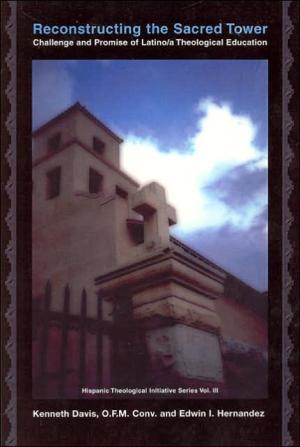
The Hispanic community in the United States is growing by leaps and bounds. The most important institution in Hispanic barrios is the church. Government programs come and go, but the churches remain. So what could be more important than good Hispanic theological leadership? This book is unblinking about the problems involved. Lacking are financial and intellectual resources in otherwise excellent seminaries and other educational institutions. At the same time the book offers a vision of hope. It uses solid data to describe the willingness of many young people to get involved in religious leadership. It shows their eagerness to learn and to serve. The book concludes with a number of well examined and down to earth recommendations. (From the Publisher)
It has been estimated that in the next ten years, about half of the current higher education faculty will retire. How can we best prepare the next generation of faculty members to fill this tremendous gap in our educational system? Paths to the Professoriate offers all those involved in higher education—everyone from administrators to scholars to graduate students—a much-needed resource that brings together major research, the most important developments in practice, and informed analysis on improving graduate education and preparing the future faculty. This important book includes chapters from some of the best-known researchers, practitioners, and scholars working to prepare the faculty of the future. In one volume, the authors offer a synthesis of what has been learned about the challenges and concerns in graduate education as preparation for faculty careers, highlight the various projects and approaches for improving graduate education, and identify strategies for institutional leaders, department chairs, faculty advisors, and graduate students. Paths to the Professoriate: * Presents important reasons for considering ways to improve the preparation of the next generation of faculty * Describes research studies concerning the graduate school experience * Highlights illustrative examples of innovative programs and projects * Provides a synthesis of key lessons from the research and projects addressing the preparation of future faculty This solidly research-based book covers such vital topics as: the lack of systematic developmentally organized preparation for those aspiring to teaching careers in higher education; graduate students’ perceptions of their graduate experiences and their preparation for faculty work; particular challenges confronting Black doctoral students; reasons students leave doctoral study; programs to prepare graduate students for roles as teaching scholars and engaged citizens; strategies to help graduate students and faculty members identify mutual goals and resolve conflicts; and much more. Paths to the Professoriate offers all those concerned with the fate of higher education a valuable resource for the future. (From the Publisher)
Wabash Center Staff Contact
Rachelle Green, Ph.D.
Associate Director
Wabash Center
greenr@wabash.edu