Resources

Journal Issue.
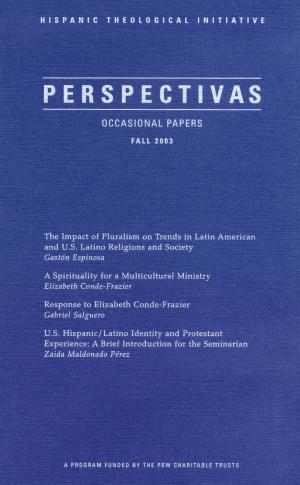
Journal Issue.
Journal Issue.
Journal Issue.
Journal Issue
This explosive book examines the current state of civil rights in the U.S. through the unique experiences of Asian Americans. In the tradition of W.E.B. Du Bois, Cornel West, and other public intellectuals who have confronted the "color line" of the twentieth century, journalist, scholar, and activist Frank H. Wu offers a unique perspective on how changing ideas of racial identity will affect race relations in the new century. Often provocative and always thoughtful, this book addresses some of the most controversial contemporary issues: discrimination, immigration, diversity, globalization, and the mixed race movement, introducing the example of Asian Americans to shed new light on the current debates. Mixing personal anecdotes, social science research, legal cases, history, and original journalistic reporting, Wu tackles Asian American stereotypes like "the model minority" and "the perpetual foreigner," and shows how these seemingly innocuous concepts have harmed individuals and damaged relations between communities. By offering new ways of thinking about race in American society, Wu's work challenges us to make good on our great democratic experiment. (From the Publisher)
"I won't learn from you" is Herb Kohl's now-classic essay about the phenomenon of "not-learning," or refusing to learn, which takes place when a student's intelligence, dignity, or integrity is compromised by a teacher, an institution, or a larger social mindset. Available in book form for the first time, "I Won't Learn from You" serves here as a starting point for four new, groundbreaking essays by one of the country's leading thinkers on education. "The Tattooed Man: Confessions of a Hopemonger" is about the importance of teaching hope, and is Kohl's first autobiographical effort to discover in his own ghettoized childhood attitudes that let him recognize "not-learning" when he saw it among his students decades later. "Creative Maladjustment and the Struggle for Public Education" is inspired by Martin Luther King, Jr.'s call for creative maladjustment to an unjust society, and deals with the ways in which one can lead a positive life and learn new ways of maintaining opposition and resistance. "Excellence, Equality, and Equity" explores the relationship between these three crucial - and often confused - concepts. "Uncommon Differences" is about the way in which notions such as political correctness have been used to distract us from the central concerns of public education, including educating the poor, developing cultural diversity within the schools, and undoing the stigmatization of students who do not conform. It is about what public education in America can become. Written in Kohl's hallmark conversational style and employing the case examples that make his writing so compelling, these essays are at the forefront of current thinking on urban education. (From the Publisher)
Conventional wisdom has it that education is the great equalizer in a society. Notwithstanding, access to higher education and terminal degrees have not proven synonymous with the establishment of legitimacy for many voices. Academics and scholars of color continue to confront barriers constituent of the racialized, gendered, and class(ed) baggage characterizing dominant social relations. In I've Got a Story to Tell different members of academe struggle with the institutionalized constructs that pose real challenges to the transformation and democratization of higher education. (From the Publisher)
Since 1986, when K. Patricia Cross first began to write and speak about Classroom Research, faculty across the country have been inspired by her vision of a learner-centered, teaching-directed approach aimed at understanding and improving student learning. In the intervening five years, hundreds of college teachers at dozens of institutions have taken up her challenge to become "Classroom Researchers," engaging in the systematic and ongoing study of teaching and learning. This volume of New Directions for Teaching and Learning is a collection of examples illustrating a range of ways Classroom Research can be used in a variety of disciplines and settings. It is a gathering of teachers' stories that are also teaching stories, narratives that distill hundreds of hours of experience into a few pages. Whether they are faculty, faculty developers, or academic administrators, readers can profit by learning from the hard-won experience and insights distilled in these early lessons from success. This is the 46th issue of the quarterly journal New Directions for Teaching and Learning. (From the Publisher)
Wabash Center Staff Contact
Rachelle Green, Ph.D.
Associate Director
Wabash Center
greenr@wabash.edu