Resources
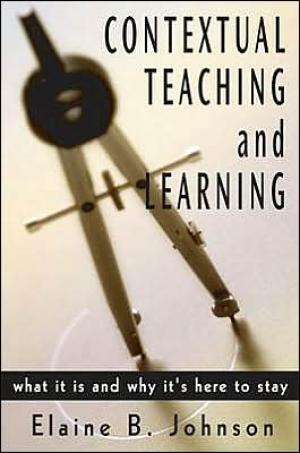
Contextual teaching and learning (CTL) is a system for teaching that is grounded in brain research. Brain research indicates that we learn best when we see meaning in new tasks and material, and we discover meaning when we are able to connect new information with our existing knowledge and experiences. Students learn best, according to neuroscience, when they can connect the content of academic lessons with the context of their own daily lives. Johnson discusses the elements of the brain-compatible contextual teaching and learning system: making meaningful connections; investing school work with significance; self-regulated learning; collaboration; critical and creating thinking; nurturing the individual; reaching high standards; and using authentic assessment. Drawing on the practices of teachers in kindergarten through university, Johnson provides numerous examples of how to use each part of the CTL system. Contextual Teaching and Learning: What it Is and Why It's Here to Stay is more than a handbook on precise steps to follow to help children of all abilities achieve high standards by joining academic lessons with their immediate context. This book also explains how the brain works, discusses why teachers need to pay attention to context, and makes a strong case for the need to teach students to think critically and creatively. This inspirational book urges educators to eliminate the student question: "Why do we have to learn this?" If the educators invest learning with meaning by relying on context, that question won't have to be asked. (From the Publisher)
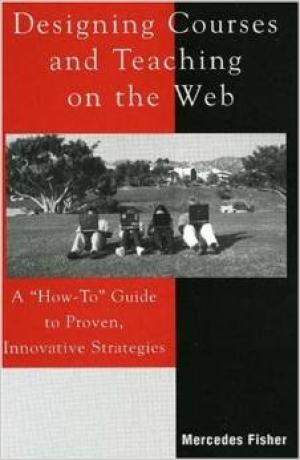
Here is a practical, how to book written for new online web instructors. It will also be helpful to course designers, trainers, administrators, or anyone interested in the potential of online learning and training by providing an excellent introduction to the online education arena. The format provided will easily fit into any course design while utilizing a variety of current resources and tools. (From the Publisher)

Journal Issue.

Integrative Learning explores the challenges to integrative learning today as well as its longer tradition and rationale within a vision of liberal education. In outlining promising directions for campus work, the authors draw on AAC&U's landmark report, Greater Expectations, as well as the Carnegie Foundation's long-standing initiative on the scholarship of teaching and learning. Readers will find a map of the terrain of integrative learning on which promising new developments in undergraduate education can be cultivated, learned from, and built upon. (From the Publisher)
This monograph suggests ways in which an institution can diversify its faculty and facilitate the work of the search committee before a candidate ever reaches the interview stage. It outlines a step-by-step process to improve the likelihood of a successful search, and it recommends items to consider after a hire is confirmed to ensure that the new faculty member will be more likely to stay. The sections are: (1) Before the Search Begins; (2) The Search Process; and (3) After the Search. Appendixes contain a checklist of best practices, a list of leading institutions for minority Ph.D.s, a list of baccalaureate institutions identified as producers of numbers of female doctorates; and a list of Web resources of programs for building diverse faculties. An annotated bibliography lists 59 sources for additional information. (Contains 36 references.) (From the Publisher)

"My mother still wants me to get a 'real' job. My father, who is retired after forty-four years in the merchant marine, has never read my work. When I visited recently, the only book in his house was the telephone book." "I do not know that my mother's mother ever acknowledged my college education except to ask me once, 'How can you live so far away from your people?'. Thus write two of the twenty women from working-class backgrounds whose voices are heard in this unique collection of essays. Each of the women has lived through the process of academic socialization - as both student and teacher - and each has thought long and deeply about her experience from an explicitly feminist perspective. Among the questions the contributors explore, What are the issues - pedagogical, theoretical, and personal - that affect the professional and private lives of these women? How do they resolve tensions between their roles as middle-class professionals and their roots in working-class families? How do class and gender intersect in the academy? (From the Publisher)

Journal Issue.

Journal Issue.

Journal Issue.

Journal Issue.
Wabash Center Staff Contact
Rachelle Green, Ph.D.
Associate Director
Wabash Center
greenr@wabash.edu