Resources
Describes a new taxonomy of liberal and professional learning--a Table of Learning--that creates a system for classifying the kinds of learning faculty seek for their students, and also serves as a stimulus for the design and evaluation of education.
Journal Issue.
Journal Issue.
Journal Issue.
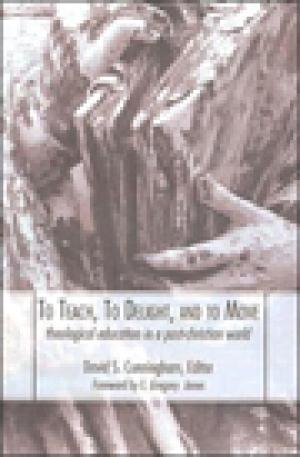
From the Publisher This book initiates a new conversation about how theological education might be re-envisioned for the twenty-first century church. The prevailing curricular structure in today’s seminaries and divinity schools was fashioned in a very different era – one that assumed the continued cultural dominance of Christianity and the continued academic dominance of the canons of Enlightenment reason. Neither assumption is viable in today’s post-Christian world; hence, our new circumstances demand a new vision for theological education. The authors of this volume offer an important resource for this project through their creative appropriation of the classical rhetoric tradition, particularly as it has been rehabilitated in the contemporary context. Like St. Augustine, they believe that the chief goals of Christian theology are similar to those of classical rhetoric: “to teach, to delight, and to move.” And the authors are united their conviction that these must also be the goals of theological education in a post-Christian era. This volume arises out of a passionate commitment to the cause of theological education. The authors hail from a wide range of denominational traditions and have taught in numerous seminaries and divinity schools. They have also studied the classical and postmodern rhetorical traditions in both theory and practice. They met as a group on numerous occasions to read one another’s contributions to the volume and to offer guidance for the process of rewriting. As a result, this book is much more than a mere collection of essays; it is a jointly-authored work, and one which presents an integrated vision for the future of theological education.
Changes in instructional paradigms are leading to changes in the way student achievement is tested, including group testing, online testing and authentic testing. This issue discusses the theory and practice of these new forms of testing and offers practical suggestions for instructors considering their use. (From the Publisher)
Assessment Clear and Simple is "Assessment 101" in a book -- a concise, step-by-step guide written for everyone who participates in the assessment process. This practical book helps to make assessment simple, cost-efficient, and useful to the institution, while at the same time meeting the requirements of accreditation agencies, legislatures, review boards, and others. Assessment Clear and Simple can help your institution employ assessment as a powerful instrument for improvement and provide a basis for wiser planning, budgeting, and change in curriculum, pedagogy, staffing, programming, and student support. (From the Publisher)
Creating ways to make a discipline come alive for those who are not experts - even for students who may not take more than one or two courses in the disciplines they study - requires rigorous thought about what really matters in a field and how to engage students in its practice. Faculty from Alverno College representing a range of liberal arts disciplines - chemistry, economics, history, literature, mathematics and philosophy - here reflect on what it has meant for them to approach their disciplines as frameworks for student learning. The authors all demonstrate how the ways of thinking they have identified as significant for their students in their respective disciplines have affected the way they design learning experiences. They show how they have shaped their teaching around the ways of thinking they want their students to develop within and across their disciplines; and what that means in terms of designing assessments that require students to demonstrate their thinking and understanding through application and use. (From the Publisher)
As online courses proliferate, teachers increasingly realize that they have to connect with their students as they would in face-to-face classes. They have to provide true opportunities for inspirational and meaningful learning, rather than a sterile experience of clicking within a labyrinth of links. With the specific purpose of switching emphasis from the technical issues of online teaching to the human implications of teaching and learning through the Internet, Tisha Bender draws on her extensive research, her training of online faculty, and her own online teaching experience, to create a fresh vision of online pedagogy. Discussion-Based Online Teaching to Enhance Student Learning consists of three parts: Theory Practice Assessment The author shows how she applies learning theories to online discussion-based courses. She presents a wealth of suggestions and techniques, illustrated by real examples, for stimulating and managing online discussion effectively, and for improving teaching practices. The book concludes with methods for assessing the efficacy of online courses. This accessible and comprehensive book offers an engaging and practical approach to online teaching that is rooted in the author's experience and enthusiasm for creating a virtual environment involves students and fosters deep learning. This is a book for all educators and administrators in higher education, in any discipline, engaged in, or contemplating offering, online classes that involve discussion or collaborative learning. It is relevant both to faculty teaching a hybrid class (a class taught on campus that also has an online component) and courses that are taught entirely online. (From the Publisher)
Connecting to Learn: Educational and Assistive Technology for People With Disabilities presents a comprehensive approach to matching the right assistive technology with students with disabilities, especially visual and auditory disabilities. Dr. Scherer explores the way disabilities, especially those involving the senses, can lead to isolation and a lack of "connectedness," and how this leads to educational difficulties. She then provides a step-by-step model for assessing and evaluating the needs of individual students and finding the right assistive technology to help each student. This practical book features data on prevalence of vision and hearing loss as well as quotations from students and teachers about the various technologies they use in their schools and in daily life. School psychologists, educators, and rehabilitation psychologists will find this book indispensable in their efforts to help those with disabilities learn, live, and connect with others. (From the Publisher)
Wabash Center Staff Contact
Rachelle Green, Ph.D.
Associate Director
Wabash Center
greenr@wabash.edu