Resources
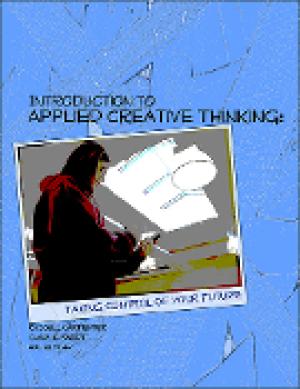
Click Here for Book Review Abstract: Here is a new text that fulfills an emerging need in both higher and public education and stands to break new ground in addressing critical skills required of graduates. When working on their last book, It Works for Me, Creatively, the authors realized that the future belongs to the right-brained. While Daniel Pink and other visionaries may have oversimplified a bit, higher education is ripe for the creative campus, while secondary education is desperately seeking a complement to the growing assessment/teach-to-the-test mentality. You don’t have to study the 2010 IBM survey of prominent American CEOs to know that the number one skill business wants is students who can think creatively. To meet the demand of new courses, programs, and curricula, the authors have developed a 200-page “textbook” suitable for secondary or higher education courses that are jumping on this bandwagon. Introduction to Applied Creative Thinking, as the title suggests, focuses not on just developing the skills necessary for creative thinking, but on having students apply those skills; after all, true creative thinking demands making something that is both novel and useful. Such a book may also be used successfully by professional developers in business and education. For this book, Hal Blythe and Charlie Sweet are joined in authorship by Rusty Carpenter. He not only directs Eastern Kentucky University’s Noel Studio for Academic Creativity but has co-edited a book on that subject, Higher Education, Emerging Technologies, and Community Partnerships (2011) and the forthcoming Cases on Higher Education Spaces (2012). Introduction to Applied Creative Thinking is student-friendly. Every chapter is laced with exercises, assignments, summaries, and generative spaces. Order copies now or contact the publisher for further information. (From the Publisher)
Click Here for Book Review Abstract: This edited book series serves as a guide to the study of improved training, employment and administration of graduate and professional student development programs. A new publication that addresses a critical need in higher education. The series is designed to highlight all aspects of professional development of graduate and professional students. (From the Publisher)
Let’s Do the Hokey Pokey! A few years back, George Will wrote that what we choose to believe, how we dream to live, how we strive to make those ideals become reality, we make self-validating. In that spirit, I’m going to talk about one of my self-evident truths, which I choose to believe, how I dream to live, how I strive to make it and other allied self-evident truths my reality. In academia, there is something that is often so deadening that it sucks the life out of teaching and learning, something so often depressing that it reduces focus to information gathering and transmission and exiles people to unnoticed corners, something so bland that it is devoid of emotional intensity, something so stagnating that it doesn’t stir the imaginative and creative juices. That something is passion. Now, I am not talking about being passionate about or dedicated to one’s discipline or to the practice of research and publication. I am talking about being passionate about teaching and being dedicated to each student’s learning. So, here is my take on the importance of passion in education, on what I call “hokey pokey teaching.” And, it starts like this:   You put your whole self in; you put your whole self out; you put your whole self in; and you shake it all about. You do the Hokey-Pokey, And you turn yourself around That’s what it’s all about!   Now that is passion! If you have ever danced the Hokey Pokey you know what I mean. It’s really an exciting experience. And, Hokey Pokey teaching! That’s what it’s all about! (From the Publisher)
This paper explores how adult learners in a college composition course resisted pedagogies and teaching strategies designed to critically examine student and teacher assumptions about classism, racism, and sexism as well as other oppressive structures and discourses.
Teaching biblical studies in the undergraduate liberal arts classroom poses many challenges. Do biblical studies deserve a place at a secular liberal arts college? In church-affiliated colleges, should courses in Bible toe the denominational line? Can we claim that biblical studies advance the goals of liberal education, whatever we might think they are? On a more practical level, how can an instructor engage the attention of students who are taking a course in biblical studies only to fulfill a requirement? How best to begin with students from non-religious backgrounds who begin a course with no real knowledge of the Bible at all? How best to deal with students who already think they know what the Bible is all about, and resist any ideas or approaches that might threaten their ideas? This collection of pedagogical essays reflects the practical experience of instructors who have spent years teaching biblical studies successfully to undergraduates at liberal arts colleges. The essays address both methodological approaches and specific classroom strategies for teaching biblical studies effectively in a way that advances the skills of thinking and expression that are essential to a liberal arts education. The product of several years of conversation among working professors from an array of liberal arts colleges, these essays offer insights and inspiration for biblical studies instructors who work in a very specific and demanding academic environment. (From the Publisher)
It is a commonplace that scholarship and teaching inform one another. Minimally, this means that the materials of research guide the formation of a syllabus. In courses that are introductory, however, teachers are called to reflect on the foundations of their scholarship. In this task, teaching serves to unsettle and provoke research, not only in the decision of what books to teach, but also in the course's argument. I propose that this argument be directed not toward a field in some ideal shape but toward the more elementary concepts of course, canon, and introduction themselves, since teaching an introductory course is perforce to consider the very nature of introduction. The three concepts of introduction, canon, and course are integral to thinking across the arts and sciences, nowhere more so than in the study of religion, where the work of Jonathan Z. Smith has tunneled, if only partially, into their paradoxes.
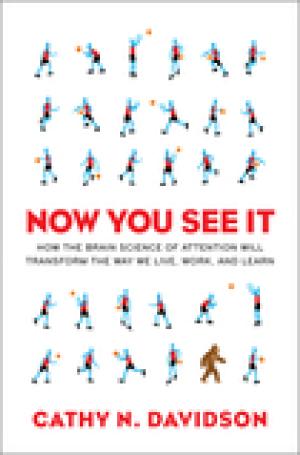
When Cathy Davidson and Duke University gave free iPods to the freshman class in 2003, critics said they were wasting their money. Yet when students in practically every discipline invented academic uses for their music players, suddenly the idea could be seen in a new light-as an innovative way to turn learning on its head. This radical experiment is at the heart of Davidson's inspiring new book. Using cutting-edge research on the brain, she shows how "attention blindness" has produced one of our society's greatest challenges: while we've all acknowledged the great changes of the digital age, most of us still toil in schools and workplaces designed for the last century. Davidson introduces us to visionaries whose groundbreaking ideas-from schools with curriculums built around video games to companies that train workers using virtual environments-will open the doors to new ways of working and learning. A lively hybrid of Thomas Friedman and Norman Doidge, Now You See It is a refreshingly optimistic argument for a bold embrace of our connected, collaborative future. (From the Publisher)
Inspiring Academics draws on the experience and expertise of award-winning university teachers to illuminate exemplary teaching practice. It is structured around five core themes: inspiring learning, command of the field, assessment for independent learning, student development and scholarship. Mirroring the vast range of practices and characteristics that constitute high quality teaching, 26 distinguished scholars from Australia, Canada, New Zealand, the UK and the USA recount and reflect on the personal and professional circumstances that have made them great teachers. Through its autoethnographic approach, this book provides captivating and illuminating personal explorations of the 'hows and whys' of excellent university teaching. (From the Publisher)
Journal Issue.
Most university teachers have ideas about the typical good or not-so-good student in their classes, but rarely do they share these thoughts with others. By keeping quiet about the preconceptions – or stereotypes – they harbour, teachers put themselves at risk of missing key evidence to help them revise their beliefs; more importantly, they may fail to notice students in real need of their support and encouragement. In this unique work, the authors explore UK and US university teachers’ beliefs about their students’ performance and reveal which beliefs are well-founded, which are mistaken, which mask other underlying factors, and what they can do about them. So is it true, for instance, that British Asian students find medicine more difficult than their white counterparts, or that American students with sports scholarships take their studies less seriously? Is it the case that students who sit at the front of the lecture hall get better grades than those who sit at the back? By comparing students’ demographic data and their actual performance with their teachers’ expectations, the authors expose a complex picture of multiple factors affecting performance. They also contrast students’ comments about their own study habits with their views on what makes a good learner. For each preconception, they offer clear advice on how university teachers can redesign their courses, introduce new activities and assignments and communicate effective learning strategies that students will be able to put into practice. Finally, the authors explore the ramifications of teachers’ beliefs and suggest actions that can be taken at the level of the institution, department or programme and in educational development events, designed to level the playing field so that students have a more equitable chance of success. Ideal for both educational developers and university teachers, this book: • reveals general tendencies and findings that will inform developers’ own work with university teachers, • provides practical guidance and solutions for university teachers to be able to identify and address students’ actual – rather than assumed – needs, • explores means of addressing and challenging people’s natural tendency to rely on preconceived ideas and stereotypes, and • explains an action research method that educational developers can use on their own campuses to unravel some of the local preconceptions that may be hampering student success. (From the Publisher)
Wabash Center Staff Contact
Sarah Farmer, Ph.D.
Associate Director
Wabash Center
farmers@wabash.edu