Resources
With a unique focus on the relationship between assessment and engagement this book explores what works in terms of keeping students on course to succeed. Against a backdrop of massification and the associated increase in student diversity there is an escalating requirement for personalized, technology driven learning in higher education. In addition, the advent of student fees has promoted a consumer culture resulting in students having an increasingly powerful voice in shaping curricula to their own requirements. How does one engage and retain a group of students of such diverse culture, ethnicity, ambition and experience? Using examples from a variety of institutions worldwide this edited collection provides a well-researched evidence base of current thinking and developments in assessment practices in higher education. The chapters discuss: • Staff and student views on assessment • Engaging students through assessment feedback • Assessment for learning • Assessing for employability • Interdisciplinary and transnational assessment • Technology supported assessment for retention The book draws together a wealth of expertise from a range of contributors including academic staff, academic developers, pedagogical researchers, National Teaching Fellows and Centres for Excellence in Higher Education. Recognising that a pedagogy which is embedded and taken-for-granted in one context might be completely novel in another, the authors share best practice and evaluate evidence of assessment strategies to enable academic colleagues to make informed decisions about adopting new and creative approaches to assessment. This interdisciplinary text will prove an invaluable tool for those working and studying in higher education. (From the Publisher)
Every semester, colleges and universities ask students to complete innumerable course and teaching evaluation questionnaires to evaluate the learning and teaching in courses they have taken. For many universities it is a requirement that all courses be evaluated every semester. The laudable rationale is that the feedback provided will enable instructors to improve their teaching and the curriculum, thus enhancing the quality of student learning. In spite of this there is little evidence that it does improve the quality of teaching and learning. Ratings only improve if the instruments and the presentation of results are sufficiently diagnostic to identify potential improvements and there is effective counselling. Evaluating Teaching and Learning explains how evaluation can be more effective in enhancing the quality of teaching and learning and introduces broader and more diverse forms of evaluation. This guide explains how to develop questionnaires and protocols which are valid, reliabile and diagnostic. It also contains proven instruments that have undergone appropriate testing procedures, together with a substantial item bank. The book looks at the specific national frameworks for the evaluation of teaching in use in the USA, UK and Australia. It caters for diverse methodologies, both quantitative and qualitative and offers solutions that allow evaluation at a wide range of levels: from classrooms to programmes to departments and entire institutions. With detail on all aspects of the main evaluation techniques and instruments, the authors show how effective evaluation can make use of a variety of approaches and combine them into an effective project. With a companion website which has listings of the questionnaires and item bank, this book will be of interest to those concerned with organising and conducting evaluation in a college, university, faculty or department. It will also appeal to those engaged in the scholarship of teaching and learning. (From the Publisher)
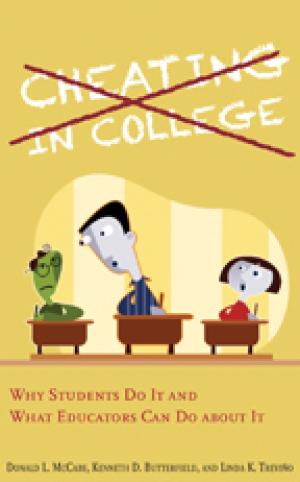
Today's students are tomorrow's leaders, and the college years are a critical period for their development of ethical standards. Cheating in College explores how and why students cheat and what policies, practices, and participation may be useful in promoting academic integrity and reducing cheating. The authors investigate trends over time, including internet-based cheating. They consider personal and situational explanations, such as the culture of groups in which dishonesty is more common (such as business majors) and social settings that support cheating (such as fraternities and sororities). Faculty and administrators are increasing their efforts to promote academic honesty among students. Orientation and training sessions, information on college and university websites, student handbooks that describe codes of conduct, honor codes, and course syllabi all define cheating and establish the consequences. Based on the authors' multiyear, multisite surveys, Cheating in College quantifies and analyzes student cheating to demonstrate why academic integrity is important and to describe the cultural efforts that are effective in restoring it. (From the Publisher)

Journal Issue.
The purpose of this study was to examine the gender bias in student ratings of effective teaching. Students in five colleges were invited to rate instructors on three factors: interpersonal characteristics, pedagogical characteristics, and course content characteristics. We analyzed group differences based on student gender, instructor gender, and student level. Ratings of pedagogical characteristics and course content characteristics yielded significant interactions between student gender and instructor gender, but no differences were found among groups on interpersonal characteristics. We concluded that gender bias plays a role in students’ views of effective teaching in terms of how students evaluate pedagogical and content characteristics and that this bias generalizes across student levels.
On Being a Mentor is the definitive guide for faculty in higher education who wish to mentor both students and junior faculty. It features strategies, guidelines, best practices, and recommendations for professors who wish to excel in this area. Written in a pithy style, this no-nonsense guide offers straightforward advice about managing problem mentorships and measuring mentorship outcomes. Practical cases studies, vignettes, and step-by-step guidelines illuminate the process of mentoring throughout. Other outstanding features include: *research-based advice on the rules of engagement for mentoring, mentor functions, qualities of good mentors, and methods for forming and managing student-faculty relationships; *summaries of the common mentoring relationship phases and guidance for adhering to ethical principles when serving as a mentor; *guidance about mentoring specific populations, including undergraduate and graduate students, faculty, and protégés who differ from the mentor in terms of sex and race; and *recommendations for department chairs and deans on how to foster an academic culture of mentoring. On Being a Mentor is intended for professors, department chairs, and deans in a variety of educational settings, including colleges, universities, and medical and law schools and is suitable for professors in all fields of study including the sciences, humanities, psychology, education, and management. (From the Publisher)
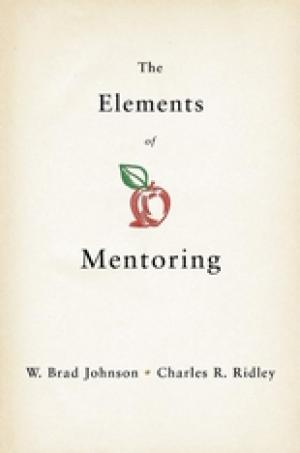
Patterned after Strunk and White's classic The Elements of Style, this new edition concisely summarizes the substantial existing research on the art and science of mentoring. The Elements of Mentoring reduces this wealth of published material on the topic to the sixty-five most important and pithy truths for supervisors in all fields. These explore what excellent mentors do, what makes an excellent mentor, how to set up a successful mentor-protégé relationship, how to work through problems that develop between mentor and protégé, what it means to mentor with integrity, and how to end the relationship when it has run its course. Succinct and comprehensive, this is a must-have for any mentor or mentor-to-be. (From the Publisher)
Getting Mentored in Graduate School is the first guide to mentoring relationships written exclusively for graduate students. Research has shown that students who are mentored enjoy many benefits, including better training, greater career success, and a stronger professional identity. Authors Johnson and Huwe draw directly from their own experiences as mentor and protégé to advise students on finding a mentor and maintaining the mentor relationship throughout graduate school. Conversational, accessible, and informative, this book offers practical strategies that can be employed not only by students pursuing mentorships but also by professors seeking to improve their mentoring skills. Johnson and Huwe arm readers with the tools they need to anticipate and prevent common pitfalls and to resolve problems that may arise in mentoring relationships. This book is essential reading for students who want to learn and master the unwritten rules that lead to finding a mentor and getting more from graduate school and your career. (From the Publisher)
The first edition of Assessing Student Learning has become the standard reference for college faculty and administrators who are charged with the task of assessing student learning within their institutions. The second edition of this landmark book offers the same practical guidance and is designed to meet ever-increasing demands for improvement and accountability. This edition includes expanded coverage of vital assessment topics such as promoting an assessment culture, characteristics of good assessment, audiences for assessment, organizing and coordinating assessment, assessing attitudes and values, setting benchmarks and standards, and using results to inform and improve teaching, learning, planning, and decision making. (From the Publisher)

Journal Issue.
Wabash Center Staff Contact
Sarah Farmer, Ph.D.
Associate Director
Wabash Center
farmers@wabash.edu