Resources
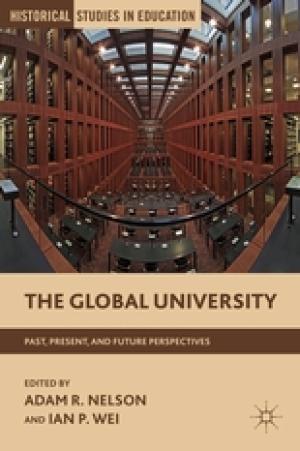
Engages a topic of pressing concern for government, business, and education leaders around the world: the race to establish 'world-class' universities. Some herald the globalization of higher education as the key to a dynamic and productive 'knowledge society.' Others worry that modern universities have come to resemble multinational corporations. (From the Publisher)
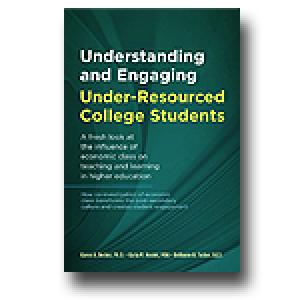
The degree to which your post-secondary school understands and supports students from poverty makes all the difference in meeting your recruitment, retention, and graduation goals. Understanding your students starts with better information about their personal experience of poverty, and about the skills and strengths they bring with them to college. Supporting your students involves creating opportunities to access a variety of resources, remedial education relevant to their lives, and fully engaged relationships inside of school and out. You'll learn to: Recognize the impact of economic class on student preparedness and educational success Build on students' existing resources, experiences, and abilities Encourage student success through curriculum design and programming Partner with communities and businesses to support academic progress Help students look beyond the classroom through service learning and civic engagement (From the Publisher)
Journal Issue.

Journal Issue.
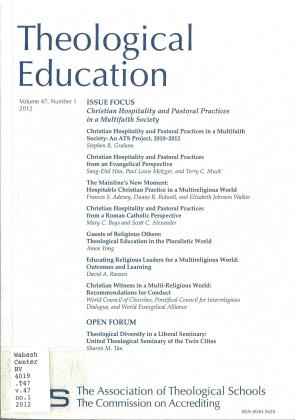
Journal Issue. Full text is available online.
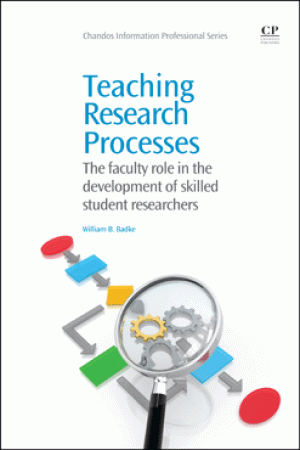
- engages the domain of teaching faculty rather than librarians only  - analyzes the reasons why the research processes concept represents a gap in academia  - focuses on research ability as a process that can be taught within disciplines  -  provides concrete examples to help faculty teach research processes while meeting existing academic goals Information literacy may be defined as the ability to identify a research problem, decide the kinds of information needed to tackle it, find the information efficiently, evaluate the information, and apply it to the problem at hand. Teaching Research Processes suggests a novel way in which information literacy can come within the remit of teaching faculty, supported by librarians, and reconceived as ‘research processes’. The aim is to transform education from what some see as a primarily one-way knowledge communication practice, to an interactive practice involving the core research tasks of subject disciplines. This title is structured into nine chapters, covering: Defining research processes; Research ability inadequacies in higher education; Research processes and faculty understanding; Current initiatives in research processes; The role of disciplinary thinking in research processes; Research processes in the classroom; Tentative case studies in disciplinary research process instruction; Research processes transforming education; and Resourcing the enterprise. The book concludes by encouraging the reader to implement the teaching of research processes. Readership: This book is intended for university professors, academic administrators, academic librarians, and students in library and Information Studies programs (From the Publisher)

Robert and DeMethra’s book, Me-Searching and Re-Search, has caught my fancy in a number of ways. The book title cleverly captures what SPN is all about—it is about self narratives (the “me-search” part) and about scholarly meaning making (the “re-search” part). This eye-catching title also illuminates the authors’ intent to turn this seemingly intimidating method of self-inquiry into something very accessible and doable. Their jargon-free language is friendly and inviting. Although they don’t intend to make their many methodological tips and tools too prescriptive, their practical suggestions provided in this guide book are, indeed, helpful and useful. I believe that Robert and DeMethra have demonstrated admirable talents as effective educators by unpacking the complex method of SPN writing into bite-sized steps. I am fully convinced that the steps will help both novices, and the experienced researcher, to reach the ultimate height of producing engaging, and scholarly significant, SPN’s. The book is also fun to read. The authors intersperse throughout their own SPN’s, pedagogical insights from their doing and teaching, and real-life stories, in order to illustrate the methodological process, challenges, and triumphs. (From the Publisher)
Teaching and Learning in the Digital Age is for all those interested in considering the impact of emerging digital technologies on teaching and learning. It explores the concept of a digital age and perspectives of knowledge, pedagogy and practice within a digital context. By examining teaching with digital technologies through new learning theories cognisant of the digital age, it aims to both advance thinking and offer strategies for teaching technology-savvy students that will enable meaningful learning experiences. Illustrated throughout with case studies from across the subjects and the age range, key issues considered include: • how young people create and share knowledge both in and beyond the classroom and how current and new pedagogies can support this level of achievement • the use of complexity theory as a framework to explore teaching in the digital age • the way learning occurs – one way exchanges, online and face-to-face interactions, learning within a framework of constructivism, and in communities • what we mean by critical thinking, why it is important in a digital age, and how this can occur in the context of learning • how students can create knowledge through a variety of teaching and learning activities, and how the knowledge being created can be shared, critiqued and evaluated. With an emphasis throughout on what it means for practice, this book aims to improve understanding of how learning theories currently work and can evolve in the future to promote truly effective learning in the digital age. It is essential reading for all teachers, student teachers, school leaders, those engaged in Masters’ Level work, as well as students on Education Studies courses. (From the Publisher)
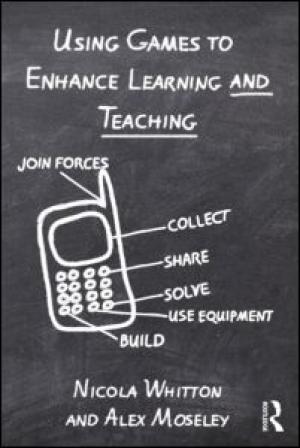
Click Here for Book Review Abstract: Using Games to Enhance Learning and Teaching provides educators with easy and practical ways of using games to support student engagement and learning. Despite growing interest in digital game-based learning and teaching, until now most teachers have lacked the resources or technical knowledge to create games that meet their needs. The only realistic option for many has been to use existing games which too often are out of step with curriculum goals, difficult to integrate, and require high-end technology. Using Games to Enhance Learning and Teaching offers a comprehensive solution, presenting five principles for games that can be embedded into traditional or online learning environments to enhance student engagement and interactivity. Extensive case studies explore specific academic perspectives, and featured insights from professional game designers show how educational games can be designed using readily accessible, low-end technologies, providing an explicit link between theory and practice. Practical in nature, the book has a sound theoretical base that draws from a range of international literature and research. (From the Publisher)
This volume collects essays and lectures of renowned scholar of religion Jonathan Z. Smith, many previously published in out-of-the-way periodicals or unavailable in print. For more than thirty years, Jonathan Z. Smith has been perhaps the most important voice of critical reflection within the academic study of religion. His essays are cited constantly, his books used in undergraduate and graduate classes. Smith has also produced a significant corpus of essays and lectures on teaching and on the essential role of academic scholarship on religion in matters of education and public policy. Many of these articles appeared in education journals, which unfortunately most academic scholars do not read; others are collected in specialist volumes of conference proceedings on Judaic Studies, for example. Many were originally delivered as keynote speeches to the AAR and other major scholarly organizations, and although scholars reminisce about hearing Smith deliver them, the works themselves are not readily available. Education is not a side issue for Smith, and his essays continually shed light on fundamental questions. What differentiates college from high school? What are the proper functions of an introductory course? What functions should a department serve in undergraduate and graduate education? How should a major or concentration be conceived--if at all? What roles should the academic guilds play in public discourse on education and on religion? Most importantly, what does it mean to say that one is both a scholar and a teacher, and what responsibilities does this entail? On Teaching Religion collects the best of these essays and lectures into one volume, along with a new essay by Smith. (From the Publisher)
Wabash Center Staff Contact
Sarah Farmer, Ph.D.
Associate Director
Wabash Center
farmers@wabash.edu