Resources
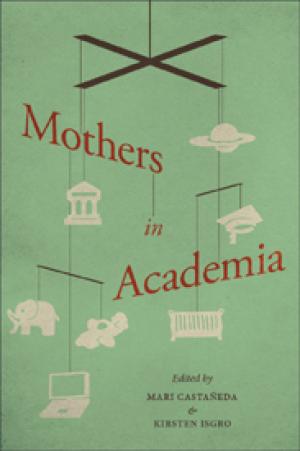
Featuring forthright testimonials by women who are or have been mothers as undergraduates, graduate students, academic staff, administrators, and professors, Mothers in Academia intimately portrays the experiences of women at various stages of motherhood while theoretically and empirically considering the conditions of working motherhood as academic life has become more laborious. As higher learning institutions have moved toward more corporate-based models of teaching, immense structural and cultural changes have transformed women’s academic lives and, by extension, their families. Hoping to push reform as well as build recognition and a sense of community, this collection offers several potential solutions for integrating female scholars more wholly into academic life. Essays also reveal the often stark differences between women’s encounters with the academy and the disparities among various ranks of women working in academia. Contributors—including many women of color—call attention to tokenism, scarce valuable networks, and the persistent burden to prove academic credentials. They also explore gendered parenting within the contexts of colonialism, racism, sexism, ethnocentrism, ageism, and heterosexism. (From the Publisher)
Journal Issue.
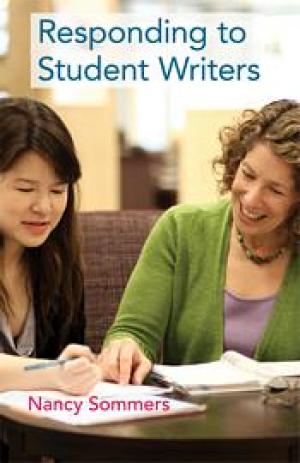
Because teachers' comments shape student writers Written from one teacher to another, Nancy Sommers’ Responding to Student Writers offers a model for thinking about response as a dialogue between students and teachers — and for thinking about the benefits of responding to writers as well as to their writing. Braddock Award–winning Nancy Sommers has taught composition and run composition programs for more than three decades; she currently teaches writing and mentors future teachers in Harvard’s Graduate School of Education. In this resource, which is based on her research and her travels to two- and four-year colleges and universities, she focuses on the roles that teacher feedback plays in writers’ development and offers strategies for moving away from responding as correcting. This is a free resource for instructors. (From the Publisher)
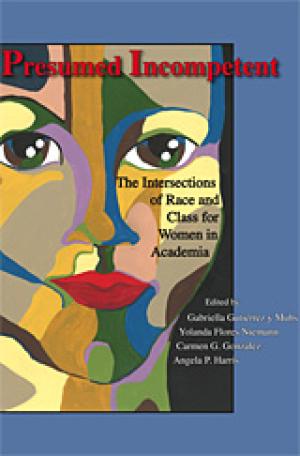
Presumed Incompetent is a pathbreaking account of the intersecting roles of race, gender, and class in the working lives of women faculty of color. Through personal narratives and qualitative empirical studies, more than 40 authors expose the daunting challenges faced by academic women of color as they navigate the often hostile terrain of higher education, including hiring, promotion, tenure, and relations with students, colleagues, and administrators. The narratives are filled with wit, wisdom, and concrete recommendations, and provide a window into the struggles of professional women in a racially stratified but increasingly multicultural America. (From the Publisher)
The study of classical Jewish texts is flourishing in day schools and adult education, synagogues and summer camps, universities and yeshivot. But serious inquiry into the practices and purposes of such study is far rarer. In this book, a diverse collection of empirical and conceptual studies illuminates particular aspects of the teaching of Bible and rabbinic literature to, and the learning of, children and adults. In addition to providing specific insights into the pedagogy of Jewish texts, these studies serve as models of what the disciplined study of pedagogy can look like. This book will be of interest to teachers of Jewish texts in all contexts, and will be particularly valuable for the professional development of Jewish educators. (From the Publisher)
National Jewish Book Award finalist in Contemporary Jewish Life and Practice category Make Yourself a Teacher is a teaching book and a book about teaching. It discusses three dramatic, well-known stories about the student and teacher Rabbi Eliezer ben Hyrcanus from the Oral Torah. The stories of R. Eliezer serve as teaching texts and models for reflection on the teacher/student relationship in the Jewish tradition and in contemporary culture, with special emphasis on the hevruta mode of Jewish learning, a collaborative process that invites the reader into a dialogue with teachers past and present. Susan Handelman considers how teacher/student relations sustain and renew the Jewish tradition, especially during troubled times. As a commentary on historical and contemporary educational practices, she asks a range of questions about teaching and learning: What is it that teachers do when they teach? How do knowledge, spirituality, and education relate? What might Jewish models of study and commentary say about how we teach and learn today? Handelman not only presents pedagogical issues that remain controversial in today's debates on education but she also brings the stories themselves to life. Through her readings, the stories beckon us to sit among the sages and be their students. Susan Handelman is professor of English at Bar-Ilan University, Israel. (From the Publisher)
In The Learning Paradigm College, John Tagg builds on the ground-breaking Change magazine article he coauthored with Robert Barr in 1995, “From Teaching to Learning; A New Paradigm for Undergraduate Education.” That piece defined a paradigm shift happening in American higher education, placing more importance on learning outcomes and less on the quantity of instruction. As Tagg defines it, “Where the Instruction Paradigm highlights formal processes, the Learning Paradigm emphasizes results or outcomes. Where the Instruction Paradigm attends to classes, the Learning Paradigm attends to students.” (From the Publisher)
Journal Issue.
One page Teaching Tactic: students work collaboratively and in role play, to understand historical agents.
One page Teaching Tactic: weekly schedule designed to encourage students to bring their questions and concerns to the subject matter.
Wabash Center Staff Contact
Sarah Farmer, Ph.D.
Associate Director
Wabash Center
farmers@wabash.edu