Resources
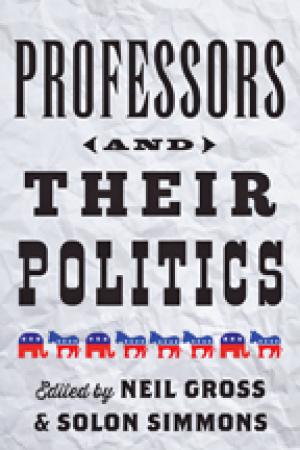
This edited volume addresses the common assumption that professors have overwhelmingly liberal or radical political views and that they have significant biases against conservative thought. Grounded in both quantitative and qualitative research, the editors suggest that the common stereotype of academic culture as hostile to political worldviews that do not fall on the leftwing of a continuum does not stand up to the scrutiny of data. Instead, their eleven chapter, method-rich book reveals the political and social thought of most individual members of the academy is, indeed, typically progressive, but that the effect of these individual worldviews on the collective environment of higher education is more nuanced. Moreover, the standard notion that so-called liberal professors discriminate against conservatives because they are conservatives does not emerge from the results of any of the contributors’ work. The backdrop for much of the book is an agreement on the part of the editors that American higher education is in crisis. This crisis involves many factors, including finances. Colleges and universities are feeling the effects of a constricting economy. Competition for students is fierce. The need for revenue is great and institutional endowments are shrinking. That some attribute the crisis in higher education to the social thought of the educators in higher education motivated this study to examine the precise nature of higher education’s social worldview. The volume’s primary orientation is the sociology of higher education and includes the sociology of intellectuals. A unifying observation is that the professoriate, as well as other elements of the academy, possesses a progressive political worldview. This worldview grows from a number of factors, including but not limited to the social class of those who enter professions in higher education. The current orientation of the academy toward progressive politics is not new and studies of it are not new, either. Gross and Simmons provide a brief survey of literature exploring the history of political and social views of academics, noting the significant presence of higher education professionals who worked in New Deal related positions in addition to their work in colleges and universities. Their book, focused on the current state of affairs, explores higher education since 2006. Professors and their Politics has value for all professionals associated with American higher education. The various studies in the book make a case for why progressive values are dominant among those who enter vocations associated with colleges and universities, as well as how these values shape research agendas, hiring practices, and treatment of students. If their conclusions are correct, and the various authors have provided data to support verifiable conclusions, the political life of the academy is a sign of its vitality, not a cause of its crisis, and the vitality of the academy includes more support for diversity of thought, especially among students, than common stereotypes assume. This volume makes an important contribution to understanding the culture of contemporary higher education.

Youshaa Patel Assistant Professor of Religious Studies Lafayette College Every translation is an interpretation. This statement is especially true with regard to the Quran, since, according to Muslims, a translation of the Quran is not the actual Quran - just one interpretation among many. The Arabic Quran contains the actual.

Cláudio Carvalhaes Associate Professor McCormick Theological Seminary One of the joys of teaching is to teach with somebody else. In my years of teaching, I have had many great experiences and I cherish each one of them very much. In past blogs I said that to teach is to create

Caleb Elfenbein Assistant Professor Grinnell College More often than not, it seems, students register for courses on Islam wanting to learn “stuff.” In a moment when the ubiquity of Islam in public consciousness is matched by general illiteracy about its history and diverse forms, these expectations are tempting. Yet if.

Tat-siong Benny Liew Class of 1956 Professor in New Testament Studies College of the Holy Cross Recent studies suggest that African American students, despite the opportunity to attend college, tend not to major in disciplines that are linked to a high income generating future, such as a STEM field; instead,.

Growing up with a father who served as the director of the service-learning experiences at a faith-based college, I heard many stories of the joys and challenges of academic and non-profit agencies trying to work together. Later in my own teaching career, similar stories emerged as I witnessed the power and problems of out-of-the-classroom learning experiences. With a clearly stated goal (12), the authors of Community Partner Guide to Campus Collaboration effectively present an orderly guide for non-academic organizations to begin to develop mutually beneficial partnerships with post-secondary institutions. Building on the premise that “effective community-campus relationships educate students and enhance communities” (4), the authors provide multiple ideas and strategies for a community group to function in partnership with a post-secondary institution. After a brief introductory chapter, the book lays out in subsequent chapters particular ways for non-profit leaders to explore and establish potential relationships with colleges and instructors. Within the opening chapters, the authors provide a useful definition of reciprocity that notes the differences between charity and solidarity (41) in community-campus relationships. The authors set a foundation on which a mutually beneficial relationship for both organizational and individual involvement in such partnerships can be constructed. The book also presents a variety of examples to explain the concepts of community-campus relationships. Building on the opening chapters, the authors outline specific steps to assist an agency coordinator in both engaging faculty and empowering students for engaged learning. Again, a variety of practical examples and creative ideas are suggested. The final chapter on evaluation helps community partners, academic instructors, and students evaluate both the impact of their work with the organization and their own personal involvement and learning through such engaged learning experiences. There is little to criticize about this book since it speaks clearly to both academic and non-academic organizations. The authors’ illustrations demonstrate a breadth of experience working within both types of organizations and their writing style is welcoming to readers who may be unacquainted with how community group and college partnerships work together to produce significant student learning outcomes. Some checklists may have provided a helpful summary, but there are other visual clues in the book to emphasize their key points and demonstrate the benefits of this educational approach. The authors are clearly convinced that “communities are stronger when campuses and community agencies collaborate because it creates knowledgeable and engaged students who give back to their communities as committed citizens long after they graduate” (108). Their manual, written specifically for helping non-academic people navigate the post-secondary world, also benefits academics interested in connecting their students to experiential learning opportunities.
Institutions of higher education can treat the life experiences of adult learners as raw student material – material that requires expert educators to transform it into knowledge. Elana Michelson questions hegemonic tendencies in higher education that often perpetuate dualism of mind versus body as well as dismissive attitudes about the value of embodied knowledge. Her argument that “professional discourse concerning experiential learning remains rooted in the disembodied Enlightenment knower” rings true in theological education as well as other areas of scholarship (38). When claims of knowledge need to be authorized in some way, the process of authorization is always embedded in power relationships. Michelson elucidates these relationships through her examination of institutional assessment of life experience for academic credit. Her book serves as a window for surveying epistemological issues of trends in higher education. Academic scholars continue to question the legitimacy of learning from experience. Michelson traces the history of the program Assessment of Prior Experiential Learning (APEL), as it originated from liberal educational ideals responding to needs of returning war veterans after World Wars I and II. College equivalency assessment and training programs met needs for “both relevance and access” (103). Similar programs were generated globally with changes in educational multiculturalism and class mobility. The need for systems that evaluate experiential learning in order to assign academic credit and professional credentials continues to be furthered by globalization. Michaelson examines more recent developments in APEL as it responds to corporate and technical pressures on higher education. Michelson enlists Alisoun, the wife of Bath from Chaucer’s Canterbury Tales, as a memorable symbol of the canny, shrewd, embodied insight that stands in contrast to the orthodox knowledge of formal scholars and clerics. The figure of Alisoun creatively questions gendered polarities of body versus mind in the history of what counts as knowledge. Alisoun’s critique of the church’s leaders has a persuasive force while questioning textual authority, misogynistic attitudes of the priesthood, and orthodoxy’s monopoly on interpretation. Michelson beautifully illustrates her argument connecting tales of old wives like Alisoun with M.M. Bakhtin’s symbol of carnival as metaphor for the “transgressive possibilities of experiential learning” and “subversive knowledges” which may pose challenges to the economic and political structures of formal education (189). Although Michelson does not address theological education directly, religious studies programs and theological schools with programs in field education and contextual learning will benefit from her study. Authorization for ministry is changing rapidly. Consider an applicant for a Doctor of Ministry program who does not have a Master of Divinity degree but has decades of pastoral experience. Experiential knowing may be valuable, but how can that value be assessed? Unfortunately, people seem capable of failing to learn from their experience, so explicating the processes that facilitate learning from experience requires more study. Institutions of higher education or authorizing bodies who oversee workplace competencies must assess knowledge in terms of preparedness to practice professional tasks. Michaelson’s study would be stronger if she directly addressed specific examples of practical challenges of assessing the worth of experiential knowledge in consistent and fair ways. However, her book makes an important and timely contribution to the discourse on learning theory and will be valuable to those in religious studies and theological education, especially regarding intersections with critical-race theory, queer theory, and feminist theory.
The pedagogical landscape of education has recently experienced a tectonic shift in terms of professional development. Once in the field, teachers seeking improvement and new ideas as to how to improve their craft, like so many professionals, used to wait for top-notch scholars to produce new research-based, paradigm-changing tomes. The thinking was that those in the trenches, those who filled kindergarten classrooms and chemistry labs across the country, were not creative enough to provide cutting-edge educational discoveries; only those who labored for a doctorate and took to the ivory towers of academia were capable of such exploration. Sadly, by the time these game-changing discoveries trickled down to the huddled masses in the faculty workroom, these ideas had already been discovered by accident and had been shared among the other faculty on the quad. Teacher’s in-service did not focus on the next great discovery but on how to share the discovery with fellow teachers. As this new wave of creative teachers began filling the gaps in higher education after proving themselves as master teachers and scholars in this area or that (and with the advent of social media), the focus kept evolving: for example, how can this idea, discovered in a chemistry classroom, be applied to the theology, composition, or social work classroom? Thankfully, Hal Blythe, Charlie Sweet, and Russell Carpenter, all writing professors at Eastern Kentucky University, have made it their mission to improve teacher effectiveness across the nation, first with their Noel Studio for Academic Creativity and now with their It Works for Me book series. In this volume, as in the previous seven volumes, Blythe, Sweet, and now Carpenter, have assembled a cadre of interdisciplinary scholars from across the country to engage in a conversation about what these teachers and administrators have found in their efforts to “flip” the classroom in an attempt to improve student learning and retention. The authors selected for this volume exhibited good ideas and were invited to share those ideas with others. Generosity, author and speaker Michael Hyatt would say, has become the new currency in learning, leadership, and life. This volume is divided into seven sections and includes an introduction and take-away-style conclusion. The sections this reviewer found of note were the opening where the flipped classroom is defined (all instructional content is found outside the classroom and classroom time is used for conversations, processing, and reflection), the sections on in-class and out-of-class assignments, and assessment. Each larger section opens with a short introduction from the editors, which is followed by a number of short essays from the contributing authors where each author or team of authors discusses their experiment with flipping the classroom. References, where applicable, have been provided. The concluding take-away section offers twenty ideas, such as never spending more than fifteen minutes on any activity, using Bloom’s taxonomy when crafting course components, engaging other faculty to get feedback on flipped assignments or course structure, and developing your own competency in technology. Overall, this is an incredibly helpful volume. Its strength is in sharing ideas that might inspire a new way of doing one assignment or offering one lecture that might increase student learning and retention. In that way, it works!

There are many important discussions happening in the academy about how to re-envision the student experience in order to provide better learning opportunities. The culture of higher education is undergoing a shift from an instruction-centered model to a learning or student-centered paradigm. These discussions are extremely significant in that they force faculty to re-evaluate and re-envision the traditional models – and ultimately lead to a more thorough and permanent education for the students. However, many of these studies are difficult since ways of applying these new theoretical models is often not immediately obvious. In Building a Pathway for Student Learning, Jones, Noyd, and Sagendorf have compiled a comprehensive and effective workbook addressing this lack. The workbook represents the results of a faculty development course design retreat that the authors have conducted for the last several years. This is not a book about course design, it is a systematic workbook giving direction for designing a learning-centered course in any discipline. At every stage in the course design process, the reader is reminded that, “our success ultimately comes not from what we as instructors are able to do but from what our students learn as a result of taking our courses” (9). To this end, the following pathway is suggested for effective course design. First, know the students you will teach. Second, identify the course learning goals. Third, build a summative assessment to determine the extent to which students have accomplished the learning goals. Fourth, develop a list of learning proficiencies that are required to successfully accomplish the learning goals, and then sequence them. Fifth, create learning experiences that will allow students to build and develop the central proficiencies, and to accomplish the learning goals. Sixth, construct several formative assessments, and use them to evaluate student progress toward the core proficiencies, which will encourage student improvement. After going through each of these stages, the authors lead the reader through two synthetic activities: creating a course poster and syllabus. The course poster assembles the learning experiences to be utilized in class, the proficiencies that will be developed, the way these proficiencies will be assessed, and the goal of the class, in order to ensure coherence and alignment within the course, and to transparently display the structure of the course to students. The syllabus is envisioned as a tool to demonstrate the learning-centered design of the course, not just the course policies and assignments. Each of these synthetic steps is aided by the use of the companion website. The workbook has much to commend. First, each chapter contains a helpful and thorough survey of the more significant research on the topic under consideration. Second, the system suggested to redesign courses is logically ordered, and effective. Third, at several key points the authors suggest proactive ways of finding evaluation of stages in the course design from colleagues. Most importantly, the authors recognize that effective course design has to be a flexible system; they do not claim to have all the answers for how every course can best be structured, rather they provide a series of guiding questions so that individual instructors can think through how to order their classes so that they effectively take students from wherever they begin, to the acquisition of central proficiencies and the accomplishment of learning goals, whatever the discipline. For these reasons, this book should be essential for anyone developing or revising courses towards a learning-centered model.

Some academic disciplines such as law and medicine have a long history of using case teaching as a pedagogical approach while other disciplines seldom employ case teaching. Espen Andersen, associate professor in the department of strategy and logistics at the Norwegian Business School, and Bill Schiano, professor of computer information systems at Bentley University, drawing from their experience of using case teaching in business schools, demonstrate the positive impacts case teaching can bring and provide a practical guide for instructors who would like to adopt this pedagogical approach. As readers move through the content, they will discover that the book covers topics broader than case teaching and offers rich insight into how classroom discussions can be effective toward student participatory learning development. As indicated in the title, Teaching with Cases is a practical guide. It is not only a practical guide for teaching with cases, but also covers basic teaching skills and techniques. These include: how to develop content; writing a syllabus; planning a class session; using guest speakers; employing role play; designing group discussions, assignments, and grading rubrics; debriefing a course and using feedback; handling small details such as seating arrangement; using technology; managing breaks and classroom behaviours; and using the white/blackboard effectively. The book is a comprehensive manual for teachers, new or experienced. While the comprehensiveness of the book is to be commended, more in-depth insights about case teaching are lacking as the book wanders around discussion-based teaching techniques rather than focusing on how to use cases effectively. The most helpful piece on actual case teaching is chapter 6, “Quantitative and Technical Material,” where the important value of case teaching is spelled out: “to foster an intuitive understanding of a situation and to learn to think and make decisions like a manager” (174).The best illustration on a teaching case (Dell computer’s build-to-order) is also found in this chapter. More guidance on how to craft out an effective teaching case to be used in both classroom and online discussions would be helpful. While I appreciate the authors’ sensitivity to language and culture as an issue in case teaching and an entire chapter devoted to addressing content and classroom dynamics such as gesture, custom, vocabularies, and so forth, the authors seem to generalize language and culture by national identities or geographical boundaries and fail to recognize the particularities and diversity with a culture. For example, Chinese students from Taiwan, Hong Kong, and mainland China have different cultural values and educational systems. Hence, their understanding of what connotes sound educational practices will vary as well. Even within those three localities, diverse expressions of customs and norms can be observed. To assume all Asian students think and behave the same way is problematic. The lack of a strong conclusion that ties it all together is a disappointment, especially since the book covers such a broad range of teaching skills and techniques. Overall, Teaching with Cases is a helpful guide for instructors, particularly those who are interested in engaging students in participatory learning. Readers may also find additional supplementary materials for this book online at http://academic.hbsp.harvard.edu/teachingwithcases.
Wabash Center Staff Contact
Sarah Farmer, Ph.D.
Associate Director
Wabash Center
farmers@wabash.edu