Resources
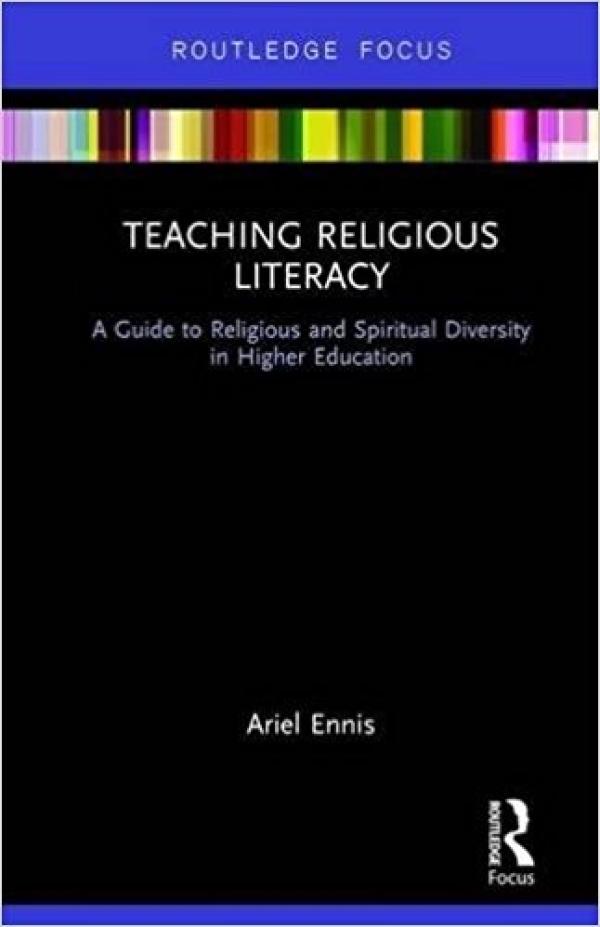
Ariel Ennis, Assistant Director and Senior Multifaith Educator at the Of Many Institute for Multifaith Leadership in the Office of Global Spiritual Life at New York University, has authored an important contribution to a burgeoning literature on campus-based interfaith and interreligious outreach. Noting that diversity and inclusion initiatives on American campuses frequently address race, sexuality, and gender while ignoring religious identity, Ennis reports on efforts at NYU to create a center to support spiritual life. Special attention is given to the development of a “Faith Zone” curriculum that trains leaders for enhanced multifaith encounters. Ennis analyzes a variety of extant approaches to cross-cultural religious and spiritual experiences, looking at intended outcomes of different programs. Focusing on the concept of “religious literacy,” he describes a framework for the NYU workshops on spiritual diversity that supports religious literacy initiatives. Included in the book is the Faith Zone curriculum and rubrics drawn from the AACU (Association of American Colleges and Universities) VALUE rubrics that are used for post-workshop outcomes assessment. He shares data from these assessments in order to demonstrate the impact on campus of the religious literacy curriculum. The book closes with the author’s reflections on how Faith Zone workshops could be offered on different types of campuses (public/private, religious/secular) and with his recommendations for successfully meeting challenges emerging from the workshops. Campus religious literacy initiatives that Ennis advocates embrace the question: Can we teach people to have more productive conversations about religion and spirituality in diverse settings? Using the definition of religious literacy developed by Dianne Moore of the Religious Literacy Project at Harvard Divinity School, Ennis answers this question affirmatively, setting four outcomes for the interfaith curriculum. Workshops will (1) enhance participants’ knowledge of historic and contemporary interconnections of religion with cultural, political, and social life; (2) embrace an ecumenical orientation that offers participants firsthand experience in exploring religio-cultural boundaries; (3) promote self-awareness about the intersections of participants' religio-spiritual identities with larger social forces; and (4) encourage participants' commitment to apply their new found religious literacy through practical projects that bridge intercultural divides. In contrast to Eboo Patel’s portrait of a fraught relationship between interfaith outreach and religious studies programs (https://www.wabashcenter.wabash.edu/scholarship/interfaith-leadership-a-primer/), Ennis’ book points to positive implications for partnerships on campus between religious studies programs and interfaith outreach. Similarities between Faith Zone outcomes and learning outcomes/assessment of the religion major on many campuses suggest productive cross-fertilization. Students could sustain the long-term impact of the workshop outcomes, adding depth and breadth, through coursework in religious studies grounded in similar learning outcomes. In complementary fashion, religious studies majors could apply learning in the major outside the classroom, enhancing their resumes, through interfaith internships: as graduates of Faith Zone training, they could lead workshops on religious literacy and develop and lead associated campus programming.

What’s a Catholic College? I grew up agnostic and converted to Islam when I was eighteen. A lifetime later, I now teach at a Catholic, Jesuit, liberal arts college. Like many religious studies educators, I continue to mull over questions about the intersections of identity, metaphysics, and socio-politics. So, when I began working at Le Moyne College, I wondered what kinds of encounters with religion my new position would have in store. I was especially curious because before coming to Le Moyne, I had taught only at state institutions (in California and Tennessee). Since joining the faculty at Le Moyne, I have engaged in a number of on- and off-campus mission-related programs, and these programs have raised a number of questions for me about what it means to teach where I teach: What is Catholic education? What is Jesuit education? To what extent can non-adherents of a tradition teach or study within an institutional context that espouses a particular tradition? My experience has shown me that by deepening my engagement with the Jesuit mission of the college I am better able to serve my students, and even better understand my own location in the pluralistic landscape of higher education. As Amir Hussain (Loyola University, Marymount), former editor of the Journal of the American Academy of Religion (JAAR) and current faculty member at a Jesuit institution writes in his “Editor’s Note” for the JAAR in 2011: “I wonder what the members of the National Association of Bible Instructors (the forerunner of the AAR) would have thought of their journal one day being edited by a Canadian Muslim scholar of Islam teaching at a Catholic university.” I appreciate Hussain’s playful gesture here because it underscores how intermingled religious studies pedagogy can be. That his self-conscious reflection on the context of religious and national pluralism makes its way into the flagship journal of the field is a positive sign for me, especially in a world of growing Islamophobia. As someone who studies and teaches about a particular religious tradition (Islam), I acknowledge the value of assigning categories, but this has its limitations and one’s religious identity is frequently a poor indicator of what people actually believe. (I write more on this in “Muslim in the Classroom: Pedagogical Reflections on Disclosing Religious Identity,” published in Teaching Theology and Religion [2016].) To illustrate this, I often invite my students to dig deep by asking ten Catholics to describe what their traditions mean to them, or to describe Who or What God is. Will they find ten different answers? I think so. As I’ve tried to figure out what Catholic education means to people, I too have encountered a range of voices. Engaging the Jesuit Mission Because my undergraduate and Ph.D. programs were both at state schools, I didn’t know to what extent I might engage Jesuit-related professional development opportunities at Le Moyne; I had no context to compare. Fortunately, I’ve been encouraged by the impact of mission-related workshops, conferences, and study groups on my intellectual development as a teacher, scholar, and citizen. In the broadest sense, teaching as a Muslim at a Catholic college reminds me of the importance of interreligious encounters and helps me, I hope, model and live the kinds of interreligious encounters that I encourage for my students. Conferences like “Collegium”—an annual weeklong colloquy on Catholic higher education—and “Islam at Jesuit Colleges and Universities,” at the University of San Francisco in 2015, have offered me a window into live questions and challenges that diverse educators at Catholic institutions face. I have the opportunity to reflect further on the topic at an upcoming conference at Seattle University, where I’ll participate in a panel entitled “Islam at Jesuit Institutions: Inter-religious Dialogue, Social Justice, and Campus Life.” Despite my own positive experiences encountering and engaging Jesuit education on and off campus, challenges of language and stereotypes still pervade the minds of students as well as faculty; think, for example, about the debates on the relationship of religious studies to theology. My department offers religious studies as well as theology courses, so my attention to these debates has heightened in many ways. To illustrate the disparities in thinking about religiously affiliated institutions, let me conclude this blog post with two brief anecdotes—one about faculty and one about students. Confusing Categories Faculty story: A job candidate for a position at Le Moyne once expressed to me that the school attracted her because it was “faith-based.” As I learned more about what she meant, it became clear that the candidate did not fully understand the context of Jesuit education or the particular institution at which she sought employment. It would be untrue to say that Jesuit education didn’t have a “faith-based” component, but looking around the United States, for example, what this component means to Jesuit schools and their faculty, broadly speaking, is quite different than what it means for, say, Liberty University or any number of “faith-based” institutions. Regarding my argument about religious identity as a poor indicator of, well, a lot of things, I think this becomes straightforward when one examines the range of “faith-based” institutions across the country. (She didn’t get the job.) Student story: A linguistic trope that I often press my students to explain is when they refer to someone as “super-Catholic.” Many of my students, apparently, have a “super-Catholic” member of their family. “Is what you mean,” I try to gently provoke them, “that your uncle is kind of obnoxious and not too interested in learning about diverse opinions?” Although students may not have this blunt characterization in mind when explaining their family member, they often agree with my interpretation. I’ll follow up: “Well, what about your Jesuit professors at Le Moyne—who spent over a decade training to enter the order? Do you consider them super-Catholic?” (If anyone connected to the Le Moyne community is super-Catholic, I should think it would be the Jesuits.) At this point, I suspect I succeed in slightly confusing students and problematizing the imprecision of “super-Catholic” code language. Indeed the institutional context aids me here in guiding students through a teachable moment about word choice and the assumptions we hold about various traditions. Making Context work for Students To help students understand the mission of their institution, I incorporate Le Moyne’s mission statement into some course assignments to invite student reflection on the raison d’etre of their liberal arts experience. Unsurprisingly, I encounter a range of responses. Some students, for example, don’t know that Jesuit means Catholic. At the other end of awareness, a Catholic religious studies major once shared something very perceptive with me: It’s easy to be a student at Le Moyne and pretty much ignore its Catholic-ness, but at the same time it’s also easy to engage with that part of the school if you choose to go that route. To further help my students reflect on institutional context and best appreciate the purpose behind their required courses (all Le Moyne students must take any religious studies class as part of the core curriculum), I briefly share at the beginning of the semester that I’m a convert, but that our course will ask us—professor included—to approach material from a position of epoche (suspension or bracketing of personal convictions). I find that flagging my positionality (while leaving its particulars undefined) as well as our methodological approach signals to my students that no one is out to convert them. (Although if I were out to convert them, wouldn’t it be odd that a Catholic hired someone to convert its students to Islam? What would that even mean—theologically, logistically?) Although I rarely make reference to my own Muslim identity after the first week of class, my courses on Islam focus on issues of race and privilege, so I know my students cannot escape the fact that their teacher is a white convert. As one student recently wrote in an anonymous feedback activity, “When I tell my sisters I have a White professor for this class, they are mind blown.” In conclusion, I consistently find that my typical 18-22-year-olds students appreciate the vibe of the institution, but they’re not necessarily convinced it’s because of its Jesuit Catholic heritage—even if I’m convinced that the institution’s affiliation affects students more than they might suspect. I also find that students tend to appreciate that a Catholic institution would offer classes about all sorts of different religions (as Le Moyne does). For many reasons, including a curriculum that values courses on Islam, I—and I think most of my students as well—consider Le Moyne a super Catholic college. Perhaps even a super-Catholic college.
This collection highlights the depth and breadth of interest in the historical Jesus across various forms of higher education. Editor Zev Garber has done an outstanding job of assembling high quality scholar-teachers to explicate their framework for understanding Jesus in his social-historical setting. What makes the volume noteworthy for a faculty teaching theology and religion, however, is the reflection on how to teach this important subject in ways that are pertinently positioned for a variety of student audiences. Taken as a whole, the volume answers Rudolf Bultmann’s question, “Can there be exegesis without presuppositions?” with a resounding “no.” Each contributor clearly presents their own position, the background of their institutional context, and assumptions that surround the teaching of their group of students. The collection is made up of twenty shorter essays and full comment on each cannot be made here. The first part of the volume examines teaching and student engagement from a variety of institutional contexts – primarily undergraduate, but including a rabbinical school and a Christian seminary. Further marks of delineation are private versus public; Protestant, Jewish, Catholic; and even a public community college. Some contributors function both in academia as well as in the training of religious leaders, formally or informally. Pedagogy is presented and explained, along with reflection on student questions, reactions, and participation in the learning process. The underlying purpose in doing this teaching work is to increase fruitful interfaith dialogue. The second section examines specific issues in teaching the historical Jesus – often these are difficulties encountered, with solutions suggested (for example, the use of art or cinema; the nature of Judaism and Jesus; the extended turn toward later Christian terms and theology; the use of gospel materials in reconstruction; clarity on the “parting of the ways”). The final section consists of four technically positioned essays about Jesus’s Jewish background and his roles within local, pan-Mediterranean, and larger political contexts of his society (who was Jesus among other males, the Pharisees, and political seditionists?). If readers of Reflective Teaching believe that good teaching is enhanced by “good conversations about teaching,” then this volume is a gold mine. Garber has directed the contributors to be transparent about themselves, their contexts, and their students. This allows us to contrast them to our own pedagogies, experiences, expectations, and accomplishments or difficulties. In addition, we can be reminded that our own contexts may be busy and focused to the extent that we are unaware of or inattentive to the differing contexts and perspectives of colleagues that both warrant our notice and our conversation – thus increasing our respect, tolerance, civility, and openness to dialogue. And because much of the discussion in this book revolves around students, we have an opportunity to see the variety of perspectives that we might one day engage in the classroom ourselves. I highly recommend this book for those who teach early Christianity or introductory courses in which the historical Jesus is a significant subject of inquiry.
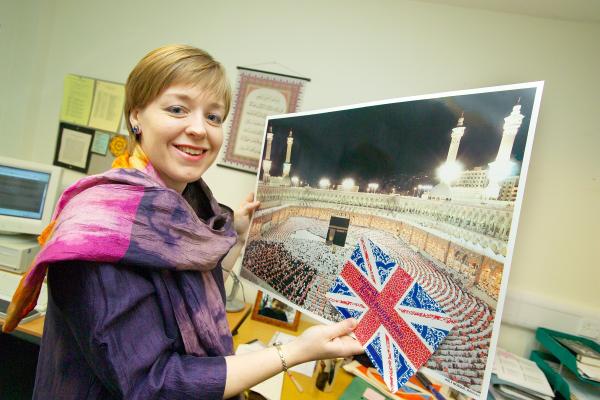
Sophie Gilliat-Ray Director Centre for the Study of Islam in the UK Cardiff University I ended my last blog entry by noting the value of inter-religious relationships formed among students learning about Islam in the higher education environment. Continuing with this theme, one of the consequences of this mixed-faith, or...
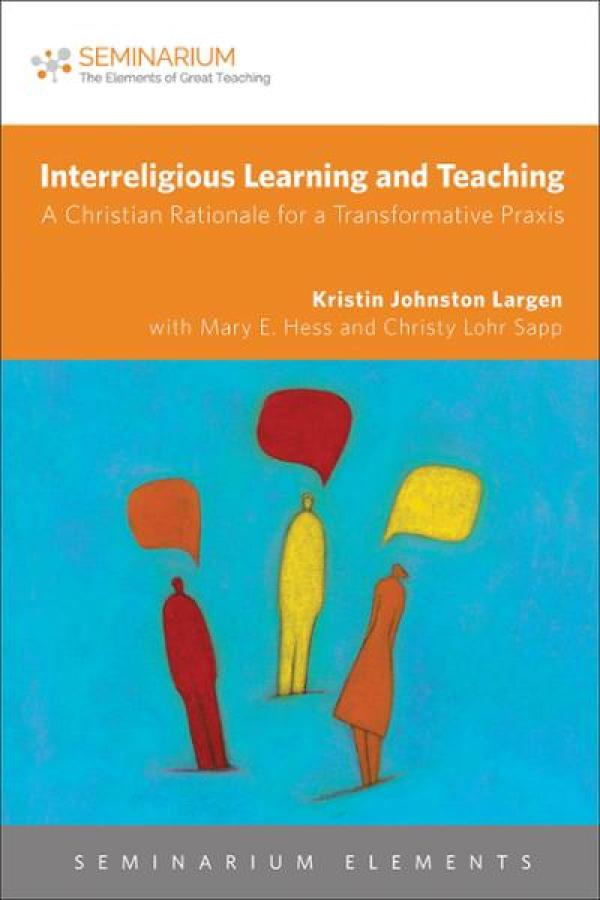
Published in the Fortress Press series, “Seminarium: The Elements of Great Teaching,” this affordable, concise volume is targeted for Protestant seminary professors in particular but will also be of value to those working in Christian higher education and ministry, more generally. The teacher-friendly format features three chapters of text by K. Johnston Largen, punctuated by sequentially numbered, stand-alone text boxes of “Praxis Points” by C. Lohr Sapp, and responses to each chapter and an epilogue by M. E. Hess. The text offers many useful resource references including texts, websites, and video clips. Quick Response codes intersperse the text and the relevant URLs are also provided in footnotes. The first chapter presents four specific examples of interreligious experience relating to Hinduism, Islam, Buddhism, and Judaism, in order to demonstrate the urgent and practical importance of interreligious education and dialogue. The second chapter offers a theological rationale for such learning drawing upon insights of comparative theology. The third chapter suggests expected outcomes and pitfalls, strategies for including interreligious learning within a theological curriculum, and considerations for assessing transformative praxis for students, faculty, and institutions. The format highlights the richness of collaborative work that coheres well throughout the volume yet offers distinct contributions by each authorial voice, modeling the value of dialogue in its overall presentation. Theological references are primarily Lutheran and Roman Catholic but also model dialogue within Christian diversity. A further dialogue which informs all aspects of this text involves pedagogical scholarship, particularly literature associated with adult learners. Each author demonstrates pedagogical depth and writes in a personal, accessible, and occasionally humorous tone. Since the authors emphasize the importance of meeting students where they are and structuring learning opportunities with this in mind, a great deal of attention is paid to resistance and fears some Christian students continue to have toward learning about other religious ways and practices. Readers who are not actively involved in communities or educational settings that reflect this tension and ambivalence may be impatient with the introductory nature of the volume. The authors write to convince and inform those who are beginning or seeking to encourage others to begin this type of transformative praxis.