Resources
Hugh Heclo's recent book On Thinking Institutionally (Paradigm Publishers, 2008) analyzes changes that have taken place in the past half century in how North Americans tend to think and act in institutions. The volume is receiving particular attention as it can be applied to higher education and to religious denominations, and so deserves consideration by those who teach in theology and religious studies. At an October 2009 conference, The Wabash Center hosted a lively discussion of Heclo's volume among invited religion and theology scholars, which resulted in the present compilation of four short responses to the book. What was and is clear from these responses is that while Heclo has identified a crucial issue, his analysis and prescription leave important theoretical and practical questions untouched. Indeed part of the energy around the discussion of the book flowed from the ways in which his lack of attention to social class, gender, race, and age circumscribed his ability to robustly describe and diagnose the challenge that gave rise to his book. In order to orient readers to the volume and discussion of it, the "Conversation" begins with a descriptive review of the book.
Short tribute to Bill Placher, as teacher, on the occasion of a panel of AAR Teacher of the Year Award recipients.
Reflective practice has moved from the margins to the mainstream of professional education. However, in this process, its radical potential has been subsumed by individualistic, rather than situated, understandings of practice. Presenting critical perspectives that challenge the current paradigm, this book aims to move beyond reflective practice. It proposes new conceptualisations and offers fresh approaches relevant across professions. Contributors include both academics and practitioners concerned with the training and development of professionals. Definitions of reflection (which are often implicit) often focus on the individual's internal thought processes and responsibility for their actions. The individual - what they did/thought/felt – is emphasised with little recognition of context, power dynamics or ideological challenge. This book presents the work of practitioners, educators, academics and researchers who see this as problematic and are moving towards a more critical approach to reflective practice. With an overview from the editors and fourteen chapters considering new conceptualisations, professional perspectives and new practices, Beyond Reflective Practice examines what new forms of professional reflective practice are emerging. It examines in particular the relationships between reflective practitioners and those upon whom they practise. It looks at the ways in which the world of professional work has changed and the ways in which professional practice needs to change to meet the needs of this new world. It will be relevant for those concerned with initial and ongoing professional learning, both in work and in educational contexts. (From the Publisher)
The editor of Teaching Theology and Religion facilitated this reflective conversation with four teachers who recently moved from undergraduate institutions to seminaries and divinity schools. Three major themes emerge in the conversation: (1) developing their pedagogical craft in undergraduate settings made them better teachers in their new contexts; (2) they moved, in part, to achieve a "better balance" between teaching and scholarship, and while this was generally achieved it was manifest in unexpected ways; (3) the communities or publics among whom and on behalf of whom they engage in broader service shifted in ways that have effected both their scholarship and their teaching; and (4) the move to a new teaching context enhanced their professional lives because they were able to consider their own visions of career in relation to the mission of their new institutions.
David Brooks discusses On Thinking Institutionally in a recent column. Read it here! David Brooks Column A brilliant look at institutions as popular as professional sports and as austere as the Supreme Court, all through the lens of what it means to "think institutionally." The twenty-first-century mind deeply distrusts the authority of institutions. It has taken several centuries for advocates of "critical" thinking to convince Western culture that to be rational, liberated, authentic, and modern means to be anti-institutional. In this mold-breaking book, Hugh Heclo moves beyond the abstract academic realm of thinking "about" institutions to the more personal significance and larger social meaning of what it is to "think institutionally." His account ranges from "respect for the game" of baseball to Greek philosophy, from twenty-first-century corporate and political scandals to Christian theology and the concept of "office" and "professionalism." Think what you will about one institution or another, but after Heclo, no reader will be left in doubt about why it matters to think and act institutionally. What do these things have in common? (From the Publisher)
Women professors of educational administration share their personal stories of being female firsts. (From the Publisher)
Your graduate work was on bacterial evolution, but now you're lecturing to 200 freshmen on primate social life. You've taught Kant for twenty years, but now you're team-teaching a new course on “Ethics and the Internet.” The personality theorist retired and wasn't replaced, so now you, the neuroscientist, have to teach the "Sexual Identity" course. Everyone in academia knows it and no one likes to admit it: faculty often have to teach courses in areas they don't know very well. The challenges are even greater when students don't share your cultural background, lifestyle, or assumptions about how to behave in a classroom. In this practical and funny book, an experienced teaching consultant offers many creative strategies for dealing with typical problems. How can you prepare most efficiently for a new course in a new area? How do you look credible? And what do you do when you don't have a clue how to answer a question? Encouraging faculty to think of themselves as learners rather than as experts, Therese Huston points out that authority in the classroom doesn't come only, or even mostly, from perfect knowledge. She offers tips for introducing new topics in a lively style, for gauging students' understanding, for reaching unresponsive students, for maintaining discussions when they seem to stop dead, and -yes- for dealing with those impossible questions. Original, useful, and hopeful, this book reminds you that teaching what you don't know, to students whom you may not understand, is not just a job. It's an adventure. (From the Publisher)
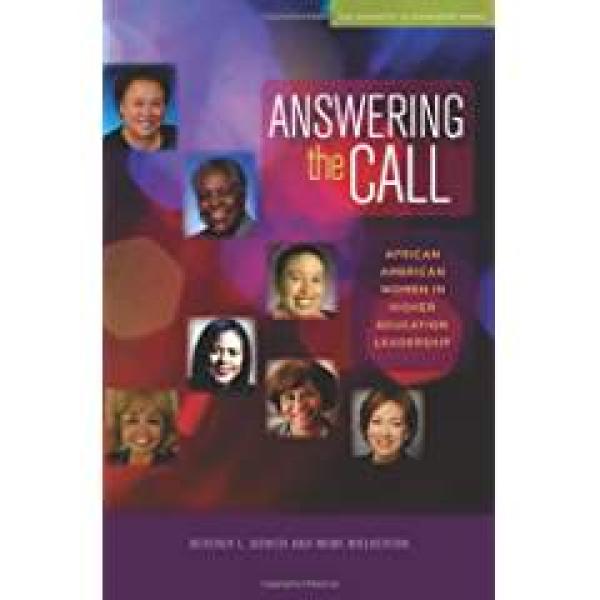
Although much has been written about leaders and leadership, we unfortunately know little about women, particularly minority women, who fill this particular role. This book the second in a series that explores women leaders in different contexts presents the stories, and the reflections on their paths to leadership, of seven African American women. Five are, or have been, college presidents; three have devoted a good portion of their lives to leadership in higher education policy at state and/or national levels. Each has been the first woman, or first African American, or first African American woman in one or more of the positions of authority that she has held. Along the way, they have overcome the double bind of sexism and racism that can inhibit the professional attainment of African American women, particularly as they move toward the top of their professions. Although their pathways into leadership are different, definite similarities in their experiences, values, and beliefs emerge. Their values took root in the 1960s, a time of strong cohesion in the Black community, a time during which African Americans and women made great strides toward equality. They recognize that they owe their strength to the confidence and sense of empowerment instilled in each of them by parents and early role models. Several of them believe that their leadership skills were born out of their childhood experiences. Grateful for the support they have received, these women leaders express a need to give back to those communities that nourished their growth and leadership of which this book is a manifestation. At a time when national demographic dataindicate that a significant turnover in college leadership is about to occur presenting increased opportunities for women and minorities these African American women leaders hope that the strategies they describe, the insights they impart, the experiences they recount, and, most of all, the passion they have sustained for the betterment of and greater inclusiveness in higher education, will inspire the next generation of women to answer the leadership call. The African-American Women Leaders Covered in this Book: Debra Austin, Lois Carson, Marvalene Hughes, Yolanda Moses, Beverly Daniel Tatum, Jerry Sue Thornton, Belle S. Wheelan. These women exude strength and self-confidence. They each hold the belief, as Belle Wheelan puts it, that "with a little heart and a lot of learning I can do anything". (From the Publisher)
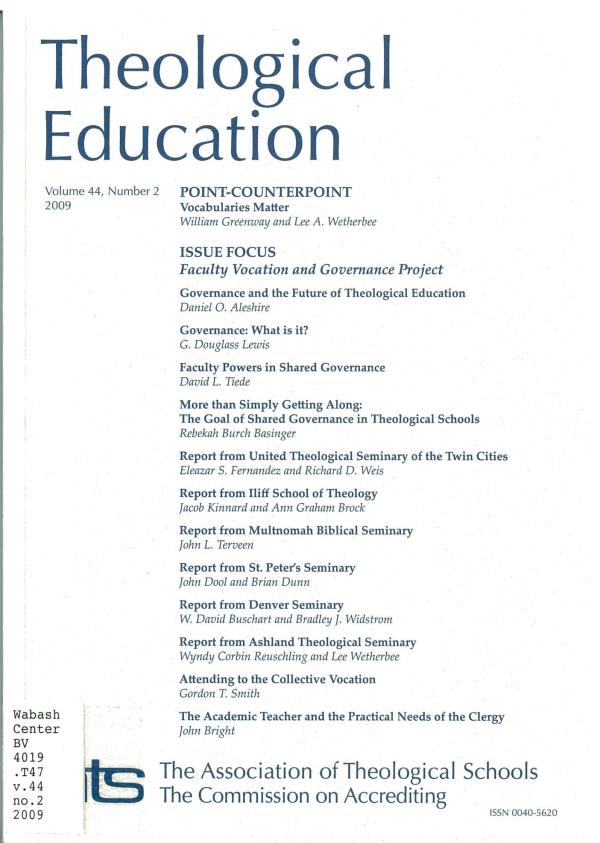
Journal Issue. Full text is available online.