Resources
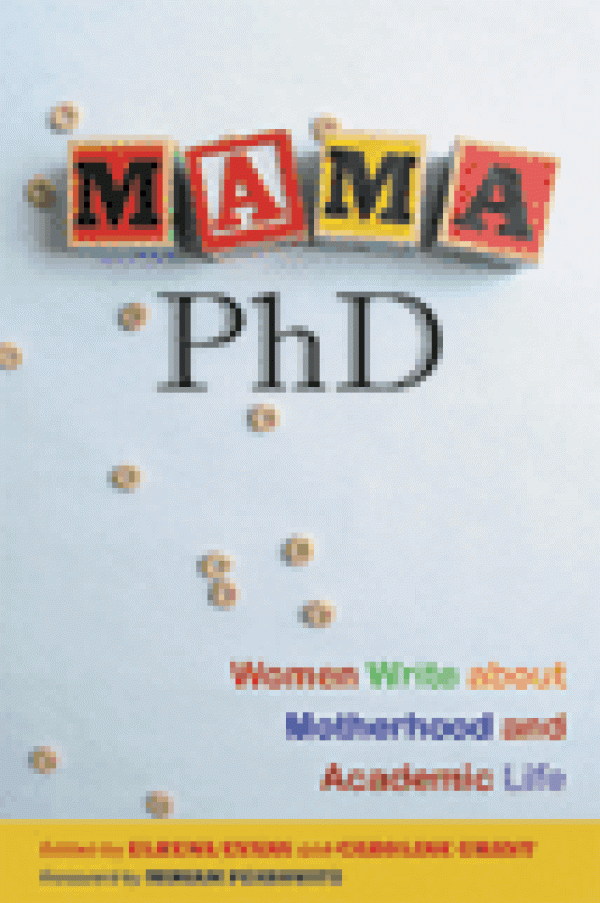
Every year, American universities publish glowing reports stating their commitment to diversity, often showing statistics of female hires as proof of success. Yet, although women make up increasing numbers of graduate students, graduate degree recipients, and even new hires, academic life remains overwhelmingly a man's world. The reality that the statistics fail to highlight is that the presence of women, specifically those with children, in the ranks of tenured faculty has not increased in a generation. Further, those women who do achieve tenure track placement tend to report slow advancement, income disparity, and lack of job satisfaction compared to their male colleagues. Amid these disadvantages, what is a Mama, PhD to do? This literary anthology brings together a selection of deeply felt personal narratives by smart, interesting women who explore the continued inequality of the sexes in higher education and suggest changes that could make universities more family-friendly workplaces. The contributors hail from a wide array of disciplines and bring with them a variety of perspectives, including those of single and adoptive parents. They address topics that range from the level of policy to practical day-to-day concerns, including caring for a child with special needs, breastfeeding on campus, negotiating viable maternity and family leave policies, job-sharing and telecommuting options, and fitting into desk/chair combinations while eight months pregnant. Candid, provocative, and sometimes with a wry sense of humor, the thirty-five essays in this anthology speak to and offer support for any woman attempting to combine work and family, as well as anyone who is interested in improving the university's ability to live up to its reputation to be among the most progressive of American institutions. (From the Publisher)
Researching and Teaching Social Issues: The Personal Stories and Pedagogical Efforts of Professors of Education is comprised of original personal essays in which notable teacher educators delineate the genesis and evolution of their thought and work vis-a-vis the teaching of social issues. In relating their personal stories, the authors were asked to discuss among other issues those individuals and/or scholarly works that have most influenced them and how, their own aspirations in the field, the frustrations they have faced, their perceptions of the field, their major contributions, and their current endeavors. Our goal was that each and every story be as informative, instructive, and engaging as possible. We believe that readers will be thoroughly engaged as they read the stories of these individuals—stories that are inspiring, filled with passion, and reflective in nature. We also believe that readers will gain unique pedagogical insights into the field and ample food for thought. The individuals selected for inclusion in the book dedicated a great amount of time, thought, energy, and commitment to creating powerful and pedagogically sound ways to teach about social and/or controversial issues. Many have done so for well over forty years, and have been among the strongest advocates vis-à-vis the place social issues have in the extant curriculum and beyond. (From the Publisher)
The article discusses associate professors in the U.S., focusing on their overall happiness and attitudes related to their positions. The article cites a study conducted by the Collaborative on Academic Careers in Higher Education at Harvard University which provides statistics related to the job satisfaction of associate professors in areas such as leadership, collaboration, and workload. The article explores the tenure track process for college teachers, notes that few personal and professional services are offered to mid-career professors, and provides comments from various associate professors including Judith C. Amburgey-Peters, Karen L. Kelsky, and Margaret Soltan.
Twenty-two essays explore topics such as feminism in the liberal arts disciplines; the relationship of the liberal arts to the larger university; the costs and rewards for women in administration; the corporatization of university campuses; intergenerational and transcultural tensions within feminist communities; balancing personal life with professional aspirations; the relationship of feminism to cultural studies; women, social justice, and the liberal arts. Not Drowning But Waving is a welcome progress report on the variety of feminisms at work in academe and beyond. It provides crucial insights for university administrators, faculty, and literate non-specialists interested in the Arts and Humanities. (From the Publisher)
The contributors to this inspiring anthology meet the challenge that everyone faces: that of becoming a whole person in both their personal and professional lives. John C. Haughey, SJ, has gathered twelve professionals in higher education from a variety of disciplines—philosophy, theology, health care, business, and administration. What they have in common reflects the creative understanding of the meaning of "catholic" as Haughey has found it to operate in Catholic higher education. Each essay in the first six chapters describes how its author has assembled a unique whole from within his or her particular area of academic competence. The last six chapters are more autobiographical, with each author describing what has become central to his or her identity. All twelve are "anticipating an entirety" with each contributing a coherence that is as surprising as it is delightful. (From the Publisher)
Analyzes the spiritual journey of a student affairs practitioner and scholar. Experience gained by the practitioner in educating graduate students; Description of spiritual principles that guided the life of the practitioner; Contribution of the practitioner to student development.
During the past three years more than 80 scholars, students, and educational leaders have participated with the Higher Education Research Institute in an extended series of dialogues about issues of spirituality, authenticity, meaning, wholeness, and self-renewal in higher education. These dialogues explored issues related to: achieving a greater sense of community, spirituality, and shared purpose in higher education; what are the causes of the divisions and fragmentation experienced by many academics in their institutional and personal lives; what it means to be authentic, both in the classroom and in dealings with students; and what disconnections higher education is experiencing within and in relation to the larger society. Through personal narratives the monograph explores expressions of spirituality, as well as obstacles to and facilitators of spiritual development; value conflicts; personal authenticity; sources of stress, including time pressures, competition between work and family life, research and publication, administrative responsibilities, students and teaching, tenure and peer review, and institutional climate; effect of stress; coping with stress; and sources of renewal. The monograph concludes with a brief review of ongoing and further work on spirituality in higher education. Appended are letters of invitation, the interview protocol, and a list of committee members. (From the Publisher)
Wisdom or questing to know God and the world evokes fear through case studies of the controversial Reimagining Conference and the race related responses to the O. J. Simpson verdict, the fear of knowing God (which included the fear of questioning dominant metaphors of God) and the fear of knowing ourselves are explored. From this analysis, a view of wisdom is proposed and also an approach to education that inspires and encourages people to seek to know and respond to God and the world.