Resources
Before you reconcile yourself to the idea that excellence in teaching and research are mutually exclusive, consider the similarities between the two endeavors.
I had absolutely no idea how to shift from the role of student to teacher. The School offered no guidance, apparently expecting me to know by osmosis how to teach.
Students deserve great teachers and learning to become a great teacher is a lifelong journey. On Becoming a Teacher guides both the new and experienced teacher through the exhilarating process of learning to educate students in a way that makes a lasting impact on their lives. Dr. Kearney leads the reader through the process of understanding what lies at the foundation of great teaching, loading each essay with ready-for-classroom use applications and challenging ideas. This book is designed to encourage the reader to think deeply about all aspects of education, while instilling, or rekindling, the excitement, enthusiasm, and teaching excellence shared by all great teachers. Written in conversational essay form and supplemented with discussion and reflection questions, this brief book would make an ideal classroom text for student teaching and education seminars. Whether you aspire to teaching excellence at the elementary school, middle school, high school, or collegiate level, On Becoming a Teacher is a must read. (From the Publisher)
Personal, affirming but critical self-reflection on the evolution of a personal teaching style.
What is a "biblical scholar"? Stephen D. Moore and Yvonne Sherwood provide a thoroughly defamiliarizing and frequently entertaining re–description of this peculiar academic species and its odd disciplinary habitat. The modern—and —biblical scholar, they argue, is a product of the Enlightenment. Even when a biblical scholar imagines that she is doing something else entirely (something confessional, theoretical, literary, or even postmodern), she is sustaining Enlightened modernity and its effects. This study poses questions for scholars across the humanities concerned with the question of the religious and the secular. It also poses pressing questions for scholars and students of biblical interpretation: What other forms might biblical criticism have taken? What untried forms might biblical criticism yet take? (From the Publisher)
Click Here for Book Review Abstract: Mark Edmundson's essays reclaim college not as the province of high-priced tuition, career training, and interactive online courses, but as the place where serious people go to broaden their minds and learn to live the rest of their lives. A renowned professor of English at the University of Virginia, Edmundson has felt firsthand the pressure on colleges to churn out a productive, high-caliber workforce for the future. Yet in these essays, many of which have run in places such as Harper's and the New York Times, he reminds us that there is more to education than greater productivity. With prose exacting yet expansive, tough-minded yet optimistic, Edmundson argues forcefully that the liberal arts are more important today than ever. Why Teach? offers Edmundson's collected writings on the subject, including several pieces that are new and previously unpublished. What they show, collectively, is that higher learning is not some staid, old notion but a necessary remedy for our troubled times. Why Teach? is brimming with the wisdom and inspiration that make learning possible. (From the Publisher)
Inspired College Teaching challenges faculty to be responsible for their professional growth and development as an ongoing, career-long quest. Written by an experienced college teacher and editor of The Teaching Professor newsletter, this book explores the journey and growth of college teachers. It provides goals best positioned for beginning, mid-career, and senior faculty as well as activities faculty can use to ignite intellectual curiosity from both students and themselves. This book presents a way for faculty members to obtain and sustain teaching excellence throughout their career. (From the Publisher)
Mentoring is an important but often overlooked resource in theological education and students' academic and spiritual formation. This essay profiles the mentoring practices and postures of the writing tutor and the spiritual director as exemplars of academic and spiritual mentoring. An extended probe of this analogy affirms the integration of academic and spiritual formation as a core value in theological education; identifies mentoring in theological education as a hidden treasure fostering this integration and warranting attention as a theological practice; and re-envisions the theological practice of mentoring under the traditional rubric of the “care of souls,” embracing the relational, educational, formational, spiritual, and rhetorical dimensions of this practice.
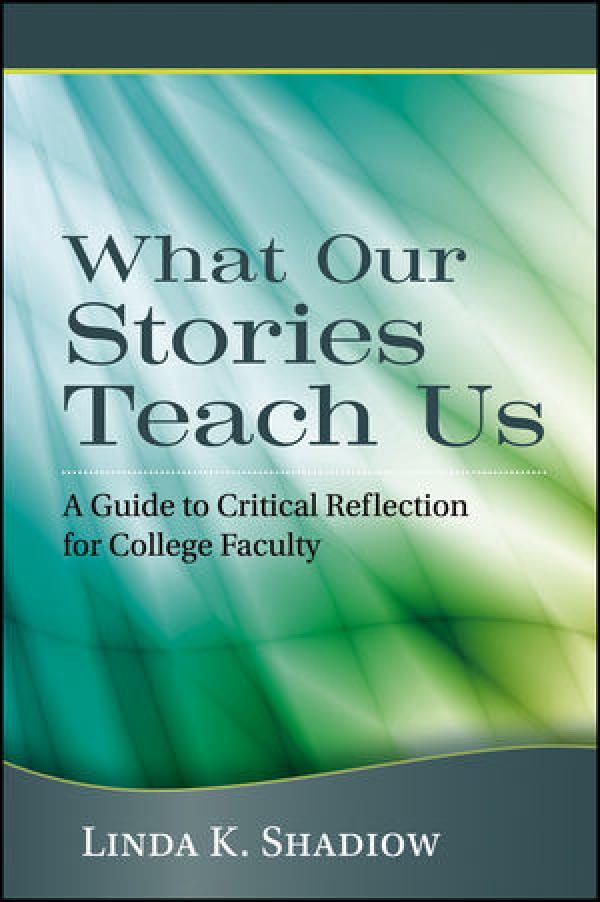
This book encourages and enables faculty to deeply examine their teaching experiences, stories, and choices so real insight results. The author invites faculty to recall stories from their own biographies, demonstrates how to view these stories as critical incidents instead of mere reminiscences, and introduces an approach faculty can undertake to analyze then interpret these stories for the benefit of professional growth in teaching. (From the Publisher)
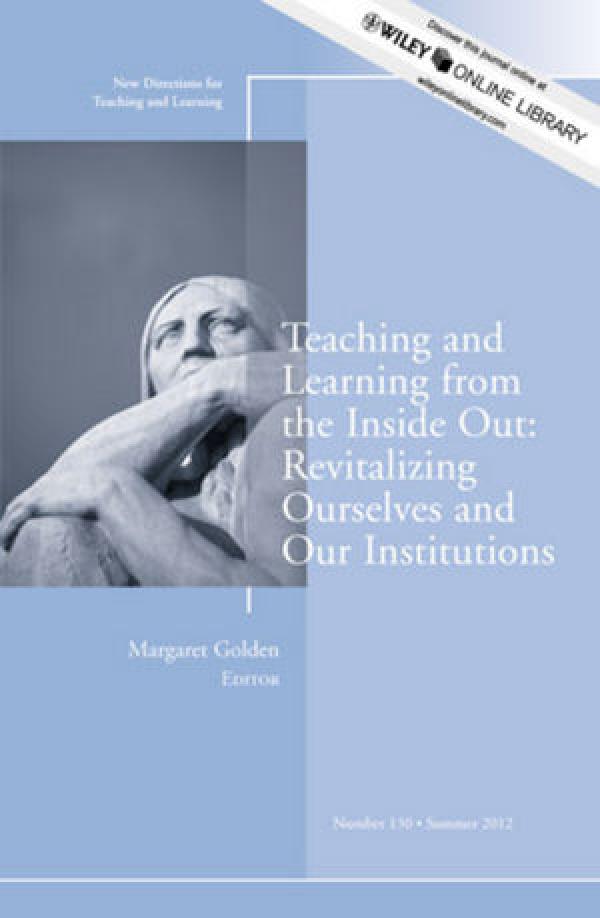
By reclaiming the passions of our hearts and exploring insights and ideas, we begin a remembering of ourselves. As we begin to reclaim our wholeness, we also have the capacity to renew and revitalize our institutions from within. After a long career of writing and speaking about how living in congruence—without division between inner and outer life—allows for being present with ourselves and those who journey with us, Parker Palmer and colleagues at the Center for Courage & Renewal developed a process of shared exploration. This Circle of Trust approach encourages people to live and work more authentically within their families, workplaces, and communities. This issue explores the transformative power of engaging in a Circle of Trust. The authors examine its direct applications to teaching and learning, and they explore and discuss the research being done by the facilitators of this work. This is the 130th volume of this Jossey-Bass higher education series. New Directions for Teaching and Learning offers a comprehensive range of ideas and techniques for improving college teaching based on the experience of seasoned instructors and the latest findings of educational and psychological researchers. (From the Publisher)