Resources
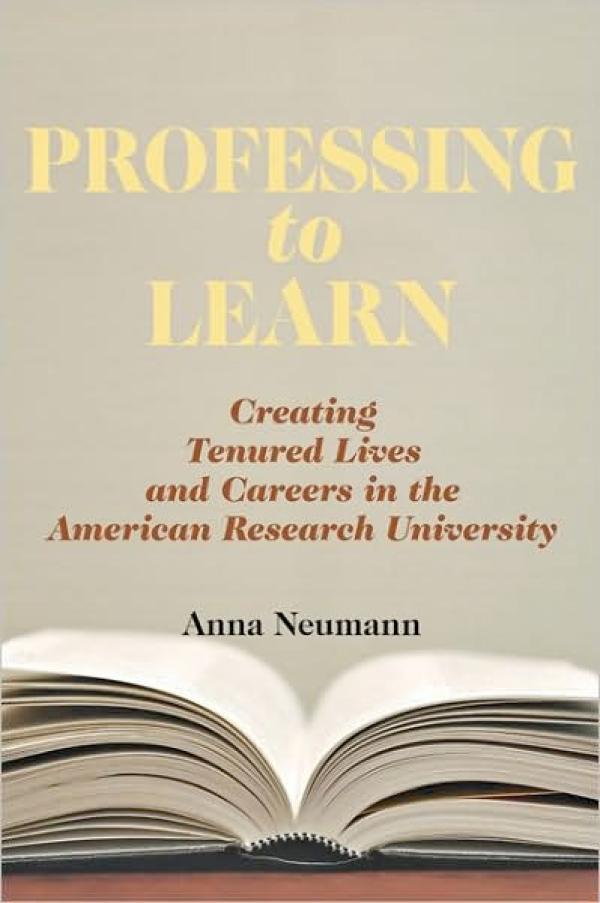
Research, teaching, service, and public outreach — all are aspects of being a tenured professor. But this list of responsibilities is missing a central component: actual scholarly learning — disciplinary knowledge that faculty teach, explore in research, and share with the academic community. How do professors pursue such learning when they must give their attention as well to administrative and other obligations? Professing to Learn explores university professors' scholarly growth and learning in the years immediately following the award of tenure, a crucial period that has a lasting impact on the academic career. Some launch from this point to multiple accomplishments and accolades, while others falter, their academic pursuits stalled. What contributes to these different outcomes? Drawing on interviews with seventy-eight professors in diverse disciplines and fields at five major American research universities, Anna Neumann describes how tenured faculty shape and disseminate their own disciplinary knowledge while attending committee meetings, grading exams, holding office hours, administering programs and departments, and negotiating with colleagues. By exploring the intellectual activities pursued by these faculty and their ongoing efforts to develop and define their academic interests, Professing to Learn directs the attention of higher education professionals and policy makers to the core aim of higher education: the creation of academic knowledge through research, teaching, and service. (From the Publisher)
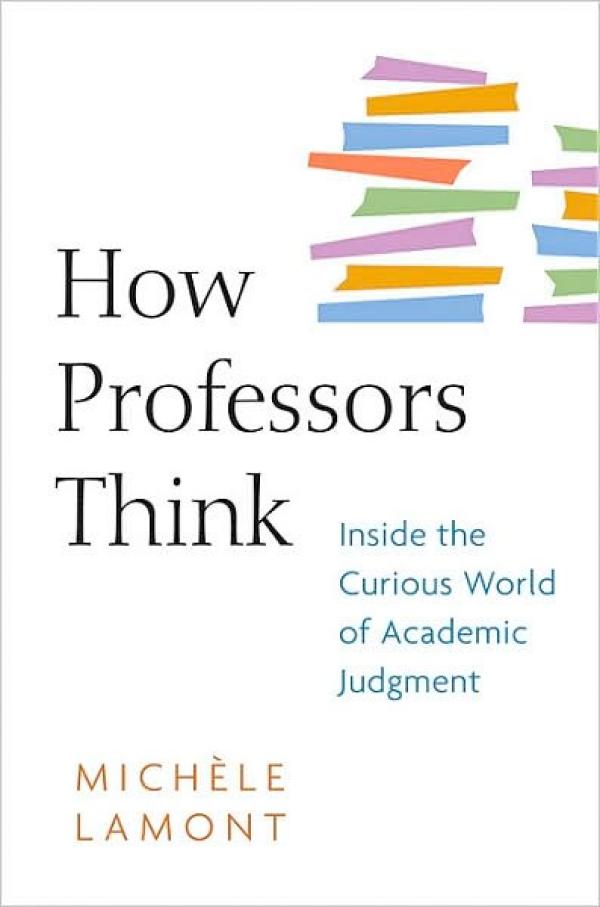
Excellence. Originality. Intelligence. Everyone in academia stresses quality. But what exactly is it, and how do professors identify it? In the academic evaluation system known as “peer review,” highly respected professors pass judgment, usually confidentially, on the work of others. But only those present in the deliberative chambers know exactly what is said. Michèle Lamont observed deliberations for fellowships and research grants, and interviewed panel members at length. In How Professors Think, she reveals what she discovered about this secretive, powerful, peculiar world. Anthropologists, political scientists, literary scholars, economists, historians, and philosophers don’t share the same standards. Economists prefer mathematical models, historians favor different kinds of evidence, and philosophers don’t care much if only other philosophers understand them. But when they come together for peer assessment, academics are expected to explain their criteria, respect each other’s expertise, and guard against admiring only work that resembles their own. They must decide: Is the research original and important? Brave, or glib? Timely, or merely trendy? Pro-diversity or interdisciplinary enough? Judging quality isn’t robotically rational; it’s emotional, cognitive, and social, too. Yet most academics’ self-respect is rooted in their ability to analyze complexity and recognize quality, in order to come to the fairest decisions about that elusive god, “excellence.” In How Professors Think, Lamont aims to illuminate the confidential process of evaluation and to push thegatekeepers to both better understand and perform their role. (From the Publisher)
In "Higher Education Reconceived: A Geography of Change", authors Sherrie Reynolds and Toni Craven examine the process of change in higher education as they engage the reader in conversation about how we relate to ourselves and to one another. They draw on modern and post-modern elements of higher education as well as personal narratives to address personal change, emergent change, and changing ideas about learning, curriculum, and communities of learning. The traditional view in higher education is that teaching causes learning. However, these authors assess how, as our ideas of student learning, research, and disciplines have developed, our understanding of teaching has evolved as well. Throughout, the authors intimate a sense of the spiritual in the processes of teaching and learning. This holistic volume encourages meditation on the multidimensional journey of teaching and learning, sheds new light on current paradigms of education, and presents ways of living together in a pluralistic and globally connected world. Opening each chapter with a labyrinth illustration to depict the winding and porous nature of the topic, this book should find a place on every educator's bookshelf. As teacher-scholars together discover a new understanding of higher education fit for our times, they should never forget that - as Reynolds put it - 'Being a university professor is a sacred trust'.(From the Publisher)

Sid Brown brings a Buddhist perspective into the classroom to explore the ethical quandaries, lived experiences and intimacy of teaching. Addressing such topics as attention, community, rage, wonder, consumerism, and kindness, Brown demonstrates how this centuries-old tradition can enrich and inform classroom life. (From the Publisher)
Becoming an authentic teacher appears to be a developmental process that relies on experience, maturity, self-exploration, and reflection. It is the purpose of this volume to explore a variety of ways of thinking about authenticity in teaching, from the perspective of both scholars and practitioners. This volume addresses five overlapping and interrelated aspects of teaching that impact a teacher's authenticity: * self-awareness and self-exploration * awareness of others (especially students) * relationships with students * awareness of cultural, social, and educational contexts and their influence on practice * critical self-reflection on teaching Authenticity is one of those concepts, like soul, spirit, or imagination, that are easier to define in terms of what they are not than what they are. We can fairly easily say that someone who lies to students or pretends to know or who deliberately dons a teaching persona is not authentic. But do the opposite behaviors guarantee authentic teaching? Not necessarily... This is the 111th volume of the quarterly journal, New Directions for Adult and Continuing Education.(From the Publisher)
On Teaching and Learning takes the ideas explored in renowned educator Jane Vella’s best-selling book Learning to Listen, Learning to Teach to the next level and explores how dialogue education has been applied in educational settings around the world. Throughout the book, she shows how to put the principles and practices of dialogue education into action and uses illustrative stories and examples from her extensive travels. Dialogue education values inquiry, integrity, and commitment to equity—values that are also central to democracy. Learners are treated as beings worthy of respect, recognized for the knowledge and experience they bring to the learning experience. Dialogue education emphasizes the importance of safety and belonging. It is an approach that welcomes one’s certainties and one’s questions. (From the Publisher)
A group of eminent African American scholars of religoius and theological studies examines the problems and prospects of Black scholarhip in the theological academy. They assess the role that prominent African American scholars have played in transforming the study and teaching of religion and theology, the need for a more thorough-going incorporation of the fruits of black scholarship into the mainstream of the academic study of religion, and the challenges and opportunities of bringing black art, black intellectual thought, and black culture into predominantly white classrooms and institutions. (From the Publisher)
Combining an overview of current research literature and 23 engaging narratives, Faculty of Color invites deeper dialogue on the experiences of faculty of color teaching in predominantly white institutions. By raising issues for commentary and investigation, the book challenges its readers to adopt effective strategies for the recruitment and retention of faculty of color in higher education. The authors represent a variety of disciplines and share firsthand experiences that range from teaching, recruitment, research, mentoring, institutional climate, and administration, to relationships with colleagues as well as students. Through their stories, they are able to offer useful insights into * Teaching styles and how they affect promotion decisions * The impact of mentoring relationships * Collegiality in the campus and university setting * Separating self-identity from group membership * Managing service activities * Understanding and dealing with racism Faculty of Color is intended for senior administrators and policymakers, faculty development professionals, current faculty, and future faculty of color who are contemplating academia. Each chapter offers a variety of recommendations designed to guide predominantly white colleges and universities in working to ensure that their institutions continue to change in substantive ways. (From the Publisher)
The “Sista’ Network"”is a term used to describe the relationships between and among professional African-American women which enable them to assist one another in learning the unwritten rules and protocols of various professions. In the context of higher education, the Sista' Network can help new African-American women faculty learn the rules to “the Tenure Game.” A qualitative inquiry into the lives and experiences of nine African-American women during various stages of the tenure process, this book partly explores general, practical considerations such as the tenure process; requirements for tenure; and negotiating the balance among teaching, research, service, and collegiality. Yet it delves further into the statistics of African-American women faculty in the academy; issues of isolation, mentoring, and networking; African-American women faculty and the tenure process; African-American feminist thought; and racism, sexism, and the politics of singularity. Also included are 12 guiding principles for new African-American women faculty members embarking upon the tenure process. Carefully weaving African-American feminist thought with the literature on academic tenure and minority along with stories of women faculty’s experiences in the academy, the author creates an effective and engaging account for minority women embarking on the tenure journey themselves. (From the Publisher)
Journal Issue.