Resources
This paper explores how adult learners in a college composition course resisted pedagogies and teaching strategies designed to critically examine student and teacher assumptions about classism, racism, and sexism as well as other oppressive structures and discourses.
One page Teaching Tactic: low-stakes writing assignments to improve students engagement with texts.
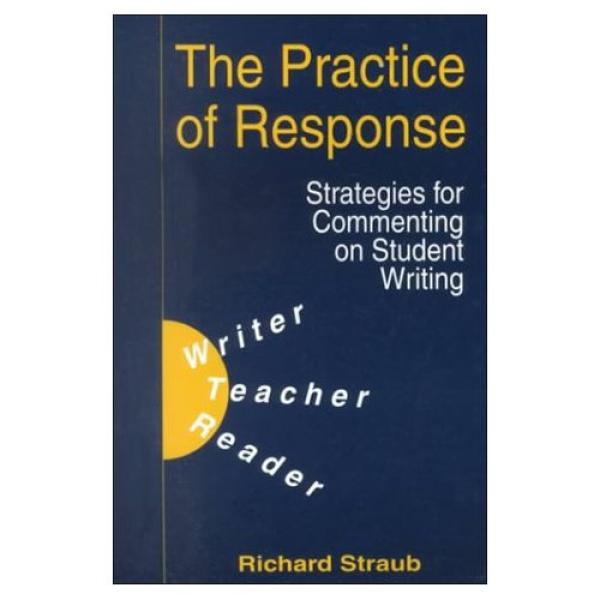
This book sets out to help teachers gain a practical understanding of response to student writing---essentially, by examining sample comments by knowledgeable teachers. It displays and analyzes over 30 sets of comments from a variety of settings, by a variety of teachers, all of them informed by composition studies. It defines the strategies these teachers put into practice. And it situates teacher repines in the larger context of writing instruction. (From the Publisher)
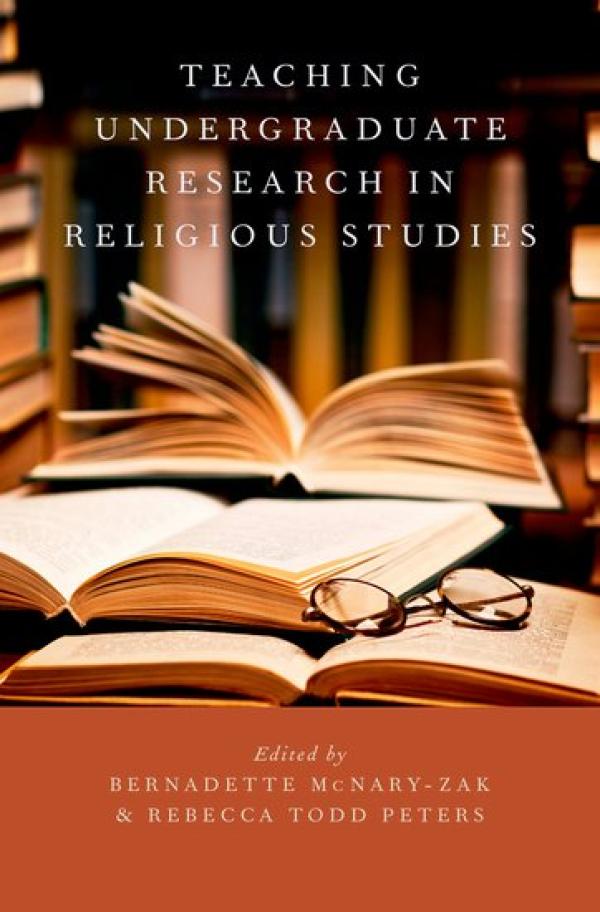
AAR Teaching Religious Studies Series (Oxford University Press) Teaching Undergraduate Research in Religious Studies offers an introduction to the philosophy and practice of Undergraduate Research in Religious Studies and takes up several significant ongoing questions related to it. This volume emerges from sustained conversations about the pedagogy of Undergraduate Research by a group of teacher-scholars in the discipline, and it seeks to extend those conversations. For those new to Undergraduate Research, this book provides an overview of fundamental issues and pedagogical questions and practical models for application in the classroom. For seasoned mentors, it acts as a dialogue partner on emerging issues and offers insight into pertinent questions in the field based on the experience of recognized experts. Individual chapters focus on select theoretical and practical topics including the nature of collaboration between faculty and students, what it means for undergraduate students to make an "original contribution" in their research, how to identify and shape a research project that is appropriate and manageable, the types of institutional and professional support systems needed to adequately support and reward faculty who participate in this kind of pedagogy, and procedures for adequate and appropriate assessment. Student perspectives highlight the importance of Undergraduate Research to student learning. (From the Publisher)
This book offers ideas that secondary teachers, university content faculty, and teacher educators can use to challenge traditional literacy practices and demonstrate creative, innovative ways of incorporating new literacies into the classroom, all within a strong theoretical framework. Teachers are trying to catch up to the new challenges of the twenty-first century. It is a superheroic feat that must be achieved if education is to stay relevant and viable. There is a lot of zip, bam, whap, and wow in the fast-paced, social networking, technological world, but not so much in the often laboriously slow-paced educational world. Where is the balance? How do teachers and students learn together, since one group has seasoned wisdom with limited technological know-how and the other uses all the cool new tools, but not in the service of learning? These are some important issues to consider in finding the balance in an unstable, fast-moving, ever-changing world. This book is practical and useful to literacy teachers, teacher educators, and university faculty by bringing together the expertise of composition/rhetoric researchers and writers, literacy specialists, technology specialists, and teachers who are on the cutting edge of new literacies. (From the Publisher)
A classic handbook for anyone who needs to write, Writing With Power speaks to everyone who has wrestled with words while seeking to gain power with them. Here, Peter Elbow emphasizes that the essential activities underlying good writing and the essential exercises promoting it are really not difficult at all. Employing a cookbook approach, Elbow provides the reader (and writer) with various recipes: for getting words down on paper, for revising, for dealing with an audience, for getting feedback on a piece of writing, and still other recipes for approaching the mystery of power in writing. In a new introduction, he offers his reflections on the original edition, discusses the responses from people who have followed his techniques, how his methods may differ from other processes, and how his original topics are still pertinent to today's writer. By taking risks and embracing mistakes, Elbow hopes the writer may somehow find a hold on the creative process and be able to heighten two mentalities--the production of writing and the revision of it. From students and teachers to novelists and poets, Writing with Power reminds us that we can celebrate the uses of mystery, chaos, nonplanning, and magic, while achieving analysis, conscious control, explicitness, and care in whatever it is we set down on paper. (From the Publisher)
With Writing without Teachers (OUP 1975) and Writing with Power (OUP 1995) Peter Elbow revolutionized the teaching of writing. His process method--and its now commonplace "free writing" techniques--liberated generations of students and teachers from the emphasis on formal principles of grammar that had dominated composition pedagogy. This new collection of essays brings together the best of Elbow's writing since the publication of Embracing Contraries in 1987. The volume includes sections on voice, the experience of writing, teaching, and evaluation. Implicit throughout is Elbow's commitment to humanizing the profession, and his continued emphasis on the importance of binary thinking and nonadversarial argument. The result is a compendium of a master teacher's thought on the relation between good pedagogy and good writing; it is sure to be of interest to all professional teachers of writing, and will be a valuable book for use in composition courses at all levels. (From the Publisher)

Journal issue. Full text is available online.
Compared research papers before and after implementation of an inquiry-based library instruction program at the University of New Mexico to asses the program's effectiveness and consider its future development. Discusses increased collaboration between the library and the English department and suggests more training for instructors and greater emphasis on a rhetorical research approach.
One page Teaching Tactic: students reflect on the writing rubric used to grade their writing, in an online or hybrid course.