Resources
A concise and not too abbreviated set of guidelines from UC Berkeley to help students to assess the many types of resources they’ll encounter through research, and evaluate a source’s authority and appropriateness for their research.
Purdue University site helping students evaluate bibliographic citations, content in a source, as well as internet sources. Links to further resources.
For students, a concise review of how to evaluate the authority, usefulness, and reliability of the information found through the process of library research. Including: books, periodical articles, multimedia titles, or Web pages – whether looking at a citation, a physical item in hand, or an electronic version on a computer. Links to lengthier discussions.
A series of related essays providing an overview of writing pedagogy and methods, along with specific examples of how to teach writing.
An extensive series of essays on related topics describing for students how to write effective academic papers in college.
Mentoring is an important but often overlooked resource in theological education and students' academic and spiritual formation. This essay profiles the mentoring practices and postures of the writing tutor and the spiritual director as exemplars of academic and spiritual mentoring. An extended probe of this analogy affirms the integration of academic and spiritual formation as a core value in theological education; identifies mentoring in theological education as a hidden treasure fostering this integration and warranting attention as a theological practice; and re-envisions the theological practice of mentoring under the traditional rubric of the “care of souls,” embracing the relational, educational, formational, spiritual, and rhetorical dimensions of this practice.
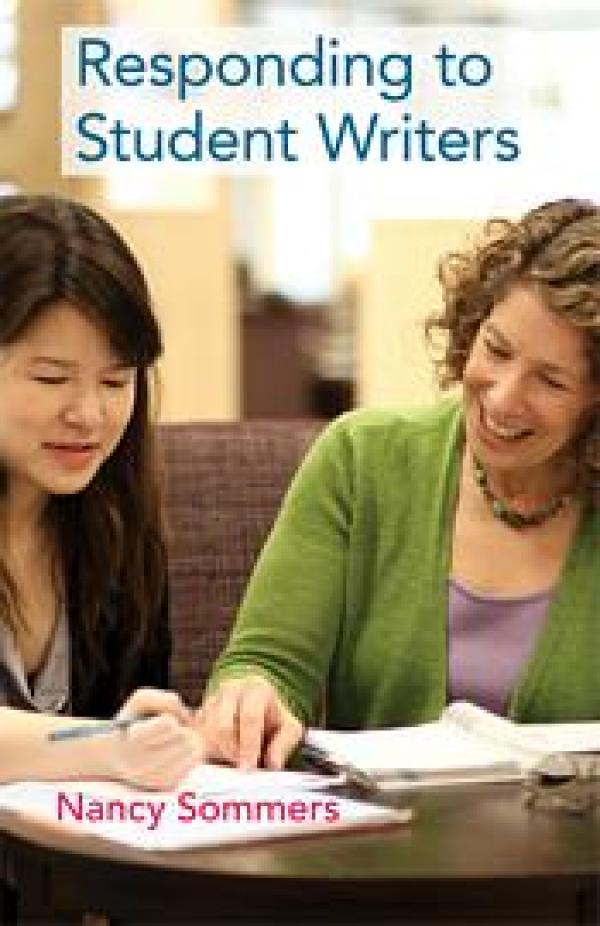
Because teachers' comments shape student writers Written from one teacher to another, Nancy Sommers’ Responding to Student Writers offers a model for thinking about response as a dialogue between students and teachers — and for thinking about the benefits of responding to writers as well as to their writing. Braddock Award–winning Nancy Sommers has taught composition and run composition programs for more than three decades; she currently teaches writing and mentors future teachers in Harvard’s Graduate School of Education. In this resource, which is based on her research and her travels to two- and four-year colleges and universities, she focuses on the roles that teacher feedback plays in writers’ development and offers strategies for moving away from responding as correcting. This is a free resource for instructors. (From the Publisher)
Written specifically for teaching assistants responsible for WAC or WID courses, A TA's Guide to Teaching Writing in All Disciplines provides the practical advice that teaching assistants — no matter the discipline — need in order to teach and evaluate writing effectively. This informative text is perfectly suited to a teaching assistants' training course, or it can serve as a reference for teaching assistants to use on their own. (From the Publisher)
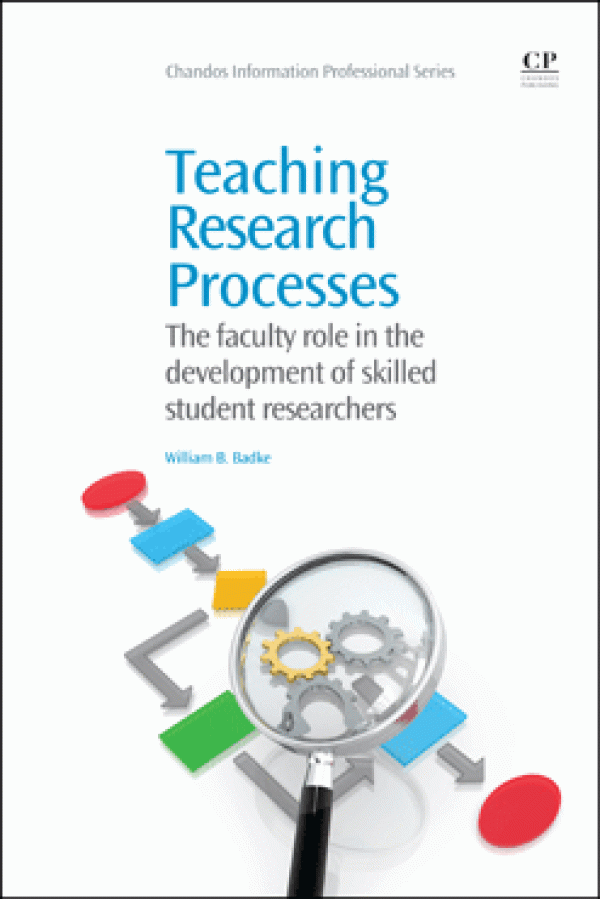
- engages the domain of teaching faculty rather than librarians only  - analyzes the reasons why the research processes concept represents a gap in academia  - focuses on research ability as a process that can be taught within disciplines  -  provides concrete examples to help faculty teach research processes while meeting existing academic goals Information literacy may be defined as the ability to identify a research problem, decide the kinds of information needed to tackle it, find the information efficiently, evaluate the information, and apply it to the problem at hand. Teaching Research Processes suggests a novel way in which information literacy can come within the remit of teaching faculty, supported by librarians, and reconceived as ‘research processes’. The aim is to transform education from what some see as a primarily one-way knowledge communication practice, to an interactive practice involving the core research tasks of subject disciplines. This title is structured into nine chapters, covering: Defining research processes; Research ability inadequacies in higher education; Research processes and faculty understanding; Current initiatives in research processes; The role of disciplinary thinking in research processes; Research processes in the classroom; Tentative case studies in disciplinary research process instruction; Research processes transforming education; and Resourcing the enterprise. The book concludes by encouraging the reader to implement the teaching of research processes. Readership: This book is intended for university professors, academic administrators, academic librarians, and students in library and Information Studies programs (From the Publisher)
Robert and DeMethra’s book, Me-Searching and Re-Search, has caught my fancy in a number of ways. The book title cleverly captures what SPN is all about—it is about self narratives (the “me-search” part) and about scholarly meaning making (the “re-search” part). This eye-catching title also illuminates the authors’ intent to turn this seemingly intimidating method of self-inquiry into something very accessible and doable. Their jargon-free language is friendly and inviting. Although they don’t intend to make their many methodological tips and tools too prescriptive, their practical suggestions provided in this guide book are, indeed, helpful and useful. I believe that Robert and DeMethra have demonstrated admirable talents as effective educators by unpacking the complex method of SPN writing into bite-sized steps. I am fully convinced that the steps will help both novices, and the experienced researcher, to reach the ultimate height of producing engaging, and scholarly significant, SPN’s. The book is also fun to read. The authors intersperse throughout their own SPN’s, pedagogical insights from their doing and teaching, and real-life stories, in order to illustrate the methodological process, challenges, and triumphs. (From the Publisher)