Resources
Five perspectives on diversity are provided here for reflection and discussion in your institution. Jack Seymour and Julia Speller offer observations drawn from discussions at the March 2002 ATS Workshop on Diversity. Two fictional cases explore negotiating cultural differences from a faculty member's and a dean's perspectives. Daniel Aleshire's column on "Good Work" is reprinted from the ATS newsletter, Colloquy (From the Publisher)
This timely and comprehensive book outlines the agenda for achieving racial justice in higher education in the next generation. It focuses on the racial transformation of higher education and the structural barriers that perpetuate racial stratification in colleges and universities--and beyond. Taking on topical issues such as shifting patterns of financial aid, the growing importance of community colleges, and identifying model programs for retaining and supporting minority students, it lays the foundation for realizing the U.S. Supreme Court Justice Sandra Day O'Connor's goal of eliminating the need for affirmative action within 25 years. (From the Publisher)

The authors discuss recent empirical evidence, gathered on behalf of the University of Michigan Supreme Court defense, demonstrating the educational benefits of diverse learning environments. These are environments that must be intentionally planned and nurtured, where diversity is conceived of as a process toward better learning and not merely an outcome that one can check off a list. Included are numerous suggestions for how to engage diversity in the service of learning, ranging from recruiting a compositionally diverse student body, faculty, and staff to transforming curriculum, co-curriculum, and pedagogy to reflect and support goals for inclusion and excellence. (From the Publisher)
Over the years, thousands of students have left Africa to pursue theological doctorates in Christian institutions of higher learning around the world. The study reported in this paper endeavored to understand their experiences and articulate their needs and aspirations. Data were collected through semistructured interviews with 23 African students and were analyzed using grounded theory procedures. The emerging profile revealed African students in pursuit of theological doctorates to be mature in age and experience with rich and variegated backgrounds. While a desire for increased competence, access to employment opportunities, and a greater voice in church and society were motivating factors in their educational quests, the dominant motivation expressed by research participants was a passion to help Africa and the African church. Students viewed increased competence and access as enhancing usefulness. Consequently, students preferred doctoral programs perceived as Africa-relevant and internationally credible. Nevertheless, they demonstrated a readiness to compromise the ideal in favor of the achievable, particularly in terms of program affordability. (From the Publisher)
Journal issue. Full text is available online.
Teaching Inclusively brings together a broad array of current "best practices" in the design, implementation, and assessment of multicultural change initiatives on college and university campuses. Readers will find that this volume advocates for more transparent connections between change initiatives at individual, departmental, and college-wide levels by highlighting the ways in which such practices and change goals can relate to and support each other, thus addressing a noticeable absence in the current available literature. The contributors to this volume present readers with a balance between theoretical models and demonstration projects that address change processes at three levels: individual courses, programs and departments, and across schools and institutions. In addition, there are descriptions of current, multi-year or multi-phase efforts at both departmental and organizational levels. Whenever possible, the contributors include their perspectives on important lessons learned from their efforts. Finally, we offer resource materials that promise concrete support for applications. Part I addresses models and perspectives that help to conceptualize, implement and assess diversity-related instructional and faculty development programs at the systemic level. Contributors offer models and descriptions of practices aimed at making transparent the values, beliefs, and goals that shape institutional and classroom climates. Note that in the context of this volume, "diversity" is deliberately defined broadly to encourage a more systemic approach to the analyses of and response to diversity-related issues. For many readers, this may offer new dimensions and greater texture to their current conceptualization of diversity. This section reflects the contributors’ interests in analytical tools and organizational frameworks useful in addressing individual, departmental, and institutional changes. Whenever appropriate, authors in this section identify a range of practical applications, such as course-based efforts in the major to courses that fulfill general education requirements. In Part II, contributors describe change initiatives that use departments (or programs) as the unit of analysis for diversity-related change efforts. In this section, readers will benefit from the descriptions and assessments of programs designed specifically to bring faculty and academic administrators together in cohorts to address diversity and teaching development goals within the disciplines in a sustained dialogue on diversity. Assessment of current efforts indicate that such initiatives illuminate the content, skills, and values necessary for sustained change and that such experiences can become important models for broader institutional change efforts. In Part III, the contributors discuss multicultural change efforts at the college or institutional level directed at creating and sustaining more inclusive teaching and learning communities. Additionally, contributors describe programs and practices useful in addressing diversity issues across the disciplines as well as within discipline-specific contexts. Particular emphasis is placed on understanding how can systematic multicultural organization change initiatives can support a departmental or campus-wide emphasis on teaching inclusively. These chapters offer rich descriptions of efforts at institutions learning how to address diversity-related initiatives in a sustainable, comprehensive manner. Such efforts can help others determine how best to assess their organization’s needs and strengths, and to determine what is needed in the larger environment to initiate and sustain successful pro-equity organizational change and innovations. Finally, Part IV pays particular attention to resources and program models particularly useful for faculty developers and centers. Contributors to this section provide a rich set of tools for self and course assessment, planning for new or revised programs, and suggesting well-proven strategies for approaches to diversity-related teaching development and organizational change initiatives. These include descriptions of specific, "hands on" consultation practices, workshop exercises, resource materials, and design elements (e.g., use of writing prompts) proven effective across the disciplines in engaging faculty in reflection, analysis, dialogue and innovation related to diversity-related teaching development goals. (From the Publisher)

"Degrees of Choice provides a sophisticated account of the overlapping effects of social class, ethnicity and gender in the process of choosing which university to attend. The shift from an elite to a mass system has been accompanied by much political rhetoric about widening access, achievement-for-all and meritocratic equalisation." This book gives a full and different picture, drawing on qualitative and quantitative data to show how the welcome expansion of higher education has also deepened social stratification, generating new and different inequalities. While gender inequalities have reduced, those of social class remain and are now reinforced by racial inequalities in access. Employing perspectives from the sociology of education and particularly Bourdieu's work on distinction and judgement, the book links school (institutional habitus) and family (class habitus) with individual choice making in a socially informed dynamic. (From the Publisher)
An authoritative, comprehensive guide to the first year of college, Challenging and Supporting the First-Year Student includes the most current information about the policies, strategies, programs, and services designed to help first-year students make a successful transition to college and fulfill their educational and personal goals. (From the Publisher)
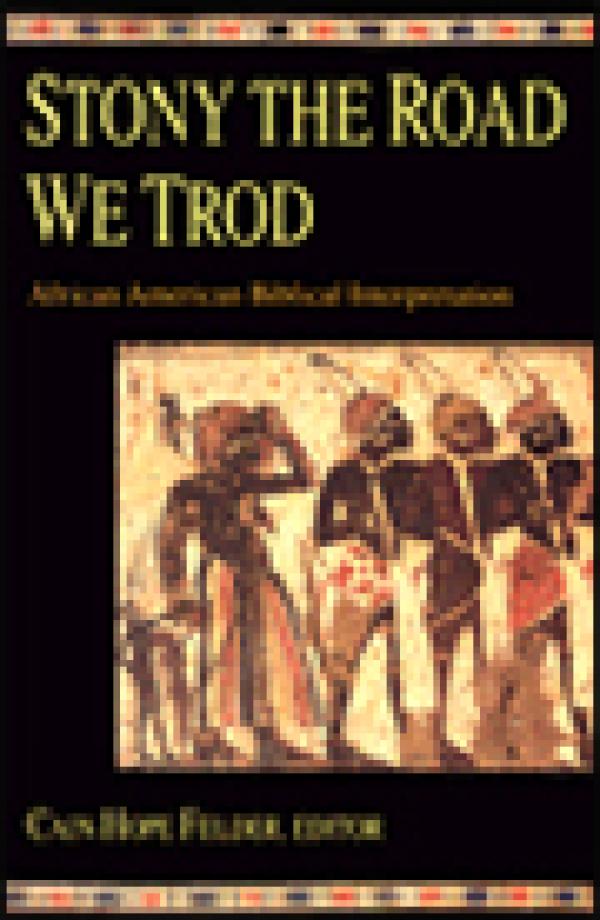
A hallmark of American black religion is its distinctive use of the Bible in creating community, resisting oppression, and fomenting social change. What can critical biblical studies learn from the African American experience with the Bible, and vice versa? This singular volume marks the emergence of a critical mass of black biblical scholars. Combining sophisticated exegesis with special sensitivity to issues of race, class, and gender, the authors of this scholarly collection examine the nettling questions of biblical authority, blacks and African in biblical narratives, and the liberating aspects of Scripture. Together they are reshaping and redefining the questions, concerns, and scholarship that determine how the Bible is appropriated by church, academy, and the larger society today. (From the Publisher)